
Founder Burnout: Recover with Sabbath
Examines how hustle culture drives founder burnout and offers biblical recovery steps: Sabbath rest, prayer, and tech boundaries.
Burnout is a silent epidemic among founders, fueled by hustle culture’s glorification of constant work. 54% of founders reported burnout in 2025, with many struggling with anxiety and depression. This relentless cycle affects not just physical and emotional health but also spiritual well-being, leading to a loss of purpose and peace.
Here’s a quick breakdown of key takeaways:
- Burnout Warning Signs: Insomnia, fatigue, irritability, brain fog, and diminished joy in work.
- Causes: Constant connectivity, blurred work-life boundaries, and myths like "rest is weakness."
- Recovery Steps:
- Sabbath Rest: Dedicate one day weekly to unplug and recharge.
- Prayer & Scripture: Shift focus from productivity to grace through intentional spiritual practices.
- Technology Boundaries: Limit work hours, turn off notifications, and prioritize personal time.
Tools like Psalmlog can help track progress, process emotions, and rebuild spiritual rhythms. You can even connect voice journaling with scripture to deepen your daily reflection. The path to recovery starts with rejecting hustle myths and embracing rest, prayer, and balance. Your worth isn’t tied to productivity – peace and purpose come from grace, not grind.
How to Recognize Founder Burnout
Physical and Emotional Warning Signs
Burnout doesn’t just sneak up on you – it often announces itself through your body and emotions. Yet, many founders push past these signals, thinking they can power through. Trouble sleeping is a common early sign. Maybe you can’t fall asleep, or you wake up in the middle of the night with your mind spinning over business problems. To compensate, you might lean too heavily on caffeine, masking the chronic fatigue that’s building up.
Then there are the physical symptoms: headaches that won’t quit, chest tightness, heart palpitations, digestive troubles, and a weakened immune system that makes every minor illness stick around longer than it should. Interestingly, your team often notices your stress before you do. Over 50% of startup employees report being able to sense when their founder is overwhelmed. You might find yourself snapping at simple questions or reading too much into routine requests, which can strain relationships.
"Burnout is a state of physical, emotional or mental exhaustion combined with doubts about your competence and the value of your work."
– Mayo Clinic
On the emotional side, burnout can leave you feeling numb. Wins don’t excite you, and failures barely register. You might experience brain fog, making decisions feel like wading through quicksand. And then there’s the frustrating irony: you’re working longer hours, but on tasks that don’t move the needle. Meanwhile, bigger priorities pile up, creating a sense of overwhelm that blocks effective decision-making.
Spiritual Symptoms and Biblical Examples
Burnout doesn’t just affect your body and emotions – it can erode your spiritual well-being too. This often shows up as a loss of purpose or peace. The work that once felt meaningful now feels like a heavy, solitary burden. You might forget that success isn’t entirely on your shoulders and lose sight of the bigger picture. Instead of joy, irritability takes its place.
The Bible offers examples of leaders who faced similar struggles. After his dramatic victory over the prophets of Baal, Elijah fell into deep exhaustion and spiritual despair (1 Kings 19). His recovery required rest and reassurance of God’s presence. Moses, too, tried to carry the weight of leadership alone until his father-in-law Jethro advised him to delegate, reminding him that no one can bear such a load solo. Even Jesus made time to step away and pray, showing the importance of rest for maintaining spiritual strength.
"Burnout is more than being tired… It’s a loss of purpose and peace, a disconnect from what actually matters."
– Jessica DeYoung, Founder, Grace Unworthy Ministries
Catching burnout early is critical. The first few weeks after symptoms appear are the best time to act. Ignoring the signs can lead to a longer recovery process and may even trigger a deeper identity crisis – especially for founders who tie their self-worth to their business performance.
Why Most Founders Burn Out (And How Smart Ones Don’t)
What Causes Burnout in Founders
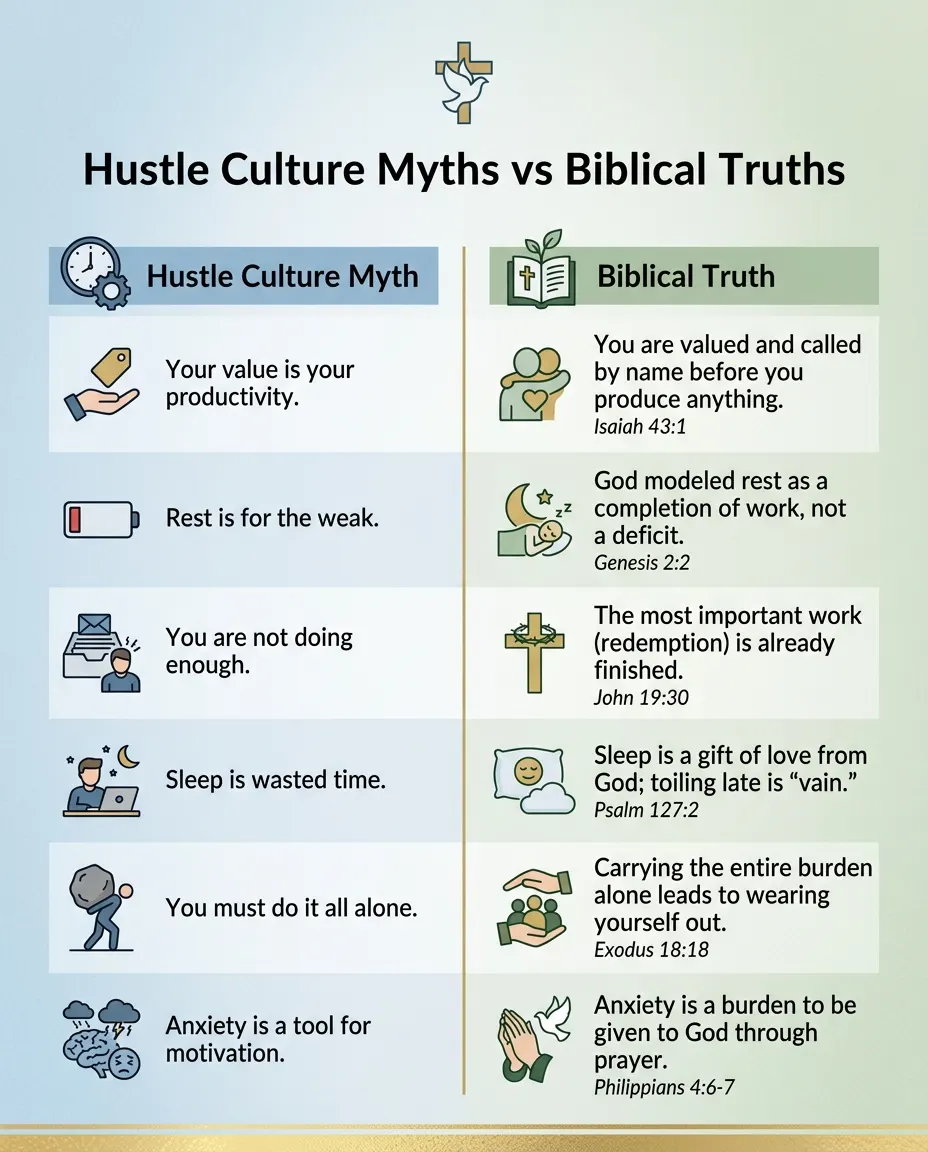
Hustle Culture Myths vs Biblical Truths About Work and Rest
How Technology Fuels Hustle Culture
Technology was supposed to simplify work, but for founders, it’s often had the opposite effect. Tools like Slack, Microsoft Teams, and project management dashboards have blurred the boundaries between work and personal life. With these tools, constant connectivity has become the norm, making it nearly impossible to "switch off." Instead of leaving work at the office, founders find themselves tethered to it 24/7 – now, the boss isn’t just at work; it’s in your head.
Philosopher Byung-Chul Han describes this phenomenon as "auto-exploitation." Founders often respond to messages at midnight, not because someone explicitly asked them to, but because being unreachable feels almost unacceptable. Your personal phone morphs into a work device, and even moments of quiet are disrupted by the possibility of a notification. This creates a cycle of chronic stress that never fully subsides. Adding to this, platforms like LinkedIn and Twitter turn personal lives into constant marketing opportunities, extending unpaid work into every corner of the day.
"The achievement-subject competes against itself and cannot stop. Burnout… is the predictable exhaust of a system that has successfully installed the boss inside the worker’s head."
– Byung-Chul Han, Philosopher
The statistics back this up. A 2024 Mental Health UK survey revealed that nearly 90% of adults experienced high or extreme levels of stress in the previous year. Around 20% of workers had to take time off due to extreme pressure. And here’s a startling comparison: a founder who gets just five hours of sleep each night for a week operates at a cognitive level comparable to being above the legal alcohol limit for driving. Yet, the constant influx of notifications makes any pause feel like falling behind.
This relentless pressure feeds into the false narratives of hustle culture, creating myths that clash with biblical truths.
Hustle Culture Myths vs. What the Bible Says
Hustle culture thrives on lies that often contradict biblical wisdom. Below is a table highlighting six common myths alongside biblical truths:
| Hustle Culture Myth | Biblical Truth | Related Scripture |
|---|---|---|
| Your value is your productivity. | You are valued and called by name before you produce anything. | Isaiah 43:1 |
| Rest is for the weak. | God modeled rest as a completion of work, not a deficit. | Genesis 2:2 |
| You are not doing enough. | The most important work (redemption) is already finished. | John 19:30 |
| Sleep is wasted time. | Sleep is a gift of love from God; toiling late is "vain." | Psalm 127:2 |
| You must do it all alone. | Carrying the entire burden alone leads to wearing yourself out. | Exodus 18:18 |
| Anxiety is a tool for motivation. | Anxiety is a burden to be given to God through prayer. | Philippians 4:6-7 |
Recognizing these myths is an essential step toward aligning your work ethic with biblical principles and reclaiming your spiritual and emotional health.
For Christian founders, the "holy hustle" fallacy can be especially harmful. It equates relentless work with spiritual faithfulness, making you feel that if you’re not grinding 24/7, you’re somehow failing in your calling. But Jesus never equated fruitfulness with a frantic pace. He taught, "Abide in me" – not "Accelerate with me". Rest isn’t something to be earned after finishing work. Consider this: Adam and Eve’s first full day was the Sabbath, meaning they began with rest, not as a reward for their labor.
Biblical Steps to Recover from Burnout
Step 1: Practice Sabbath Rest
The Sabbath isn’t just a day off – it’s a rhythm of life that helps sustain you over the long haul. For founders and leaders, taking time to rest is an act of faith, a way of acknowledging that God is in control even when you’re not working. The Bible shows us that rest isn’t a reward for work but the foundation of it. Think about it: Adam and Eve’s first full day on Earth was a day of rest. This pattern suggests we were made to work from rest, not collapse into it.
"Sabbath rest allows you to literally catch your own breath, but also then be able to see what the congregation [or organization] needs."
– Alexis Abernethy, Clinical Psychologist and Professor, Fuller Seminary
To make Sabbath rest a reality, set aside an entire day where work is off the table. If Sunday is packed with church responsibilities, pick another day – like Monday – and commit to unplugging. Turn off your devices and resist the urge to check emails or scroll through notifications. Instead, focus on activities that refresh your mind and soul: take a walk, dive into a book, or spend time in prayer. Let the quiet moments draw you closer to God. You might even find that using noise-canceling headphones helps you tune out distractions and listen for His voice. By prioritizing rest, you not only restore yourself but also set an example for your team, showing that rest is an essential part of the work rhythm – not an afterthought.
Once you’ve established rest as a priority, the next step is to deepen your spiritual practices.
Step 2: Return to Prayer and Scripture
Prayer and scripture anchor you in the truth that your worth isn’t tied to how much you accomplish. In a world that often glorifies busyness, scripture reminds us that the most important work has already been completed (John 19:30). Prayer offers a chance to realign your perspective, shifting your focus from productivity to grace. It’s in the stillness of prayer that clarity often emerges – something the chaos of constant activity can’t provide.
Dedicate one morning a week to a no-digital time of prayer and scripture study. Let this be a time free from distractions, where you’re not trying to multitask or squeeze prayer into your to-do list. Approach prayer as a moment of surrender, not just another task to check off. Bring your worries – whether they’re about your business, finances, or personal life – to God, and let scripture redefine what "enough" looks like and help you move forward. Create space in your schedule for spontaneous moments of reflection and prayer, and stick to a set time for shutting down your workday. This practice helps you embrace a slower, more intentional rhythm, reminding you that your identity isn’t tied to your output.
"Your calling isn’t sustained by hustle. It’s sustained by grace."
– Chris Builds Pro, Business Owner
With your spiritual foundation strengthened, the next step is to take control of your technology use.
Step 3: Create Technology Boundaries
Proverbs 4:23 tells us to guard our hearts, and one way to do that is by setting boundaries around technology. Constant connectivity can drain your energy and cloud your judgment. Research shows that burnout affects nearly 60% of founders’ ability to lead effectively, and 65% of startup failures are linked to burnout or internal conflict.
Despite what the world might say, being available 24/7 isn’t a badge of honor – it’s a recipe for exhaustion. Set clear boundaries for when you’ll respond to emails or messages, and stick to them. After intense work sessions or stressful meetings, take short recovery breaks – just 10 to 30 minutes can make a difference. End each day with a shutdown routine that protects your downtime and keeps work from spilling into your personal life. Schedule non-negotiables like family time, prayer, or rest on your calendar to ensure they don’t get pushed aside. And avoid multitasking – it feeds the hustle culture and often leads to mistakes.
Consider the example of Cache Merrill, founder of Zibtek. In August 2025, he realized his 70-hour workweeks were keeping him from something as simple as family dinners. By restructuring his schedule and delegating tasks, he created a healthier work-life balance. Similarly, in January 2025, Li Jianxiong left China’s grueling "996" work culture (9 AM to 9 PM, six days a week) to start Heartify, a company focused on helping others escape burnout.
"Your whole life is in your phone, and you have to decide when you want to close it."
– Esther Perel, Psychotherapist and Author
Using Psalmlog for Recovery and Prevention

Psalmlog takes the timeless wisdom of biblical recovery steps and transforms them into practical, digital tools aimed at fostering ongoing spiritual renewal.
Voice Journaling for Emotional and Spiritual Processing
Sometimes, speaking your thoughts aloud can be more freeing than writing them down. Psalmlog’s voice-first journaling feature allows you to process your emotions in real time, creating "micro-moments" of recovery that last between 10 and 30 minutes. Instead of struggling with a blank page, you simply speak from the heart – echoing the raw honesty of the psalmists.
The platform’s AI analyzes your entries to uncover patterns in your emotional and spiritual health. You can even tag relevant Scriptures, linking your personal challenges to biblical truths. This connection between your experiences and God’s Word not only helps alleviate burnout but also strengthens your relationship with Him. As Preston Zeller, Psalmlog’s creator, explains:
"AI can be a tool for spiritual reflection when used with discernment, not replacement of personal faith".
By simplifying the process, Psalmlog lets you navigate emotional chaos without adding more to your plate.
Tracking Your Progress and Building Better Habits
Beyond journaling, Psalmlog encourages long-term growth by helping you establish and maintain healthy spiritual habits. The personal insights dashboard and calendar view provide a clear picture of your progress. This isn’t just about logging your thoughts – it’s about documenting how God is working in your life and identifying areas for improvement.
The calendar view ensures you stay consistent, even when life gets hectic. By noticing patterns – like increased stress during weeks you skip Sabbath rest – you can pinpoint what truly nourishes your soul. This structured reflection helps you break free from the cycle of constant busyness and embrace a rhythm that feels spiritually aligned and manageable.
Pricing and Plan Details
Psalmlog’s Faith Builder plan is $19.99 per month. It includes 300 minutes of recording time, personalized 6-point AI insights, full transcripts, access to all Bible translations, and a calendar for tracking your progress. Annual subscriptions come with a discount, and there’s also a free trial available. This plan is designed to make spiritual growth both accessible and sustainable, supporting your journey toward peace and purpose.
Conclusion: Finding Peace and Purpose Again
Hustle culture often dangles the promise of success but leaves many feeling burned out and disconnected. Overworking drains your energy, clouds your judgment, and weakens your spiritual connection. But here’s the truth – you don’t have to live like this. The Bible offers a better way: reject the belief that your worth is tied to productivity, embrace rest as a gift from God, and set boundaries to protect your well-being.
The journey toward recovery starts by rediscovering a spiritual rhythm. Sabbath rest invites you to step back one day a week, trusting that God remains in control even when you’re offline. Daily practices like prayer and reading Scripture help you reconnect with peace and purpose. Another vital step is creating technology boundaries – giving yourself the space to think clearly and hear the Holy Spirit. As Chris Builds Pro puts it:
"Your calling isn’t sustained by hustle. It’s sustained by grace".
From there, you can take practical steps to rebuild. With biblical principles as your guide, Psalmlog turns these truths into actionable tools. Voice journaling provides small but meaningful moments to process emotions and connect your challenges to Scripture. The insights dashboard helps you track your spiritual journey, identifying patterns like increased stress when rest is neglected, and encourages healthier habits.
You can work hard and honor God without sacrificing your health or faith. Redefine what "enough" looks like, delegate responsibilities wisely, and prioritize being present with God over constant activity. True success isn’t about how much you achieve – it’s about living justly, showing mercy, and walking humbly with your God (Micah 6:8). When your work flows from a place of rest rather than exhaustion, you build something that not only lasts but also brings glory to Him. By leaning into rest, prayer, and thoughtful use of technology, you’ll find renewed clarity and purpose to lead with strength and grace.
FAQs
How can I tell burnout from normal stress?
Burnout isn’t just an extended period of stress – it’s something deeper and more draining. It’s marked by constant exhaustion, feeling emotionally disconnected, and a dwindling sense of achievement. The key difference? Burnout doesn’t go away with a good night’s sleep or a weekend off. On the other hand, regular stress tends to be short-lived and manageable. With proper rest and recovery, normal stress usually fades, allowing you to bounce back.
What if I can’t take a full Sabbath day?
If dedicating an entire Sabbath day feels out of reach, consider weaving moments of rest into your daily life. Simple practices like reflecting on scripture or recording your thoughts through voice journaling can help you reconnect and recharge. Even short, intentional breaks can bring a sense of renewal and help ward off burnout.
How do I set tech boundaries without hurting my business?
Setting limits on technology use is essential for maintaining your well-being while staying productive. Carve out specific times to step away from work devices, giving yourself a chance to rest and recharge. Let your team or clients know about these boundaries to ensure everyone is on the same page about availability. Focus on aligning your tech habits with your priorities, and avoid juggling multiple tasks at once – this can help you sidestep burnout. Clear, intentional boundaries can encourage healthier work habits and protect your mental health, all without hindering your professional progress.