
Journaling for Entrepreneurs in Hard Seasons
Faith-centered journaling helps entrepreneurs process stress, make clearer decisions, and track spiritual growth, even via voice journaling.
Journaling can be a powerful tool for entrepreneurs, especially during the most challenging phases of building a business. It helps process stress, align decisions with faith, and track personal and spiritual growth over time. For Christian entrepreneurs, journaling offers a way to connect daily business struggles with biblical truths, fostering clarity and resilience.
Key Takeaways:
- Emotional Relief: Journaling helps manage stress and prevent burnout, which affects up to 50% of business owners.
- Spiritual Growth: Reflecting on Scripture and recording prayers strengthens faith and provides guidance during tough decisions.
- Practical Benefits: Writing down fears, decisions, and outcomes improves clarity and decision-making.
Modern tools like Psalmlog make journaling even more accessible. By recording voice entries, busy entrepreneurs can integrate journaling into their daily routines while receiving Scripture-based guidance tailored to their struggles. Whether it’s a quick 5-minute reflection or a weekly review, journaling creates space for intentional, faith-driven leadership.
Biblical Foundations for Journaling During Business Trials
Biblical Figures Who Reflected and Wrote During Hard Times
The Bible offers plenty of examples of people who turned to writing during their most difficult seasons. Take David, for instance. He didn’t just keep his prayers to himself – he poured them out in the Psalms, capturing raw emotions that ranged from anguish to hope. These writings reveal an honest journey through despair, ultimately leading to praise.
Then there’s Habakkuk, who engaged in a deeply personal dialogue with God about the injustices and uncertainties he faced. His writings almost read like a prayer journal, filled with questions and God’s responses. One of those responses is particularly striking: "Write the vision and make it plain on tablets, that he may run who reads it" (Habakkuk 2:2). This wasn’t just about recording thoughts – it was a directive to document divine insights so they could guide and inspire others.
Paul provides another powerful example. From the confines of a prison cell, he penned letters to the Philippians and Ephesians. Despite his chains, his writings are filled with encouragement and deep theological truths. His reflections under pressure remind us of the strength that can emerge through honest, written processing during trials.
These biblical figures show how writing can be a powerful tool to navigate challenges and connect with God, a practice that resonates deeply with the entrepreneurial journey.
Biblical Themes That Speak Directly to Entrepreneurs
The Bible is rich with themes that align with the challenges entrepreneurs face, and journaling can help bridge these themes with daily experiences. For business owners, these truths can serve as a guide, offering clarity and reassurance during difficult times.
One theme is stewardship. Psalm 24:1 reminds us that everything – including your business – ultimately belongs to God. When setbacks happen, reflecting on Philippians 4:19 can shift your perspective, turning what feels like failure into a lesson.
Another theme is abiding. In today’s hustle culture, it’s easy to get caught up in striving. But John 15:7 offers a counterpoint, emphasizing the importance of staying rooted in Christ. This is the difference between anxiety-fueled effort and work that produces lasting results.
Lastly, there’s identity under pressure. When things go wrong – whether it’s a revenue dip or a deal falling through – it’s tempting to let your performance define your worth. But Exodus 19:5 reminds you that your identity isn’t tied to what you’ve built but to who God says you are: His "special possession".
Reflecting on these themes through journaling helps entrepreneurs navigate challenges with a deeper sense of purpose and faith.
How Journaling Supports Spiritual Growth
Journaling offers a unique way to grow spiritually that complements prayer and Bible reading. It allows you to externalize your thoughts and emotions, creating space to process them in light of God’s truth. Dr. Michael Napier, a Pastor and Psychologist, explains it this way:
"Transferring thoughts from mind to paper transforms feelings into evidence of growth."
This act of writing can help you move from fear to trust, much like the pattern seen in the lament Psalms. When you write down your worries and compare them with Scripture, you’re actively shifting your focus toward God’s promises.
Journals also serve as spiritual markers. Just as Samuel set up an Ebenezer stone to remember God’s faithfulness (1 Samuel 7), your journal entries become a record of His provision and answered prayers. These entries can be a source of encouragement when future challenges arise. Six months from now, when you’re facing another tough season, you can look back and see clear evidence – God was faithful before, and He will be again.
How to Practice Voice-Based Christian Journaling as a Busy Entrepreneur
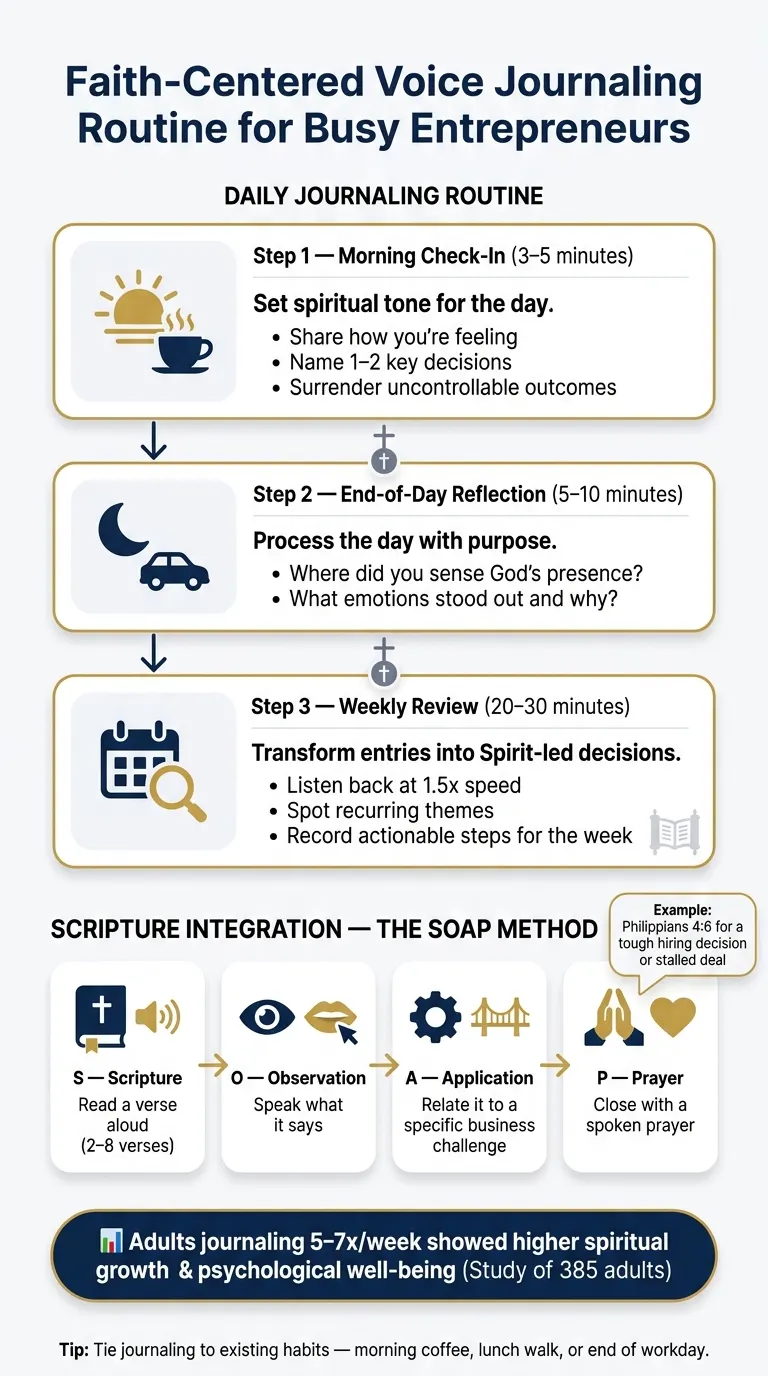
Faith-Centered Journaling Routine for Busy Christian Entrepreneurs
What Voice-Based Journaling Is and Why It Works
Voice-based journaling is a modern twist on the age-old practice of biblical journaling. Instead of writing, you simply speak your thoughts, prayers, and reflections into a device – whether that’s your phone, tablet, or computer. It’s as easy as opening an app, hitting record, and talking through whatever’s on your heart. Then, save it for later. Simple, right?
Here’s the game-changer: voice journaling allows you to capture about four times more content per minute than typing. For an entrepreneur juggling endless meetings and responsibilities, that time-saving edge is huge.
But it’s more than just practical – it often feels like praying in real time. For Christian entrepreneurs, this makes it a deeply personal and spiritually grounding tool.
So, how can you make this habit fit into your packed schedule?
Building a Journaling Routine That Fits an Entrepreneur’s Schedule
One of the biggest missteps entrepreneurs make is thinking they need a full, uninterrupted 30 minutes to journal. Let’s be honest – that’s just not realistic. The key is to weave short, intentional moments into your day.
Here’s how you can start:
- Morning Check-In (3–5 minutes): Kick off your day with a brief session. Talk about how you’re feeling, name one or two decisions weighing on you, and surrender the outcomes you can’t control. It’s a quick way to set a spiritual tone before diving into your work.
- End-of-Day Reflection (5–10 minutes): At the close of your day – whether in your car, on a short walk, or before bed – take a few minutes to reflect. Where did you sense God’s presence? What emotions stood out, and why? This helps you process the day and wind down with purpose.
- Weekly Review (20–30 minutes): Once a week, carve out a slightly longer session. Listen back to entries (at 1.5x speed if you’re pressed for time), and notice recurring themes or emotions. Ask yourself what God might be highlighting and record a new entry with a couple of actionable steps for the week ahead. This transforms your journal into more than just emotional processing – it becomes a guide for Spirit-led decision-making.
To make this routine stick, tie these moments to habits you already have. Maybe it’s right after your morning coffee, during a solo lunch walk, or just before leaving the office. Consistency beats sporadic, lengthy sessions every time.
Once you’ve nailed down a rhythm, it’s easy to include Scripture in your practice.
How to Bring Scripture Into Your Voice Journaling Practice
A helpful framework for incorporating Scripture is read–reflect–respond. Start by selecting a short passage – just 2 to 8 verses – that relates to what you’re going through. Read it aloud slowly, then hit record. Talk about what stands out, what it reveals about God’s character, and how it applies to your current situation. Wrap up by turning the passage into a prayer over your business.
Here’s an example: If you’re facing a cash-flow challenge, Psalm 23 can be a comforting choice. You might pray, “Lord, you say you are my shepherd and I shall not want. Right now, I feel like I’m lacking – clients, cash, clarity. Help me trust that you’re guiding me, even when my bank account feels tight. Show me one wise step to take this week.” This approach connects Scripture directly to your real-life struggles.
Another method is the SOAP approach:
- S: Read a verse aloud (Scripture).
- O: Speak about what it says (Observation).
- A: Relate it to a specific business challenge (Application).
- P: Close with a spoken prayer (Prayer).
For example, Philippians 4:6 – “Do not be anxious about anything, but in every situation, by prayer and petition, with thanksgiving, present your requests to God” – can be a great focus when you’re facing a tough hiring decision or a stalled deal. This method ensures Scripture stays at the center of your practice, rather than being an afterthought tacked onto your worries.
Using Psalmlog for Digital Christian Voice Journaling

How Psalmlog Fits Into a Busy Founder’s Life
Psalmlog bridges the gap between spiritual reflection and the fast-paced life of Christian entrepreneurs. Designed for those constantly on the move, this app allows you to journal by simply speaking your thoughts. The process is straightforward: share what’s on your heart, and Psalmlog transcribes your entry directly on your device. For added privacy, the audio is deleted immediately after transcription, leaving behind only an encrypted text record.
What makes Psalmlog stand out is its AI-powered pastoral response system. Within about 60 seconds, the app offers a six-part response tailored to your entry. This includes a key Bible verse, a reflection on its significance, words of encouragement, a prayer, a practical action step, and a personalized connection to your thoughts. It’s like having a spiritual mentor in your pocket, offering Scripture-based guidance exactly when you need it most.
Key Features Built for Founders
In addition to journaling, Psalmlog provides tools that help you uncover emotional and spiritual patterns over time. The calendar view visually maps out your entries, making it easier to identify trends. For example, you might notice that feelings of anxiety spike during month-end reviews or that your most peaceful days follow mornings spent in prayer.
The insights dashboard takes things further by analyzing recurring emotional and spiritual themes across your entries. Over time, you can track how feelings like fear, gratitude, or clarity shift, offering a deeper understanding of how your faith and business journey intertwine. This feature transforms your journal into a resource for self-awareness, helping you approach leadership with a more grounded perspective.
You can record offline for up to three sessions, which will automatically sync once you’re back online. Plus, your full journal history and AI-guided insights are accessible on both mobile (iOS and Android) and desktop web apps, ensuring you have access wherever you are.
Psalmlog Pricing and How to Get Started
Psalmlog offers flexible plans to accommodate busy schedules and varying needs. The Faith Builder plan costs $19.99/month and includes 300 minutes of recording time – ideal for two five-minute entries per day. For unlimited recording, the Shepherd plan is available at $34.99/month, or $24.99/month when billed annually. Both paid plans come with a 7-day free trial, and you can explore the app’s free tier without needing to provide a credit card.
| Plan | Monthly Price | Annual Price | Voice Minutes |
|---|---|---|---|
| Free | $0 | $0 | Limited |
| Faith Builder | $19.99/mo | $14.99/mo | 300 min/mo |
| Shepherd | $34.99/mo | $24.99/mo | Unlimited |
Getting started is simple: download the app and set a consistent time to record a short entry – perhaps after wrapping up your workday. The AI will highlight a relevant Scripture passage, and you can use the calendar view at the end of the week to review your reflections. The focus isn’t on perfect journaling but on showing up regularly, even for just a few minutes, and inviting God into your daily challenges.
"I used to spend 2–3 hours searching for relevant Scripture when facing big decisions. Psalmlog gives me biblical answers in minutes, right when I need them." – Sarah M., Career Professional
Tracking Spiritual and Emotional Growth Over Time
Journaling isn’t just about writing down your thoughts – it’s a tool for observing your personal and spiritual development. By tracking your progress over time, you can uncover deeper insights that may even influence your business decisions.
How to Spot Emotional and Spiritual Patterns in Your Journal
The real magic of journaling happens when you reflect on past entries. Flipping through your journal can uncover patterns that you might not notice in the moment – shifts in emotional tone, evidence of answered prayers, or signs of spiritual growth.
A simple way to start is by reviewing the past 30 days of entries each month. Look for recurring themes, emotions, or concerns. For instance, you might notice that tough decisions often come after periods of inner tension. This kind of insight helps you understand what’s shaping your choices.
Research backs this up. In a study of 385 adults, those who kept spiritual journals 5–7 times a week showed higher levels of spiritual growth and psychological well-being compared to those who wrote less often. Tools like Psalmlog make this process even easier with features like a calendar view and insights dashboard that highlight recurring themes automatically.
Spotting these patterns prepares you to make more intentional, faith-centered decisions in your personal and professional life.
Using Journaling Insights to Inform Business Decisions
The patterns you find in your journal can provide practical guidance for future decisions. For example, if you notice that stress or uncertainty often precedes difficult choices, you can use this awareness to approach challenges more thoughtfully. Instead of reacting impulsively, you can take deliberate, faith-driven steps.
One focus group participant shared how this process transformed their approach:
"Solving the problems of the day by spiritual diary is self-examination and allowed to remove impurities every day. So the next day, I can be free from the influence of the problem." – Joshua, Focus Group Participant (M/38)
This practice, described by some as a "spiritual recovery cycle", helps you regain clarity more quickly after setbacks. For business founders, especially those facing high-stakes decisions, this quicker recovery can make a big difference. It shifts decision-making from being reactive to being reflective and purpose-driven.
Founders Without Journaling vs. Founders Using Psalmlog
The benefits of journaling become even clearer when comparing founders who journal regularly with those who don’t.
| Feature/Outcome | Non-Journaling Founders | Founders Using Psalmlog |
|---|---|---|
| Decision-Making Clarity | Relies on personal "thoughts and will" | Reframes challenges through God’s perspective |
| Spiritual Recovery | Longer recovery from "soul" setbacks | Faster recovery through daily repentance |
| Psychological Well-Being | Lower Satisfaction with Life Scale (SWLS) scores | Higher levels of psychological well-being |
Conclusion: Facing Business Challenges With Biblical Wisdom Through Journaling
Running a business isn’t easy. The sleepless nights before payroll, the stress of a critical investor call, or the emotional burden of letting someone go – these challenges weigh heavily, even for those with strong faith. But here’s the good news: you don’t have to face them alone.
This guide has shown how faith-centered journaling can offer a safe space to process fears, seek God’s guidance, and reflect on His faithfulness over time. By journaling, you create a record of how God has walked with you through your entrepreneurial journey. Biblical figures like David, Jeremiah, and Paul exemplified Christian journaling techniques – they didn’t hide their struggles but brought them to God through honest words. That same approach is available to you, whether it’s during a hectic workday or a quiet moment on your commute.
The takeaway? Journaling helps you respond with wisdom instead of reacting impulsively. Philippians 4:6–7 encourages us to bring our worries to God with thanksgiving, and journaling provides a practical way to live that out. Entrepreneurs who embrace this habit often find themselves more grounded, more aware of God’s direction, and better prepared to make decisions that align with their values.
If staying consistent has been a challenge, Psalmlog can help. After a tough meeting, you can open the app, speak your thoughts for just two minutes, and receive a personalized response rooted in Scripture. It includes a relevant verse, reflection, encouragement, prayer, a practical next step, and a connection back to your own words – all delivered in about 60 seconds. No need for polished writing or a perfect setting – just honesty.
Take the first step today: open Psalmlog, select a verse like James 1:2–5 or Proverbs 3:5–6, hit record, and share what’s on your heart about your business struggles. Your first entry is free, and no credit card is required. The tough moments of building a business don’t have to push you away from your faith – with the right habits, they can actually bring you closer to it.
FAQs
What should I talk about if I don’t know how to journal?
If you’re not sure where to begin with journaling, start small and aim for consistency. Think of journaling as having a personal conversation with God – there’s no need to stress over finding the perfect words or creating a structured format.
You can use prompts like “What’s on my heart today?” or “How do I want to feel after this session?” to guide your thoughts. If writing feels overwhelming, try speaking your thoughts out loud instead. This can help you express your emotions more naturally, without the added pressure of putting pen to paper.
How do I keep journaling consistent when my schedule is chaotic?
To make journaling a regular part of your routine, try linking it to something you already do daily, like enjoying your morning coffee or during your commute. If writing feels like a hassle, consider voice journaling for quick 5- to 10-minute sessions – no pen or desk required. Setting phone alarms can help remind you, and tracking your progress lets you celebrate milestones along the way. Miss a day? No worries – just focus on consistent, small steps to keep your spiritual practice on track.
Is my journal private and secure in Psalmlog?
Yes, your journal entries and voice recordings in Psalmlog are kept private and secure. Voice data is processed directly on your device and deleted immediately after transcription. Any saved journal text is encrypted while stored. Psalmlog does not sell your data, and its AI services are contractually prohibited from using your prayers for training purposes. Your reflections are safeguarded, ensuring they remain personal – just between you and God.