
Ultimate Guide to Scripture-Based Reflection
Explore practical methods for scripture reflection, including Lectio Divina and the SOAP method, to deepen your spiritual connection and growth.
Scripture-based reflection is a simple yet meaningful way to engage with the Bible. It involves reading, meditating, and praying over passages to connect with God personally. Key methods include Lectio Divina (a meditative process), the SOAP method (Scripture, Observation, Application, Prayer), and verse mapping (a detailed study of single verses). Modern tools like Psalmlog can help you organize and deepen your reflections using features like 6-point AI biblical guidance, voice journaling, and scripture tagging. Start small – just 5 minutes a day – and build a consistent habit to grow spiritually. Whether you prefer quiet meditation or practical journaling, this approach can help you apply scripture to your daily life.
What does Scripture say about journaling?
The Bible never commands journaling, but it repeatedly commands writing things down so they are remembered. God tells Moses to "write this on a scroll as something to be remembered" (Exodus 17:14), tells Habakkuk to "write down the revelation" (Habakkuk 2:2), and Psalm 102:18 says "let this be written for a future generation." Israel's kings were to copy out the law by hand (Deuteronomy 17:18). The Psalms themselves are recorded prayers. Journaling is one way of following that pattern.
How To Study the Bible Using the S.O.A.P. Method | Real Time Bible Study (Romans 8:1-8)
Core Methods for Scripture Reflection
Engaging deeply with God’s Word can be transformative, and throughout history, believers have relied on specific methods to enrich their understanding and spiritual connection. Here are three time-tested approaches to guide your personal journey with scripture.
Lectio Divina: A Time-Honored Practice
Lectio Divina, which translates to "divine reading" in Latin, is a reflective practice that dates back to the early Church. This method is designed to foster a meditative and prayerful connection with scripture, unfolding in five distinct stages:
- Preparation: Choose a passage of scripture – this could be part of your daily reading or verses like Psalm 86:11–13 or John 1:1–14. Find a quiet, undisturbed space. Take a moment to calm your mind, focus on your breathing, and pray for an open heart to hear God’s voice. Some people light a candle as a visual cue for reflection.
- Lectio (Reading): Read the passage slowly, preferably aloud, and repeat it several times. Allow yourself to notice any word or phrase that resonates with you.
- Meditatio (Reflecting): Reread the passage, focusing on the word or phrase that stood out. Contemplate its meaning and what God might be communicating to you through it.
- Oratio (Responding): Respond to God in prayer, sharing your thoughts, feelings, and reflections. Journaling during this stage can help you record your dialogue with God.
- Contemplatio (Resting): Conclude by reading the passage one final time and spending a few moments in silent contemplation. This quiet resting in God’s presence can deepen your spiritual awareness and sense of connection.
The SOAP Method: Simple and Effective
The SOAP method is a straightforward way to engage with scripture daily. It stands for Scripture, Observation, Application, and Prayer:
- Scripture: Write out the verse or passage you’re studying.
- Observation: Note what stands out to you – key themes, repeated words, or significant insights.
- Application: Reflect on how the passage relates to your life and how you can live it out.
- Prayer: Conclude by speaking with God, asking for guidance and understanding.
This method is practical and accessible, making it a great tool for turning scripture into actionable, personal lessons.
Verse Mapping: A Deep Dive into Scripture
For those seeking a more detailed study, verse mapping provides an in-depth approach. This method focuses on a single verse or a small passage, breaking it down to uncover layers of meaning. Using tools like mind mapping, annotations, and word studies, verse mapping helps you understand scripture within its broader context.
To begin, start with prayer, asking for insight and clarity. Then, follow these steps:
- Write out the verse, leaving space around it for notes and annotations.
- Highlight key words or phrases and explore their meanings, including their original language definitions.
- Compare different translations to notice variations in wording.
- Research the historical and cultural context, as well as any cross-references that connect to the verse.
This focused study not only clarifies the passage but also enriches your understanding of the Bible as a whole, making scripture feel more personal and alive.
Each of these methods offers a unique way to engage with scripture, allowing you to deepen your faith and grow in your spiritual journey. Whether you prefer the meditative rhythm of Lectio Divina, the practicality of SOAP, or the detailed exploration of verse mapping, these practices can help you connect with God’s Word in meaningful ways.
Voice Journaling for Spiritual Growth
Voice journaling offers a simple and natural way to capture your thoughts and spiritual reflections. For many, it feels more immediate and personal than writing, especially when navigating complex emotions or profound spiritual moments. Christians often find that speaking their reflections aloud creates a deeper sense of connection with God, much like an intimate, heartfelt prayer.
Benefits of Voice Journaling
Speaking your thoughts aloud can create a unique, multisensory experience that enhances emotional expression and spiritual understanding. Unlike writing, which can sometimes feel restrictive, voice journaling allows your ideas to flow freely, helping you process your feelings more naturally. Plus, audio recordings preserve the tone and emotion behind your words, adding depth to your spiritual reflections.
How to Start Voice Journaling
Begin by choosing a quiet, private space where you won’t be interrupted. A consistent environment can help you mentally prepare for reflection and create a sense of ritual.
Start each session by reading a scripture passage aloud. This practice helps you focus, deepens your connection to the text, and creates an audio record of both the scripture and your reflections. Read slowly and with intention, letting the words resonate before transitioning into your personal reflections.
To guide your thoughts, consider using prompts like:
- What stands out in this passage?
- How does this passage relate to my current life?
- What might God be revealing to me through this?
Take short pauses to reflect and respond to these questions. Initially, keep your sessions brief – 5 to 10 minutes is a good starting point. This helps you ease into the practice without feeling overwhelmed. Over time, as you grow more comfortable, you can naturally extend your sessions to 15 or 20 minutes.
Reviewing Your Voice Journal Entries
Regularly revisiting your recordings can help you track your spiritual growth and notice recurring themes in your reflections. As Jeanne Nangle, Coach and Award-Winning Inspirational Self-Help Author, advises:
"Review your entries: Periodically read through past entries to track your growth and identify recurring themes."
When listening back, approach your recordings with gentle curiosity. Avoid judging yourself; instead, focus on observing patterns – whether it’s repeated prayers, ongoing struggles, or shifts in your understanding. This reflective process not only highlights your spiritual journey but also fosters a compassionate dialogue with yourself. Over time, you may begin to see how challenges have shaped your character and strengthened your faith.
To make this practice a habit, consider setting a regular schedule for reviewing your recordings. For example, you might listen to the past week’s entries every Sunday or reflect on a full month’s recordings at the beginning of the next month. This consistent review transforms your voice journal into a powerful tool for self-awareness and spiritual growth.
For those who prefer a more organized approach, digital platforms like Psalmlog can simplify the process. These tools allow you to record your reflections, tag them with relevant scriptures, and easily organize them for future review. In the next section, we’ll explore how these digital tools can further enrich your spiritual practice.
Digital Tools for Scripture Meditation and Journaling
Modern technology has brought new ways to deepen scripture reflection without losing its spiritual essence. Digital journaling tools can help you stay consistent and track your spiritual growth over time. Let’s dive into how Psalmlog integrates these benefits into your daily devotional practice.
Psalmlog‘s Main Features
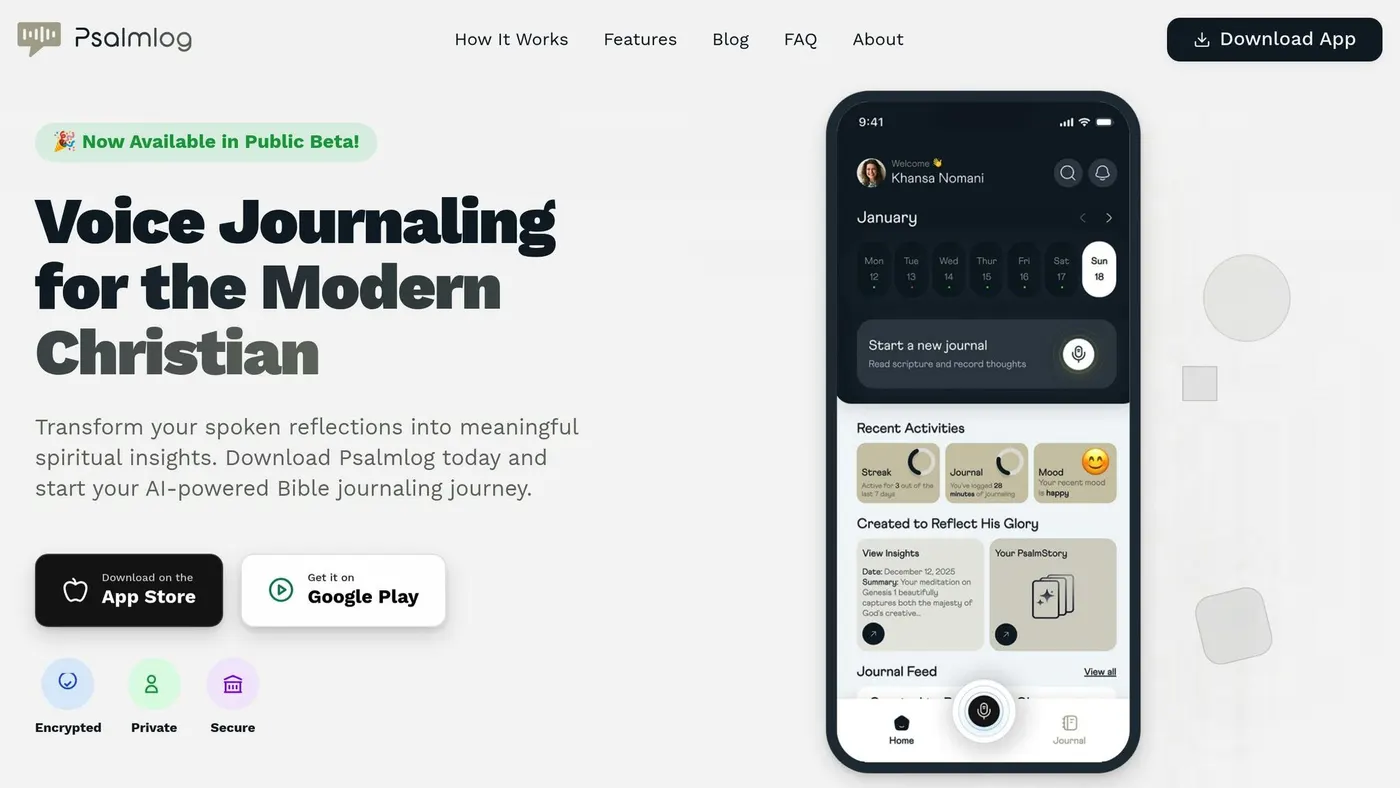
Psalmlog takes scripture-based journaling to a new level with its 6-point AI biblical guidance. Every entry – written or spoken – receives Scripture-anchored interpretation, prayer prompts, and a practical “Walking it out” application step. Voice journaling (available on Faith Builder and higher) lets you speak your reflections directly into the app, making it easier to express your thoughts naturally, without the pressure of finding the perfect words.
The app’s seamless Bible integration allows you to tag key scripture passages, creating a searchable library of your insights across multi-lingual translations. It also uses AI-powered tools to analyze your entries, helping you uncover patterns and connections between your reflections and scripture. These insights support your spiritual journey, highlighting recurring themes in your walk with God, while leaving the interpretation and discernment up to you.
Psalmlog organizes your entries by analyzing emotional tone, biblical principles, and practical applications. Through pattern recognition, you can track your emotional and spiritual journey, offering a clearer picture of how God is working in your life.
Privacy is a top priority. Entries are stored on secure managed infrastructure, and the AI providers Psalmlog uses are contractually prohibited from training on user content. This means you can be open and honest in your journaling without concerns about your reflections being used to train models.
The Insights Dashboard visually tracks your spiritual growth. It highlights emotional trends, scripture connections, and recurring themes in your reflections. Faith Builder includes a basic dashboard; Shepherd unlocks the full version plus a weekly spiritual pulse summary. You can also share parts of your journey using the Psalmstory feature, which creates visual summaries to inspire others – all while keeping your private thoughts protected.
How Psalmlog Works with Traditional Methods
Psalmlog doesn’t replace traditional spiritual practices – it enhances them. Whether you follow Lectio Divina, SOAP, or verse mapping, the app complements these methods with digital tools that make your practice more organized and accessible.
For those practicing Lectio Divina, Psalmlog’s voice journaling feature captures your spontaneous meditations during the meditatio phase. You can also tag specific verses that resonate with you, creating a deeper connection to the scripture.
If you prefer the SOAP method (Scripture, Observation, Application, and Prayer), you can speak each step directly into the app. Psalmlog’s AI tools then help identify patterns across multiple entries, revealing insights you might have missed.
For verse mapping, Psalmlog’s scripture assistant provides contextual insights, word meanings, and cross-references. You can record your discoveries as you explore the text, making it easy to revisit and deepen your understanding.
Adding Scripture Reflection to Daily Life
Incorporating daily scripture reflection into your routine can profoundly enrich your spiritual journey. By combining traditional practices with modern tools, you can create a consistent habit that nurtures your connection with God. Much like voice journaling or structured reflection techniques, these practices help maintain a meaningful dialogue with Him.
Building a Daily Reflection Habit
Start small – just five minutes is enough. Trying to dedicate an hour right away can feel overwhelming. Instead, begin with a manageable five-minute session and build from there.
Create a dedicated space and time for reflection. A quiet, distraction-free spot with your Bible and a comfortable seat works wonders. For many, early mornings are ideal, offering a chance to set a spiritual tone for the day before life’s distractions kick in. Others may prefer evenings to reflect on the day’s events through the lens of scripture.
Set digital reminders. Use your phone to set a daily alarm labeled with something meaningful, like "Time with God" or "Scripture Reflection." These gentle nudges can help you stay on track.
Visualize your progress. Mark each day you reflect on a calendar or use tools like Psalmlog’s dashboard to track your consistency. Seeing your streak grow can be motivating, and if you miss a day, it’s a chance to recommit without guilt.
Embrace imperfection. Life happens, and you might miss a day. What matters most is picking up where you left off and continuing your practice without unnecessary self-criticism.
Pairing Reflection with Other Spiritual Practices
Begin and end with prayer. Starting your reflection with prayer invites God into the process, and ending with prayer creates a natural transition from listening to speaking with Him.
Link scripture to worship. Pair your reflection with hymns or worship songs that align with the passages you’re studying. For example, after reading a psalm about God’s faithfulness, listen to songs celebrating His reliability. This approach engages multiple senses and deepens your connection to the scripture.
Take it outdoors. When the weather allows, reflect in nature. Whether it’s walking while listening to scripture or sitting in a garden, being surrounded by creation can enhance your sense of God’s presence.
Turn reflection into action. After reading passages about compassion or justice, look for ways to live out those principles in your daily life. This transforms reflection from a passive activity into a practice that impacts the world around you.
Combine reflection with fasting. During fasting periods, use mealtimes for extended scripture reflection. The physical discipline of fasting often sharpens spiritual awareness, creating space for deeper meditation.
Once your reflection habit is established, you’ll likely encounter challenges. Addressing these obstacles thoughtfully can help you maintain consistency.
Solving Common Reflection Challenges
Pressed for time? Use commutes or breaks to reflect. Meditate on a single verse while driving, waiting in line, or during lunch. Tools like Psalmlog’s voice journaling feature make it easy to record quick reflections on the go.
Struggling to focus? Try the "verse of the day" method. Instead of tackling long passages, choose one meaningful verse and revisit it throughout the day. Let its message sink in with each encounter.
When scripture feels dry or confusing, don’t force it. Sometimes, reflection is simply about sitting with God’s word, even if it doesn’t immediately resonate. Write down your questions or doubts – they often lead to deeper insights later.
For busy parents or caregivers, involve your family. Read scripture aloud during breakfast or car rides, then reflect privately on those passages later. This creates shared spiritual moments while preserving your personal practice.
Find your natural rhythm. If mornings feel rushed, try reflecting in the evening. Reviewing your day through scripture can be equally powerful. Use tools like Psalmlog to record how biblical principles shaped your experiences.
Feeling unmotivated? Remember, spiritual disciplines aren’t always emotionally rewarding. Some days may feel routine or uninspired, but consistency during these times often leads to unexpected growth.
Frequent traveler? Develop portable habits. Download scripture apps for offline use, sync your Psalmlog journal across devices, and look for quiet moments in hotel rooms or airports to reflect.
Conclusion: Growing Spiritually Through Scripture Reflection
Reflecting on Scripture transforms casual reading into a deeply personal journey of spiritual growth. Practices like Lectio Divina, the SOAP method, and verse mapping each offer unique ways to connect with God’s word in a meaningful way.
One particularly personal approach is voice journaling. Speaking your reflections out loud creates a raw, honest record of your spiritual journey. Listening back to these recordings can highlight patterns in your growth and moments where God’s voice feels especially clear.
For those looking to blend tradition with technology, tools like Psalmlog bring a modern edge to Scripture reflection. With features like 6-point AI biblical guidance, scripture tagging, and an insights dashboard, it provides a fresh way to engage. Beginners can start free (3 lifetime entries, no credit card), or unlock the full 6-point AI guidance with the Seeker plan at $9.99/month. Voice journaling unlocks on Faith Builder ($19.99/month with 300 min/mo). All paid plans include a 7-day free trial – see full pricing.
No matter which method or tool you choose, consistency is what truly matters. A few minutes of daily reflection will nurture your faith far more than occasional, lengthy sessions. Whether you prefer the structured focus of SOAP, the meditative stillness of Lectio Divina, or the flexibility of voice journaling during a busy commute, the key is to start where you feel most comfortable.
Your approach can evolve as your spiritual needs change. Mix and match methods – use verse mapping for challenging passages, turn to voice journaling when emotions feel overwhelming, or stick to written reflection when you need to process your thoughts slowly and deliberately.
Remember, Scripture reflection isn’t about achieving perfect understanding every time. Just showing up is often enough. Those simple, everyday moments of reflection can become the foundation for profound spiritual growth.
Take the first step today. Choose one verse, set aside five minutes, and try a method that resonates with you. Let that small act open the door to a deeper connection with God.
FAQs
What are some practical ways to fit scripture reflection into a busy daily routine?
Incorporating scripture reflection into a busy day doesn’t have to be overwhelming. By building a few intentional habits, you can make it a natural part of your routine. For instance, carve out a few minutes in the morning or before bed to read or meditate on scripture. If you’re often on the go, listening to audio scriptures or devotionals during your commute is an easy way to stay connected without needing extra time.
Tools like Bible apps with daily reading plans or journaling prompts can help you stay organized and focused. You can also transform everyday moments into times of reflection – try praying while cooking or meditating on scripture during a walk. These small adjustments can make scripture reflection feel like a seamless addition to your day.
How do digital tools like Psalmlog improve scripture reflection and complement traditional practices?
Digital tools like Psalmlog have made reflecting on scripture easier and more engaging than ever before. With features like 6-point AI biblical guidance, voice journaling, scripture tagging, and an insights dashboard, these tools help users form a deeper connection with scripture in ways that feel personal and meaningful. Whether you’re at home or on the go, they allow you to reflect at your own pace, making it easier to stay consistent in your spiritual journey.
By blending modern technology with timeless spiritual practices, Psalmlog helps you meditate on scripture, monitor your spiritual growth, and build a reflection routine that fits naturally into your everyday life.
How can I decide between Lectio Divina, the SOAP method, and verse mapping for scripture reflection?
Choosing how to reflect on scripture often comes down to what aligns with your spiritual goals and personal preferences. If you’re drawn to a calm, meditative approach that emphasizes listening to God’s word, Lectio Divina might be your go-to. Prefer a more structured method that helps you apply biblical lessons to your daily life? The SOAP method could be a great fit. On the other hand, if you’re intrigued by diving deep into scripture – exploring its context, cross-references, and hidden layers of meaning – verse mapping might be the perfect choice.
Think about what speaks to you the most: quiet contemplation, practical steps, or a deep analytical dive. You can always try each method to discover which one feels most aligned with your spiritual journey.