
How to Create a Devotional Plan That's Actually Relevant to Your Life
Build a short, practical devotional plan tied to your real struggles: identify needs, choose Scripture, journal, act, and adjust as life changes.
Most devotional plans fail to connect because they’re too generic. To make your devotional time meaningful, focus on your unique challenges and current needs. Here’s how you can create a personalized plan:
- Identify your struggles: Job stress? Relationship issues? Health concerns? Start with what’s weighing on you.
- Choose relevant Scripture: Find verses that speak to your situation, connecting Bible verses to daily reflections like peace for anxiety or forgiveness for strained relationships.
- Set a simple routine: Make it fit your schedule – just 10-15 minutes a day is enough to start.
- Reflect and act: Apply what you learn to real-life decisions and track your spiritual growth.
- Review and adjust: Life changes – your plan should too. Regularly revisit and update it.
Tools like Psalmlog can make this process easier by helping you spot patterns in your prayers, suggesting tailored Scriptures, and organizing your devotional journey. The goal? A devotional practice that feels like a conversation with God, not a chore.
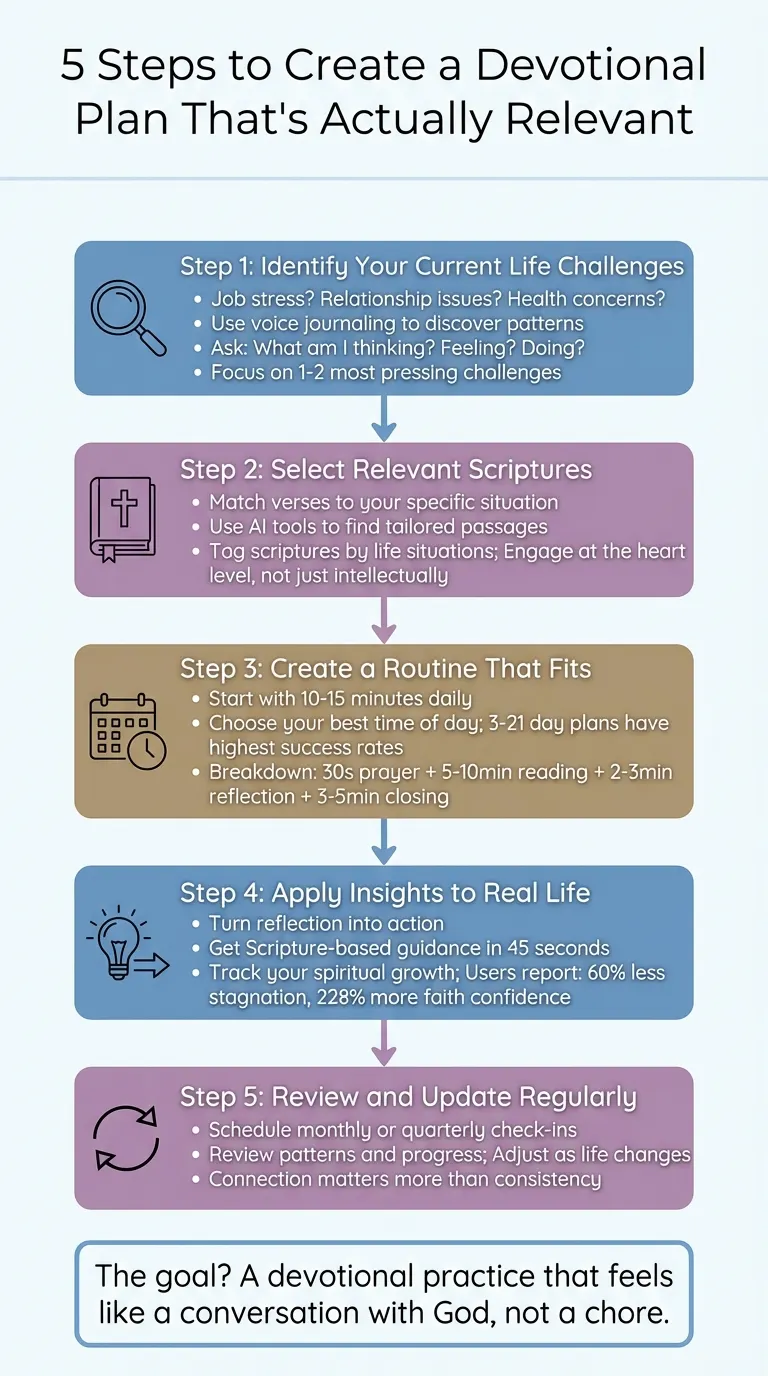
5-Step Process to Create a Personalized Devotional Plan
It’s Personal Now (Bible Study just for YOU!!!)
Step 1: Identify Your Current Life Challenges and Spiritual Needs
To create a devotional plan that truly resonates, start by pinpointing your current challenges. Are you wrestling with a tough career decision? Dealing with a strained family relationship? Maybe health concerns have left you feeling anxious. Let these personal struggles guide how you shape your devotional time.
Often, we’re not fully aware of the patterns in our lives. One day, you might pray about job stress, the next about relationship tensions, and later about financial worries. These scattered concerns could be pointing to a deeper need – perhaps for peace, trust, or clarity. A great tool to uncover these hidden patterns is connecting voice journaling with Scripture.
Discover Patterns Through Voice Journaling
Voice journaling is a simple yet powerful way to explore what’s weighing on your heart. As you speak your thoughts, prayers, and struggles aloud, tools like Psalmlog can capture these reflections and use sentiment analysis to help you identify recurring themes. Over time, you might notice repeated mentions of feeling overwhelmed or persistent worries about loved ones. These patterns can shine a light on your most pressing spiritual needs.
Kaitlin Kamp, Social Media Specialist at ReFrame Media, explains the value of reflection:
"Writing out prayers gives you the opportunity to look back and see how God has been working in your life".
The same principle applies to voice journaling. Reviewing past entries can reveal where you need God’s guidance most.
After each voice journal session, try asking yourself three simple questions based on the "Head, Heart, Hands" framework:
- What am I thinking about?
- What am I feeling or desiring?
- How am I acting in response?
This approach helps you examine your spiritual state from multiple angles, making it easier to connect your devotional practices to your daily life.
Prioritize Your Most Pressing Challenges
Once you’ve identified recurring themes, avoid the temptation to address everything at once. Using a spiritual growth goal planner can help you stay organized during this process. As Micah Maddox wisely advises:
"Do not get stuck in a rut, quit, or give up because you cannot keep up with a plan you thought seemed amazing but now is overwhelming".
Instead, focus on one or two challenges that need immediate attention. For instance, if your voice journaling reveals several struggles, start with the one disrupting your life the most right now. Maybe financial worries are keeping you up at night, or a strained relationship is weighing heavily on your heart. Zeroing in on the most urgent issue allows you to give it the attention it deserves.
This focused approach aligns with what researchers call "narrow reading" – spending several days immersed in the same Scripture passage or theme so its message can deeply resonate. You’re not ignoring other concerns; you’re simply prioritizing what needs God’s guidance most in this moment. As James 1:5 reminds us:
"If any of you lacks wisdom, let him ask of God, who gives to all liberally and without reproach, and it will be given to him".
Begin by praying for the wisdom to discern which challenge requires your focus right now. From there, let your devotional time flow naturally toward addressing that need.
Step 2: Select Scriptures That Address Your Specific Situation
Once you’ve pinpointed your biggest challenge, the next step is finding Scripture that speaks directly to it. Whether you’re dealing with financial strain, relationship troubles, or a tough career choice, focus on verses that align with your specific situation.
The goal is to match your emotional state and life circumstances with relevant passages. For example, if anxiety keeps you up at night, look for verses about peace and trust. If you’re navigating a strained relationship, focus on passages about forgiveness and reconciliation. As Crossway explains:
"Reading the Bible devotionally is about engaging with the text at the heart level."
This means choosing Scripture that not only teaches but also stirs heartfelt prayer, making it a personal and meaningful experience. With your challenge in mind, let Psalmlog guide you to the verses that speak to your heart.
Use Psalmlog‘s Scripture Assistant to Find the Right Verses
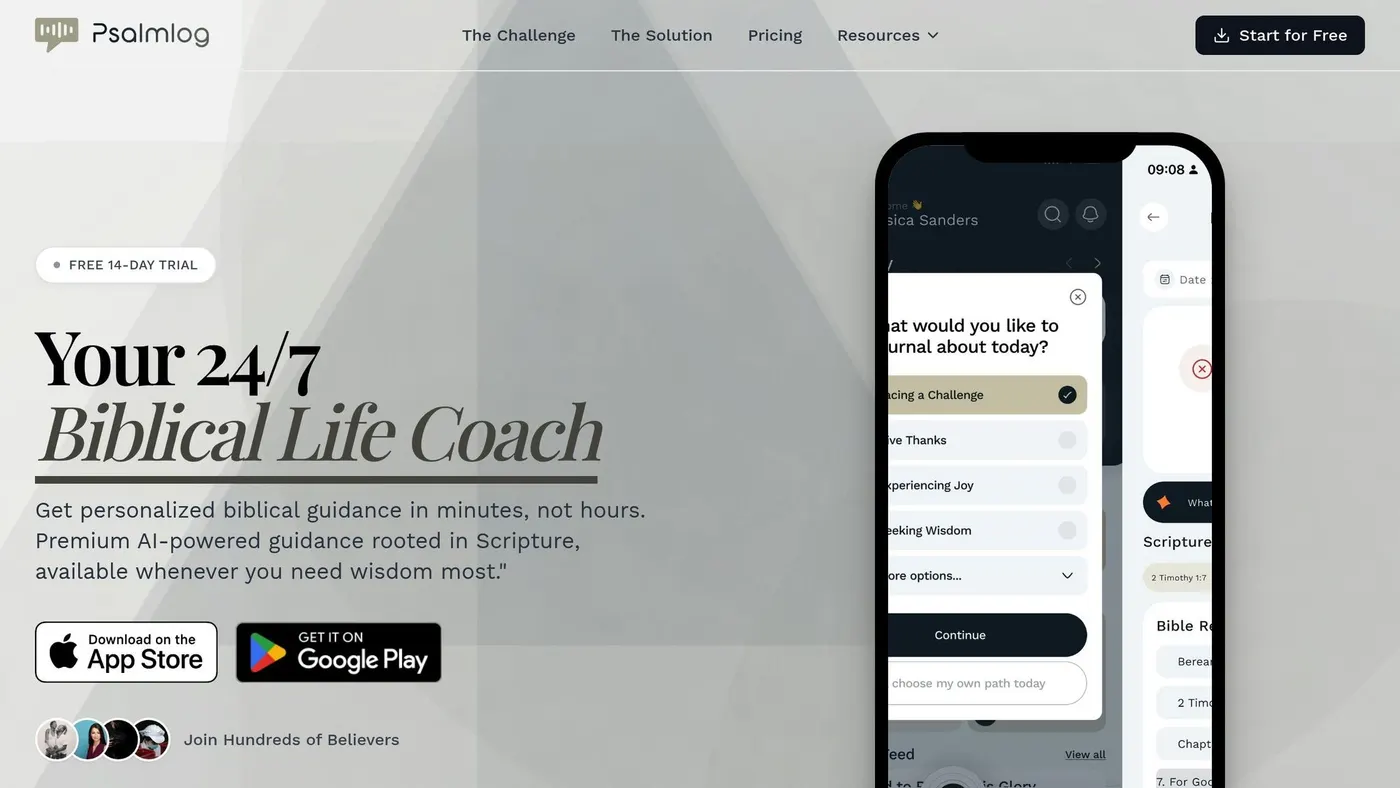
When life feels overwhelming, finding the perfect verses for scripture-based reflection can seem daunting. That’s where Psalmlog’s Scripture Assistant can make all the difference. After your journaling session, Psalmlog’s AI assistant analyzes your needs and suggests Bible passages tailored to your specific challenges. This not only saves you time but also ensures you’re reading Scripture that truly resonates with your current season.
By using the patterns identified in Step 1, the assistant links your emotions and circumstances to passages that offer the most relevant guidance and encouragement.
Tag and Organize Scriptures for Easy Access
Once you’ve found the verses that resonate, take the time to organize them for future use. Tagging these Scriptures by life situations or emotions – such as "work stress" or "parenting challenges" – makes it easy to revisit them when similar issues arise. Psalmlog’s voice-based tagging system simplifies this process. Just speak a tag after reading a meaningful passage, and it’s instantly categorized for later reflection.
Step 3: Create a Devotional Routine That Fits Your Schedule
Now that you’ve identified your challenges and chosen your Scripture, it’s time to craft a devotional routine that works for you. The goal isn’t to create a complicated plan – it’s to design something simple and manageable. As Micah Maddox, author and speaker, wisely shares:
"Daily devotion is more about loving God and developing a relationship with Him, rather than developing a schedule."
Your devotional time should feel like a natural extension of your day, not just another task to check off. Think about when you’re most focused – whether it’s early in the morning, during a quiet lunch break, or before bed – and choose a spot where distractions are minimal. This thoughtful approach helps your routine become a seamless part of your daily life.
Set Realistic Daily or Weekly Goals
Start small and keep it achievable. Research shows that Bible reading plans for new Christians lasting 3 to 21 days tend to have the highest success rates. If this is new to you, begin with just 10 to 15 minutes a day. Break it down like this: 30 seconds for an opening prayer, 5–10 minutes for reading Scripture, 2–3 minutes for reflection, and 3–5 minutes for a closing prayer.
Avoid overcommitting, like attempting to read several chapters multiple times a day. Mary Lou Redding from Upper Room offers this encouragement:
"If you are just beginning to take time for reading the Bible and praying, plan to spend about ten minutes. As you become more comfortable with the process, you may find yourself spending a longer time."
And if life happens and you miss a day? Don’t stress. Just pick up where you left off instead of trying to catch up all at once.
Use Psalmlog’s Calendar and Insights to Track Your Sessions
Once you’ve established your routine, keeping track of your progress can help you stay consistent. Tracking turns occasional devotion into a steady habit. Psalmlog’s calendar feature lets you see your devotional history at a glance, helping you recognize patterns and hold yourself accountable. After each voice journaling session, you’ll receive personalized 6-point AI insights. These reflections guide you to focus on what God wants you to know (Head), value (Heart), and do (Hands). This added layer of reflection often brings a deeper understanding of Scripture than a simple reading alone. This is why many find it helpful to use a Living Application Study Bible to bridge the gap between ancient text and modern life.
Over time, your calendar becomes a meaningful record of your spiritual journey – especially during moments when your focus feels scattered or prayers seem distant. To stay on track, set reminders on your phone to protect your devotional time. As Ken Anema, an instructor at Divine Hope Reformed Bible Seminary, advises:
"Do not underestimate the powerful impact of small consistent routines."
Step 4: Apply Your Devotional Insights to Real-Life Decisions
Scripture has the power to shape your life – but only if you put it into action. As GrowChurch wisely says, "Truth is powerless unless applied". Your devotional time isn’t just about soaking up meaningful ideas; it’s about equipping yourself to handle life’s challenges. Whether you’re navigating a tough conversation at work, facing a parenting struggle, or weighing a major career decision, the goal is to turn reflection into action.
Turn Challenges into Action with Psalmlog
Got a challenge you’re wrestling with? Psalmlog makes it easy to find guidance rooted in Scripture. Simply record a quick 45-second voice note, and within a minute, you’ll receive personalized, Scripture-based insight tailored to your situation. This isn’t one-size-fits-all advice – it’s wisdom that speaks directly to your unique circumstances.
Take Sarah M.’s story, for example: "Psalmlog’s Scripture on trusting God’s plans shifted my perspective on a job offer, giving me total peace". By focusing on your specific needs, Psalmlog helps you process real-time stress without waiting days for a pastoral appointment. It’s guidance when you need it most.
Track Your Growth and Stay Accountable
Once you’ve applied Scripture to your life, the next step is to monitor its impact. Psalmlog’s insights dashboard is designed to help you see your progress over time, uncover patterns, and prevent spiritual stagnation. Users report a 60% reduction in spiritual stagnation and a 228% boost in faith confidence. This kind of reflection ensures your devotional practices stay aligned with your current season of life.
To stay on track, set up regular accountability reminders – whether that’s adding a note to your calendar or asking a trusted friend to check in with you. Journaling can also be a powerful tool. Record key moments alongside relevant Bible passages to create a timeline of God’s guidance in your life. This visual record not only deepens your faith but also serves as a reminder of how far you’ve come when new challenges arise.
Step 5: Review and Update Your Devotional Plan Regularly
Life is always shifting – whether it’s career changes, health challenges, or evolving relationships. Your devotional plan should shift with it. As Mary Lou Redding wisely puts it, "No one devotional pattern will work for everyone. And no one way works for anyone all of the time". The goal is to notice when your routine starts to feel stagnant and make thoughtful adjustments to keep it meaningful.
Review Your Patterns and Progress
As you incorporate Scripture into your life, make it a habit to pause and reflect on your devotional journey. Schedule a regular check-in – maybe on the first day of each month or every quarter – to evaluate what’s helping you grow and what might need tweaking. This isn’t just about tracking habits; it’s about checking in on your relationship with God. Tools like Psalmlog’s sentiment trends can highlight recurring themes in your reflections. For instance, if your journaling often touches on anxiety or gratitude, those patterns might reveal areas where God is working in your life or where you need fresh perspective.
Consistency matters, but genuine connection is even more important. If you catch yourself skimming through Scripture just to "get it done", that’s a signal to reassess. Similarly, if you notice frequent gaps in your devotional time, dig into the reasons behind them rather than simply pushing yourself to do more. Once you’ve identified what’s working and what’s not, it’s time to refresh your plan. This is especially helpful if you feel stuck in your spiritual growth.
Adjust Your Plan as Your Life Changes
Major life changes often call for a new approach. A new job, shifting family dynamics, or even evolving spiritual needs might mean it’s time to recalibrate your devotional routine. Start with small, realistic changes. If you’ve fallen behind, don’t stress about catching up – just restart with a simple 10-minute goal. Feeling uninspired by reading? Try switching to an audio Bible or take a reflective walk while you pray. Remember, your devotional plan is there to support you, not to become a burden.
Conclusion
Shaping a devotional plan that truly resonates with your life doesn’t have to be complicated. Start by pinpointing your challenges, choosing Scriptures that speak to your situation, creating a routine that fits your lifestyle, applying what you learn to daily decisions, and reflecting on your progress. Using a spiritual reflection planner can help you stay consistent. Each step brings you closer to a devotional practice that feels more like a heartfelt dialogue with God than a task to check off.
As Micah Maddox beautifully puts it:
"Getting close to God is not about a reading plan, a calendar, a set of rituals, or even a prayer closet. It is all about a devoted heart".
While structure has its place, the heart of your devotional time is your relationship with God. It should be a source of strength during career shifts, relationship challenges, health concerns, and the daily pressures of life – not another obligation weighing you down.
Psalmlog simplifies the process by combining voice journaling, a Scripture Assistant, and calendar insights into one seamless tool. Instead of juggling different resources or feeling unsure about where to begin, you’ll have everything you need in one place to create and sustain a devotional plan that adapts as you grow.
So, take the first step today – even if it’s just 10 minutes. Spend that time in prayer and Scripture, because, as Micah Maddox reminds us:
"The heart’s devotion is not toward an exercise, but toward the Savior".
Your personalized devotional journey is ready to begin, designed to support you and grow alongside you.
FAQs
How can I figure out which spiritual challenges I should focus on?
Start by carving out a quiet, consistent time in your day – whether it’s in the morning before the chaos begins or in the evening when things have settled. Use this time to reflect and seek clarity. Begin by reading a short Bible passage and inviting God to show you areas where you might be struggling or in need of guidance. As you do this, pay attention to any emotions or thoughts that surface. These could be tied to concerns about work, relationships, health, or anything else weighing on your heart. Write these reflections down in a journal. If writing feels like a hurdle, Psalmlog’s voice-first journaling can simplify things, allowing you to record your thoughts anytime, hands-free.
Over the next week or two, take a step back and review your notes. Look for recurring themes – they often highlight the challenges that need your attention most. To help prioritize, ask yourself questions like: What’s robbing me of peace right now? or Which issue feels the most pressing? By focusing your devotional time on these core areas, you can craft a plan that addresses your current struggles and strengthens your connection with God.
What’s the best way to make Scripture a meaningful part of my daily life?
To make Scripture a meaningful part of your daily life, think of it as a priority, much like any other important commitment. Pick a time that works best for you – whether it’s in the morning, during lunch, or in the evening – when your mind is clear and focused. Create a quiet space where you can reflect without distractions. Start with something manageable, like reading a single verse, jotting down your thoughts, or saying a brief prayer for direction.
Apps like Psalmlog can help you stay on track and organized. You can use it to save verses, record voice notes, or tag passages you want to revisit. A great way to deepen your connection is by writing out a verse, interpreting it in your own words, and setting a small intention for the day. For instance, you might decide, "Today, I’ll focus on being more patient in conversations."
Wrap up your devotional time with a short prayer, asking for wisdom to live out what you’ve learned. By keeping the practice simple and personal, Scripture can become a steady source of encouragement and guidance in your daily routine.
How can I tell when it’s time to adjust my devotional plan?
Sometimes, it might be time to rethink your devotional plan. If it starts to feel monotonous, doesn’t fit into your schedule, or no longer speaks to your current spiritual needs, it’s worth considering a change. Life transitions – like starting a new job, changes in relationships, or health challenges – can also signal that it’s time to adjust your approach.
Your devotional plan should evolve alongside you. If it’s becoming a struggle to maintain or feels out of sync with your daily life, take a moment to reflect and realign it with your current goals and priorities. Keeping it relevant ensures your devotional time remains meaningful and enriching.