
How to Move from Bible Reading to Bible Application
Learn a five-step method: voice journaling, AI insights, practical steps, tracking, and review to turn Bible reading into real-life spiritual change.
Feel like your Bible reading isn’t changing your daily life? You’re not alone. Many struggle to connect Scripture with real-world actions. The key is moving beyond reading for knowledge and focusing on applying biblical truths in practical ways. Here’s how:
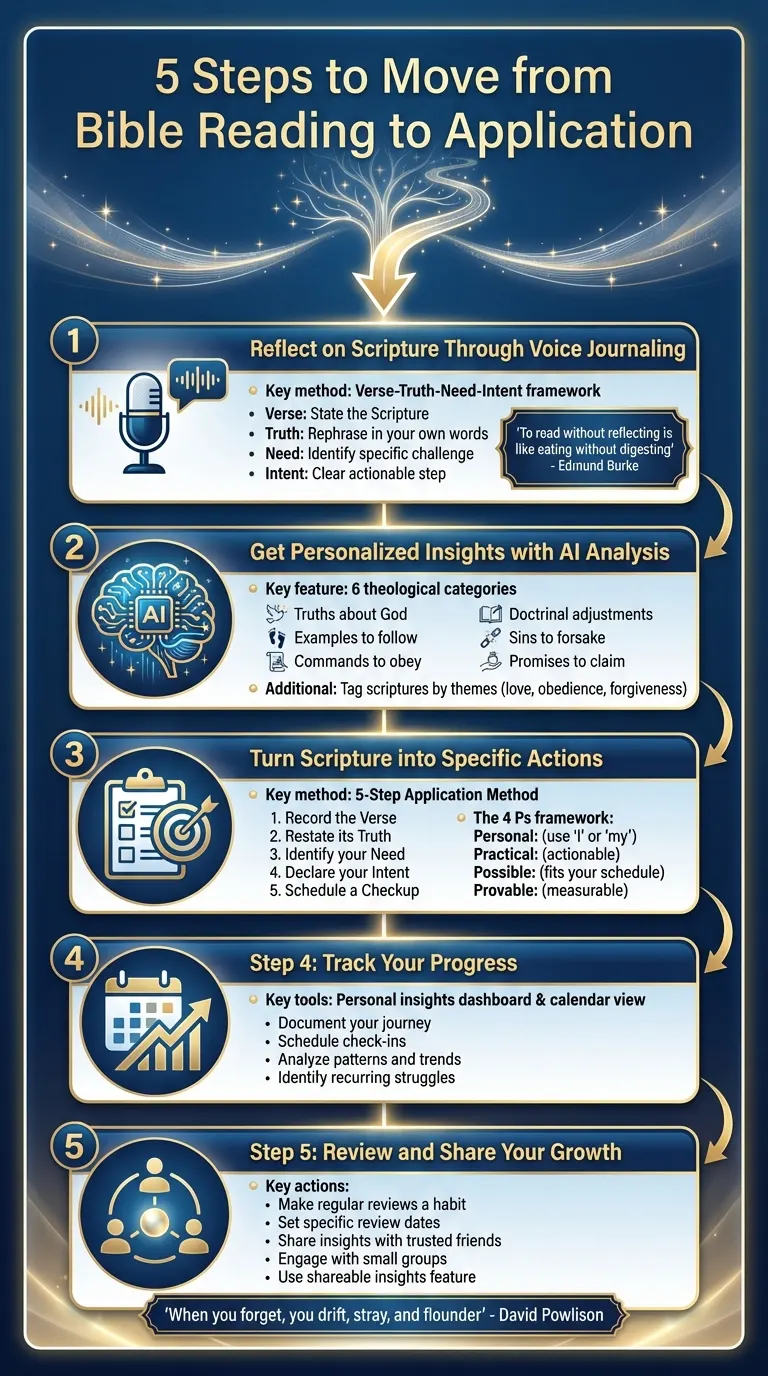
- Reflect deeply: Use tools like voice journaling to process Scripture and relate it to your life.
- Organize insights: Identify truths, commands, and examples from Scripture that apply to your challenges.
- Take action: Break down biblical principles into specific, measurable steps.
- Track progress: Monitor how these actions shape your life using tools like Psalmlog.
- Review and share: Regularly reflect on your growth and share insights with others for accountability.
This approach helps Scripture guide your daily decisions, making it more than just words on a page. Ready to turn knowledge into transformation? Let’s dive in.
5 Steps to Move from Bible Reading to Application
Making SMART Applications From The Bible Which Will Change Your Life
Why Reading the Bible Isn’t Enough
You can read the Bible every single day and still feel spiritually stuck. Why? Because reading alone builds knowledge, but it doesn’t automatically change your actions or your heart. Pastor and author Conrad Mbewe explains it well:
"The Christian life is not just about getting to heaven in the future. It is also, in the present, about growing more and more into the likeness of Jesus Christ. A crucial means of this growth is regularly reading the Bible with a view to living out what it says – that is, applying it."
The key difference lies in moving from simply absorbing information to experiencing transformation. Let’s take a closer look at how knowledge and transformation are not the same.
Knowledge vs. Transformation
When you read Scripture, it fills your mind with truth. But it’s the application of that truth that reshapes your heart and actions. James 1:22 offers a warning: believers who "merely listen without action deceive themselves". You might know what the Bible says about patience or forgiveness, but still struggle to put those teachings into practice when life gets messy.
Think about the religious leaders in Jesus’ time. They had an impressive knowledge of Scripture, yet their understanding didn’t transform their hearts or how they lived. As Desiring God puts it:
"God gave us the Bible not just to inform our minds, but also to transform our hearts."
Without action, the truths of Scripture remain just that – facts, not life-changing realities.
What Stops People from Applying Scripture
So, what holds people back from turning Scripture into action? Several barriers can stand in the way.
Unconfessed sin is one major obstacle. It can create a sense of distance from God, making it harder to embrace and live out His Word. Some approach the Bible like a textbook, studying it for knowledge but failing to connect its teachings to their daily lives. Others feel overwhelmed by the cultural gap between the ancient world of the Bible and the complexities of modern life. For example, how do commands written thousands of years ago relate to today’s workplace stress or challenges in marriage?
But perhaps the most common issue is not knowing how to apply Scripture practically. You might read a verse about overcoming anxiety, yet feel stuck when worry keeps you awake at night. Or, you might understand the command to love your neighbor but struggle to figure out what that looks like when dealing with a difficult coworker or an awkward social situation. Without clear steps to bridge the gap between Scripture and real-life choices, the Bible can feel more inspirational than transformational.
Step 1: Reflect on Scripture Through Voice Journaling
Reflection acts as the bridge between reading the Bible and living out its teachings. While traditional journaling might feel like a chore, voice journaling offers a fresh and engaging alternative. It captures your immediate thoughts, emotions, and questions, transforming your reading time into a heartfelt dialogue with God.
Why Reflection Matters
Reading Scripture without reflecting on it is like eating a meal without giving your body the chance to digest it. Edmund Burke summed it up perfectly:
"To read without reflecting is like eating without digesting".
You might take in the words, but without reflection, they won’t truly shape you. It’s in those moments of thoughtful consideration that understanding Scripture turns into real-life change.
David Powlison, Executive Director of the Christian Counseling & Educational Foundation, describes this process beautifully:
"A passage becomes personal when your details participate in what is said".
For example, instead of reading about God’s peace in an abstract way, you apply it to your own life – whether it’s a disagreement with a loved one, anxiety about an upcoming interview, or the worry that’s keeping you up at night. This is when Scripture transforms from ancient text to a living guide, reshaping your daily experiences. Reflection like this paves the way for meaningful voice journaling with Psalmlog.
How to Use Psalmlog for Voice Journaling
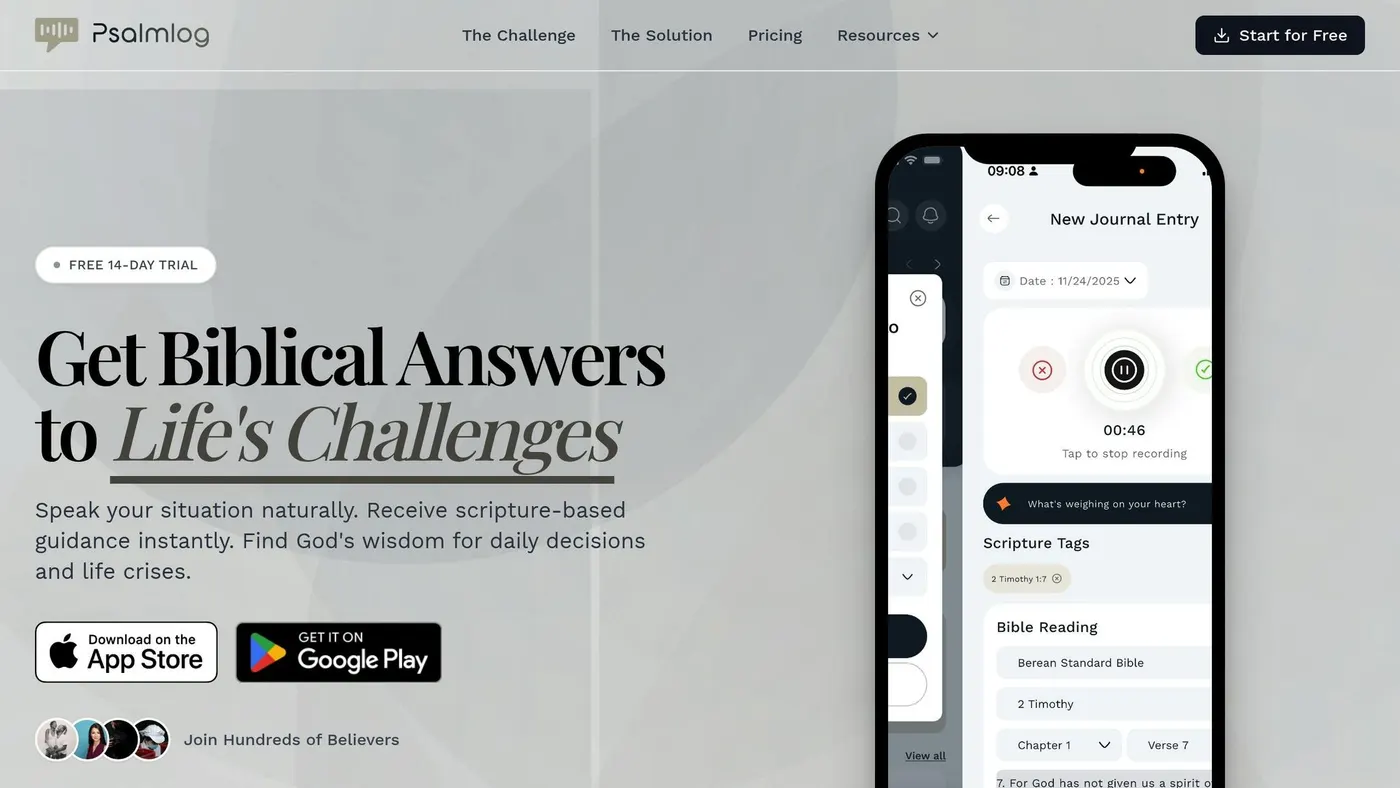
Psalmlog’s voice-to-text feature makes reflection simple and accessible. After reading a passage, open the app, hit record, and speak freely about the verse – share your emotions, questions, and how it relates to your current circumstances.
A helpful framework to guide your reflections is the "Verse-Truth-Need-Intent" method. Here’s how it works:
- Verse: Start by stating the Scripture you’re reflecting on.
- Truth: Rephrase the verse in your own words. What is God communicating to you?
- Need: Identify a specific challenge or gap in your life that this verse speaks to.
- Intent: Conclude with a clear, actionable step you can take based on the verse.
For example, if you’re reflecting on Philippians 4:6-7, your voice journal might sound like this:
"I’m reading about not being anxious but bringing everything to God in prayer. The truth here is that God cares about my worries, even the everyday stuff, not just the big spiritual concerns. My need is that I’ve been losing sleep over a project deadline at work, and I haven’t prayed about it – I’ve just been overthinking. My intent is to pray specifically about this project every morning this week before I check my email."
Step 2: Get Personalized Insights with AI Analysis
After recording your thoughts through voice journaling, Psalmlog’s AI steps in to provide tailored insights by analyzing your reflections. It distills them into six key journal categories, helping bridge the gap between simply reading Scripture and actively applying it to your life.
How AI Organizes Your Reflections
The AI system organizes your reflections into six theological areas: truths about God, examples to follow, commands to obey, doctrinal adjustments, sins to forsake, and promises to claim. This approach encourages you to move beyond passive reading, turning Scripture into actionable steps that can influence your daily decisions and mindset.
For instance, if you’ve been journaling about workplace stress over the past few weeks, the AI might highlight a recurring theme of trusting in God’s provision. It can link your specific concerns – like anxiety about an upcoming performance review or conflicts with a coworker – to relevant biblical truths that address those challenges directly. Additionally, the system uses sentiment tagging to analyze the emotional tone of your reflections, ensuring that your engagement with Scripture resonates not just on an intellectual level but also emotionally.
This structured categorization lays the groundwork for further organizing your insights through thematic tagging.
Tag Scriptures for Better Context
By tagging your reflections with themes such as love, obedience, or forgiveness, you can craft a personalized spiritual guide. This makes it easier to revisit related verses when similar challenges arise, effectively transforming your journal into a searchable library of God’s wisdom and guidance.
The real strength of this system lies in its ability to connect broad scriptural principles to your specific emotional and spiritual needs. For example, instead of viewing God’s peace as an abstract concept, the AI helps you relate it to sleepless nights, difficult conversations, or financial stress. By automatically making these connections, the system ensures that the timeless truths of Scripture feel relevant and impactful in your modern life.
Step 3: Turn Scripture into Specific Actions
Once you’ve organized your reflections, it’s time to take the next step: putting Scripture into action. This means turning biblical insights into clear, achievable steps. Many people find it challenging to figure out how to apply Scripture to their daily lives, which is why Psalmlog’s scripture assistant is designed to help transform general principles into specific, measurable actions.
Break Down Verses into Practical Steps
To make Scripture actionable, try breaking it down using the 5-Step Application Method:
- Record the Verse
- Restate its Truth
- Identify your Need
- Declare your Intent
- Schedule a Checkup.
This method simplifies the process of turning biblical wisdom into daily habits. For example, let’s say you’re reading Philippians 4:6 and feeling anxious about an upcoming medical procedure. You might decide: "I will pray for five minutes each morning and write down three blessings." Then, plan to review your progress on Sunday evening.
The "4 Ps" can also ensure your actions are realistic and effective:
- Personal: Use "I" or "my" to keep it specific to you.
- Practical: Make it something you can actually do.
- Possible: Ensure it fits your schedule and resources.
- Provable: Include a way to measure your follow-through.
This approach helps you avoid vague commitments like "I’ll trust God more" and instead focus on measurable actions, such as "I’ll spend 10 minutes in prayer before checking my phone each morning."
Apply Scripture to Your Personal Challenges
Once you’ve structured your reflections, use these steps to tackle personal challenges head-on. Psalmlog’s scripture assistant helps bridge the gap between biblical principles and real-life situations – whether it’s workplace stress, relationship struggles, or financial concerns. It also clarifies the deeper meaning behind ancient commands. For instance, when Paul writes about greeting one another with a "holy kiss", the takeaway isn’t about the act of kissing but about showing genuine warmth and affection. In today’s context, that might look like offering a handshake, a hug, or even sending a thoughtful text.
When facing challenges like workplace conflict, the S-P-A-C-E P-E-T-S framework can help you extract actionable steps from Scripture:
- Look for a Sin to confess, a Promise to claim, an Attitude to change, a Command to obey, an Example to follow, a Prayer to pray, an Error to avoid, a Truth to believe, or Something to praise God for.
For example, if you’re dealing with a difficult coworker and reading about loving your enemies, you might realize you need to adjust your attitude – seeing them as someone created in God’s image rather than as an adversary. You might also feel called to obey the command to pray for them. A specific action could be: "I will pray for my coworker by name each morning and find one positive quality to acknowledge in our next interaction."
"The ultimate test of our personal application of Scripture is ‘Does this help me become more like Jesus?’"
- Greg Burdine, Pastor and Author
This process also helps personalize biblical language, making ancient prayers relevant to your daily life. For example, when the Psalms mention "enemies", you can reinterpret this to represent your personal battles – whether it’s resisting worldly influences, overcoming internal struggles, or standing firm against spiritual attacks.
Step 4: Track Your Progress with Psalmlog
Putting Scripture into practice is just the first step. The real impact comes when you consistently monitor how these actions are shaping your life. Psalmlog’s personal insights dashboard and calendar view are designed to help you document your journey and stay accountable. Without tracking, it’s easy to miss the ways God is working through your daily choices.
Document Your Application Journey
The calendar view lets you schedule regular check-ins for each step of your spiritual application. For example, if you commit to praying for five minutes every morning or focusing on a positive quality during a difficult interaction, you can set reminders to review your progress. This keeps your goals front and center.
Looking back at past entries can reveal how God has been moving in your life. Spiritual growth often feels subtle in the moment, but reflecting on your journey can uncover changes you might not have noticed. As Paul Tripp explains:
"Most Christians feel comfortable with their past salvation… and their future salvation… but they struggle with how to walk out their salvation in the present".
These reflections serve as a record of your growth, helping you see how far you’ve come. They also provide valuable insights for identifying recurring themes in your spiritual walk.
Analyze Patterns and Trends
Once you’ve documented your reflections, the next step is to analyze them for meaningful patterns. The dashboard doesn’t just store your thoughts – it helps you uncover recurring struggles or verses that resonate deeply with your situation. Recognizing these patterns is a key part of intentional spiritual growth.
For instance, if you notice repeated struggles with cynicism, pride, or anxiety, this awareness allows you to focus on specific spiritual disciplines to address them. The dashboard highlights these insights, pointing out moments of growth or breakthroughs. As Jon Bloom wisely reminds us:
"Our emotions are gauges, not guides. They tell us where we are, but we shouldn’t let them tell us where to go".
Step 5: Review and Share Your Growth
After tracking your progress with Psalmlog, the next step is all about reflecting on your journey and sharing your growth. Applying Scripture effectively means taking time to review what you’ve learned and sharing it with others. Regular check-ins keep you grounded and accountable. As David Powlison aptly states:
"When you forget, you drift, stray, and flounder".
Make Regular Reviews a Habit
Set reminders to pause and evaluate your progress. If you’ve committed to applying a particular biblical truth, schedule a specific date to reflect on how well you’ve followed through. During these reviews, ask yourself questions like, "What specific struggle did this Scripture address?" or "How has this truth reshaped my life since I last meditated on it?". These reflections help you gauge whether the Word is truly transforming your thoughts and actions.
To make growth measurable, tie your goals to clear actions. For example, if you decided to pray for five minutes every morning, check if you’ve been consistent. Link your review process to key verses as a way to reinforce lasting change. As Conrad Mbewe, pastor and author, points out:
"What we will be spiritually twenty or thirty years from now depends largely on whether we maintain a habit of prayerfully meditating on the Word of God as part of our daily walk with him".
This structured approach not only strengthens your growth but also prepares you to share your insights confidently.
Share Your Growth with Others
Once you’ve reviewed your progress, take the next step by sharing your journey with others. Spiritual growth flourishes in community. Share your insights, struggles, or breakthroughs with trusted friends, small groups, or accountability partners. As the African proverb says:
"He who has a mouth can never get lost".
Psalmlog makes this easier with its shareable insights feature. You can turn your voice journal reflections into meaningful conversations, whether it’s sharing a verse that’s impacted you or discussing a challenge you’ve faced. This openness not only invites others to support your journey but also fosters mutual encouragement and growth. Engaging with your church community can sharpen your understanding and keep you moving forward.
Conclusion
Turning Bible reading into meaningful application doesn’t have to be overwhelming, but it does call for a deliberate approach. The five steps outlined here – using voice journaling for reflection, gaining personalized AI insights, translating Scripture into actionable steps, tracking your progress, and reviewing your growth – create a powerful framework. Together, they shift your experience from simply reading the Word to allowing it to deeply shape your daily life. These steps work in harmony to help you move from passive engagement to active transformation.
The real impact of applying Scripture lies in its lasting influence on your spiritual journey. As Conrad Mbewe aptly puts it:
"What we will be spiritually twenty or thirty years from now depends largely on whether we maintain a habit of prayerfully meditating on the Word of God as part of our daily walk with him".
Your spiritual growth hinges on whether you let Scripture remain theoretical or allow it to transform your life.
Application isn’t about following a rigid checklist. It’s about letting the Word of God examine your heart and lead you to real change. Whether it’s confessing a sin, obeying a command, or holding onto a promise, each action invites God’s truth to replace personal biases with His wisdom.
Psalmlog offers practical tools to support this journey. With the Faith Builder plan at $19.99/month, you’ll have access to 300 minutes of voice journaling, personalized insights, and full Bible translations – all designed to help you turn Scripture into action. By combining reflection, AI-driven insights, and progress tracking, Psalmlog helps you move from merely reading the Word to experiencing God’s guidance in your everyday life.
Take the first step today. Every intentional moment spent applying Scripture brings you closer to living out its truths in your daily walk.
FAQs
How can I turn Bible reading into practical actions in my daily life?
To transition from simply reading the Bible to actively applying its teachings in your daily life, start by considering how the Scripture connects to your current challenges or decisions. When you come across a verse, try rewriting its main message in your own words. Then, pinpoint a specific situation – like a conflict, a choice you need to make, or a personal goal – where the verse could offer guidance. Once you’ve done that, create a simple, actionable step you can take during the week, and set a reminder to check in on your progress.
For instance, if you read Psalm 119:105, which says, "Your word is a lamp to my feet", you might decide to carve out a few quiet minutes each morning to pray for guidance or clarity in your decisions. Writing down your thoughts, meditating on the verse, or keeping it visible – whether on a sticky note, your phone wallpaper, or another spot you’ll see often – can help you stay connected to its message throughout the day. By taking small, deliberate steps and consistently reflecting on how you’re doing, you can develop a lasting habit of living out God’s truth in practical and meaningful ways.
What are some practical ways to apply the Bible to daily life?
Applying Scripture to your daily life doesn’t have to be overwhelming – it starts with a few intentional steps. Begin by praying for guidance before diving into the text. Ask the Holy Spirit to help you grasp the message and see how it relates to your life. As you read, pay attention to the context and underline any action words or phrases that jump out to you. Then, rewrite the verse in your own words to make it resonate more personally, and take a moment to reflect on how it speaks to a specific challenge or decision you’re facing.
From there, let your reflection inspire action. Set a clear, realistic goal based on the verse. For instance, if the passage emphasizes forgiveness, you could decide to reach out to someone you’ve struggled to forgive. To keep yourself accountable, use reminders – whether it’s a sticky note on your mirror or a notification on your phone – and check in with yourself later in the week to review your progress. Writing down your thoughts and experiences in a journal can also be a powerful way to work through challenges and stay committed to living out the message.
By blending prayer, thoughtful reflection, and purposeful action, you can transform your Scripture reading into a meaningful, everyday practice.
How can voice journaling help me better understand and apply the Bible?
Voice journaling offers a deeper way to engage with Scripture by blending reflection, interpretation, and application into a rich, sensory experience. When you speak your thoughts out loud, you often catch details – like specific words or phrasing – that might slip by when reading silently. This practice naturally slows you down, encouraging a more thoughtful connection with the text.
Another benefit? Recording your voice creates a powerful auditory reminder. You can listen to your notes later, which is especially handy when life gets hectic and flipping through a written journal isn’t realistic. Over time, replaying your recordings can help you spot recurring themes in your thinking and make it easier to uncover practical steps to apply in your everyday life.
What makes voice journaling stand out is its convenience. Whether you’re commuting, working out, or simply enjoying a quiet moment, you can capture your reflections on the go. It transforms Scripture into wisdom you can carry with you and apply in real time.