
Bible on Pride and Humility: Causes & Cure
Presents pride as self-rule, cites Proverbs, James, and Philippians, and gives practical steps: confession, repentance, and humility.
The short answer: the Bible treats pride as self-rule, warns that it leads to a fall, and points to humility as the answer.
If I boil this article down, here’s what matters most:
- Pride puts self in God’s place
- Proverbs 16:18 says pride comes before destruction
- James 4:6 says God opposes the proud and gives grace to the humble
- Genesis 3 shows pride at the root of human sin
- Philippians 2:3–8 points me to Jesus as the model of humility
- Pride often shows up in daily life through comparison, stubbornness, quarrels, and self-reliance
- The right response is self-examination, confession, repentance, and submission to God
Put another way: this is not just about attitude. It’s about who rules my heart.
One clear fact from the article stands out: “Pride only starts quarrels” (Proverbs 13:10). That means pride is not hidden for long. It shows up in conflict, correction, and how I treat other people.
Here’s the core contrast:
| Area | Pride | Humility |
|---|---|---|
| Heart posture | Self-rule | Dependence on God |
| Toward others | Comparison and rivalry | Service and care |
| When corrected | Pushes back | Listens and repents |
| End result | Fall and opposition from God | Grace and help from God |
So if I want the article’s main point in one line, it’s this: pride leads to ruin, but humility leaves room for grace.
Biblical Humility: What the Bible Really Says About Pride, Mercy, and Walking Humbly With God
What the Bible Means by Pride
In the Bible, pride is self-rule. It’s putting yourself in the place that belongs to God. At the heart level, it’s rebellion. On the outside, it often shows up as self-sufficiency and resistance to correction. Scripture leaves room for only God-centered boasting. Paul said he would boast only in the cross of Christ (Galatians 6:14).
Scripture doesn’t treat pride like a small personality flaw. It shows what pride looks like and where it leads.
Proverbs 16:18 and the Pattern of Downfall
Proverbs 16:18 says, "Pride goes before destruction, and a haughty spirit before a fall." The Hebrew word points to something swollen or inflated. That’s the image: inward decay starts first, then the public fall comes after.
This isn’t just common-sense advice. Scripture gives a clear example in King Uzziah. He acted as if he were fit for priestly duties and was struck with leprosy (2 Chronicles 26). Genesis 3 shows that this pattern didn’t start with him. It started much earlier.
Genesis 3 and the Root of Self-Rule
You can see the root of pride in the garden. The serpent’s temptation went straight at self-exaltation: "You will be like God, knowing good and evil" (Genesis 3:5). Adam and Eve chose self-rule over God’s wisdom. They trusted their own judgment above His. The same bent still shows up now – in stubbornness, defensiveness, and a refusal to repent.
"The devil’s greatest lie: that we could possess the ability to rightfully judge good and evil in ourselves, and each other." – Meg Bucher
Why God Warns Against Pride
Pride is more than bad manners or an ugly habit. In Scripture, it is self-rule. It puts a person in conflict with God, not just with other people. The Bible treats pride as rebellion, not a small flaw to clean up later.
C.S. Lewis put it this way: "According to Christian teachers, the essential vice, the utmost evil, is Pride… it was through Pride that the devil became the devil: Pride leads to every other vice: it is the complete anti-God state of mind." That gets to the heart of it. Pride says, I don’t need You, and God does not brush that aside.
James 4:6: God Opposes the Proud
James 4:6 says, "God opposes the proud but gives grace to the humble." The term translated as "opposes" means to stand directly against. So this isn’t passive disapproval. God does not ignore pride.
That matters because understanding grace is essential for people who know they need help. Pride leans on self-sufficiency and refuses need. In that sense, pride doesn’t just insult God. It shuts the door on the very gift a person needs most. Humility does the opposite. It takes the place of dependence and receives help from God.
Psalm 10:4 describes the proud heart as leaving no room for God in its thoughts, living as though His authority does not matter. And that conflict with God rarely stays hidden for long.
What Pride Produces in Daily Life
Pride shows up in plain, everyday ways. You can hear it in conversations, spot it in tense relationships, and see it in daily choices. Proverbs 13:10 says it with blunt force: "Pride only starts quarrels."
It looks like this:
- insisting on being right
- brushing off correction
- feeling threatened by someone else’s success
- making ordinary conflicts harder than they need to be
Those moments may seem small, but they show what pride does when it gets room to grow.
"Pride is spiritual cancer: it eats up the very possibility of love, or contentment, or even common sense." – C.S. Lewis
Psalm 138:6 adds one more sobering line: God knows the proud "from afar". When a person becomes hard to teach, quick to quarrel, or distant in relationships, pride is often at work beneath the surface.
Scripture’s answer to pride is humility, because humility receives grace instead of pushing back against God.
Christlike Humility as the Biblical Answer
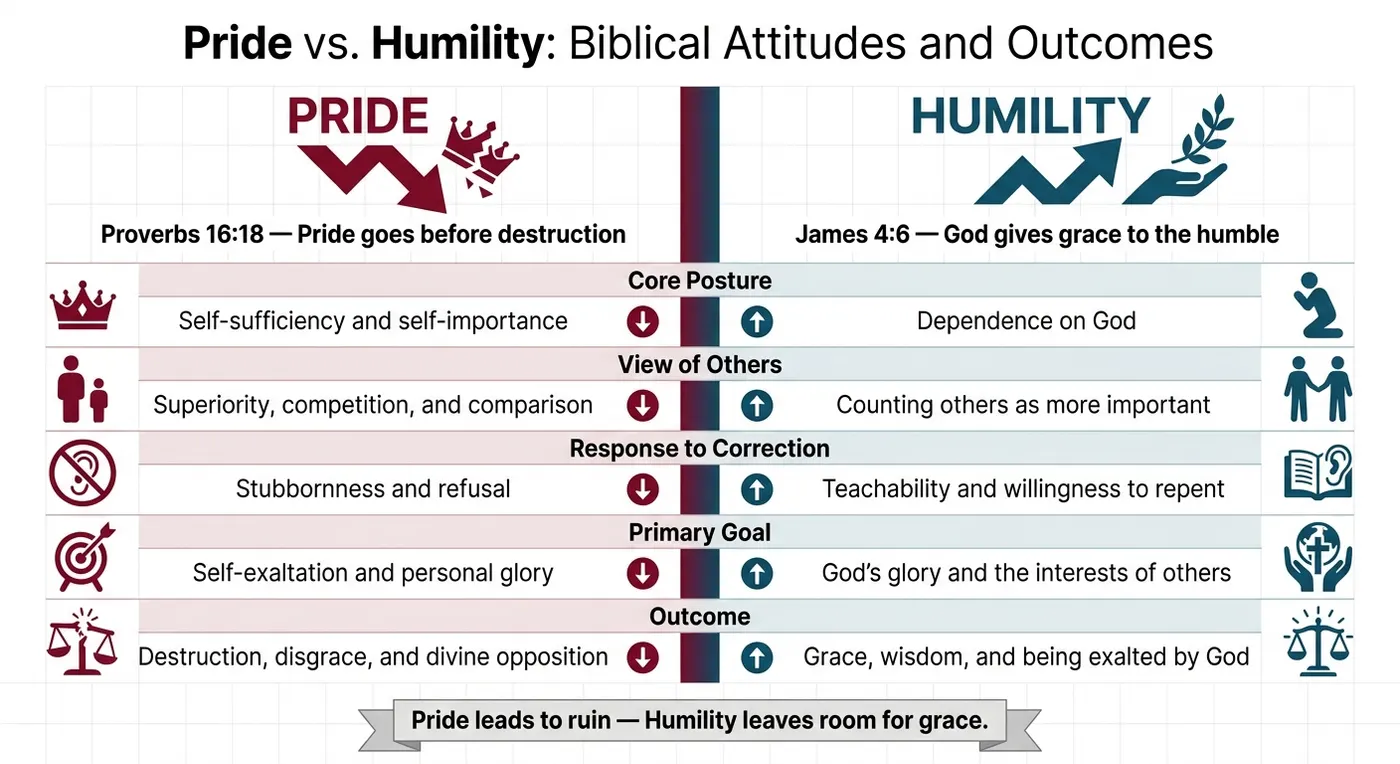
Pride vs. Humility: Biblical Attitudes and Outcomes
If pride is self-rule, humility is surrendered dependence. In the Bible, humility means a God-centered way of living that puts others first.
Philippians 2:3–8 and the Mind of Christ
Paul gives one of the clearest pictures of this in Philippians 2:3–8. He tells believers to reject selfish ambition and conceit, to count others as more important than themselves, and to care about the interests of others, not just their own. Then he points to Jesus as the model.
Paul’s meaning isn’t hard to miss. Jesus did not hold on to status for His own gain. He emptied Himself, took the form of a servant, and became obedient to the point of death on a cross. Keith Christensen of the Center for Biblical Counseling & Discipleship puts it this way:
"The highest form of humility must include a willingness to set aside the rights and honors that are truly one’s own, for the good of others."
That’s the pattern Paul lays out: no self-promotion, only servant-hearted obedience.
Pride vs. Humility: Attitudes and Outcomes
The gap between pride and humility shows up in everyday attitudes and where those attitudes lead:
| Attitude | Pride | Humility |
|---|---|---|
| Core posture | Self-sufficiency and self-importance | Dependence on God |
| View of others | Superiority, competition, and comparison | Counting others as more important |
| Response to correction | Stubbornness and refusal of correction | Teachability and willingness to repent |
| Primary goal | Self-exaltation and personal glory | God’s glory and the interests of others |
| Outcome | Destruction, disgrace, and divine opposition | Grace, wisdom, and being exalted by God |
This is where the issue gets personal. The contrast doesn’t stay on the page. It shows up in how people take correction, how they treat others, and what they want most.
How to Recognize Pride and Practice Humility Daily
Knowing what the Bible says about pride is one thing. Seeing it in your own life is another.
As author Jaquelle Crowe puts it:
"We know the disease, but we don’t recognize the symptoms. And that’s why we need the insight of our Great Physician and to reveal its symptoms and release us from it’s grip."
That’s why self-examination matters. Not so you can beat yourself up, but so you can turn back to God fast.
Questions to Check Your Heart for Hidden Pride
Pride usually doesn’t show up waving a flag. It hides in defensiveness, anxiety, and that quiet sense that you’ve got things under control. A few honest questions can help bring it into the light:
- Where am I acting self-sufficiently – in my decisions, plans, prayer life, or in how I compare myself to other people?
- When someone corrects me, is my first reaction to push back or to listen?
- Is there a sin, a conflict, or a failure I keep excusing instead of confessing?
Confession, Repentance, and Submitting to God
James 4 and Philippians 2 point to a clear response: name pride, bring it to God, and obey in a new way. That means confessing specific attitudes – not just saying, “I struggle with pride,” but saying, “I brushed off that person’s correction because I didn’t want to be wrong.”
Repentance is daily. Name self-rule, ask for mercy, and choose humble obedience.
Brian Cederquist, Lead Pastor at Good News Baptist Church, puts it plainly:
"Pride is essentially self-worship. Anything we accomplish in this world would not have been possible were it not for God enabling and sustaining us."
Submitting to God means giving Him the credit, serving with a willing heart, and receiving correction instead of resisting it.
Using Psalmlog for Scripture-Based Self-Examination
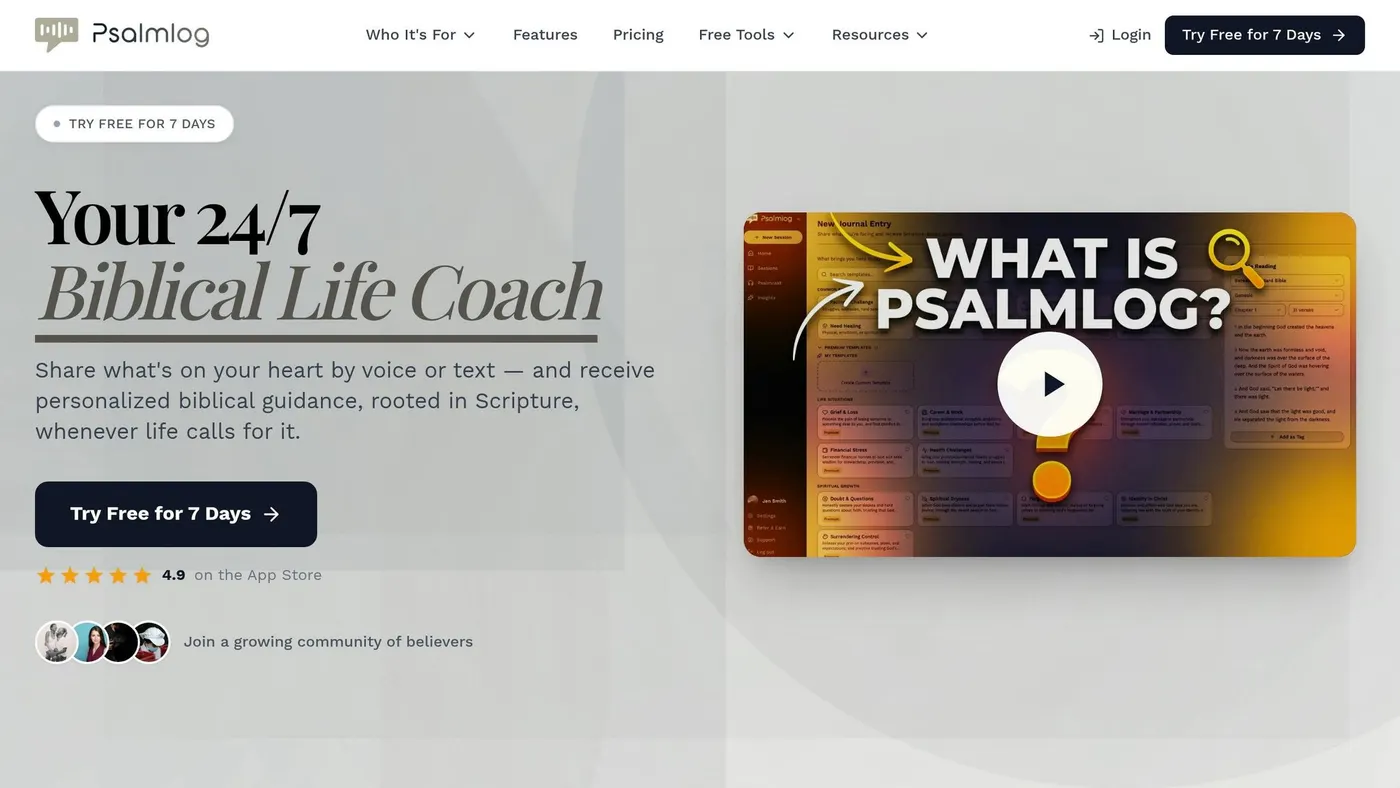
Daily honesty is easier when you have some structure. Psalmlog helps turn these biblical checks into a daily scripture-based reflection practice.
It’s a voice-based mobile app where you can speak honestly about your attitudes, reactions, and struggles in private. You can tag entries to passages like Proverbs 16:18, James 4:6, and Philippians 2:3–8, which keeps your reflections tied to Scripture. The AI can spot recurring patterns like self-sufficiency or defensiveness that may slip past you day to day. And the built-in Scripture Assistant gives guided prompts that help you move from seeing pride to answering it with biblical humility.
Psalmlog lets you record reflections, tag them to Scripture, and review patterns of pride over time.
Conclusion: Pride Leads to Ruin, Humility Leads to Grace
The Bible says the same thing from Genesis through the New Testament: pride pushes God out of His place, and that always comes with a cost. It started in Eden, and it still shows up now in the form of self-reliance and self-rule.
Then comes the answer. James 4:6 says it plainly: God opposes the proud, but gives grace to the humble.
So the response isn’t vague or abstract. It’s practical: honest self-examination, specific confession, daily repentance, and steady dependence on God.
Jesus showed humility through obedient service. That isn’t weakness. It’s the clearest picture of humility in action.
Bring pride into the light through Scripture, prayer, and correction, and grace will meet you there. Humility is the only path that leaves room for God’s grace.
FAQs
Is all pride sinful in the Bible?
No. The Bible warns against pride that grows out of self-reliance, arrogance, or the urge to step into God’s place.
At the same time, it leaves room for a God-honoring kind of pride: a sense of joy or satisfaction in your work, your life, or your ministry that sees those things as gifts from God and points the glory back to Him.
How can I tell if pride is shaping my reactions?
Look closely at your heart for signs of self-sufficiency, superiority, or an unwillingness to repent. Pride may be at work when you brush off wise counsel, think too highly of your own ability, or hide your flaws so you can look better than other people.
It also helps to watch for entitlement, a habit of putting others down, being quick to judge, or getting offended over small things. Pride can be sneaky. That’s why it’s wise to ask God to show you attitudes in your own heart that are often much easier to spot in someone else.
What does biblical humility look like in everyday life?
Biblical humility does not mean tearing yourself down. It means seeing yourself with a God-centered view: you depend on Him fully, and whatever you have or do well is a gift from God.
In day-to-day life, that looks like this:
- putting others ahead of yourself
- serving instead of trying to get noticed
- staying thankful
- inviting accountability
- admitting it fast when pride shows up, then confessing and repenting