
What Does the Bible Say About Social Justice and Our Responsibility to the Poor?
Explores biblical teachings and practical steps for aiding the poor and pursuing justice, with key verses, community actions, and spiritual tools.
The Bible emphasizes that helping the poor and pursuing justice are non-negotiable aspects of faith. Key teachings include:
- God’s Character: He defends the vulnerable, as seen in verses like Psalm 68:5 and Psalm 140:12.
- Active Commands: Scripture uses strong language like "rescue" and "defend" to highlight the importance of action (Isaiah 1:17, Proverbs 31:8-9).
- Jesus’ Teaching: Serving others, especially the needy, is equated with serving Christ Himself (Matthew 25:35-40).
- Holistic Care: Poverty isn’t just material – it includes emotional and social struggles. Addressing these is part of biblical justice.
Practical steps include identifying needs in your community, volunteering, and giving generously. As James 2:17 reminds us, faith without action is dead.
‘Poverty and Justice" Bible Calls Christians to Action …
Bible Verses on Social Justice and Helping the Poor
The Bible includes numerous verses that emphasize the importance of aiding the poor and pursuing justice. These scriptures provide believers with clear instructions for taking meaningful action. Below are three key passages that highlight God’s expectations.
Proverbs 31:8-9 – Speak Up for Those Who Cannot Speak
"Open your mouth for the mute, for the rights of all who are destitute. Open your mouth, judge righteously, defend the rights of the poor and needy." – Proverbs 31:8-9
This verse calls on believers to actively advocate for those who cannot advocate for themselves. The repeated command to "open your mouth" underscores the importance of speaking out against injustice. It’s a challenge to move beyond passive concern and take action – whether by addressing unfair practices, championing equitable policies, or standing with those facing discrimination. Silence, in this context, is not an option.
Isaiah 1:17 – Seek Justice and Help the Oppressed
"Learn to do right; seek justice. Defend the oppressed. Take up the cause of the fatherless; plead the case of the widow." – Isaiah 1:17
Isaiah frames justice as something to be actively pursued and practiced. It’s not just about knowing what’s right but about doing it. The verse highlights specific groups – the fatherless and widows – who were among the most vulnerable in society. This call to action goes beyond acts of charity, urging believers to confront systemic inequalities and advocate for those who are powerless. It’s a reminder that justice requires both compassion and courage.
Matthew 25:35-40 – Serve Christ by Serving Others
"The King will reply, ‘Truly I tell you, whatever you did for one of the least of these brothers and sisters of mine, you did for me.’" – Jesus Christ, Matthew 25:40
Here, Jesus draws a direct connection between serving others and serving Him. Caring for the hungry, thirsty, lonely, sick, or imprisoned is portrayed as an act of devotion to Christ Himself. This passage provides a clear blueprint for living out faith in practical ways – by meeting basic needs and offering compassion to those on the margins. It’s a powerful reminder that true faith is demonstrated through action, not just words.
How to Apply Biblical Justice in Your Life
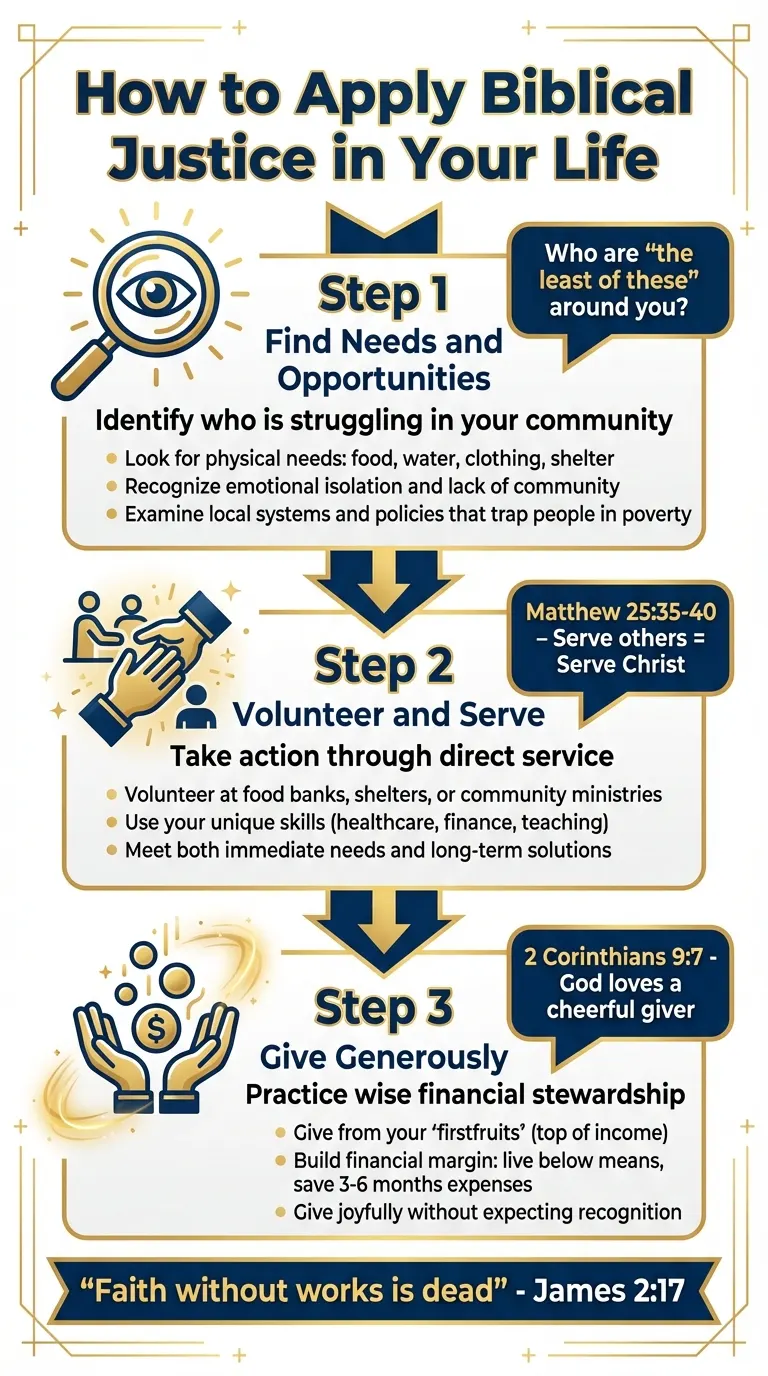
3 Biblical Steps to Practice Social Justice in Your Community
Understanding biblical justice is one thing; living it out is another. The Bible doesn’t just encourage believers to feel compassion – it calls for action. Here’s how you can take biblical principles and turn them into meaningful steps that impact your community.
Find Needs and Opportunities in Your Community
Start by looking around you. Biblical justice begins with seeing the needs of others. Who in your community is struggling? Think about "the least of these" – those without food, clean water, clothing, or shelter. But don’t stop there. Poverty isn’t just physical; it can also mean emotional isolation or a lack of community.
Ask yourself who might be slipping through the cracks. Are there family members who need support? Neighbors facing eviction? Workers being treated unfairly? Take a closer look at local systems – are there policies or practices that keep people trapped in poverty? Biblical justice isn’t just about quick fixes; it also involves addressing deeper, systemic issues.
Once you’ve identified these needs, take deliberate steps to bring about change in your community.
Volunteer and Join Outreach Programs
The next step is action. Matthew 25:35-40 lays it out clearly: feed the hungry, welcome strangers, clothe those in need, care for the sick, and visit the imprisoned. This isn’t just a suggestion – it’s a call to serve. Volunteering at food banks, shelters, or community ministries is a direct way to live out these commands.
Think about your unique skills and how they can make a difference. If you’re in healthcare, offer your time at a free clinic. If you’re good with money, help support microfinance programs that empower people to become self-reliant. Teachers might offer tutoring or job training. Whether you’re meeting immediate needs or helping with long-term solutions, every effort matters. And as you serve others, you’re ultimately serving Christ.
To keep these efforts going, it’s essential to plan your finances wisely.
Give Generously and Manage Your Money Wisely
Generosity is a cornerstone of biblical justice, and it starts with thoughtful financial stewardship. Everything we have belongs to God, and we are called to manage those resources wisely. Proverbs 3:9 teaches us to give from our "firstfruits" – from the top of our income, not what’s left over.
To give freely, you’ll need to create financial margin. Live below your means, save for emergencies (three to six months of expenses), and avoid debt. Proverbs 22:7 reminds us, "the borrower is slave to the lender". Financial freedom allows you to respond quickly when opportunities to help arise.
When you give, do it with joy and without expecting recognition. Second Corinthians 9:7 encourages, "Each one should give as he has decided in his heart, not reluctantly or under compulsion, for God loves a cheerful giver". And Proverbs 19:17 promises, "Whoever is generous to the poor lends to the Lord, and He will repay him for his deed". Your giving is more than charity – it’s an investment in God’s kingdom.
Use Psalmlog to Learn More About Social Justice

Biblical justice calls for introspection, practical steps, and a commitment to growth. As Scripture urges us to act – to speak up, defend, and serve – Psalmlog provides digital tools to help make these commands part of your daily life. Here’s how Psalmlog connects Scripture with actionable steps.
Voice Journaling for Scripture Reflection
Psalmlog’s voice journaling feature allows you to engage deeply with over 2,000 Scripture passages focused on justice. Instead of simply reading verses like Isaiah 1:17 (“Seek justice and help the oppressed”) or Matthew 25:35-40, voice journaling helps you turn these words into meaningful actions.
Think about your own community – who are “the least of these” that Jesus refers to? How can you follow Proverbs 31:8-9 and speak up for those who can’t speak for themselves? Voice journaling helps you identify actionable steps based on these passages. It also encourages reflection on the emotional and social struggles tied to poverty, such as feelings of shame or powerlessness.
Scripture Assistant for Practical Guidance
When you’re navigating specific social justice issues, Psalmlog’s Scripture Assistant offers tailored biblical advice. It pulls from books like Psalms, Proverbs, Isaiah, Deuteronomy, and Luke, providing relevant passages and practical applications.
This tool helps you move from general understanding to specific actions. For example, it can guide you in applying principles like those found in Leviticus 19:9-10, which instructs leaving part of the harvest for the poor and strangers. In today’s context, this might mean dedicating a portion of your resources to support those in need. With this guidance, you can align your actions with Scripture’s call to justice.
Track Your Growth and Inspire Others
Psalmlog’s sentiment analysis and insights dashboard allow you to monitor your spiritual journey. Are you giving “cheerfully,” as 2 Corinthians 9:7 encourages, or has obligation started to overshadow joy? The platform evaluates the tone and depth of your reflections, helping ensure your efforts are motivated by genuine care rather than the desire for public recognition, as warned in Matthew 6:1-2.
The insights dashboard provides a visual representation of your progress, highlighting areas of growth and opportunities to deepen your practice. You can also share these insights with others, inspiring your community to join you in living out God’s call to justice. This commitment isn’t just about financial resources – it’s about using whatever gifts God has entrusted to you with faithfulness and purpose.
Conclusion: Answer God’s Call to Justice
The Bible reminds us that "faith without works is dead" (James 2:17), calling us to stand up for the vulnerable and serve "the least of these" (Matthew 25:40). This isn’t just about writing a check or volunteering once in a while – it’s about weaving justice into the fabric of our daily lives. It means addressing both immediate needs and the deeper issues that perpetuate poverty.
Living out this calling starts with everyday decisions that reflect your faith in action. Look around your community and respond to immediate needs. Use the talents God has given you – whether it’s teaching, offering encouragement, or showing compassion – to serve others (Romans 12:6-8). Go further by advocating for changes to policies and systems that keep people stuck in poverty. Let your actions be guided by genuine love and a desire to honor God, not for personal recognition (Matthew 6:1-2).
"If the Bible commands us to love and care for individual poor people that cross our paths, should not our love for them lead us to be even more eager to seek to change oppressive laws and policies in an entire nation…?" – Wayne Grudem, Distinguished Research Professor Emeritus of Theology and Biblical Studies
Poverty often comes with more than just material lack – it can strip people of dignity and leave them feeling isolated. By offering your presence, friendship, and advocacy, you can help restore a sense of worth to those who feel unheard. Whether you’re providing direct assistance, supporting job training initiatives, or using tools like Psalmlog to refine your approach to justice, remember this: every action you take, no matter how small, carries the potential to make a meaningful impact.
FAQs
What does the Bible say about addressing poverty and systemic issues in my community?
The Bible encourages us to care for those in need and seek justice for the vulnerable. Addressing systemic poverty in your community begins with understanding the factors that contribute to inequality. These might include gaps in education, housing, or healthcare. Dive into local data – like unemployment rates or housing costs – to pinpoint where support is most urgently needed. Scripture reminds us of this responsibility, as seen in Psalm 82:3: "Defend the weak and the fatherless; uphold the cause of the poor and the oppressed." It’s a call to action, not just awareness.
Once you’ve identified the root causes, take actionable steps to make a difference. Dedicate a portion of your monthly budget (e.g., $50–$100) to support local efforts like food banks or affordable housing initiatives. Volunteering with outreach programs or mentoring young people can also help break cycles of poverty. Beyond direct aid, you can advocate for broader change by joining efforts to improve wages, zoning laws, or public transit in your area. Proverbs 19:17 reminds us, "Whoever is generous to the poor lends to the Lord." Through acts of kindness and advocacy, you can embody Christ’s command to love your neighbor and contribute to meaningful, lasting change.
What does the Bible teach about helping the poor and addressing social justice?
The Bible underscores that helping those in need and striving for justice are essential expressions of faith. It calls for generosity, encouraging acts like sharing food, clothing, and financial aid with those who are struggling. Proverbs 19:17 beautifully states, "Whoever is generous to the poor lends to the Lord," while Deuteronomy 15:7-8 urges believers to open their hands and provide for the less fortunate. This can take many forms – whether through tithes and offerings, donating to local charities, or supporting outreach programs.
The Scriptures also stress the importance of advocacy and care. Isaiah 1:17 commands us to "seek justice" and "correct oppression," while James 1:27 highlights caring for orphans and widows as a reflection of pure faith. Living out these principles could mean volunteering at shelters, mentoring young people, or working to address systemic issues that keep people in poverty.
In the New Testament, serving others is elevated as an act of worship. Offering your time, talents, and resources to assist those in need not only fulfills biblical teachings but also demonstrates God’s love in action. Whether it’s through small, everyday acts of kindness or larger efforts within your community, every contribution matters and brings hope to those who need it most.
How can Psalmlog help me live out biblical principles of social justice in my daily life?
Psalmlog offers tools to help you live out biblical principles on social justice and caring for those in need. By focusing on scripture, it encourages reflection on passages like Proverbs 31:8-9, Isaiah 1:17, and Matthew 25:35-40, highlighting God’s call to advocate for justice and extend compassion to the marginalized.
Through Psalmlog, you’ll find practical ways to act, such as joining local outreach efforts, supporting underserved communities, and embracing a lifestyle of generosity. It’s a resource aimed at inspiring and empowering you to address inequality and poverty with a heart rooted in biblical teachings.