
Bible Tithing: What Scripture Says
Explains OT tithing as Israel's 10% law and the New Testament's call to willing, proportionate generosity—10% as a guideline, not a rule.
Short answer: Christians are not clearly commanded to give a fixed 10% in the New Testament. In the Bible, the Old Testament tithe was a set tenth tied to Israel’s law, while New Testament giving is framed as willing, steady, and from the heart.
If you want the plain takeaway, here it is:
- Old Testament tithing was a required 10% tied to Israel’s covenant life
- Some teachers say Israel gave more than 10% total through more than one tithe
- Malachi 3:10 speaks to Israel and the temple storehouse, not a modern church budget in a direct one-to-one way
- Proverbs 3:9 points to honoring God with your first and best, not a hard percentage
- Matthew 23:23 shows that exact giving means little if justice, mercy, and faithfulness are missing
- 2 Corinthians 9:6–8 says giving should be cheerful, willing, and not forced
- Many Christians still use 10% as a starting point, but not as a law for every believer
Here’s the big idea in one line: the article says tithing was part of Old Testament Israel’s system, while Christians today are called to generous, planned giving rather than a fixed rule.
| Passage | Main point in the article | What it means for you |
|---|---|---|
| Malachi 3:10 | A command within Israel’s covenant setting | Not a direct command that every Christian must give 10% |
| Proverbs 3:9 | Honor God with firstfruits | Put God first with your money |
| Matthew 23:23 | Jesus rebukes outward rule-keeping without heart obedience | Giving is not just math |
| 2 Corinthians 9:6–8 | Give freely, gladly, and without pressure | Plan your giving with joy, not guilt |
So if you give 10%, that can be a simple benchmark. If you cannot, the article’s point is that Christian giving is still about faith, honesty, and proportion – not pressure.
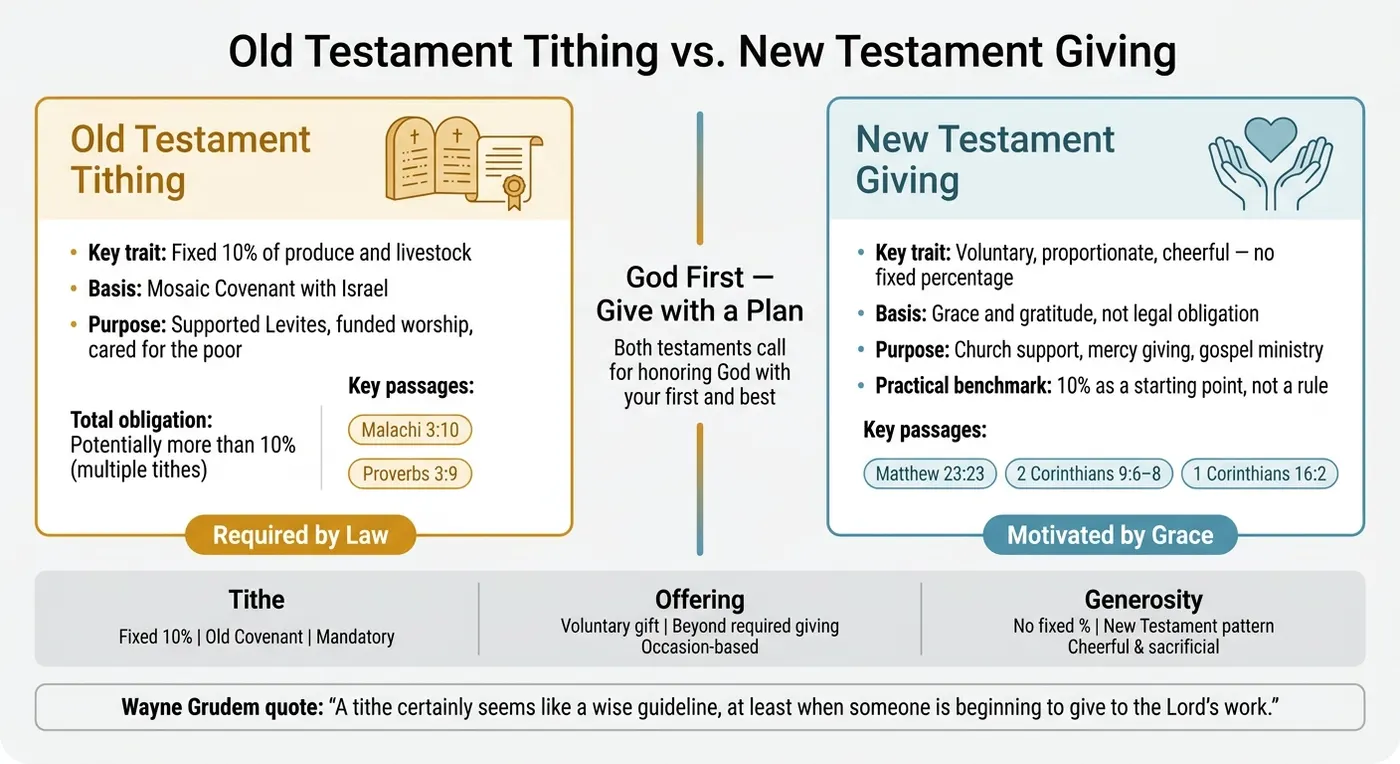
Old Testament Tithing vs. New Testament Giving: Key Bible Passages Explained
What does the Bible say about Christian tithing? | GotQuestions.org
What Tithing Means in the Bible
Tithe means tenth. In Scripture, it refers to a set 10%. That difference matters if you’re trying to sort out whether Christians are under a command to tithe today.
The Tithe as a Fixed Tenth Under the Old Covenant
Under the Mosaic Law, Israel was required to tithe. It was part of the covenant, not a matter of personal choice. And in the Bible, the tithe was tied to produce and livestock, not cash.
Because God was seen as the owner of the land, Israel returned part of what the land produced. The tithe supported the Levites, funded worship, and helped care for the poor. Many scholars point to these as three separate tithes, which means the total duty came to more than 10% overall.
That covenant backdrop helps explain why the New Testament talks about giving in a different way.
How Tithing Differs From General Christian Giving
Since the tithe belonged to Israel’s covenant system, New Testament giving is described in other terms. It is proportionate, cheerful, and voluntary, rather than a fixed percentage. In plain terms, many Christians treat 10% as a starting point, not a binding rule.
What Key Bible Passages Teach About Giving
These passages help explain why tithing is handled one way in the Old Testament and another way in the New.
Malachi 3:10 and Proverbs 3:9
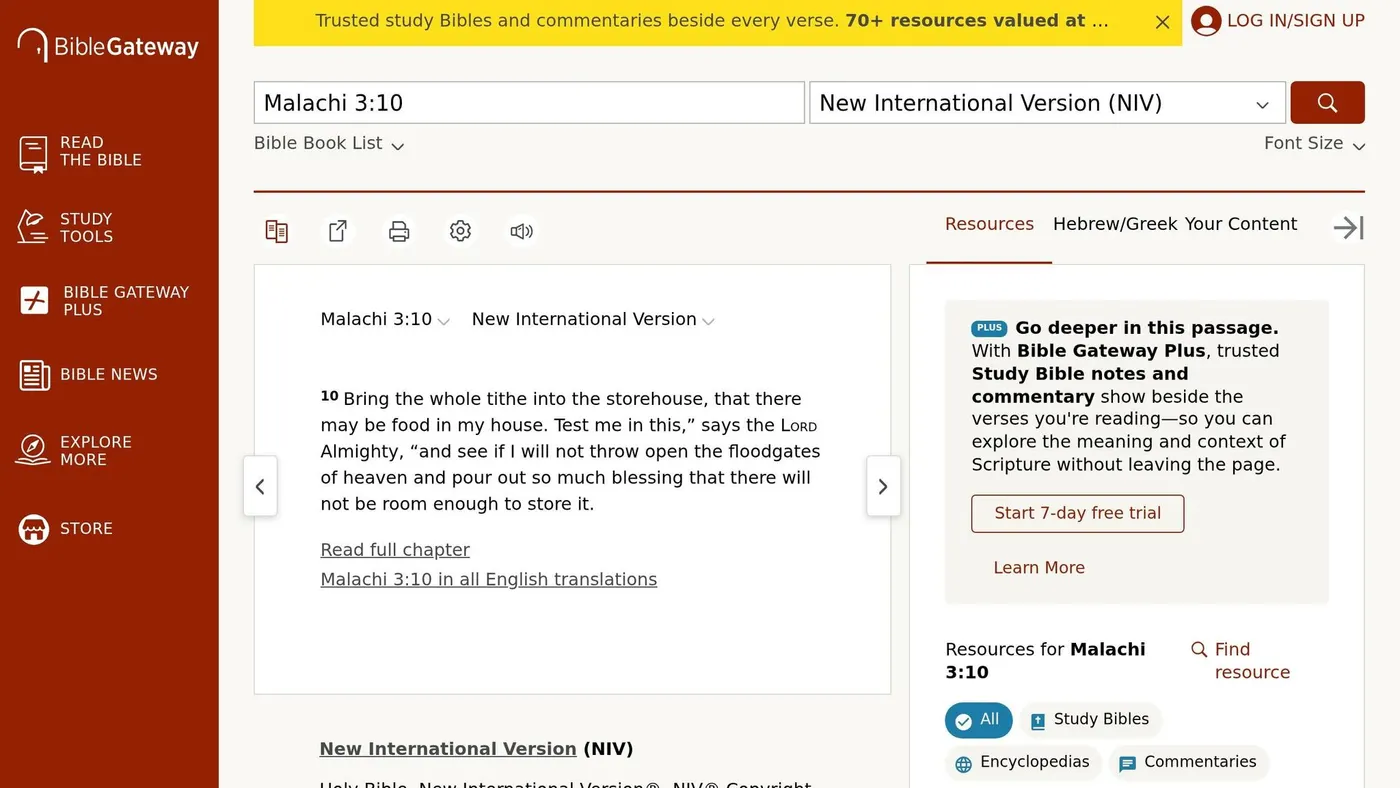
Malachi 3:10 speaks to Israel after the exile under the Mosaic Covenant. The “storehouse” was a literal room in the Jerusalem temple, not a direct model for a modern church’s general fund. The command to “test” God also belongs to Malachi 3’s covenant setting, so it does not transfer to Christians today.
Proverbs 3:9 works in a different way. It treats honoring God with firstfruits as a wisdom principle, not a legal rule. The stress falls on giving God the first and best, not on meeting a set percentage.
The first two texts sit inside Israel’s covenant life. The next two move the discussion from external practice to the heart.
Matthew 23:23 and 2 Corinthians 9:6–8
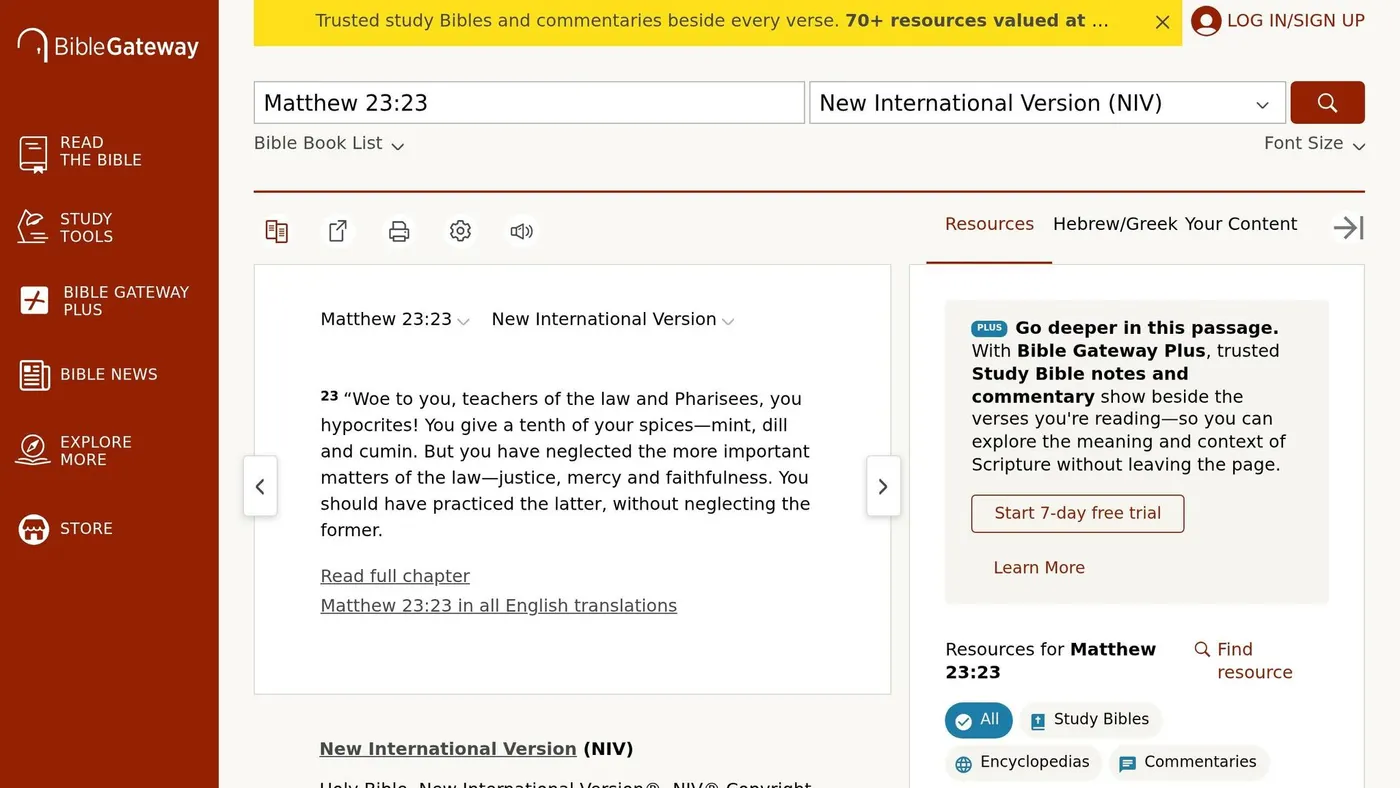
In Matthew 23:23, Jesus says the Pharisees tithed even garden herbs but neglected justice, mercy, and faithfulness. The point is clear: outward precision cannot stand in for inward righteousness.
Paul states the New Testament pattern in plain terms. In 2 Corinthians 9:6–8, he says giving should be decided in the heart, not done reluctantly or under compulsion, and it should be cheerful. He does not give a fixed percentage. Instead, he calls believers to give willingly and cheerfully.
Taken together, these passages show a clear shift. Old Testament tithing was tied to the covenant with Israel, while New Testament giving is voluntary and heart-led. That sets up the next issue: are Christians required to tithe today?
Are Christians Required to Tithe Today?
That Old Testament system applied to a specific covenant. In the New Testament, the pattern changes. The focus moves from required tithing to voluntary generosity.
What the New Testament does command is generous, willing, steady giving.
What the New Testament Commands and What It Does Not
Paul’s instructions show what that looks like in everyday life. In 1 Corinthians 16:2, he tells believers to set aside money in proportion to their income, not according to a fixed percentage. As Thomas R. Schreiner puts it, Scripture, not tradition, sets the standard for Christian giving.
That leads to a fair question: why do so many Christians still use 10%?
Why Some Christians Use 10% as a Starting Point
Even without a legal requirement, many believers use 10% as a practical starting point rather than a binding rule. Wayne Grudem puts that balance well:
"The New Testament does not specify any certain amount such as 10 percent, but a tithe certainly seems like a wise guideline, at least when someone is beginning to give to the Lord’s work." – Wayne Grudem
So if 10% helps you give with consistency, it can be a useful guide. It should not feel like a legal burden.
How Tithing, Offerings, and Generosity Apply to Real Giving Decisions
Because New Testament giving is voluntary, the next issue is simple: how do you actually live that out?
Tithes, Offerings, and Generosity Side by Side
These terms aren’t the same thing. They each point to a different kind of giving.
- Tithe: A fixed 10% under the Old Covenant, mandatory in Israel’s law
- Offering: A voluntary gift beyond any required giving, directed toward specific needs or occasions
- Generosity: A willing pattern of cheerful, sacrificial giving without a fixed percentage – the New Testament pattern of grace-shaped giving
Once that distinction is clear, the next step is putting some structure around your giving.
A Practical Way to Budget and Give Faithfully
It helps to decide your giving amount before the month starts instead of giving whatever happens to be left at the end. Many theologians treat 10% as a wise starting point for disciplined giving. That doesn’t mean every Christian is bound to a flat rule, but it does give people a clear place to begin.
From there, make the local church the first priority through regular, steady support. Then leave room for mercy-focused giving too, like helping the poor, widows, orphans, and missions. One simple framework is the 10-10-80 approach: 10% for giving, 10% for savings, and 80% for living expenses. For a lot of people, that kind of plan takes the guesswork out of giving and helps them stay steady month after month.
Conclusion: A Biblical Answer on Tithing
The Bible treats tithing one way in the Old Testament and another in the New. In the Old Testament, tithing was part of Israel’s covenant and included a set system of required tithes. In the New Testament, that legal system is not carried over. A tithe can still be a wise place to begin, but the New Testament does not present it as law.
That difference matters. Ten percent is a useful starting point, not a fixed rule. Your giving should fit your income and your obligations.
This shifts giving away from pressure and toward stewardship. Faithful giving grows out of worship, gratitude, and trust. When you give with a plan for your church, the poor, and gospel ministry, you give in step with Scripture’s call to grace-shaped generosity.
FAQs
Should I tithe on gross or net income?
The Bible doesn’t spell out whether giving should come from gross income or net income. It also doesn’t tell New Testament believers they must give a fixed 10 percent.
Some people link firstfruits to giving before taxes or other deductions. In the end, biblical giving is a personal choice shaped by generosity, proportion, and sacrifice.
Can I give less than 10% and still be faithful?
Yes. The New Testament does not set a fixed percentage for Christian giving, so a believer can give less than 10 percent and still be faithful.
For many Christians, 10 percent is a useful starting point, not a hard rule. The main point in Scripture is different: give with thought, give in proportion to what you have, and give with a willing heart. Giving should be sacrificial when called for, but it should also be free and cheerful, not forced or driven by pressure.
Where should my giving go first?
The New Testament doesn’t give a single rule about where giving has to go first. Instead, believers are told to give regularly, with joy, and in line with what they’ve decided in their hearts.
Biblical priorities include:
- supporting gospel teachers
- meeting fellow believers’ needs
- caring for the poor and marginalized
So, instead of sticking to a fixed formula, prayerfully manage your giving in a way that honors God.