
10 Bible Verses for When You're Facing Financial Stress
Comforting Bible verses and practical steps to reduce anxiety, manage debt, and trust God's provision during money worries.
Feeling overwhelmed by financial stress? You’re not alone. Nearly 90% of Americans report struggling with money concerns – whether it’s debt, rising costs, or unexpected expenses. But the Bible offers timeless wisdom to help shift your focus from worry to trust in God’s provision.
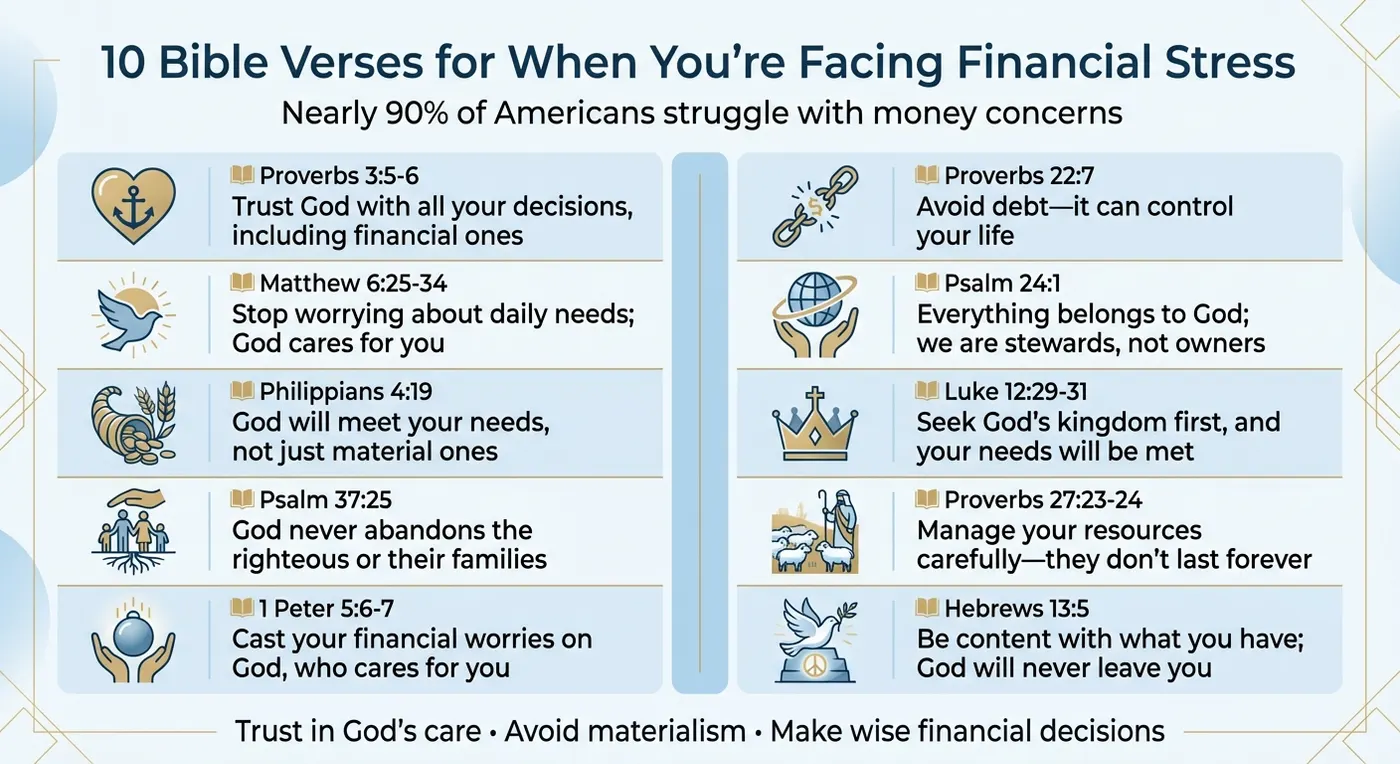
Here’s a quick overview of 10 Bible verses that provide comfort and guidance during financial challenges:
- Proverbs 3:5-6: Trust God with all your decisions, including financial ones.
- Matthew 6:25-34: Stop worrying about daily needs; God cares for you.
- Philippians 4:19: God will meet your needs, not just material ones.
- Psalm 37:25: God never abandons the righteous or their families.
- 1 Peter 5:6-7: Cast your financial worries on God, who cares for you.
- Proverbs 22:7: Avoid debt – it can control your life.
- Psalm 24:1: Everything belongs to God; we are stewards, not owners.
- Luke 12:29-31: Seek God’s kingdom first, and your needs will be met.
- Proverbs 27:23-24: Manage your resources carefully – they don’t last forever.
- Hebrews 13:5: Be content with what you have; God will never leave you.
These verses remind us to trust in God’s care, avoid materialism, and make wise financial decisions. Keep reading for practical ways to apply these Scriptures to your financial life.
10 Bible Verses for Financial Stress Relief
These 9 Bible Verses Changed My Financial Life
1. Proverbs 3:5-6
"Trust in the Lord with all your heart and lean not on your own understanding; in all your ways submit to him, and he will make your paths straight."
This verse addresses a challenge many of us face during financial struggles – the tendency to rely solely on our own understanding. Instead of reacting with worry or relying on quick fixes, Proverbs 3:5-6 encourages us to place our trust in God and seek His guidance.
When we involve God in our financial decisions, we move from handling challenges on our own to inviting His wisdom into every choice we make. Whether it’s deciding on a career change, adjusting our budget, or determining how to spend, seeking His direction can bring clarity and peace.
As Bible Is Life reminds us:
"When you put God first, everything else falls into place. Seek His will above all else, and He will handle your finances."
Begin each financial decision with prayer, expressing gratitude for what you already have. Honoring God with the first portion of your income – through tithing or giving – can shift your mindset from fear to trust, reinforcing faith in His provision.
Let this trust guide your steps as we move forward to the next verse.
2. Matthew 6:25-34
"Therefore I tell you, do not be anxious about your life, what you will eat or what you will drink, nor about your body, what you will put on. Is life not more than food, and the body more than clothing?"
When financial stress feels overwhelming, these words from Jesus offer a deep sense of reassurance. This passage directly addresses the common worries that can consume our thoughts – whether it’s about making rent, buying groceries, or dealing with unexpected expenses.
Jesus points to the natural world as a lesson in trusting God’s care. He uses the example of birds, which don’t plant crops or gather harvests, yet are still provided for: "Look at the birds of the air, for they neither sow nor reap nor gather into barns; yet your heavenly Father feeds them. Are you not of more value than they?" This gentle reminder highlights that worrying doesn’t change our circumstances. Instead, it encourages us to trust in God’s provision, a theme woven throughout Scripture.
Verse 33 shifts the focus, urging us to prioritize what truly matters: "But seek first the kingdom of God and His righteousness, and all these things shall be added to you." By aligning our financial choices with God’s principles – choosing generosity, honesty, and wise stewardship – we can trust that He will meet our needs. This mirrors the wisdom found in Proverbs 3:5-6, which calls us to lean on God’s guidance rather than our own understanding.
Jesus also emphasizes living in the present: "Therefore do not worry about tomorrow, for tomorrow will worry about its own things. Sufficient for the day is its own trouble." Instead of being weighed down by future uncertainties, focus on making thoughtful choices today. Trust that God will provide the strength and resources you need for each moment.
3. Philippians 4:19
"And my God will meet all your needs according to the riches of his glory in Christ Jesus."
Paul penned these words while he was in prison, supported by a community that gave generously despite their own struggles with poverty. Their giving came from a deep commitment to the gospel, not any expectation of financial reward.
It’s important to understand that this verse isn’t about promising material wealth. Instead, it reassures us of God’s ability to provide for our true needs, often in ways that transcend our circumstances.
Paul’s message highlights God’s abundant provision, rooted in His glory, rather than the pursuit of material possessions. Take a moment to reflect on this when you experience unexpected blessings, and let it cultivate gratitude, especially during tough financial times.
One helpful practice is to note moments when you see God’s provision in your life. Whether it’s through a kind gesture, an unexpected gift, or support from a friend, writing down these instances can help you shift your focus. Instead of dwelling on what you lack, you’ll start noticing the steady care and blessings God provides. These small reflections can strengthen your faith and bring peace, even in financial uncertainty.
4. Psalm 37:25
"I have been young, and now am old, yet I have not seen the righteous forsaken or his children begging for bread."
King David’s words here are a comforting reminder of God’s constant care. He reflects on a lifetime of experiences, affirming that those who live righteously are never abandoned. This reassurance isn’t just for you – it extends to your children and future generations. When you’re facing financial struggles, remember that "bread" in this verse represents your essential needs. God’s promise is to meet those needs, no matter the situation.
What strengthens this verse even more is the surrounding context. It emphasizes that setbacks or challenges won’t defeat you because God is always there to support you. Financial stress can feel overwhelming, but it’s temporary – it doesn’t mean you’ve been left behind by God.
One way to hold onto this truth is by starting a "Never Forsaken" journal. Use it to jot down moments when God’s provision showed up in your life, like unexpected financial help or timely support from a friend. Over time, this journal becomes a powerful reminder of God’s faithfulness, especially when you face future challenges.
This verse also encourages generosity as a reflection of trust in God’s provision. David notes that the righteous are "ever lending generously", showing that giving blesses both the giver and their family. Even if your budget feels tight, consider setting aside a small amount for giving – it’s an act of faith that acknowledges God’s ongoing care.
Keep your journal and these reflections close as we dive into the next verse for more guidance.
5. 1 Peter 5:6-7
"Humble yourselves, therefore, under the mighty hand of God so that at the proper time he may exalt you, casting all your anxieties on him, because he cares for you."
This verse encourages humility, reminding us that we can’t control everything – especially when it comes to finances. Instead, it urges us to place our worries in God’s hands. By doing so, we allow ourselves to face financial challenges with a calmer, more focused mindset.
The phrase "cast all your anxieties" is an invitation to take action. When a financial worry – like a looming bill or mounting debt – feels overwhelming, bring it to God through prayer. This doesn’t mean neglecting your responsibilities but rather releasing the emotional weight to someone who deeply cares for you.
A more peaceful mind can help you steer clear of hasty decisions, like taking on unfavorable loans or jumping into high-risk investments. With clarity, you’re better equipped to make thoughtful financial choices.
The verse also offers reassurance: after a season of hardship, God promises to "restore, confirm, strengthen, and establish you." This serves as a reminder that financial struggles are temporary. Trusting in God’s timing allows you to find hope and patience, even during challenging periods. Leaning on faith during these times becomes a way to honor your trust in His care.
To put this into practice, try writing down your financial worries and offering them to God in prayer. Saying them out loud can be a powerful way to let go of the burden. Pair this habit with daily reflection on Scripture to deepen your trust in God’s provision and care.
6. Proverbs 22:7
"The rich rule over the poor, and the borrower is slave to the lender."
This verse emphasizes how debt can limit financial freedom. The Hebrew word "loweh", meaning "to bind", paints a vivid picture of how debt restricts and controls an individual’s choices.
Debt essentially takes a portion of every paycheck, forcing you to prioritize repayments over personal needs or pursuing a higher purpose. This concept isn’t just a modern issue – it reflects a historical reality. In biblical times, the consequences of debt were often severe. For instance, in 2 Kings 4:1, a widow faced the devastating prospect of her children being taken as slaves to settle a debt. While today’s debt doesn’t result in physical servitude, its emotional and spiritual toll can feel just as heavy.
To regain control, start by conducting a debt audit. Write down all your debts, including balances, interest rates, and minimum payments. This step helps you understand the full scope of your financial situation. Then, choose a repayment method: the debt snowball (paying off smaller debts first for quick wins) or the debt avalanche (focusing on high-interest debts to save money over time).
Building an emergency fund with 3–6 months’ worth of expenses is another crucial step. This buffer can prevent you from relying on debt during unexpected financial challenges. At the same time, practice living within your means and avoid taking on new debt. These habits not only help you regain financial independence but also align with the biblical principle of living free from debt’s control. By taking these practical steps, you can work toward a life that reflects both financial stability and spiritual freedom.
7. Psalm 24:1
"The earth is the Lord’s and everything in it, the world, and all who live in it."
Psalm 24:1 serves as a powerful reminder that everything we have belongs to God. When financial pressures mount and the weight of responsibility feels overwhelming, this verse shifts our perspective. It tells us that God is the ultimate owner of every resource – our income, possessions, and even our ability to work. We are not owners but stewards, entrusted with what belongs to Him.
This mindset can bring a sense of peace during tough financial times. Consider the response of John Wesley when he learned that his house had burned down. He said:
"The Lord’s house burned to the ground. That means one less responsibility for me."
Wesley understood that if God owns everything, then the responsibility ultimately rests with Him. Similarly, Randy Alcorn, founder of Eternal Perspective Ministries, offers this reassurance:
"The one whose hope is in God will be devastated only if God fails – and He never does."
Instead of relying on unstable sources like jobs, savings, or investments, this verse invites us to put our trust in God’s unchanging provision. Financial setbacks, then, can be seen not as personal failures but as opportunities to adjust our stewardship according to His will.
Realigning your financial perspective with God’s ownership can be transformative. This begins with consciously surrendering your home, career, and finances to Him. Deuteronomy 8:18 reminds us that even our ability to earn comes from God. While stewardship is important, it’s freeing to remember that God’s resources are limitless, no matter what your bank account says. As Corrie ten Boom once said:
"My finances are always in the realm of God’s miracles. He is my heavenly treasurer."
8. Luke 12:29-31
"And do not set your heart on what you will eat or drink; do not worry about it. For the pagan world runs after all such things, and your Father knows that you need them. But seek his kingdom, and these things will be given to you as well."
Financial stress can be overwhelming. The word "worry" here conveys a sense of restlessness, a mind that drifts and is easily unsettled. Jesus offers a different path – one that shifts our focus from material concerns to God’s kingdom.
He draws a clear line between the relentless pursuit of wealth and the care of a Father who already knows your needs. When we adopt a mindset consumed by worldly anxieties, financial tension often follows. Instead, Jesus calls us to prioritize God’s kingdom, continuing the biblical theme of releasing earthly concerns.
Studies suggest that most of our worries revolve around things beyond our control. By shifting focus from fleeting anxieties to lasting spiritual values, you align yourself with Jesus’ teachings. The promise is simple yet profound: when you seek God’s kingdom first – placing His principles above financial stress – your needs will be met. This isn’t a call to neglect your responsibilities but rather to trust God while taking thoughtful, practical steps. Practicing generosity is one way to loosen the hold money can have on your heart, reminding you that where your treasure is, your heart will follow. Let this perspective guide your financial choices, keeping spiritual priorities at the center.
9. Proverbs 27:23-24
"Be sure you know the condition of your flocks, give careful attention to your herds; for riches do not endure forever, and a crown is not secure for all generations." – Proverbs 27:23-24 (NIV)
Financial stress often stems from uncertainty about where your money is going. Back in Solomon’s time, a shepherd who neglected to check on his flocks risked losing them to illness or predators. The same principle applies today: staying on top of your finances helps protect and grow your resources. This ancient wisdom encourages us to take an active role in managing our money.
The imagery of a shepherd inspecting his flocks highlights the importance of careful attention. The Hebrew word used for "diligent" – yāḏaʿ – suggests a deep, experienced understanding. It’s not just about quickly glancing at your finances; it’s about truly knowing where your money is going and why. Verse 24 serves as a reminder that wealth is fleeting – it can disappear due to market fluctuations, unexpected expenses, or poor decisions.
To practice this diligence, start by tracking every dollar. Use whatever works for you: a notebook, a spreadsheet, or a budgeting app. Spend just 30 minutes each week reviewing your bank statements to catch unnoticed expenses. Additionally, build an emergency fund that covers three to six months of living costs. This safety net can help you weather unexpected challenges like medical bills or job loss.
10. Hebrews 13:5
As we wrap up this journey through Scripture’s insights on financial stress, let’s reflect on this powerful verse:
"Keep your lives free from the love of money and be content with what you have, because God has said, ‘Never will I leave you; never will I forsake you.’" – Hebrews 13:5 (NIV)
This verse offers a profound reminder: true security doesn’t come from wealth or possessions but from God’s constant presence. It warns against letting materialism take root in our hearts, emphasizing that our worth and peace are anchored in a relationship with God – not in the size of our savings.
The promise "Never will I leave you; never will I forsake you" underscores God’s unwavering commitment to us. Even when finances are tight, His presence ensures we’re never spiritually lacking. By focusing on His faithfulness rather than material possessions, we can find relief from financial anxieties.
Here are some practical ways to align with this teaching:
- Start your day by affirming God’s promise: "You will never leave me."
- Before making a purchase, reflect on whether it strengthens your connection to Christ.
- End your day by identifying three ways God provided for you.
Additionally, consider reducing time on social media to avoid comparisons and set intentional goals for giving. These small steps can help shift your focus from material concerns to spiritual contentment.
Conclusion
Financial stress impacts a staggering 90% of Americans, but the Bible offers a refreshing perspective. These ten verses provide practical wisdom that shifts the focus from self-reliance to trusting in divine provision.
With over 2,000 verses addressing finances and resource management, it’s clear that this topic holds significant importance in Scripture. As Bob Lotich, a financial expert and author, puts it:
"The source of our provision is not only earthly, but also richly divine, reflecting the generosity and abundance of God’s love".
This understanding can reshape how you handle budgeting, debt, and even unexpected expenses.
Applying these Scriptures requires intentional action. Start by creating a budget that aligns with the principle of "estimating the cost" before making commitments. During times of financial stability, practice saving consistently, following the wisdom of gathering resources "little by little". When financial worries creep in, reflect on moments when God has provided in the past – this can strengthen your confidence to face current challenges. These small, practical steps can help ease financial anxiety.
FAQs
How do I pray about money stress without ignoring my bills?
When dealing with financial stress, prayer can be a powerful way to seek peace, clarity, and direction. Focus on asking for calmness in your heart, wisdom to make sound financial decisions, and trust in God’s care. For instance, you might say, "Dear God, please grant me peace and guide me in managing my finances wisely. Help me trust in Your provision and not be consumed by worry over my bills."
Incorporating Scripture into your prayer, such as 2 Corinthians 9:8, can further bolster your faith: "And God is able to bless you abundantly, so that in all things at all times, having all that you need, you will abound in every good work." Let this verse remind you of God’s promise to provide for you.
What does the Bible mean by “needs” versus “wants”?
The Bible distinguishes between “needs” and “wants” in a way that emphasizes trust in God’s provision. Needs are the essential things required for survival and well-being – things God promises to supply. On the other hand, wants refer to desires that go beyond basic necessities, which Scripture does not guarantee. While God calls us to practice contentment, He also encourages us to rely on Him, trusting that He understands and provides what is truly best for us.
How can I start budgeting in a biblical way?
To manage your finances in a way that aligns with biblical teachings, focus on stewardship – the idea that all resources belong to God (Psalm 24:1). Start by seeking guidance through prayer, asking for wisdom in managing what has been entrusted to you.
Next, create a budget that reflects core biblical values. This means prioritizing generosity, avoiding unnecessary debt, and living within your financial limits. Regularly track your income and expenses to ensure you’re staying on course. Make giving a priority, whether through tithes, offerings, or helping those in need, and let your spending reflect trust in God’s provision rather than fear or anxiety.
By combining prayer, disciplined planning, and these principles, you can honor God with your finances and experience a sense of peace and purpose in your financial decisions.