
Christian Entrepreneurs: Decisions & Risk
Faith reframes entrepreneurial risk: steward God's resources, manage anxiety biblically, and choose faithfulness over fear.
Entrepreneurship is full of tough decisions and uncertainty, often leading to anxiety. For Christian entrepreneurs, faith provides a unique way to navigate these challenges. By viewing themselves as stewards of God’s resources, they shift focus from personal control to honoring God and serving others. This perspective transforms business decisions into acts of worship.
Key takeaways:
- Faith reframes decision-making: Instead of prioritizing profit, decisions are guided by values and eternal purpose.
- Biblical strategies manage anxiety: Tools like journaling, prayer, and Scripture reflection help entrepreneurs find peace and clarity.
- Risk through a biblical lens: Bold decisions are encouraged but should be paired with careful planning and wise counsel.
- Practical tools for faith-based decisions: Voice journaling, the 10/10/80 financial rule, and setting 90-day goals align actions with God’s will.
Trust God with the outcomes, focus on faithfulness, and let His wisdom guide your business journey.
Biblical Framework for Christian Entrepreneurs: Managing Anxiety and Making Faith-Based Decisions
How to Recognize and Manage Anxiety When Making Decisions
Common Anxiety Triggers for Entrepreneurs
Anxiety goes beyond typical nervousness. As author and coach Robyn Graham explains:
Anxiety is almost an irrational level of apprehension or fear around a situation, thing, person, etc. It is preventative. It locks them down and hampers their actions.
While nervousness often subsides after completing a task, anxiety can stop you in your tracks before you even start.
For Christian entrepreneurs, anxiety tends to follow certain patterns. The "what if" cycle is a common culprit, feeding doubts like, "What if they didn’t like me?" This mental spiral often brings physical symptoms, such as a racing heart, trouble breathing, or stomach issues. Stefanie Gass, founder of Stefanie Gass LLC, highlights the importance of recognizing these patterns:
If you recognize that it’s happening and identify the pattern, you’ll be able to identify the triggers. It’s vital to identify the triggers of anxiety so that you can take action to address it.
Once you’ve pinpointed your triggers, the next step is to embrace biblical strategies to manage them effectively.
Biblical Methods for Managing Anxiety
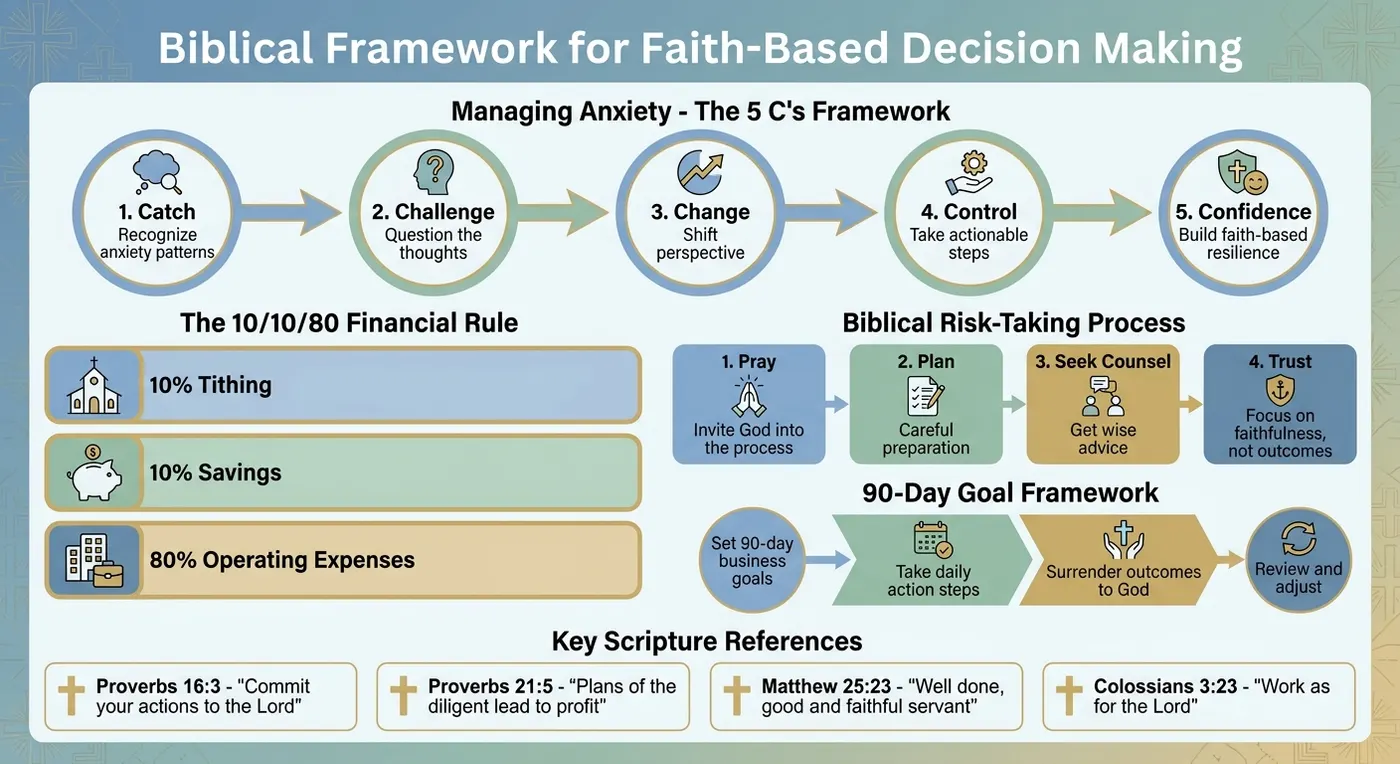
Identifying your anxiety triggers is only the beginning. Scripture provides a structured approach to help you regain control. A straightforward 5-step process can guide you: pause, reflect, identify the trigger and its root fear, then take specific, actionable steps. Additionally, the "5 C’s" framework – Catch, Challenge, Change, Control, and Confidence – can serve as a practical guide for navigating anxious moments.
For high-stress situations like networking events or major business decisions, preparation is key. Research the event beforehand, bring along a supportive companion if possible, plan a few conversation starters, and have a polite exit plan ready. Physical movement, such as a quick walk, can also work wonders to calm your mind and ease rising anxiety.
Using Psalmlog to Process Anxiety in Real Time

To build on these biblical strategies, consider using Psalmlog as a tool to manage anxiety as it happens. This modern approach incorporates voice journaling with Scripture, allowing you to record your thoughts and gain clarity in the moment. Robyn Graham emphasizes the benefits of journaling:
Journaling is like meditating; it reroutes the neural pathways in our brains. It can clear your mind.
Psalmlog’s voice journaling feature helps you capture your "what if" thoughts and concerns as they arise, offering personalized biblical guidance on the spot. By verbalizing your worries, you can complement your prayer practice and address anxiety immediately. With plenty of recording time each month, this tool ensures you have the space to process emotions whenever they surface.
5 Indicators of Anxiety for Entrepreneurs with Steve Cuss
How to View Risk Through a Biblical Lens
Building on biblical principles for managing anxiety, viewing risk through the lens of Scripture can strengthen your faith and bring clarity to your decision-making.
What the Bible Says About Taking Risks
The Bible encourages bold, faith-driven decisions that lead to spiritual growth and make a lasting impact. When you approach business decisions this way, risk becomes less about fear and more about opportunities for growth.
Matthew Chang of Chang Robotics offers a thought-provoking perspective:
What if the riskiest thing you could do with your life was play it safe?
This mindset shift is transformative. When you see your business as a resource entrusted to you by God, every decision becomes an act of stewardship. Fear of loss starts to fade when you focus on honoring Him with your choices.
However, biblical risk-taking doesn’t mean acting without thought. Proverbs 21:5 reminds us, "The plans of the diligent lead to profit as surely as haste leads to poverty." Careful planning, prayer, and seeking wise counsel are essential steps. These aren’t barriers to bold action – they’re the foundation that ensures your courage is guided by wisdom. Surrounding yourself with experienced advisors can help you discern the difference between faith-filled risks and impulsive decisions.
Once you’ve reframed risk through a biblical perspective, the next step is ensuring your goals align with God’s will.
How to Align Your Goals with God’s Will
Alignment begins long before you make your first move. Many entrepreneurs create a business plan and then ask for God’s blessing after the fact. Instead, invite God into the process from the very beginning. Build generosity into your business model and shape your goals to serve both people and His kingdom.
Ask yourself: Does this decision address real needs and benefit others? Mark 8:36 offers a sobering reminder: "What good is it for someone to gain the whole world, yet forfeit their soul?" When your goals go beyond profit and reflect Christ’s character, you create a foundation that’s both spiritually and practically sound. This approach naturally rules out opportunities that may seem profitable but conflict with your values.
Proverbs 11:25 emphasizes that "those who refresh others will themselves be refreshed." What might seem like a risky act of generosity can actually foster goodwill and loyalty, creating a competitive edge while reinforcing the eternal significance of your work.
Once your plans align with God’s purpose, you can step forward in faith, even when the path ahead is uncertain.
How to Trust God When Outcomes Are Unclear
Uncertainty is where faith is put to the test. You’ve done your homework, sought wise counsel, and prayed, but the results remain unknown. This is where God calls you to trust Him and take action. True stewardship focuses on faithfulness in the process rather than obsessing over perfect results.
For many entrepreneurs, financial uncertainty – especially when securing funds – is a major hurdle. It can feel overwhelming, but God’s timing often doesn’t match our own. Trusting in His plan means being patient and steadfast.
Integrity is another key to navigating uncertainty. Proverbs 11:1 underscores the importance of honest dealings: "The Lord detests dishonest scales, but accurate weights find favor with him." In a world where shortcuts are tempting, ethical excellence in every transaction becomes your long-term advantage. By working "with all your heart, as working for the Lord" (Colossians 3:23), you remain grounded, even when results take time to materialize.
Jesus’s words in Matthew 25:23 offer reassurance: "Well done, good and faithful servant!" God values your faithfulness over achieving perfect outcomes. Trust that He acknowledges your obedience and effort, even if the visible results haven’t arrived yet.
Practical Tools for Making Faith-Based Decisions
Building on biblical principles and earlier tools, these practical methods can help you navigate anxiety and strengthen your faith. They’re designed to bring clarity, align your decisions with Scripture, and cultivate the spiritual strength needed for consistent, faith-driven choices.
How Voice Journaling Brings Clarity and Peace
When you’re wrestling with big decisions, sometimes it’s easier to talk things out than write them down. Voice journaling allows you to process your thoughts in real-time by speaking them aloud. Tools like Psalmlog combine this practice with Scripture, linking your concerns to specific biblical passages like Philippians 4, Psalm 23, or Isaiah 41.
This tool doesn’t just give you verses – it provides a six-point response that includes a reflection on your fears, a prayer for peace, and actionable steps like “reach out to your pastor” or “call your doctor.” Sarah M., a career professional, shared her experience:
I used to spend 2-3 hours searching for relevant Scripture when facing big decisions. Psalmlog gives me biblical answers in minutes, right when I need them.
By speaking your fears plainly, you allow the system to process your raw emotions and guide you. Specific journaling templates, such as those for “decision paralysis” or “financial worry,” help you organize your thoughts during stressful times. Over a three-to-six-month period, you can track patterns using an insights dashboard to see when anxiety peaks and which Scriptures have brought you the most peace. This reflective practice naturally complements prayer and Scripture-based decision-making.
Using Prayer and Scripture Reflection to Guide Decisions
Before making a significant change – whether hiring a key employee, launching a product, or shifting your strategy – invite God into the process through prayer. This act places God at the center of your planning and decision-making.
Start your day with prayer and regularly assess your tasks, removing anything that doesn’t align with your spiritual values. Use the Bible as your guide, especially Proverbs, which offers wisdom on integrity, financial stewardship, and planning. Proverbs 16:3 reminds us: “Commit your actions to the Lord and your plans will succeed.”
Set 90-day business goals and take daily steps toward them, trusting that God is working through your fears and leading the way. Financially, the 10/10/80 rule – 10% for tithing, 10% for savings, and 80% for everything else – can help you manage revenue in a way that aligns with biblical stewardship. These practices establish a foundation for spiritual strength and consistency in faith-based decisions.
How to Build Spiritual Resilience
Spiritual resilience doesn’t happen overnight – it’s built through intentional, steady practices. One of the most important steps is slowing down your decision-making process. If you feel rushed, it’s often a sign to pause and seek God’s wisdom more carefully.
A structured approach can help you make decisions with confidence. Start by clarifying your core values, exploring multiple options, seeking advice from trusted mentors, and evaluating long-term consequences. This process strengthens your ability to stay grounded in faith.
Isolation can lead to poor choices, so it’s essential to connect with a biblically sound community. With 99.7% of Christ-following entrepreneurs worldwide building their businesses alone without support from a Christian organization, finding fellowship and mentorship is critical. These relationships provide valuable perspective and wisdom, especially when you’re too close to a situation to see it clearly. Resilience grows through consistent spiritual disciplines – prayer, Scripture study, gratitude, and community – not by trying to handle everything on your own.
Conclusion: Trusting God’s Wisdom in Every Decision
Key Takeaways
Making high-pressure decisions doesn’t have to leave you overwhelmed. By grounding your choices in biblical truth, you can shift your mindset from owning everything to stewarding what God has entrusted to you. This perspective transforms fear into an opportunity to rely on His provision.
Take each decision to God in prayer – whether it’s hiring your first employee or making a major pivot in your strategy. Practical tools like the 10/10/80 financial rule (10% for tithing, 10% for savings, and 80% for other expenses) can guide you in managing your resources responsibly. Set 90-day goals and focus on consistent daily actions, but always surrender the outcomes to God. As Proverbs 16:3 says: "Commit your actions to the Lord and your plans will succeed".
Consider using tools like voice journaling with Psalmlog to process your worries and connect them to Scripture. This practice can help you identify actionable steps while grounding your decisions in faith. Additionally, regularly review your business activities. If something isn’t bearing fruit or aligning with God’s purpose for you, have the courage to let it go.
By integrating biblical practices like prayerful planning and journaling into your decision-making, you can approach each choice as a meaningful step in your faith journey.
Encouragement for Christian Entrepreneurs
You’re not building your business on your own. God has equipped you to face uncertainty, manage anxiety, and honor Him in every decision. Your work is more than just a way to earn – it’s an opportunity to reflect God’s character and fulfill His purpose.
As Stefanie Gass, a Christian entrepreneur, wisely says: "Business is about serving others well, not just making money". Avoid the isolation that can lead to poor decisions by surrounding yourself with mentors and a community grounded in Scripture. When you start your day by seeking God, align your choices with His Word, and trust Him with the outcomes, you show that His wisdom is all you need to face any challenge. Let today’s pressures deepen your faith and remind you to trust His guidance in every step.
FAQs
How do I know if I’m feeling anxiety or just normal nerves?
Anxiety and regular nervousness might seem alike at first, but they differ in both intensity and effect. Anxiety tends to stick around, often feeling overpowering. It can bring physical symptoms like a racing heart or trouble focusing, and it often disrupts decision-making. Plus, the reaction usually feels out of proportion to whatever triggered it.
On the other hand, normal nerves are short-lived and easier to handle. They’re often tied to moments of anticipation or excitement – like before a big presentation or event – and they usually fade once things get underway or the situation resolves.
Understanding these distinctions can make it easier to address and manage each one appropriately.
How can I tell faith-filled risk from impulsive risk?
Faith-filled risk is rooted in a deep trust in God. It involves intentional prayer, reflecting on scripture, and actively seeking His wisdom. This type of risk aligns with biblical teachings and brings a sense of peace, even when the outcome is uncertain.
Impulsive risk, however, comes from acting on haste, emotions, or a craving for quick results. It often skips over spiritual discernment, leaving decisions disconnected from God’s guidance and potentially leading to reckless outcomes.
What should I do when I’ve prayed but still feel unsure?
When you’ve prayed but still feel uncertain, it’s important to remember that faith often calls for patience and trust in God’s timing. Turning to scriptures like Philippians 4:6-7 can provide comfort and reassurance: *"Do not be anxious about anything, but in every situation, by prayer and petition, with thanksgiving, present your requests to God. And the peace of God, which transcends all understanding