
How to Discern God's Will for a Specific Decision You're Facing
Use prayer, Scripture, counsel, and voice journaling to find clarity, notice God’s peace, and make faith-guided decisions.
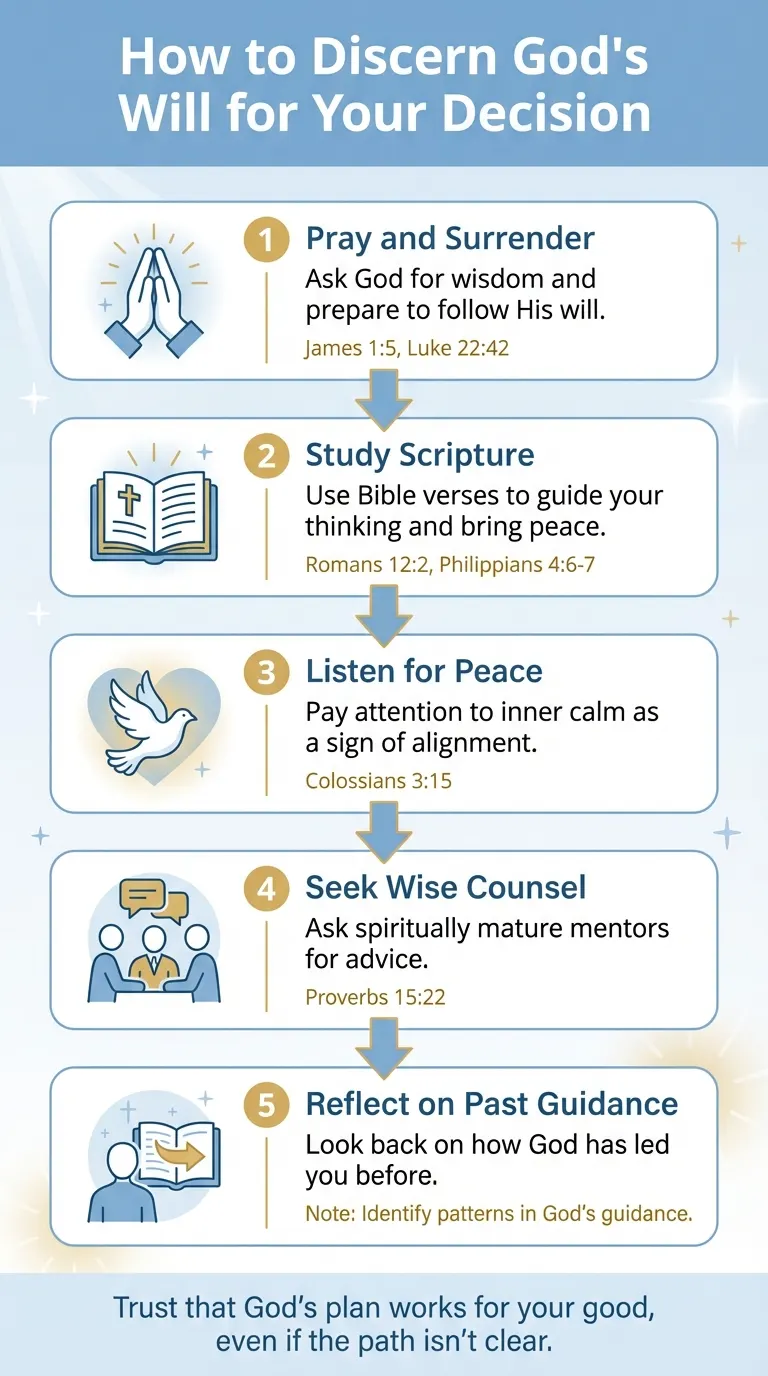
Struggling to make a big decision? Here’s a simple guide to understanding God’s will:
- Pray and Surrender: Start by asking God for wisdom (James 1:5) and prepare your heart to follow His will, not your own (Luke 22:42).
- Study Scripture: Use Bible verses like Romans 12:2 and Philippians 4:6-7 to guide your thinking and bring peace.
- Listen for Peace: Pay attention to an inner calm (Colossians 3:15) as a sign of alignment with God’s will.
- Seek Wise Counsel: Ask spiritually mature mentors for advice (Proverbs 15:22).
- Reflect on Past Guidance: Look back on how God has led you before to identify patterns.
Tools like journaling and apps like Psalmlog can also help you process your thoughts and connect them with Scripture. Ultimately, trust that God’s plan works for your good, even if the path isn’t clear.
5 Steps to Discern God’s Will for Your Decision
Pray for Guidance and Study Scripture
How to Pray About Your Decision
Prayer is more than just asking God for answers – it’s about preparing your heart to truly hear His guidance. George Müller once said, "I seek at the beginning to get my heart into such a state that it has no will of its own in regard to a given matter." This attitude of surrender is the foundation of meaningful prayer. Following Jesus’s example in Luke 22:42 – "Not my will, but yours be done" – can help you let go of your own desires and trust in His wisdom.
When you pray, be specific in your requests. James 1:5 reminds us that God gives wisdom generously to those who ask in faith. Billy Graham offered this advice: "Make it a matter of regular prayer, asking God to guide you and make His will known to you." Praying consistently can bring clarity over time. Writing down your prayers and reflections can also help you recognize recurring themes and avoid making decisions based on fleeting emotions.
Integrating Scripture into your prayers strengthens your connection to God’s will. Ask Him to guide your steps, as Proverbs 3:5-6 teaches, and let the peace described in Philippians 4:6-7 quiet your worries. Praying through these verses not only aligns your desires with God’s character but also helps you focus on His voice rather than your own thoughts. Once your heart is aligned, turn to Scripture itself for further direction.
Bible Verses That Bring Clarity
The Bible is a dependable guide, described in Psalm 119:105 as a lamp to your feet and a light to your path, offering wisdom one step at a time. When facing tough decisions, Scripture provides a framework of scriptures for prayerful discernment to help you understand God’s will.
Verses like Romans 12:2 and Colossians 1:9 encourage the renewal of your mind, equipping you with God’s wisdom. Romans 12:2, in particular, emphasizes the importance of transforming your thinking to discern His perfect will.
If fear or anxiety about making the wrong choice weighs on you, Philippians 4:6-7 offers comfort, urging you to bring everything to God in prayer and promising His peace to guard your heart and mind. Similarly, Isaiah 30:21 paints a vivid picture of God’s guidance, saying, "This is the way; walk in it", reassuring you when you’re uncertain about your next steps.
Some passages clearly outline God’s desires for your life. For example, 1 Thessalonians 4:3 highlights His will for your sanctification, while 1 Thessalonians 5:18 reminds you to give thanks in all circumstances. Micah 6:8 sums up His expectations beautifully: act justly, love mercy, and walk humbly with your God. As Andrew David Naselli wisely observed, "If you want to hear the voice of God for sure, then read the Bible."
Use Spiritual Practices to Gain Clarity
Voice Journaling to Process Your Decision
Speaking your thoughts aloud and recording them can become a powerful way to discern God’s direction. Unlike traditional journaling, voice journaling captures the natural, unfiltered flow of your thoughts. This can help you identify patterns or recurring themes you might otherwise overlook. Keith Davy, Former Director of Research and Development at Cru, highlights the importance of this practice:
"Too often our most recent thought will dominate our thinking and have the most influence, whether or not it merits that privilege."
By recording your prayers and reflections over time – whether days or weeks – you create an opportunity to revisit and notice consistent themes. These patterns can reveal how the Holy Spirit may be guiding you. This approach fosters Spirit-filled reasoning, allowing God to shape your logic and help you evaluate choices through His values rather than worldly perspectives.
As you record, consider asking yourself reflective questions like: What am I feeling? What do I truly desire? How has God led me in the past? These questions help separate fleeting emotions from the deeper desires God places in your heart. Wayne Grudem, Professor of Theology and Biblical Studies, explains:
"Our heart is often an indication of deep desires that God has planted within us".
As you review your recordings, pay attention to moments where a steady sense of inner peace emerges – it often points to clarity and direction.
Recognizing God’s Peace as Confirmation
In addition to prayer and Scripture, the unmistakable calm of God’s peace serves as a sign that you’re aligned with His will. Beyond simply reflecting on your recordings, this peace offers further confirmation of your decision.
Biblical peace isn’t just the absence of anxiety; it’s a deep confidence that you’re walking in step with God. Colossians 3:15 describes this peace as an inner guide that settles your heart during decision-making. Pastor Chuck Swindoll shared how he experienced a compelling sense of the Holy Spirit’s prompting during a pivotal decision in 1999, even when it went against his personal preferences.
However, it’s important to distinguish between genuine spiritual peace and mere comfort. True peace from God can endure even in challenging or uncertain circumstances. GotQuestions.org provides this insight:
"Generally speaking, if we don’t have peace about something, we shouldn’t do it."
Pay attention to your internal state after making a tentative decision. If you consistently feel spiritual unease – sometimes referred to as "desolation", or a sense of moving away from God – it may be a sign to pause or reevaluate. That said, peace should never be used to justify a decision that contradicts Scripture. Always measure your feelings against God’s Word to ensure they align with biblical truth.
Use Psalmlog for Biblical Guidance
How Psalmlog Helps You Discern God’s Will
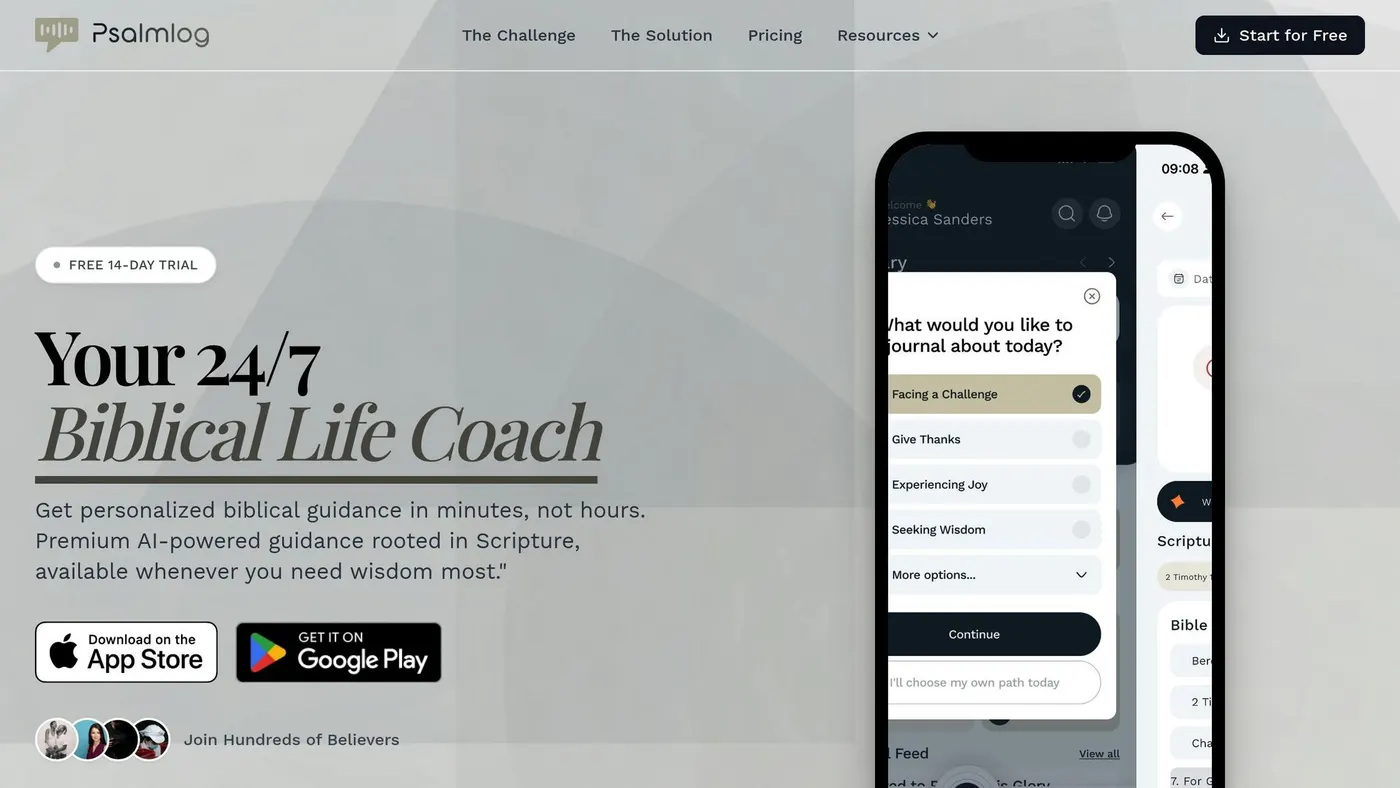
When you’re grappling with tough decisions, Psalmlog brings AI-powered tools to support your spiritual journey. By combining voice journaling with personalized scripture recommendations, the app helps you organize your thoughts and align them with biblical principles. It takes your voice entries, identifies recurring themes, and delivers clear, actionable insights.
Psalmlog’s AI listens to your spoken prayers and concerns, then suggests specific Bible verses that relate to your situation. This bridges the gap between Scripture and your decision-making process, helping you renew your mind and discern what is "good, pleasing, and perfect".
Additionally, the app’s sentiment analysis feature identifies emotional patterns in your reflections. By tracking your feelings over time, it can reveal whether you’re experiencing the biblical peace described in Philippians 4:7 – an indicator of God’s guidance. The scripture tagging tool ensures that your reflections remain rooted in God’s Word, steering you away from relying solely on personal preferences. These tools work together to deepen your understanding of biblical guidance, which is further enhanced through the Faith Builder plan.
Getting Started with Psalmlog’s Faith Builder Plan
Take your discernment to the next level with the Faith Builder plan, available for $19.99 per month. It offers 300 minutes of recording time each month and personalized, 6-point AI insights to help you process your decisions thoroughly. The structured analysis breaks down your reflections, making it easier to spot patterns and themes you might overlook.
The plan also includes access to all Bible translations, a calendar to track your spiritual growth, and full transcripts of your voice entries. This allows you to revisit past reflections and see how God has been shaping your thoughts over time. With a personal insights dashboard and the ability to create shareable insights, you can easily involve trusted Christian mentors in your discernment process. Psalmlog even offers a free trial so you can explore these features risk-free, and annual plans come with a discount for added savings.
Seek Counsel and Review Past Decisions
Getting Advice from Christian Mentors
Making decisions in isolation can lead to missteps. Proverbs 15:22 reminds us: "Without counsel plans fail, but with many advisers they succeed". When facing tough choices, turning to spiritually grounded believers can offer insights you might not see on your own.
Seek out mentors who truly know you and understand the situation at hand. These should be individuals who are not just friends but are mature in their faith, wise, and committed to living out godly principles. Juan Sanchez, Senior Pastor at High Pointe Baptist Church, emphasizes this point:
"We must fight that temptation and find counselors who truly love us and are willing to tell us what we need to hear, especially when we need to hear hard truths".
Keep your circle of advisors small – two or three trusted, spiritually mature people are ideal. Be honest about the full scope of your situation, resisting the urge to present only the details that align with what you want to hear. Ask your mentors to pray specifically about your decision, and follow up with them to see if they sense any spiritual direction. If their collective advice challenges your personal desires, it’s worth pausing and reconsidering your path. Reflecting on past decisions alongside this counsel can further affirm God’s guidance.
Learning from Your Past Decisions
Just as wise counsel is valuable now, looking back at your past decisions can reveal patterns of divine guidance. Your personal spiritual journey is a testament to God’s faithfulness. Reflecting on previous choices can help you see how God has worked in your life and give you confidence in the decisions you face today. Review old journal entries, voice recordings, or other ways you’ve documented God’s direction and how things unfolded.
Pay attention to moments when God "opened or closed doors" in your life. A job you didn’t get or a relationship that ended might have been God steering you toward something better. Remember, initial emotions can cloud your perspective, but over time, God’s steady guidance becomes clearer. Keeping a record of these moments can help you stay grounded, especially when emotions threaten to take over.
Look for recurring patterns where Scripture-based reflection, prayer, wise counsel, and circumstances align to point you in a specific direction. Reflect on whether your past decisions brought you closer to God and produced positive outcomes for you and those around you. This process not only shapes your current decisions but also strengthens your faith in God’s ongoing work in your life.
Conclusion: Trust God with Your Decision
Review of Key Steps
You’ve just explored a thoughtful approach to seeking God’s will. The journey began with prayer and Scripture, followed by using voice journaling to process your thoughts and emotions. You sought guidance from mature Christians and reflected on past experiences to recognize how God has led you before. When Scripture, prayer, wise counsel, and life circumstances align, you can step forward with confidence.
For the big decisions you’re grappling with, this intentional pursuit of God’s guidance is crucial. With these steps in mind, you’re equipped to make your choice with clarity and conviction.
Moving Forward in Faith
Now that you’ve laid the foundation, it’s time to act and trust God with the outcome. It’s natural to want a dramatic sign or an overwhelming sense of peace before making a move. But if your decision aligns with Scripture and you’ve sought God earnestly through prayer and wise counsel, you can trust Him to guide the results. George Müller, a 19th-century evangelist admired for his unwavering faith, said it perfectly:
"Nine-tenths of the difficulties are overcome when our hearts are ready to do the Lord’s will, whatever it may be".
Here’s a freeing thought: God’s sovereign plan isn’t dependent on you making a flawless choice. If you’ve sincerely sought to honor Him and find that multiple paths align with biblical principles, you have the freedom to choose based on what resonates most with your heart. Instead of saying, "God told me" – which can sometimes shift responsibility – take ownership by saying, "I’ve prayed, sought wisdom, and this seems like the wisest course." Trust that God is at work within you, shaping your desires and empowering you to act in ways that please Him. As Billy Graham once encouraged:
"Once God leads you to make a decision, don’t draw back. Instead, trust His leading, and believe He goes before you – for He does".
God sees the entire picture – past, present, and future – while our perspective is limited. Even if the outcomes aren’t what you expect, trust that He is weaving everything together for your good. Through practices like voice journaling and biblical reflection, you’ve already deepened your relationship with Him. That spiritual growth often carries more weight than the specific choice you make. Step forward confidently, knowing that your loving Father rewards those who genuinely seek Him.
The Secret to Knowing God’s Will (and Making Great Decisions)
FAQs
How can I tell if my peace is from God or just my own feelings of comfort?
Recognizing the difference between God’s peace and personal comfort involves looking closely at its origin and how it aligns with Scripture. God’s peace is a profound and steady assurance that matches His Word and often remains firm even in moments of challenge or sacrifice. On the other hand, personal comfort tends to prioritize ease, steer clear of difficulties, and can quickly disappear when circumstances shift.
To help distinguish between the two, consider these key questions:
- Does this peace align with biblical principles? God’s peace will never go against Scripture.
- Is the calm steady and enduring, even if the decision feels difficult? Personal comfort often fades when faced with challenges.
- Have I prayed and sought guidance from the Holy Spirit? God’s peace instills a quiet confidence grounded in trust, not fleeting emotions.
When the peace you feel lines up with God’s Word, remains steady through trials, and is affirmed through prayer and wise counsel, it’s likely from God. However, if it feels temporary or tied to avoiding discomfort, it may simply be personal comfort.
How can voice journaling help you understand God’s will?
Voice journaling offers a meaningful way to gain clarity when discerning God’s will. By speaking your prayers, thoughts, and reflections aloud while recording them, you create a unique opportunity to process emotions and ideas on a deeper level. Listening to these recordings later can reveal patterns, recurring themes, or insights that might otherwise go unnoticed.
Though not a traditional part of biblical decision-making, voice journaling works well alongside practices like prayer, studying Scripture, and seeking guidance from trusted advisors. It promotes honest self-reflection and helps you remain open to recognizing how God may be working through your thoughts and experiences.
How can Psalmlog help me make decisions that align with biblical principles?
Psalmlog provides a range of tools to support you in seeking and understanding God’s will during your decision-making journey. By combining Scripture-based resources, prayer prompts, and practical methods such as voice journaling, it encourages thoughtful reflection and helps align your choices with biblical principles.
These tools aim to bring spiritual clarity, guiding you through decisions while deepening your connection with God. Whether you’re confronting a major life decision or navigating smaller, everyday choices, Psalmlog offers the insights and reassurance you need to step forward in faith.