
Founder Mental Health in Startups
Hidden founder burnout and spiritual strain explored, plus faith-based tools like voice journaling and Sabbath to rebuild resilience.
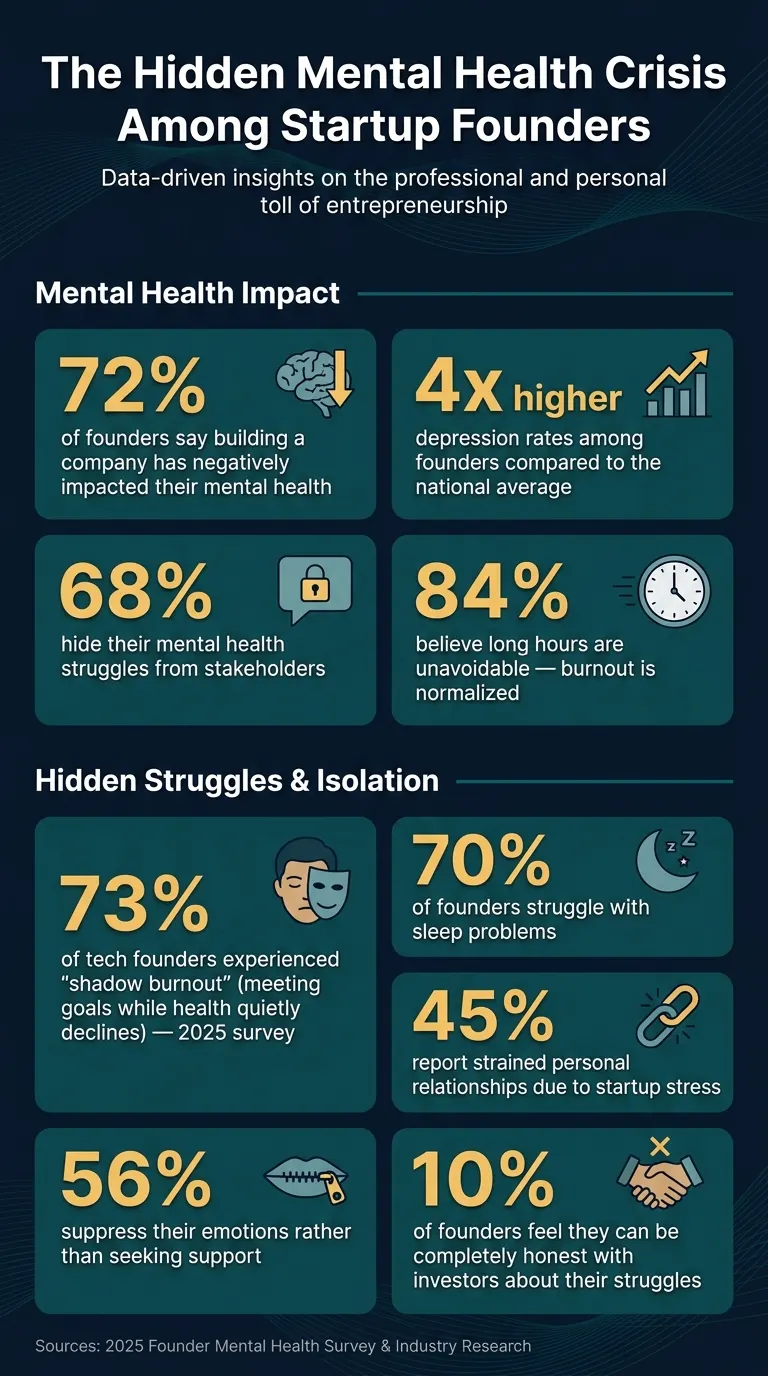
The mental health struggles of startup founders are often ignored, yet the statistics are alarming:
- 72% of founders report that building a company has negatively impacted their mental health.
- Depression rates among founders are four times higher than the national average.
- 68% hide their struggles from stakeholders, fearing reputational damage.
- Burnout is normalized with 84% believing long hours are unavoidable.
Beyond mental health, the relentless grind erodes spiritual well-being. Founders often tie their identity to their business success, leading to isolation, anxiety, and a loss of purpose. This article explores how faith-based practices, like voice journaling and Sabbath rest, can help founders manage stress, reconnect with their purpose, and build healthier startup cultures. Tools like Psalmlog offer practical ways to incorporate Scripture and reflection into busy schedules, providing both mental relief and spiritual grounding. The goal? To redefine success as faithfulness, not just metrics.
The Hidden Mental Health Crisis Among Startup Founders
How Startup Culture Affects Mental and Spiritual Health
Burnout and Chronic Stress in Founders
When people think of burnout, they often picture missed deadlines and exhaustion. But for startup founders, burnout can show up in more subtle ways. A 2025 survey revealed that 73% of tech founders experienced "shadow burnout" – a condition where they continue to meet business goals while their health quietly declines. The same study found that 70% of founders struggled with sleep problems, and 45% reported strained personal relationships.
This hidden burnout is particularly dangerous because it often goes unnoticed. EEG studies have shown that burnout forces the brain to work harder to maintain performance levels. Dr. Lisa Kantor, a therapist at CEREVITY, explains:
"Shadow burnout specifically degrades the quality of judgment while preserving the speed of execution, so you’re still making decisions fast but they’re getting worse."
Chronic stress also becomes deeply tied to a founder’s sense of identity, making setbacks feel even more devastating.
When Founders Tie Their Identity to Startup Success
For many founders, their personal identity becomes intertwined with their company’s performance. This phenomenon, known as identity fusion, can make professional challenges feel like personal failures.
Patrick Mabilog, founder of Block Ten Strategy, shared his own experience after losing a major client in February 2026. The cancellation cost his company $1,200 and resulted in a 30% drop in monthly revenue:
"My joy was directly tied to my metrics. Peace was hostage to my performance. I was not building a business, but a tower."
This entanglement of self-worth with business outcomes doesn’t just harm mental health – it can also erode the spiritual grounding that gives purpose to their work. When metrics take center stage, founders may lose sight of the deeper meaning behind their efforts. This shift, sometimes called "Solomon drift", replaces soulful purpose with a relentless focus on numbers. Strategy overshadows prayer, spreadsheets take the place of reflection, and while the business may thrive outwardly, the founder’s inner life suffers.
This blending of identity and business performance often leads to greater isolation, compounding the emotional and spiritual strain.
Isolation and the Lack of Safe Spaces in Leadership
Startup founders often find themselves carrying burdens they feel they can’t share. Many worry that showing vulnerability to their teams could weaken morale, and even with close family members, like a spouse, the weight of stress often remains unspoken. A striking statistic highlights this: only 10% of founders feel they can be completely honest with their investors about their struggles.
Instead of opening up, many founders suppress their emotions. In one study, 56% admitted to doing so. But research shows that bottling up emotions only increases physiological stress, creating a pressure cooker effect. This emotional suppression also cuts founders off from the spiritual processing they need to stay grounded.
Alfred from RuckTalk captures the challenge well:
"The ‘Lonely Top’ is a dangerous place. As you scale, your circle often shrinks. You can’t talk to your employees about your fears because you need to project strength."
Without a space to share doubts, fears, or even questions of faith, founders may lose touch with the spiritual practices that once gave them clarity and resilience. This lack of connection not only deepens their mental strain but also weakens the spiritual foundation that could help them navigate the challenges of leadership.
#590 Mental Health Is Now a Portfolio Risk: Why 72% of Founders Are Struggling? with James Oliver…
A Biblical Framework for Mental Health Under Pressure
Startups often bring intense stress and isolation, but Scripture offers a timeless guide for renewal. The struggles of burnout, identity entanglement, and loneliness are not new. For founders navigating the whirlwind of startup life, the Bible provides more than just comfort – it lays out a practical framework to navigate these challenges.
What the Bible Says About Work and Ambition
Work itself isn’t the issue. In fact, Genesis 2:15 shows that work was part of God’s original plan – a calling to steward His creation, not a measure of personal worth. As Patrick Mabilog, Founder of Block Ten Strategy, explains:
"Adam’s work wasn’t done to prove his worth. After all, God – the being of infinite worth – resided with them in that Garden."
The real problem arises when ambition shifts from serving God’s purposes to seeking personal validation. This "Tower of Babel" mindset, driven by fear and the need for approval, contrasts sharply with biblical ambition. Chris Michals describes the difference:
"A genuine Kingdom entrepreneur doesn’t start with their own idea and ask God to bless it. They start by asking God what He wants built."
This perspective invites founders to view their team, mission, and resources as entrusted by God, not owned. Even small changes in language – saying "our team" or "God’s vision" instead of "my team" or "my vision" – can ease the pressure to control outcomes. This shift aligns ambition with service, moving away from the identity struggles tied to work.
Biblical Guidance on Anxiety and Fear
Startup founders often face anxiety fueled by fears of failure – whether it’s a botched product launch, a missed fundraising goal, or losing their team’s trust. Isaiah 30:15 offers a counterpoint to this cycle:
"In repentance and rest is your salvation, in quietness and trust is your strength." – Isaiah 30:15 (NIV)
The original Hebrew words – "shuvah" (return), "nachat" (settle), "shaqet" (undisturbed), and "bitḥah" (secure confidence) – paint a picture of calm reliance on God. This contrasts with the reactive, self-reliant mindset many founders default to under pressure.
One practical tool is the "War Room" journaling method. Start by dumping your fears onto paper, separate facts from feelings, and find a Scripture that counters any lies you’re believing. Dr. Michael Napier, a psychologist and pastor, highlights the power of this practice:
"If it’s in your head, it’s just a feeling. But if it’s on paper, it becomes data."
Writing down thoughts transforms them into something tangible and manageable, creating a solid foundation for making decisions under stress. This approach naturally ties into the importance of rest.
Why Rest and Sabbath Matter for Founders
Rest isn’t just about recovery; it’s essential for sustaining leadership in high-pressure environments. While startup culture often glorifies exhaustion, the Bible frames rest as a command, not a luxury. Psalm 127:1-2 makes this clear:
"Unless the Lord builds the house, the builders labor in vain… for he grants sleep to those he loves."
For founders, Sabbath is more than taking a break – it’s an act of trust. It’s a way of acknowledging that God holds everything together, even when you step away. Skipping rest often signals a belief that success depends entirely on you.
The NCC Content Team captures this well:
"Rest is not the reward you earn after finishing everything. It is something Jesus calls you to before everything is done."
The story of Elijah in 1 Kings 19 offers a vivid example. After a period of intense ministry and deep burnout, Elijah collapsed, even asking God to take his life. Instead of rebuking him or demanding more prayer, God met Elijah’s exhaustion with care – providing bread, water, and sleep (twice). This shows that physical restoration is often the first step when burnout takes over.
Faith-Centered Practices for Founders: Voice Journaling and Psalmlog
Why Voice Journaling Works for Busy Founders
The biblical principles of rest, surrendering ambition, and trusting God with anxiety are only effective if they’re woven into daily life. But let’s face it – most founders don’t have 30 minutes to sit down and journal. That’s where voice journaling steps in. It’s quick, flexible, and fits into the cracks of a packed schedule – whether during a commute, between meetings, or just before bed.
Speaking is 3–4 times faster than typing, making it easier to process emotions and thoughts. Plus, your voice captures what text often can’t – the tremble of fear, the weariness in your tone, or the frustration behind your words. This raw honesty mirrors the way biblical figures like Hannah (1 Samuel 1), David in the Psalms, and even Jesus in Gethsemane shared their burdens with God.
To keep the practice simple and effective, use this three-step framework:
- What am I carrying today? Identify the specific fear, stress, or conflict weighing on you.
- Where did I sense God, or feel distant from Him, in this? Reflect on how the situation connects to your faith.
- What do I need to relinquish or request? Wrap up with a prayer or a specific ask for guidance.
In just five minutes, this practice transforms stress into a meaningful moment of connection with God.
How Psalmlog Supports Mental and Spiritual Health
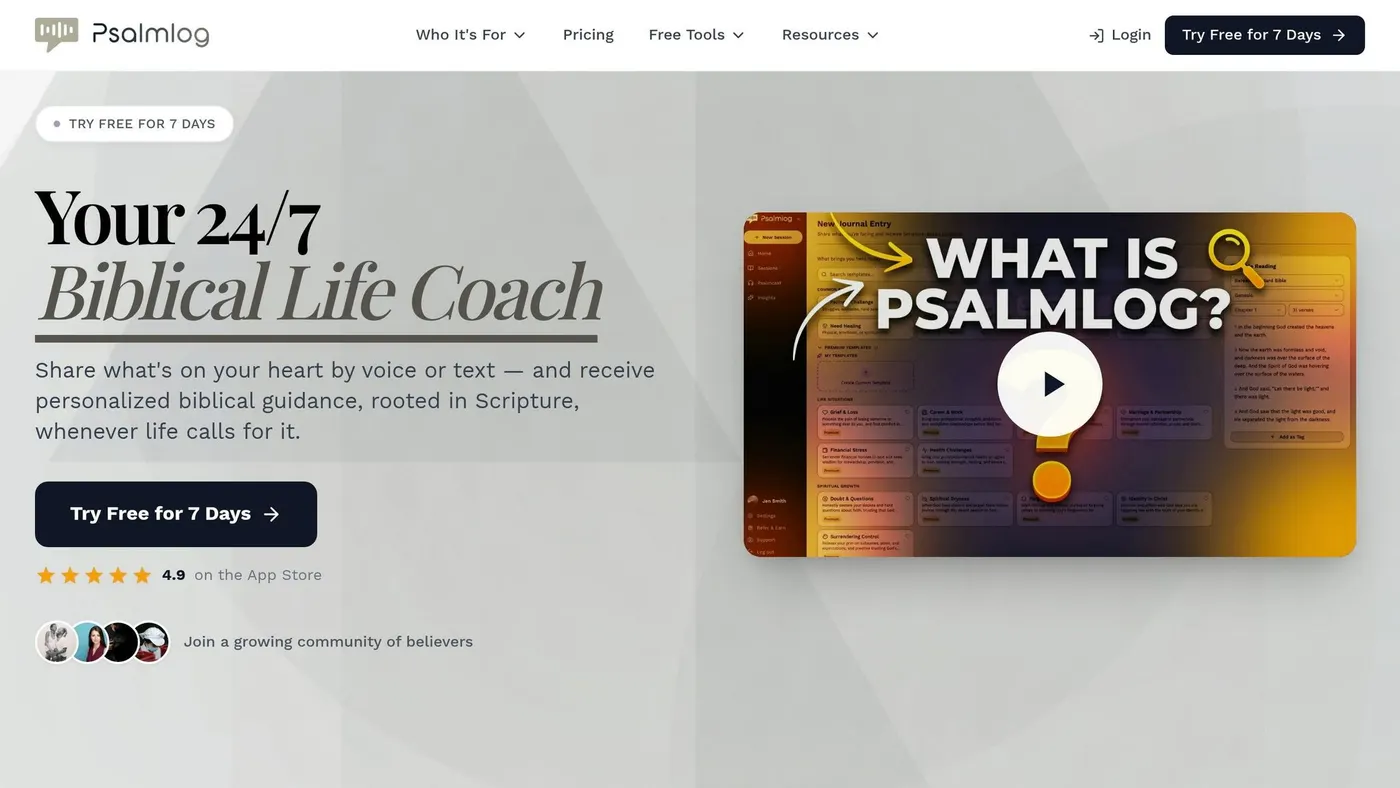
Taking voice journaling a step further, Psalmlog offers a faith-based, voice-first journaling app that provides immediate, personalized biblical guidance. After recording a voice entry, the app generates a six-part response in about 60 seconds. This includes a Scripture verse, a tailored reflection, encouragement, a prayer, a practical next step, and a direct tie to your recorded words.
What makes Psalmlog stand out is its ability to understand context. As the app explains:
"Psalmlog’s AI… functions as a biblical concordance that understands context – finding the verses you wouldn’t have found searching by keyword."
For founders battling burnout or feeling spiritually adrift, Psalmlog’s sentiment analysis can detect recurring patterns – like frequently mentioning feeling "drained" or "overwhelmed." This can act as an early warning system, helping you address issues before they escalate. Over time, the app builds a personal record of how God has worked through your challenges, creating a kind of spiritual dashboard.
Privacy is also a key feature. Audio recordings are transcribed locally on your device and immediately deleted, with only an encrypted transcript stored to ensure your reflections remain secure.
This tool equips founders to stay grounded in their faith, even when navigating the toughest business challenges.
Using Psalmlog in Specific Startup Situations
Startup life is full of high-stakes moments, and Psalmlog is designed to provide support right when you need it most. Here’s how it can help during critical situations:
- Facing a layoff decision: Use the app to process financial stress and fear, while receiving Scripture-based encouragement on stewardship and God’s provision.
- Co-founder conflict: Record your frustrations privately to work through anger before a conversation, with Psalmlog offering verses on reconciliation.
- Major pivots or fundraising decisions: Speak through your options and underlying fears, allowing the app to guide you with reflective prompts and Scripture that aligns with your mission.
Psalmlog offers several subscription options. The Faith Builder plan costs $19.99/month (or $14.99/month billed annually) and includes 300 voice minutes – enough for about 60 five-minute sessions. For unlimited recording, the Shepherd plan is available at $34.99/month (or $24.99/month billed annually). A free tier is also available, requiring no credit card to get started.
Practical Steps for Building a Healthier Startup Culture
Drawing from biblical principles and the practice of voice journaling, here are actionable ways to cultivate a more balanced and supportive startup culture.
Daily Routines for Founders
Bridging the gap between understanding biblical teachings and living them often comes down to daily habits. You don’t need hours to make a difference – just a bit of focus and consistency. These small, intentional routines help offset the relentless pace of startup life by grounding each day in reflection and rest.
Start your mornings with 10–15 minutes away from distractions like email or Slack. Use 5 minutes to meditate on a verse that aligns with your day’s challenges (e.g., Proverbs 3:5–6 for decision-making or Philippians 4:6–7 before a high-stakes investor call). Then, spend 3–5 minutes using Psalmlog to voice your top stressors and priorities. This quick voice entry becomes a resource you can revisit later.
End your day with a brief "shut-down ritual." Reflect on five questions inspired by the Ignatian Examen:
- What am I most grateful for today?
- Where did I feel the most stress or reactiveness?
- Where did I notice God’s presence?
- What do I need to confess or let go of?
- What do I want to bring to God for tomorrow?
You can record these reflections in Psalmlog during your commute or just before bed – no need for a desk setup. The goal isn’t perfection. Start small: pick one verse in the morning and try a 5-minute voice entry. Let the habit grow naturally.
Weekly Mental and Spiritual Health Check-Ins
Think of your emotional and spiritual health as deserving the same attention as a business review. Dedicate 30–45 minutes once a week – Sunday evenings or Friday afternoons work well – to take stock of where you’re at. This practice helps you address stress before it spirals into something unmanageable.
Use this time to identify recurring themes and pair them with scripture for guidance. For example:
- Fundraising anxiety? Reflect on Matthew 6:31–33.
- Struggling with overwork? Revisit the Sabbath principle in Exodus 20:8–11.
From these reflections, choose one specific action for the week ahead. This could be a conversation you’ve been avoiding, an evening you fully block off for rest, or a task you finally delegate. Over time, these weekly check-ins shift your mindset from reacting to proactively addressing challenges. They also lay the groundwork for creating a healthier team culture.
Building a Healthier Team Culture
Just as founders benefit from personal reflection, leaders can foster team well-being by modeling balanced behaviors. Remember, culture is shaped by actions, not policies. If you’re sending Slack messages at 10:00 p.m., your team will assume they’re expected to be “always on,” no matter what your handbook says. Instead:
- Schedule late-night ideas to send during regular working hours.
- Take your lunch away from your desk.
- Leave work on time occasionally, and mention it’s for family, rest, or personal commitments.
For teams led by Christian values, consider introducing optional faith-based practices. These might include:
- A 15-minute voluntary prayer time on Monday mornings.
- A Slack channel for sharing prayer requests.
- A brief scripture reflection before key meetings.
The key word here is optional – make it clear that participation is not tied to performance or belonging.
Research from Gallup shows that employees who feel their organization genuinely cares about their well-being are 69% less likely to look for a new job. That’s not just a feel-good statistic – it’s a strategy for retention and sustained performance. Combine this with regular one-on-one meetings that include well-being as a standing agenda item, and you’ll create a culture of psychological safety that supports both people and productivity.
Conclusion: Measuring Success by Spiritual Wholeness
Startup culture in the U.S. often measures success through ARR, headcount growth, valuation, and exit size. These metrics carry undeniable importance for operations. But as this article has shown, when founders define themselves solely by these numbers, the fallout can be profound – impacting their sleep, relationships, sense of identity, and even their connection with God.
Faithfulness Over Outcomes
The parable of the talents in Matthew 25:14–30 offers a different perspective. The servants who were rewarded weren’t those with the biggest results but those who were faithful with what they were given. This presents a radically different way of evaluating success compared to the metrics-driven world of startups.
In practice, this shift means asking a new set of questions at the end of the week. Instead of focusing solely on, "Did we hit our numbers?" consider: "Did I act out of faith rather than fear? Did I care for my team? Did I honor God with my time?" These aren’t fluffy questions – they’re essential for determining whether your leadership is grounded and sustainable or simply fueled by adrenaline.
Reframing your startup as a stewardship rather than a monument to personal achievement changes everything. Financial success can still be a goal, but it becomes a byproduct of faithful work, not the ultimate measure of your worth. This perspective lays a foundation for leadership that endures far beyond quarterly targets.
Keeping Leadership Strong Through Spiritual Practices
Once you embrace this mindset, daily and weekly spiritual routines become critical to making it a reality. Practices like morning Scripture reading, evening Examen, Sabbath rest, and honest check-ins with mentors – discussed earlier in this article – are the habits that sustain leaders over the long haul.
Tools like Psalmlog can help incorporate these routines even into the busiest schedules. A quick voice entry during a commute after a tough investor call, a Scripture prompt before a board meeting, or a Sunday evening reflection on the week’s events – these small, consistent habits add up. They create a record of where God has been present, where fear has crept in, and how your character is holding up under pressure. Over time, this becomes a resource you can trust, especially during seasons when external metrics don’t tell the whole story.
"I used to spend 2–3 hours searching for relevant Scripture when facing big decisions. Psalmlog gives me biblical answers in minutes, right when I need them." – Sarah M., Career Professional
This ongoing record doesn’t just document past challenges; it also informs future decisions. By prioritizing spiritual and mental health alongside financial metrics, leaders create a foundation for sustainable growth. Metrics matter, but they should never define the essence of your leadership. Instead, enduring success comes from treating spiritual health as a core part of the journey.
FAQs
How do I know if I’m in shadow burnout?
Shadow burnout can manifest as a persistent sense of exhaustion, cynicism, and a noticeable drop in personal effectiveness, lasting for three months or more – even while you continue hitting business targets. It’s tricky to recognize because you’re still performing well on the surface. Some telltale signs include a shorter fuse, diminished creativity, or a sense that you’re simply going through the motions, whether it’s in your work or spiritual practices. The joy and passion that once fueled your sense of purpose may feel like it’s slipping away.
How can I stop tying my worth to startup metrics?
Tying your sense of worth to startup metrics can often stem from linking your identity too closely to outcomes. Instead, consider shifting your perspective by rooting your identity in being a child of God, not solely a founder. Here are some practical ways to make that shift:
- Practice Sabbath: Treat rest as a gift from God, not something you have to earn through achievement.
- Journal with Purpose: Try voice journaling to process your emotions and untangle them from business metrics.
- Anchor in Scripture: Reflect on passages like Galatians 4:4-7 to remind yourself of your true value and identity.
What’s a simple way to start voice journaling with Scripture?
To get started with voice journaling using Scripture, open the Psalmlog app, hit the record button, and speak freely about your struggles, thoughts, or prayers. There’s no need to use formal language – just talk as you would to a close friend. Once you’re done, the app’s AI will generate a personalized six-point response, complete with Scripture, reflections, and actionable steps. This approach makes it easy to build a consistent and stress-free routine for spiritual growth.