
Startup Burnout Plan: 12-Month Wellness
A faith-centered 12-month plan for founders using Sabbath, voice journaling, and daily rhythms to prevent burnout and sustain energy.
Running a startup can drain you emotionally, mentally, and spiritually – especially if you’re trying to balance faith, family, and work. 72% of founders experience burnout, and for Christian entrepreneurs, the added pressure of aligning work with faith can make it worse. This 12-month wellness plan provides a step-by-step guide to prevent burnout and sustain your energy by focusing on faith-based habits, rest, and practical routines.
Key Takeaways:
- Faith-Centered Identity: Anchor your worth in Christ, not your startup’s success.
- Sabbath Rest: Taking one day off weekly can lower burnout by 34% and improve decision-making by 23%.
- Monthly Milestones: Each month focuses on specific goals like delegating tasks, emotional regulation, and community building.
- Daily Tools: Apps like Psalmlog help integrate scripture reflection into your routine using scripture-based reflection, even on busy days.
Quick Overview of the 12-Month Plan:
- Month 1: Identify burnout triggers through voice journaling with scripture.
- Month 2: Build recovery rhythms with short breaks every 90 minutes.
- Month 3: Set boundaries by delegating 3–5 tasks.
- Month 4–6: Focus on physical health, mindfulness, and values-based decisions.
- Month 7–12: Strengthen community, seek counsel, and align your mission with spiritual health.
The plan combines spiritual practices, rest, and reflection to help you lead with resilience and faith. Let’s dive into how to make it work for you.
Core Principles: Aligning Faith with Daily Work and Rest
What the Bible Says About Work and Rest
The Bible emphasizes a rhythm where rest takes precedence – Adam and Eve experienced the Sabbath before they were given any work to do. This idea is rooted in several key passages. Genesis 2:2–3 shows that rest is not an afterthought but part of a divine rhythm established by God. Matthew 11:28–30 offers comfort for those feeling overwhelmed: "Come to me, all of you who are weary and carry heavy burdens, and I will give you rest". And Psalm 127:1–2 reminds us that exhausting ourselves is meaningless if God isn’t at the center of our efforts. Together, these verses encourage founders to align their work with a divine rhythm, easing the pressure of constant performance.
"Scripture never assumes we are inexhaustible. It assumes the opposite." – Micah Yongo, Journaling Specialist, Natality
Another powerful verse, Colossians 3:23, shifts the focus of work: "Whatever you do, work at it with all your heart, as working for the Lord, not for human masters." When we work with the mindset of serving God rather than seeking approval from investors or metrics, the weight of performance-driven anxiety begins to lift.
Building a Christian Rule of Life
A Rule of Life is a practical framework that organizes spiritual, mental, and physical habits into a rhythm that supports your well-being. For founders juggling the chaos of startup life, this structure can act as a compass, keeping you grounded.
A Rule of Life can be broken into three timeframes: daily, weekly, and monthly. On a daily level, it might involve something as simple as a 10-minute prayer before opening your inbox. Weekly, it could mean dedicating one full day to rest – no work, no screens, just unplugging. On a monthly basis, you might schedule time for deeper reflection, evaluating where your energy is going and whether your choices align with your values.
Even high-profile leaders like Bill Gates have embraced similar practices. His "Think Weeks" – where he steps away from daily operations twice a year to read and reflect – highlight the value of intentional disconnection. While most of us can’t take a full week, even a quarterly half-day retreat can provide clarity that no typical strategy meeting can match.
"Strategic plans can’t do what spiritual grounding does." – Wes Granberg-Michaelson, Global Ecumenical Leader
One actionable step is creating a one-page values document that outlines your goals and the reasons behind them. When new opportunities or demands arise, you can filter them through this document. This approach not only simplifies decision-making but also reduces the emotional fatigue that comes from second-guessing. A structured life like this makes it easier to incorporate voice-based reflection into your daily spiritual habits.
Adding Voice-Based Spiritual Practices to Your Routine
Voice-based spiritual practices can take your Rule of Life to the next level, helping you process stress and build resilience. Speaking your struggles out loud has a neurological benefit: naming your feelings calms the amygdala, allowing clearer thinking and shifting your brain from stress to perspective.
"Only the pain you name is available for transformation… the pain you don’t name gets transmitted to others." – Wes Granberg-Michaelson, Global Ecumenical Leader
For founders, this practice is more than just personal wellness – it directly impacts leadership, relationships with investors, and family life. Tools like voice journaling or vocal prayer create a space to process stress before it spills over into other areas of life. This consistency is essential for maintaining the balance required by a 12-month wellness plan.
The challenge, of course, is finding the time. That’s where tools like Psalmlog come in. Designed to be voice-first, it allows you to reflect while walking, commuting, or between meetings. You simply speak what’s on your mind, and the app responds with relevant Scripture and personalized insights, turning even small moments into meaningful spiritual practice. Treating these sessions as non-negotiable – just like a client meeting – can make all the difference.
The 12-Month Wellness Plan: A Month-by-Month Breakdown
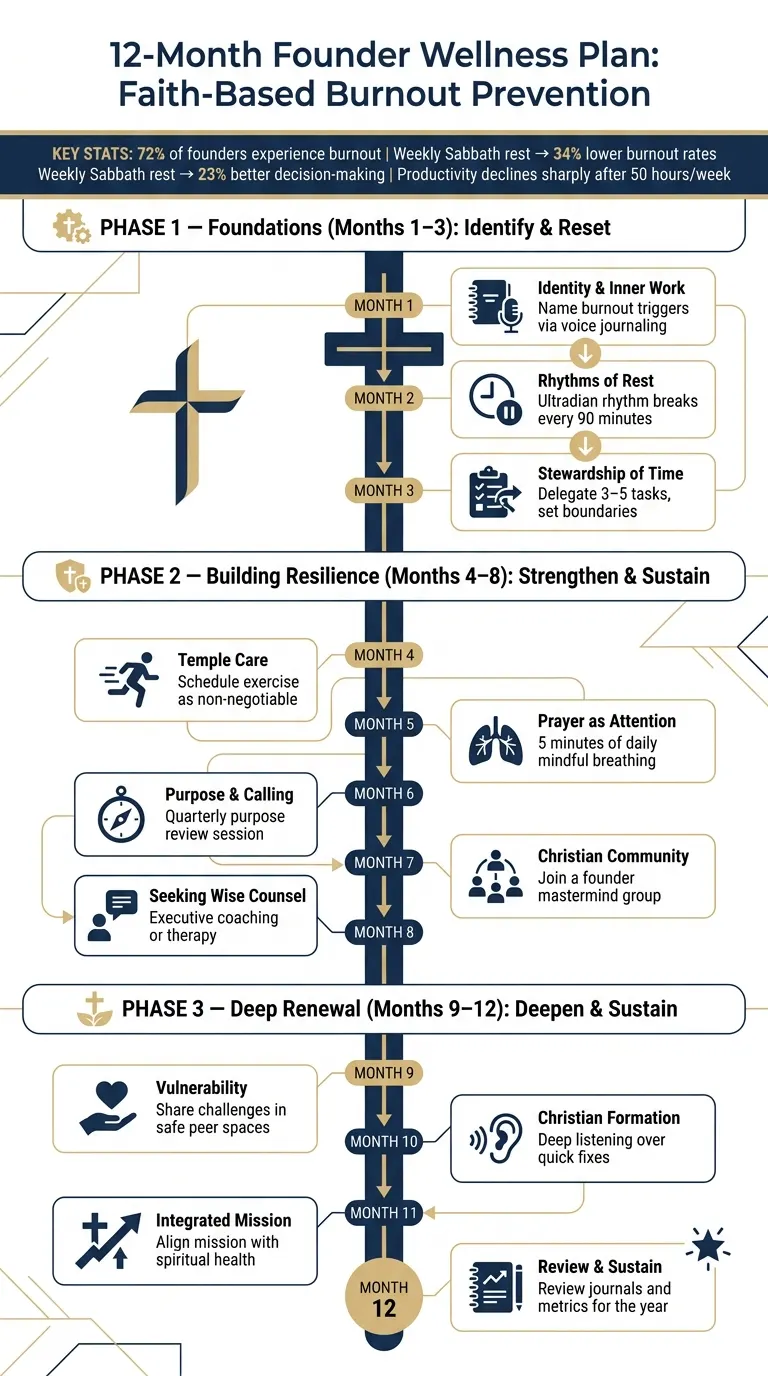
12-Month Founder Wellness Plan: Faith-Based Burnout Prevention
Monthly Focus Areas and Key Milestones
This plan is designed to build upon itself month by month. It starts with identifying burnout triggers and gradually incorporates practices to establish sustainable rhythms. Think of it as a journey where you revisit core themes, each time with a deeper understanding.
| Month | Spiritual Focus | Wellness Goal | Key Practice |
|---|---|---|---|
| 1 | Identity & Inner Work | Name burnout triggers | Voice-record your "unnamed pain" |
| 2 | Rhythms of Rest | Cognitive Recovery | Ultradian rhythm breaks (90 min) |
| 3 | Stewardship of Time | Delegation & Boundaries | Identify 3–5 tasks to hand off |
| 4 | Temple Care | Physical Movement | Schedule exercise as non-negotiable |
| 5 | Prayer as Attention | Stress Reduction | 5 minutes of daily mindful breathing |
| 6 | Purpose & Calling | Values-Based Decisions | Quarterly purpose review session |
| 7 | Christian Community | Peer Support | Join a founder mastermind group |
| 8 | Seeking Wise Counsel | Professional Support | Executive coaching or therapy |
| 9 | Vulnerability | Emotional Regulation | Share challenges in safe peer spaces |
| 10 | Christian Formation | Community Building | Focusing on deep listening over quick fixes |
| 11 | Integrated Mission | Inward/Outward Journey | Aligning mission with spiritual health |
| 12 | Review & Sustain | Progress Assessment | Reviewing journals and metrics for the year |
"The leaders who sustain faithful ministry for the long haul are the ones who tend their inner lives." – Wes Granberg-Michaelson, Global Ecumenical Leader
The first three months focus on identifying and addressing burnout triggers while introducing foundational habits. From Months 4 through 8, the focus shifts to building physical, spiritual, and relational frameworks. The final months, 9 through 12, deepen these practices and consolidate the progress, creating a solid foundation for long-term well-being. This structured approach takes you from self-awareness to sustained renewal, integrating both spiritual and physical dimensions.
Using Psalmlog to Stay Consistent Throughout the Year
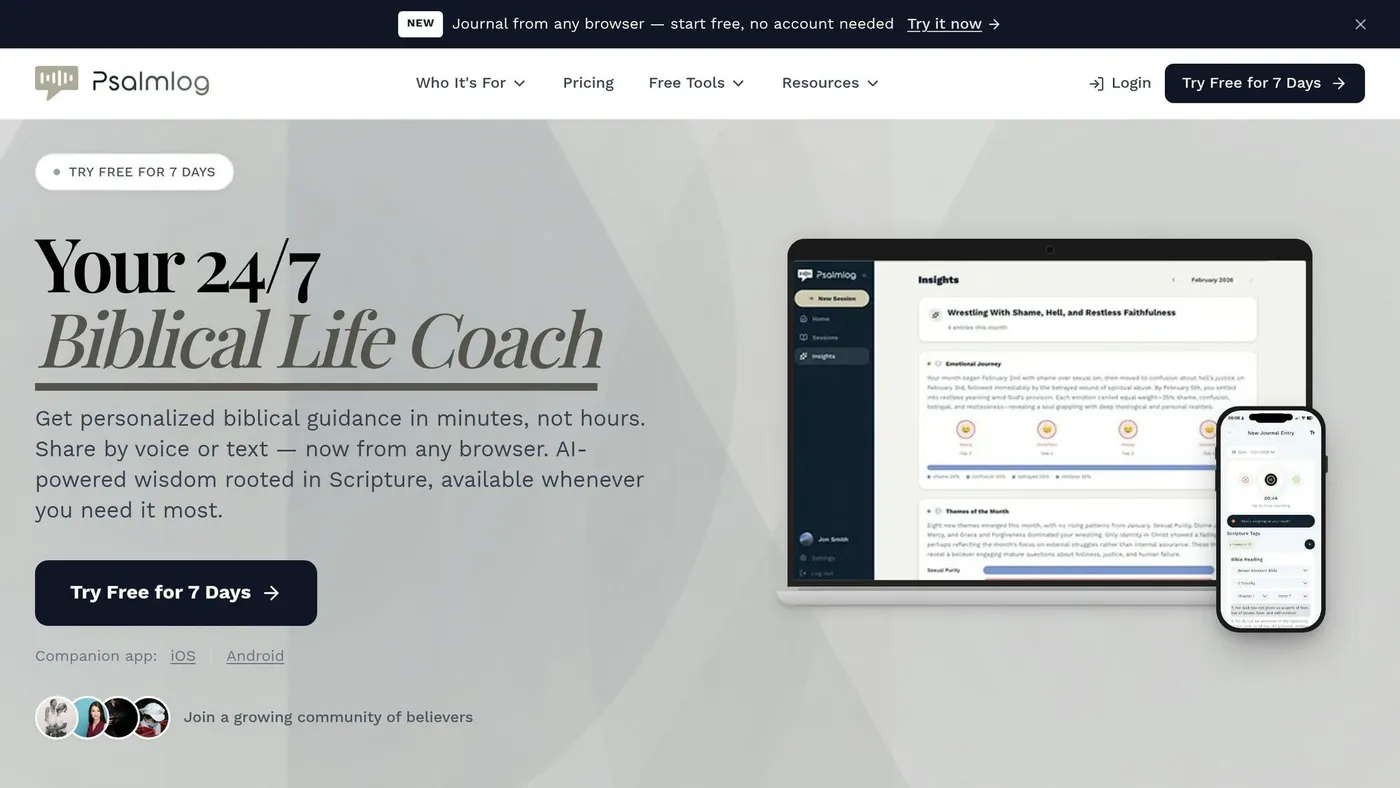
Sticking to a year-long plan is no small feat. Life gets busy, and spiritual practices are often the first to be sidelined. This is where Psalmlog can help. By offering a voice-first journaling experience, Psalmlog simplifies the process of daily spiritual check-ins and progress tracking.
In Month 1, use voice journaling to identify the specific stressors weighing on you – whether it’s funding concerns, team dynamics, or performance anxiety. This step lays the groundwork for meaningful change. By Month 6, the scripture tagging feature in Psalmlog allows you to connect recurring themes in your reflections to Bible verses, helping you stay aligned with your values. By the time you reach Month 12, the personal insights dashboard will offer a clear view of your spiritual and emotional growth over the year.
To make this tool effective, treat each Psalmlog session as a non-negotiable appointment in your schedule.
Sample Month: Building Rhythms of Rest (Month 2)
Month 2 is all about recovery, but it’s often a challenge. After the self-awareness work in Month 1, many people instinctively add more tasks instead of prioritizing rest. This month flips that script by focusing on deliberate recovery practices.
The key practice for Month 2 is incorporating ultradian rhythm breaks – short, intentional pauses every 90 minutes during your workday. These breaks align with the natural cycles of alertness and fatigue, helping you avoid the energy drain that leads to burnout. Set a timer to remind yourself to step away for 10 minutes – whether it’s to take a walk, stretch, or simply sit in silence.
The scripture focus for this month is Psalm 23:2–3: "He makes me lie down in green pastures, he leads me beside quiet waters, he refreshes my soul." At the end of each Sabbath day, use Psalmlog to voice-journal with this prompt: "What did I notice about myself when I stopped working today?" Combining ultradian breaks with weekly reflections creates a layered recovery process. These small but intentional pauses not only recharge you during the day but also reveal deeper patterns over time, offering insights no strategy session could provide.
Practical Strategies for Keeping the Plan Going
Daily, Weekly, and Monthly Rhythms That Work
Sometimes, all it takes is one bad day to throw your wellness plan off course. The key to staying on track? Build rhythms so simple they can withstand even the busiest weeks.
Daily, set a clear stopping point for work and treat it like an unmissable appointment. Eugene Peterson once described overcommitment as a "blasphemous anxiety to do God’s work", emphasizing that setting boundaries is an act of trust. At the end of your day, try a quick 7-minute "Exhaustion Inventory." Use this time to name your emotions – whether it’s exhaustion, cynicism, or feeling numb. Research shows that labeling emotions helps reduce the brain’s alarm response, shifting you from reacting to understanding. Once your daily boundaries are in place, strengthen your rhythm by protecting your weekly Sabbath.
Weekly, make your Sabbath a priority by preparing the day before. Wrap up chores, prep meals, and finalize your to-do list on Saturday so that Sunday can truly be a day of rest. Avoid email and social media during this time – it’s not just about resting your body but also nourishing your soul.
Monthly, take time for a "Mismatch Mapping" review. Look at six key areas – workload, control, reward, community, fairness, and values. Ask yourself one honest question for each. For example, "Is my daily work aligned with my core beliefs?" These monthly check-ins help you spot small issues before they grow into major problems.
Tracking Your Spiritual, Mental, and Physical Health
Daily and weekly rhythms are essential, but they work even better when paired with consistent tracking of your overall well-being. You don’t need a complicated system – just focus on four areas: physical, emotional, mental, and spiritual. A simple weekly check-in, even just a sentence for each area, can reveal patterns over time.
Tools like Psalmlog’s personal insights dashboard make this process easier. By logging voice journal entries throughout the month, the sentiment analysis feature can highlight emotional trends you might miss in the moment. After six months, you’ll have enough data to see how your spiritual engagement shifts during stressful periods. For example, research shows that productivity sharply declines after 50 hours of work per week. Tracking your weekly hours alongside mood data can uncover connections between overwork and emotional exhaustion.
The goal isn’t flawless data collection – it’s gaining just enough insight to make one better decision each week.
Getting Back on Track After a Setback
Life happens, and even the best routines can be disrupted. Whether it’s a funding crisis, a team issue, or a personal loss, setbacks are inevitable – and that’s okay. The real mistake is waiting until you feel "ready" to start again.
When routines fall apart, follow this three-step stabilization process:
- Take care of your body first: Prioritize sleep and use techniques like box breathing or resonant breathing to calm your nervous system.
- Triage your workload: Write down your top 10 tasks for the week and identify which ones truly need your input. Delegate, pause, or automate the rest.
- Redesign your week in advance: Plan the next week before it starts, not after.
"The first win isn’t ‘getting back to normal.’ It’s getting one night where your body actually powers down." – Andy Nadal, Author
One mental shift can make restarting easier: don’t dwell on broken streaks. Instead, anchor your comeback with the affirmation, "I am someone who makes space for honesty", and let that guide your next steps. Remember, this plan is built on a foundation of grace – aligning your work with your faith. That foundation remains steady, even when your routines don’t.
Conclusion: Starting and Sustaining a Healthier Founder Journey
Burnout is a harsh reality for many founders, with 72% reporting its effects. However, research shows that taking just one full day of rest each week can lead to 34% lower burnout rates and 23% better decision-making. This guide’s 12-month plan is grounded in these findings and emphasizes that your work should reflect stewardship, not serve as a measure of your worth. Each monthly milestone builds on the last, demonstrating that resilience grows through consistent, faith-centered habits.
"The challenge isn’t building a successful business as a Christian. It’s remaining a faithful Christian while building a successful business." – James, Founder, SketchMyApp
Balancing faith and entrepreneurship becomes less daunting with the right framework. Practices like starting your day with "Scripture before strategy", observing a dedicated Sabbath, and seeking guidance from a spiritual mentor who asks "How is your soul?" are vital. These habits not only nurture your spiritual well-being but also support the success of your business, proving that faith and professional growth can go hand in hand.
For added support, digital tools can make this balance easier to maintain. Psalmlog, for instance, fits effortlessly into your daily routine. Just speak your situation aloud, and in about 60 seconds, it provides a relevant Scripture passage tailored to your needs. As Preston Zeller, Psalmlog’s founder, explains: "Psalmlog will use [technological advancements] to help believers (and seekers) advance their faith journey.". With plans starting at $9.99/month, it’s an affordable resource for founders at any stage.
The journey to a healthier, more balanced life begins with a single step. Whether it’s pausing for morning prayer, taking a Sabbath, or recording a voice journal entry, small, faith-driven actions can build the resilience you need to thrive.
FAQs
How do I know I’m burned out vs just tired?
Burnout is more than just feeling tired – it comes with emotional exhaustion, a sense of detachment, and unshakable fatigue that no amount of rest seems to fix. It often brings along symptoms like brain fog, irritability, difficulty making decisions, and even physical issues such as headaches or stomach problems. On the other hand, tiredness is usually temporary and goes away with proper rest, without lingering emotional or physical effects. Spotting these differences early is key to safeguarding both your well-being and your ability to stay productive.
What if I can’t take a full Sabbath day off?
If dedicating an entire Sabbath day isn’t feasible, try carving out smaller moments of rest and spiritual renewal during your week. While setting aside a full day is ideal, even brief, intentional pauses for reflection and relaxation can make a big difference. Prioritize what fits into your routine, focusing on ways to keep yourself spiritually grounded and mentally recharged.
How can I use Psalmlog in under 2 minutes a day?
You can use Psalmlog in less than 2 minutes a day. Just open the app, share what’s on your mind – either by typing or speaking – and receive Scripture-based guidance tailored to your situation. It’s a quick way to get meaningful encouragement and stay spiritually centered, even on your busiest days.