
Founder Sleep Guide: Faith & Practical Steps
When a business is failing, faith and practical routines—Scripture, prayer, breath prayers, and voice journaling—restore sleep and clarity.
Business failure can feel like an overwhelming personal loss, especially for Christian founders who wrestle with both financial strain and spiritual doubt. Sleepless nights, fueled by anxiety and stress, often make the situation worse. This guide offers practical, faith-based solutions to help you regain peace, even in the midst of challenges.
Key Takeaways:
- Why You Can’t Sleep: Financial stress, internal doubts, and a cycle of anxiety disrupt your rest. Stress hormones and nighttime overthinking compound the issue.
- Faith-Based Solutions: Use Scripture, prayer, and spiritual tools like Psalmlog to address anxiety and find peace. Practices like breath prayers and voice journaling can help calm your mind.
- Nighttime Routine: Create a clear boundary between work and rest with steps like journaling worries, meditating on verses, and avoiding distractions like your phone.
- Morning Action Plan: Separate nighttime fears from actionable problems, reviewing them with a fresh perspective the next day.
Even in the toughest moments, faith and practical steps can guide you through. This article explores how to blend both for resilience and rest.
The Problem: Why a Failing Business Kills Your Sleep
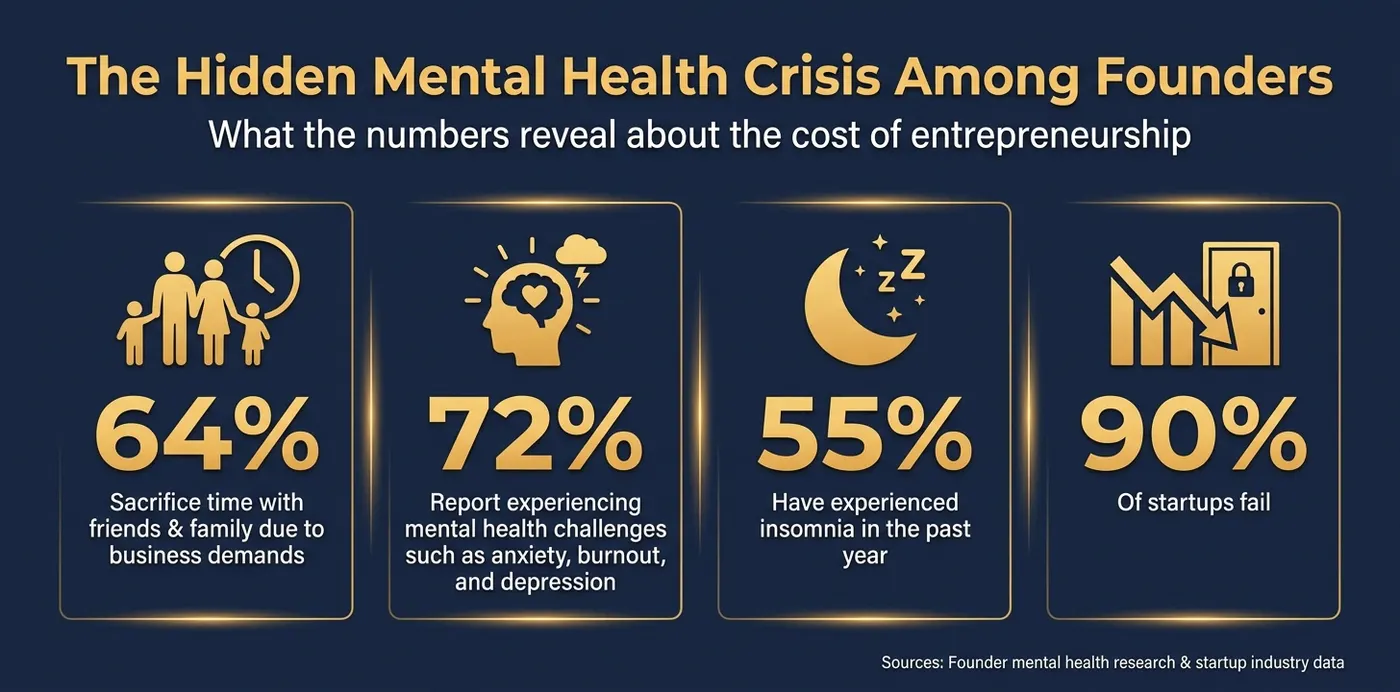
The Hidden Mental Health Crisis Among Founders: Key Statistics
The Real Pressures Founders Carry
Running a business comes with challenges that often go unnoticed. Financial stress, coupled with the responsibility of ensuring the well-being of employees and satisfying customers, creates a unique pressure. Unlike a typical 9-to-5 job, there’s no "off" switch for business owners.
"A business owner feels the heavy burden of every tough decision falling solely on his shoulders. His workers depend on him to make good decisions so that they can feed their families." – Russell McGuire, Strategist and Author
The statistics paint a sobering picture. Research shows that 64% of founders sacrifice time with friends and family due to business demands, while 72% report experiencing mental health challenges such as anxiety, burnout, and depression. When a business struggles, these stresses compound – strained relationships, looming financial concerns, and the constant feeling that you should be doing more all collide. This overwhelming mix creates a stress spiral that directly impacts sleep.
How Anxiety and Sleeplessness Feed Each Other
Stress and sleeplessness go hand in hand, creating a vicious cycle. Anxiety about your business keeps you awake at night, while poor sleep erodes your ability to think clearly and handle challenges effectively. Todd Emaus, Founder and Executive Coach, explains it this way:
"Stress = a persistent belief that 1) you’re under threat and 2) you need to protect yourself."
When your mind perceives business challenges as threats, it activates a fight-or-flight response, making restful sleep nearly impossible. This issue is far from rare – 55% of founders have reported experiencing insomnia in the past year. Breaking this cycle is crucial, and finding relief starts with addressing the root causes of anxiety.
What the Bible Says About Anxiety and Exhaustion
Scripture offers wisdom and comfort for those feeling weighed down by fear and fatigue. When business struggles disrupt your peace, biblical promises provide reassurance. Philippians 4:7 offers a profound reminder:
"And the peace of God, which transcends all understanding, will guard your hearts and your minds in Christ Jesus." (NIV)
This verse highlights a peace that protects your mind, even when external circumstances remain difficult. Similarly, Psalm 4:8 delivers another comforting message:
"I will lie down and sleep in peace, for you alone, O LORD, make me dwell in safety."
The safety and peace described here don’t depend on financial stability or business success – they stem from a deeper, unchanging promise. This distinction between temporary relief and enduring peace is at the heart of this guide.
Root Causes: What Is Actually Keeping You Awake
Outside Pressures That Amplify Founder Stress
When a business hits a rough patch, the external pressures can feel relentless. Cash flow becomes a constant concern, but payroll deadlines don’t budge. Customers grow impatient, and your team looks to you for answers you may not have. In the U.S., there’s a pervasive "hustle harder" mindset that glorifies burnout and hustle culture and implies that struggles stem from a lack of effort. This toxic narrative can make a tough season feel like a personal failure.
On top of that, the endless stream of deadlines, mounting responsibilities, and a culture that discourages taking a step back all collide at once. It’s like carrying a load that keeps getting heavier, with no break in sight. In moments like these, leaning on God’s provision can become a crucial anchor, especially when the pressure threatens to cloud your sense of purpose.
The Inner Lies That Make It Worse
The external challenges are tough enough, but what often keeps founders awake at night are the stories they tell themselves about those challenges. When your business struggles, it’s easy to equate its performance with your personal worth. You begin to believe that if your company falters, you’ve failed as a person.
For Christian founders, there’s another layer of doubt that can creep in – the feeling that God has gone silent or withdrawn His favor. Jennifer Hayes Yates, a writer and speaker, describes how these worries seem to grow at night:
"I prayed over these concerns off and on throughout the day, but at night they just seemed to grow and take on a life of their own."
The Bible offers a different perspective, reminding us that our identity isn’t tied to outcomes but to who God says we are. Your value doesn’t hinge on revenue or how much runway is left. These inner struggles, however, can trigger a stress response that makes everything feel even more overwhelming.
How Stress Hormones and Nighttime Thinking Disrupt Sleep
As internal pressures build, your body reacts in ways you can feel. When your mind perceives a threat – whether it’s financial trouble, the fear of layoffs, or a failed product – your body releases stress hormones like cortisol and adrenaline. These hormones are great for short-term emergencies but aren’t meant for the prolonged stress that comes with running a struggling business. When they stay elevated for too long, falling asleep becomes more than just a mental challenge – it becomes a physical one.
At night, when the distractions of the day fade, those worries often resurface with even more intensity. Yates describes this cycle perfectly:
"Over and over, I would read until my eyes got heavy, but as soon as I put the phone away, the worry would return."
The key isn’t finding a better distraction – it’s about getting those worries out of your head before they take over. One simple but powerful practice is to write down your specific concerns and place them inside your Bible. This symbolic act of surrendering them to God can help shift your focus from worry to trust. It’s a tangible way to remind yourself that you’re not carrying the burden alone.
Faith-Based Steps for Getting Through Sleepless Nights
Blending faith with practical strategies, these steps can help you find peace and rest even when business challenges keep you awake.
Using Scripture to Find Peace at Night
When anxiety creeps in during the quiet hours, Scripture can provide a steady anchor. Terry Enns, a pastor and author at the Center for Biblical Counseling & Discipleship, describes anxiety as:
"The nature of anxiety is that our minds are captivated by our thoughts of doom – and they invariably run (RUN!!) in a circular, downward pathway."
Psalm 4:8 offers a comforting reminder: "I will lie down and sleep in peace, for you alone, O LORD, make me dwell in safety." A practical way to embrace this promise is through breath prayers. This involves pairing a short Scripture phrase with slow, intentional breathing. For example, inhale while thinking, "The LORD is my shepherd", and exhale with, "I shall not want." This simple practice can help quiet your mind, calm your body, and center your thoughts on God’s care. Meditating on passages like the Psalms of Ascent (Psalms 120–134) can also provide a helpful focus for reflection during restless nights. Once Scripture has steadied your heart, the next step is to express your thoughts aloud.
Voice Journaling as a Spiritual Practice
When anxiety feels overwhelming, speaking your fears aloud can be more freeing than writing them down. Connecting these spoken worries to Scripture can deepen the experience, and tools like Psalmlog are designed to assist with this. This app allows you to voice your concerns, then uses AI to surface relevant Scripture, transcribe your entries, and tag related verses.
The Faith Builder plan ($19.99/month) includes 300 minutes of recording time and personalized AI insights to turn your spoken prayers into a searchable, Scripture-based record that deepens your prayer life. For those seeking unlimited journaling and long-term tracking, the Shepherd plan ($34.99/month) offers additional features.
As one user, Maria L., shared:
"During my cancer treatment, fear would hit me at 3 AM when no one was available. Psalmlog became my instant connection to God’s comfort."
If speaking or journaling feels too difficult, structured prayer frameworks can provide clarity and direction.
Prayer Frameworks That Calm Your Mind and Spirit
Structured prayer can help bring order to a racing mind. One effective approach is based on Philippians 4:6–8, which outlines three steps: name your specific worry (supplication), express gratitude to shift your emotional focus, and redirect your thoughts to what is true and uplifting.
Another option is the Psalm 4 pattern for addressing nighttime distress. This approach involves:
- Praying for relief from your current struggle.
- Guarding against the lies that fuel anxiety.
- Reflecting on God’s character.
- Examining your heart for sin.
- Trusting in God’s provision.
- Remembering past instances of God’s deliverance.
Recalling how God has helped you in the past can shift your focus from fear to faith. If personal prayer feels difficult, resources like The Valley of Vision or Piercing Heaven can provide meaningful language to guide your prayers.
Building a Nighttime Routine That Actually Helps
A steady evening routine won’t solve all your business challenges, but it can protect your sleep. The goal here is straightforward: create a clear boundary between the stress of the day and the rest you need at night.
How to Structure Your Pre-Bedtime Wind-Down
Start by moving your phone to another room at least 30 minutes before bed. This isn’t just about avoiding blue light – it’s about halting the endless cycle of checking emails, news, or updates that keeps your brain in "problem-solving mode."
Lower the lights and play soft worship music to signal the end of the day’s work. Then, follow this simple wind-down sequence:
- Write down your concerns with a "God, I hand you this" note in Psalmlog. Speak your worries aloud as the app helps you find related Scripture, and then close with a short prayer. The Faith Builder plan ($19.99/month) includes 300 minutes of recording time and personalized insights, making it easier to stick to this habit.
- End with a Breath Prayer. Practice slow breathing (4-6 seconds for each inhale and exhale) while meditating on a verse. For example, inhale with the thought, "Thou wilt keep him in perfect peace," and exhale, "whose mind is stayed on thee" (Isaiah 26:3).
As Psalm 127:2 reminds us, "He gives to his beloved sleep." Rest isn’t something you earn only after solving every problem – it’s a gift, even in the middle of life’s uncertainties.
This routine helps you draw a line between nighttime worries and the actions waiting for you in the morning.
Separating Nighttime Fear From Morning Action
Once your wind-down is in place, it’s important to separate nighttime fears from solutions that can wait until morning. Stress doesn’t magically turn off when you lie down – your mind might keep running through anxious scenarios. To quiet these thoughts, give yourself a clear stopping point.
If worries come up after you’ve gone to bed, resist the urge to mentally work through them. Instead, reach for a verse card or your Bible on the nightstand instead of your phone. If the concern persists, speak it into Psalmlog and make a conscious decision to revisit it in the morning. This isn’t about ignoring issues – it’s about postponing them until you can approach them with a fresh perspective.
“Naming the worry and physically writing the release substantially reduces middle-of-the-night rumination. You have already handed it over. There is nothing left to solve tonight.” – BMOZI Guide
The next morning, review what you recorded. Often, fears seem smaller in daylight, while others may highlight decisions that need attention. This practice of separating nighttime fear from daytime action prevents anxiety from dominating every moment.
Reviewing Your Entries to See Patterns Over Time
One overlooked advantage of voice journaling is the ability to look back and reflect. Psalmlog’s calendar view and personal insights dashboard allow you to revisit past entries, helping you notice recurring themes, shifts in emotional tone, or fears that never actually came to pass.
As you review your entries, you’ll uncover not only patterns in your worries but also evidence of God’s guidance during tough times. Over time, this record becomes a powerful reminder of His presence, even in moments when you felt alone. Spending just 10 minutes a week reviewing your entries can turn a simple journaling habit into a meaningful way to track spiritual growth and resilience during life’s challenges.
Conclusion: Moving Through Business Failure With Faith
Business failure is more common than many founders are willing to admit. Around 90% of startups don’t make it, and the emotional toll can feel as heavy as a personal loss. If you’re in that space right now, remember – you’re not weak, and you’re definitely not alone.
The sleepless nights, constant worries, and overwhelming fears aren’t signs of being abandoned by God. Instead, they’re reminders that support is needed beyond just financial plans and business strategies. Turning to Scripture-based reflection, honest prayer, and regular spiritual practices can provide the clarity and grounding necessary for thoughtful next steps.
"Every perceived failure in business is a chance to better hone one’s approach. Sure, having to close doors on the business is ‘a failure’ of sorts, but the true failure is if one doesn’t learn why that happened." – Marcus Harjani, Co-Founder and COO, FameMoose
Building on this idea, tools like Psalmlog can help turn these difficult moments into opportunities for growth and reflection. By speaking your fears out loud, finding Scripture that resonates with your struggles, and documenting your journey, you create a spiritual record – a reminder of God’s faithfulness and your own resilience. With its Faith Builder plan ($19.99/month), Psalmlog offers 300 minutes of recording time each month, along with personalized insights to guide your spiritual reflection and growth.
The journey through business failure doesn’t always lead to a dramatic turnaround. Sometimes it’s about a pivot, a closure, or a tough lesson that shapes what’s next. Faith doesn’t guarantee a solution, but it does promise God’s presence. Lean into these practices to move forward with clarity, peace, and trust in His unwavering guidance.
FAQs
What should I do at 3 AM when panic hits?
When anxiety hits in the middle of the night, leaning on biblical practices can bring comfort and calm. Begin with prayer or reflecting on scripture to redirect your thoughts from fear to a sense of peace. Another helpful approach is voice journaling, which allows you to express and process your emotions. Reading a soothing scripture or a heartfelt prayer can also help quiet your mind, making it easier to drift back to sleep. These faith-centered actions can help you reconnect with God and find relief during moments of stress.
How do I stop linking my worth to my business results?
Focusing on your inner worth rather than external achievements can bring a sense of peace and purpose. Biblical teachings emphasize that your value comes from being loved by God, not from what you accomplish. To align with this perspective, you can take practical steps like setting aside time for prayer, reflecting on scripture, and practicing voice journaling. These habits help reinforce your identity in Christ, shifting your attention away from seeking external validation and building a deeper sense of spiritual strength and self-worth – independent of business outcomes.
When is it time to get professional mental health help?
If you’re dealing with ongoing fatigue, struggling to make decisions, feeling unmotivated, or noticing physical issues like headaches or disrupted sleep, it might be time to consider professional mental health support. When stress starts to feel overwhelming and nothing – whether it’s self-care, delegating tasks, or leaning on others – seems to help, seeking professional guidance can be crucial for safeguarding both your personal well-being and the health of your business.