
The Antidote to Burnout: Biblical Principles for True Rest
Scripture, Jesus’ example, Sabbath practice, and tools like voice journaling to overcome burnout and renew body, mind, and soul.
Feeling drained, overwhelmed, or spiritually disconnected? Burnout isn’t just about being tired – it’s a deep exhaustion that impacts your body, mind, and soul. But here’s the good news: rest isn’t a luxury or something to feel guilty about. It’s a gift from God, designed to refresh and sustain you.
Here’s what you’ll learn:
- Burnout stems from overwork and self-reliance, but Scripture offers renewal through trust in God.
- Jesus modeled rest by stepping away, prioritizing solitude, and offering a lighter "yoke" for those burdened.
- Sabbath rest isn’t optional; it’s a command to pause, trust God, and find peace.
- Tools like voice journaling and intentional scheduling can help weave rest into your daily life.
The takeaway? True rest begins when you let go of guilt, embrace God’s rhythm, and prioritize renewal for your body, mind, and spirit.
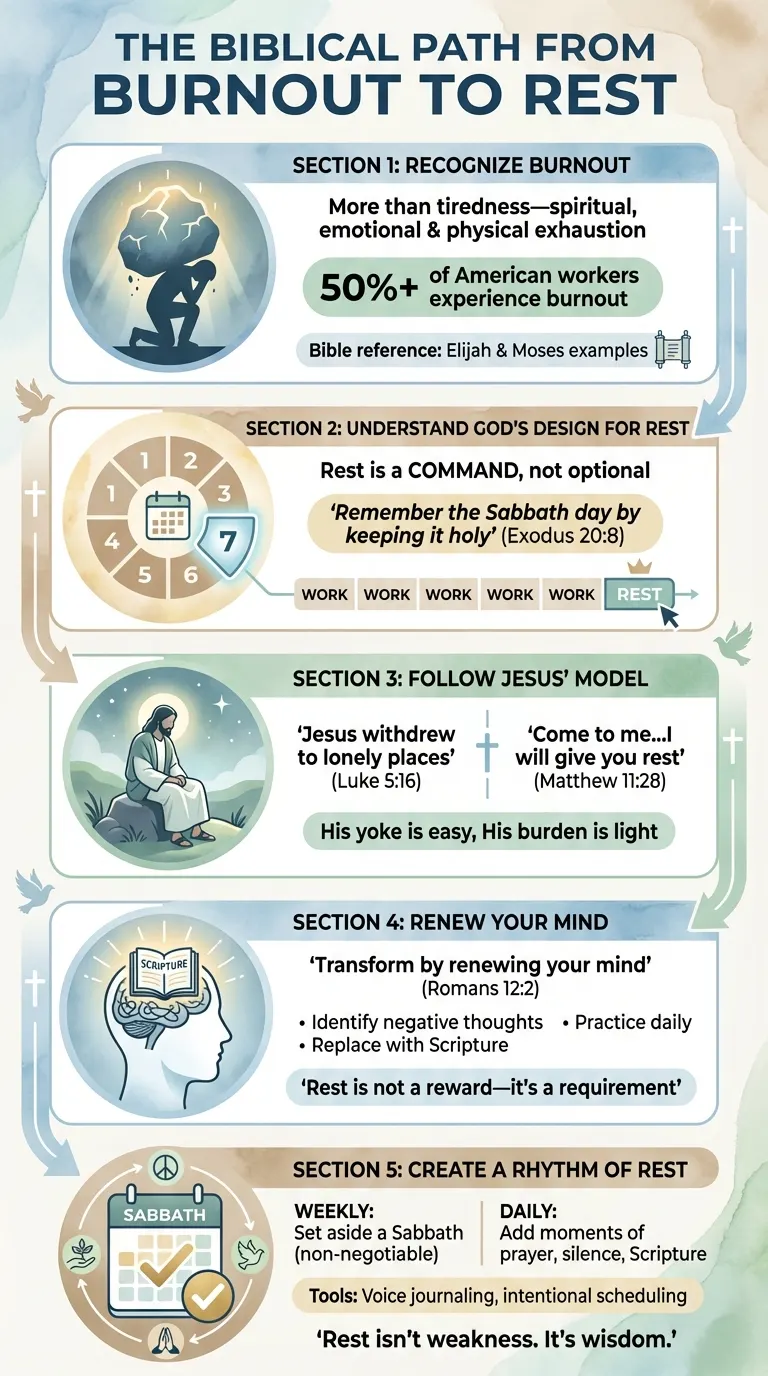
Biblical Steps to Overcome Burnout and Find True Rest
Battling Burnout? Discover God’s Plan for Rest and Renewal
What Burnout Looks Like from a Biblical Perspective
Burnout is more than just feeling tired – it’s a deep exhaustion that affects the body, emotions, and spirit. From a biblical lens, it’s not just about being overworked; it’s about a spiritual heaviness, a sense of losing heart. This kind of weariness isn’t something a good night’s sleep can cure – it’s an ache that lingers.
While burnout feels like a modern problem, it’s not new. The symptoms we see today mirror struggles that have existed for centuries. In fact, over half of American workers report experiencing burnout, and the U.S. tourism industry generates more than $1 trillion annually as people seek relief through vacations. Yet, these escapes rarely address the deeper need for soul-level rest.
What Causes Burnout
In today’s culture, productivity often feels like a measure of self-worth. We glorify busyness, treating it as a badge of honor, and view rest as laziness. The constant push of "hustle culture" convinces us that stopping to rest is a sign of weakness. From a biblical perspective, this mindset stems from self-reliance – trying to handle everything on our own instead of trusting God. It’s easy to fall into the trap of serving the "god of productivity", where our achievements define our identity and value. Ruth Clemence captures this well:
Burnout can helpfully remind us of is: we are not God. We are not the savior and rescuer that we often pretend we are.
The Bible gives us real-life examples of burnout. Elijah, after a major spiritual victory, collapsed in the wilderness, overwhelmed to the point of wishing for an end. Moses, too, nearly burned out from trying to handle all of Israel’s disputes until his father-in-law wisely advised him to delegate. Even those deeply faithful can reach their limits when they try to shoulder everything alone.
Recognizing these causes helps us turn to Scripture for a path to renewal.
What Scripture Says About Weariness
The Bible doesn’t just acknowledge our exhaustion – it offers hope and restoration. God doesn’t chastise the weary; He meets them with compassion. When Elijah was at his breaking point, God didn’t lecture him. Instead, He provided food, water, and rest before speaking to him in a "still, small voice". This reminds us that even the first steps toward recovery often begin with meeting our physical needs.
Jesus speaks directly to this deep weariness in Matthew 11:28-30: "Come to me, all you who are weary and burdened, and I will give you rest. Take my yoke upon you and learn from me, for I am gentle and humble in heart, and you will find rest for your souls. For my yoke is easy and my burden is light." This isn’t just about physical rest – it’s an invitation to find renewal for the soul, something vacations or weekend breaks can’t provide.
Isaiah 40:29-31 reinforces this promise: "He gives strength to the weary and increases the power of the weak. Even youths grow tired and weary, and young men stumble and fall; but those who hope in the Lord will renew their strength. They will soar on wings like eagles; they will run and not grow weary, they will walk and not be faint." Instead of pushing through exhaustion, this passage points us to the renewal that comes from relying on God.
The contrast between worldly rest and biblical rest is striking. The world often sees rest as escape – whether through binge-watching TV, scrolling endlessly on social media, or taking a vacation to "get away." But biblical rest, reflected in the Hebrew word menuha, is different. It’s an active kind of rest, rooted in delighting in God’s creation and trusting His control. It’s not about running away but about finding strength to endure.
As Joel Min explains:
Jesus isn’t offering escape. He’s offering endurance. A way to live under the same pressures without being crushed by them.
This kind of rest doesn’t just give a temporary break – it transforms how we live. It’s about working alongside Jesus, not wearing ourselves out trying to work for Him. That’s the rest that truly restores.
God’s Command for Sabbath Rest
Rest isn’t just a good idea – it’s a divine command. God didn’t merely suggest taking breaks; He wove rest into creation itself and instructed His people to honor it. By understanding the purpose behind the Sabbath, we see that rest isn’t optional – it’s an essential part of how we’re meant to live.
How God Modeled Rest in Creation
Scripture offers a blueprint for rest, starting with the very beginning of time.
When God completed His work of creation, He did something remarkable: He rested. Genesis 2:2-3 tells us, "on the seventh day he rested from all his work." This wasn’t because God was tired – Isaiah 40:28 reminds us that God doesn’t grow weary. Instead, He rested because His work was finished and it was good.
The word "shabbat" in Hebrew means "to cease." God’s rest wasn’t about recovery; it was about completion. True rest, as the Bible describes it, reflects the order and goodness of God’s creation. The seventh day stands out in a special way – it’s the first thing in creation that God declared "holy." This shows just how intentional God was in establishing a rhythm of work and rest. Unlike months or years, which are tied to astronomical cycles, the seven-day week is entirely theological, rooted in God’s design.
The Fourth Commandment and Why It Matters
God didn’t just model rest; He commanded it. In Exodus 20:8-11, He says, "Remember the Sabbath day by keeping it holy. Six days you shall labor and do all your work, but the seventh day is a sabbath to the Lord your God." This commandment is the longest and most detailed of the Ten Commandments, highlighting its importance.
The Sabbath ties directly to two key aspects: God’s pattern in creation and His act of redemption. It reminds us that our identity isn’t defined by endless work or productivity. As Christopher Watkin explains:
"God’s rest [at creation] makes it clear that work is not all there is for God, and we know from Exodus 20 that he doesn’t want it to be all there is for us either."
Keeping the Sabbath is an act of trust. It’s a way of saying that we believe God will take care of our needs, even when we pause from our labor. This challenges the modern mindset that measures worth by how much we achieve. Eugene Peterson captures this beautifully:
"Sabbath is about God’s formation of us."
The Sabbath command isn’t just for individuals – it’s for everyone. It ensures rest for children, employees, and even animals, protecting against overwork and exploitation. It’s a gift that invites us to set aside our worries and trust God as our provider. Honoring the Sabbath not only glorifies God but also renews our spirit, offering a much-needed antidote to burnout.
This command for rest lays the foundation for Jesus’ example and His promise of ultimate rest.
How Jesus Modeled and Offered True Rest
Jesus’ life provides a clear example of how to embrace rest as part of a balanced and fulfilling life. Rooted in the biblical principle of Sabbath rest, His approach offers a practical guide for navigating the pressures of modern life. Despite constant demands and never-ending needs, Jesus never succumbed to burnout. His secret? A purposeful rhythm of stepping away and renewing Himself.
Jesus’ Habit of Rest and Solitude
Even during His busiest times, Jesus prioritized rest. In Mark 1:35, we see Him rising "very early in the morning, while it was still dark" to find a quiet place to pray. Similarly, Luke 5:16 highlights that He "often withdrew to lonely places" for solitude. This wasn’t an occasional act; it was a regular practice, even when people urgently sought His help.
When His disciples were so overwhelmed they didn’t have time to eat, Jesus invited them to pause. In Mark 6:31, He said, "Come with me by yourselves to a quiet place and get some rest." His rest wasn’t limited to physical renewal – it extended to spiritual and mental restoration. He prayed to connect with God, slept during storms (Mark 4:38), and took breaks when tired, as shown in John 4:6.
As Vaneetha Rendall Risner notes:
Jesus was clear on what God was calling Him to do, so other people’s pressing needs and their desire for His presence didn’t drive His activity.
This mindset challenges the modern belief that busyness equals faithfulness. Jesus showed that rest isn’t a sign of weakness – it’s an act of wisdom. His approach followed a consistent rhythm: serve others, step away to recharge, and then return to pour Himself out again. This rhythm not only sustained Him but also provides a practical model for us. It leads seamlessly into His invitation to take on an "easy yoke."
The Easy Yoke: Surrendering Your Burdens
In Matthew 11:28-30, Jesus offers an invitation to those feeling overwhelmed: "Come to me, all you who are weary and burdened, and I will give you rest. Take my yoke upon you and learn from me, for I am gentle and humble in heart, and you will find rest for your souls. For my yoke is easy and my burden is light."
Here, "weary" refers to internal exhaustion from relentless effort, while "burdened" points to external pressures like societal expectations and religious demands. In farming, a yoke was a wooden tool that linked two oxen, distributing the load evenly. Importantly, yokes were custom-fitted to avoid causing pain. Jesus’ "easy yoke" symbolizes a life tailored to fit us without causing harm.
His yoke is light because He shoulders the weight. Even amid life’s demands, His yoke lifts our burdens.
This isn’t about doing less but about doing life alongside Jesus. The rest He offers, described by the Greek word anapausis, means inner peace and refreshment – a type of rest that coexists with meaningful work. Daniel Emery Price explains:
Jesus isn’t demanding that we do something in this text, he is offering to deliver the whole world from its spiritual exhaustion. It’s not a commandment, it’s an invitation to rest.
The key is letting go of the burdens we carry – whether it’s the need for approval, the drive to always be productive, or the fear of letting others down – and replacing them with Christ’s easy yoke. This exchange is essential for overcoming burnout. It shifts us from a cycle of exhaustion to a life marked by the soul-deep rest Jesus promises, all while maintaining a sustainable rhythm that allows us to keep moving forward with peace and purpose.
Renewing Your Mind to Fight Burnout
Burnout doesn’t just drain your energy – it reshapes your thoughts. When you’re overwhelmed, it’s easy to believe lies like “I can’t stop” or “Taking a break will make things worse.” These thoughts can lock you into a cycle of exhaustion. But Scripture offers a way out. True rest begins by renewing your mind and replacing the relentless demands of hustle culture with God’s truth. As Raymond, a writer at Disciple Blueprint, puts it:
Rest is not a reward – it’s a requirement.
Shifting your mindset from earning your worth through performance to embracing your identity as God’s child is a powerful step toward breaking free from burnout. This mental shift lays the foundation for deeper spiritual renewal.
Transforming Your Thoughts with God’s Word
Romans 12:2 reminds us: "Do not be conformed to this world, but be transformed by the renewal of your mind." This transformation isn’t a quick fix – it’s a daily practice. Your mind constantly absorbs messages, and without intentional effort, the pressures of the world can distort your thinking. Dr. Michelle Bengtson highlights this beautifully:
Jesus showed us that rest isn’t laziness; it’s obedience. When you learn how to rest in God, you find peace that hustle can’t give.
Start by identifying and challenging negative thoughts. When stress or anxiety creeps in, pause and recognize the falsehood. Replace it with Scripture. For example, if you catch yourself thinking, “I have to prove my worth,” remind yourself of the truth: grace is a gift, not something you earn. Memorizing verses like Philippians 4:8, which encourages focusing on what is true, honorable, and pure, can help filter out the noise of stress. God’s Word becomes the fuel for this renewal, shifting your focus from performance to purpose.
Restoring Your Soul with Scripture
As your thoughts align with God’s truth, your soul begins to find rest as well. Psalm 23:2-3 paints a vivid image: "He makes me lie down in green pastures. He leads me beside still waters. He restores my soul." Notice how God actively leads you to rest – it’s intentional, not accidental. Spiritual burnout often feels like “spiritual dehydration,” and Scripture acts as the refreshment your soul needs. As Seedword Christian insightfully notes:
Rest is a form of worship because it acknowledges: ‘I am not God. Only God is God.’
When prayer feels heavy, let Scripture carry you. Reading Psalm 23 aloud, for example, can allow God’s promises to calm your heart. Incorporate small moments of renewal into your day – record a verse on your phone during your commute or jot down a quick reflection while waiting for an appointment. These little acts of connection add up, drawing you closer to the One who offers rest that goes beyond physical sleep.
Using Psalmlog for Spiritual Renewal

Understanding biblical principles of rest is one thing – putting them into practice is another. That’s where Psalmlog steps in as a practical tool for spiritual renewal. It helps you shift from striving to trusting by creating a space to process burnout and receive Scripture-based insights. By easing the mental burden that often leads to burnout, Psalmlog not only reinforces the importance of biblical rest but also provides practical ways to weave it into your everyday life.
Voice Journaling to Process Burnout
One standout feature of Psalmlog is its voice journaling tool, which allows you to speak your thoughts and struggles instead of typing them out. This act of verbalizing your emotions taps into a psychological practice called affect labeling, which helps move your mindset from chaos to clarity. Psalm 32:3 captures this idea beautifully:
When I kept silent, my bones wasted away.
After journaling, Psalmlog offers personalized Scripture insights tailored to what you’re going through. For instance, if you’re feeling overwhelmed by an endless to-do list, you might be guided to Hebrews 4:9–10, which reminds us that rest is a “Sabbath-rest” for God’s people – a vital rhythm, not just a reward for productivity. The app also tracks your emotional patterns over time, offering a deeper understanding of how to adjust your routine for better balance. This combination of reflection and intentional action helps solidify your journey toward renewal.
Using Psalmlog’s Calendar for Weekly Rest
In addition to journaling, Psalmlog’s calendar feature helps you schedule intentional rest. You can block off time for a weekly Sabbath and mark it as non-negotiable in your routine. By reviewing past reflections, you can identify what drains you versus what restores you. For example, you might notice that late-night emails leave you feeling depleted, while starting your day with Scripture reading refreshes your spirit. This awareness allows you to make thoughtful adjustments to your schedule.
Getting Personalized Spiritual Guidance
To deepen your renewal process, Psalmlog provides personalized spiritual guidance. Beyond offering Scripture, the app delivers six-point insights tailored to your unique challenges, giving you actionable steps to apply biblical rest principles. For instance, if you’re struggling with control, the app might suggest practicing "burden re-assignment", where you sort tasks into categories like “mine to do” and “mine to release.” Or, if you’re feeling spiritually disconnected, Psalmlog might recommend a breath prayer to help calm your nervous system and bring you back to a place of rest. These practical, step-by-step suggestions help translate biblical wisdom into meaningful actions you can take today.
Creating a Consistent Rhythm of Rest
Following Jesus’ example and embracing God’s command for the Sabbath can reshape how you approach rest. It’s not just about understanding biblical rest – it’s about weaving it into your daily life as a rhythm that sustains you for work, rather than treating rest as a reward for completing tasks. Without clear boundaries, work can easily take over, leaving you feeling drained and unbalanced.
Setting Aside a Weekly Sabbath
Carve out a specific time each week to pause from work. This might start small – an evening or even a single day each month – but the key is to make it a priority. Schedule this time before other commitments so it becomes a non-negotiable part of your routine. As Psalm 127:2 reminds us, working endlessly in “anxious toil” is pointless because God provides for His beloved. Observing the Sabbath is a way to affirm your trust in His care.
During this time, focus on activities that recharge you. What refreshes you might differ from someone else – it could be a family meal, a walk outdoors, or diving into a good book. Avoid activities that drain you, like checking emails or endlessly scrolling through social media. Use the Sabbath to deepen relationships with loved ones through meaningful conversations, rather than simply retreating from them. As Jesus said in Mark 2:27:
The Sabbath was made for man, not man for the Sabbath.
Adding Rest to Your Daily Schedule
The Sabbath provides a weekly reset, but daily moments of rest can reinforce this rhythm. Build short pauses into your day – like a few quiet minutes during lunch – for prayer, silence, or Scripture reflection. Practices such as fixed-hour prayer can help you refocus on God’s presence throughout the day. You might also explore the REAP Method for engaging with Scripture: Read, Examine, Apply, and Pray.
Establishing boundaries is also essential. Simple rituals, like closing your office door, turning off Wi-Fi at a certain hour, or journaling to release tomorrow’s worries to God, can help signal your mind to shift into rest mode. These small practices can make a big difference in maintaining a rhythm of rest in your daily life.
Conclusion
Rediscover your well-being by aligning your life with God’s rhythm. Rest isn’t just a break from the chaos – it’s a gift from God, designed to sustain and renew you. Jesus invites us into this rest with His words: "Come to me, all you who are weary and burdened, and I will give you rest" (Matthew 11:28-29). Grounded in Scripture and modeled by Jesus Himself, rest is both a divine command and a generous provision.
Start making intentional choices today. Set aside a weekly Sabbath to remind yourself that your dependence is on God, not your own efforts. Incorporate moments of silence and Scripture into your daily routine. Tools like Psalmlog can help you refocus your heart on God’s priorities through voice journaling and tailored spiritual guidance. As Tricia Goyer wisely said, "Rest isn’t weakness. It’s wisdom." Choosing to pause and trust God to sustain what matters isn’t laziness – it’s obedience. Ruth Clemence also reminds us, "We are not the savior and rescuer that we often pretend we are. We are finite, vulnerable individuals who need basic needs met to continue to function, let alone thrive".
Be honest with God about your exhaustion. Prioritize rest before filling your schedule with other commitments. Let go of guilt and embrace the limits God has given you. By doing so, you’ll experience true peace and renewal. Trust His promises, live in His rhythm, and find strength to face each day anew.
FAQs
How do I know if I’m burned out or just tired?
Burnout and tiredness may seem similar, but they’re quite different in both how long they last and how they affect you. Tiredness is short-lived and usually goes away after some rest. Burnout, on the other hand, sticks around and can take a toll on your emotions, body, and even your sense of purpose. Common signs of burnout include feeling irritable, emotionally numb, or spiritually depleted. If rest doesn’t seem to make a difference and the feelings linger, it’s likely more than just being tired. Turning to biblical teachings about rest can be a way to regain a sense of calm and balance in your life.
What counts as Sabbath if my schedule is chaotic?
If your life feels hectic, Sabbath doesn’t have to mean setting aside an entire 24 hours. It can be any intentional time dedicated to rest and spiritual renewal. Think of it as creating a rhythm of rest that reflects God’s design. This could look like brief moments of prayer, reflecting on scripture, or simply stepping away from work to place your trust in God. The key is to prioritize consistent spiritual renewal, even through small but meaningful actions.
How can Psalmlog help me build a real rhythm of rest?
Psalmlog offers a thoughtful way to establish a rhythm of rest rooted in biblical principles. By blending practices like scripture reflection and voice journaling, it encourages spiritual renewal. These tools help you process emotions, reconnect with God, and align your rest with the truths found in His Word.
Another key focus of Psalmlog is honest prayer and biblical lament. These practices provide a space to express weariness and seek comfort through Scripture, creating a meaningful pathway to balance peace and renewal in your daily life.