
When You Feel Numb: What the Bible Says About Depression and Finding Hope
Biblical guidance for depression and emotional numbness: honest prayers, simple Scripture practices, voice journaling, and when to seek professional help.
When depression makes you feel emotionally numb, it’s hard to pray, read Scripture, or even get through daily tasks. But the Bible offers comfort and guidance for these moments. Key takeaways:
- Depression can feel like a heavy void. Psalm 42 describes it as a “downcast soul.”
- The Bible encourages honesty with God. Job and David openly shared their struggles.
- Simple spiritual practices help reconnect with God. Start with small steps like meditating on one verse or praying Scripture aloud.
- Voice journaling can ease emotional processing. Speaking your feelings aloud while reflecting on Scripture can bring clarity.
If depression disrupts daily life or physical symptoms persist, professional help is essential. Therapy complements faith, offering tools to heal while staying grounded in God’s promises. Start small – reading one verse or whispering a prayer – and trust that healing is a step-by-step process.
Depression: Symptoms & Biblical Hope | Christian Counseling
Bible Verses for Depression and Emotional Numbness
Scripture doesn’t shy away from addressing pain and hardship. Instead, it offers comfort and guidance, especially when depression leaves you feeling drained. Even in moments of despair, God’s promises remain steadfast. Deuteronomy 31:8 reassures us: "The Lord himself goes before you and will be with you; he will never leave you nor forsake you." This verse reminds us that God’s presence is constant, regardless of how we feel.
Being Honest About Your Feelings
The Bible encourages complete honesty about your struggles. Job didn’t hold back when he said, "My soul is weary of my life; I will leave my complaint upon myself; I will speak in the bitterness of my soul" (Job 10:1). Similarly, David openly questioned his own sorrow in Psalm 42:11: "Why, my soul, are you downcast? Why so disturbed within me? Put your hope in God, for I will yet praise him."
Practical Ways to Reconnect With God During Depression
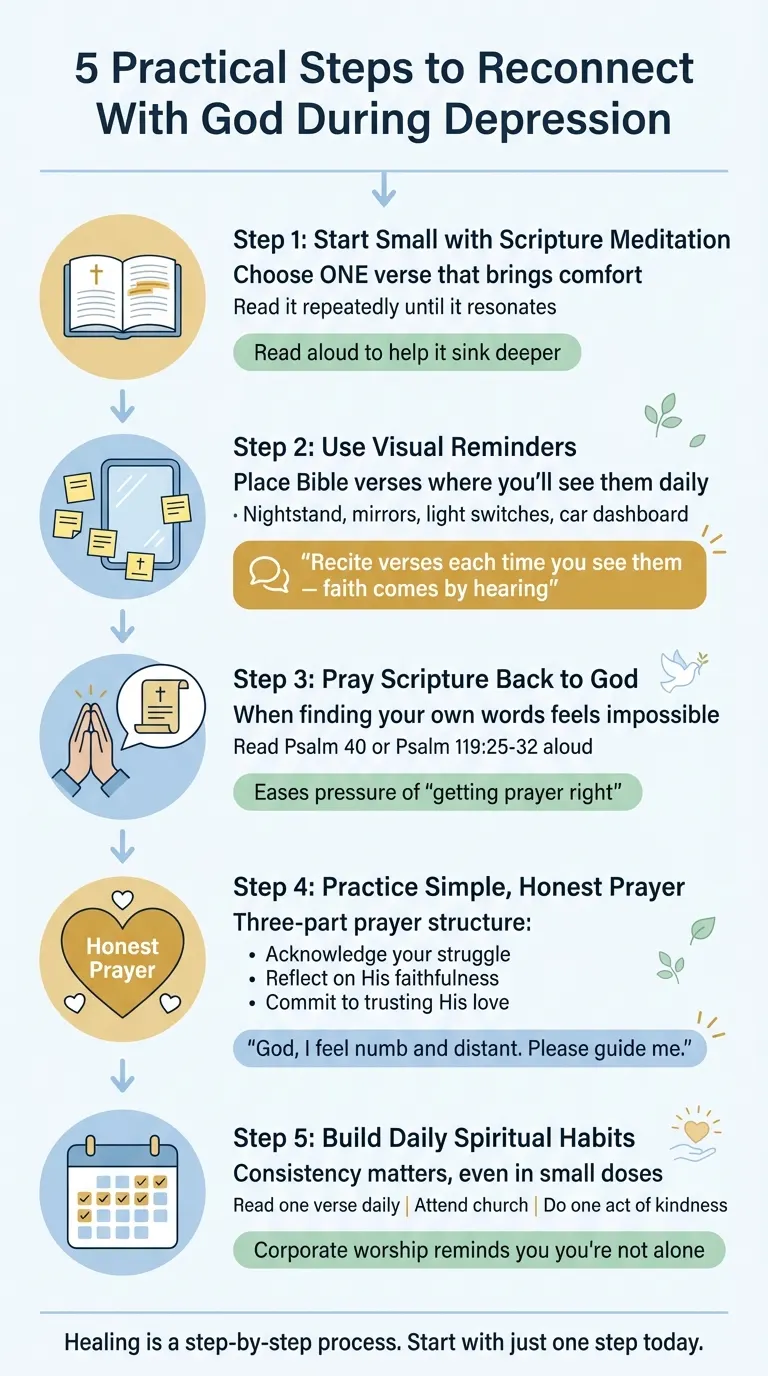
5 Practical Steps to Reconnect With God During Depression
When life feels numb and heavy, reconnecting with God through Scripture can be a powerful way to find comfort and clarity. Grounding yourself in His word can help ease the fog of depression.
How to Meditate on Scripture
Struggling to focus on complex passages? Start small. Choose one verse that feels comforting and read it repeatedly until its meaning starts to resonate. Reading the verse aloud can be especially impactful – hearing God’s promises spoken aloud can help them sink deeper into your heart.
Dr. Michelle Bengtson, a doctor and author, shared her own experience with this practice during a season of deep depression. She placed Bible verses on sticky notes throughout her home – on her nightstand, bathroom mirrors, light switches, and even her car dashboard. Each time she saw one, she would read it out loud, using Scripture to combat negative thoughts and remind herself of God’s promises.
"I wrote out the Bible verses that gave me hope on post-it notes and stuck them on my nightstand, on my closet doors, on my light switches, on my bathroom mirrors, on the dashboard of my car… I would recite the Bible verses each time I saw them because faith comes by hearing." – Dr. Michelle Bengtson, Author and Doctor
If finding your own words feels impossible, try praying Scripture back to God. For example, read passages like Psalm 40 or Psalm 119:25-32 aloud. This practice can ease the pressure of "getting prayer right" while keeping you grounded in truth. Over time, it may naturally lead you into heartfelt prayer.
Praying When You Feel Numb
Even when emotions feel absent, prayer remains a lifeline. Forget about trying to sound eloquent – God values honesty over perfection. Start with three simple steps: acknowledge your struggle, reflect on His faithfulness, and commit to trusting His love.
If you’re unsure where to begin, try a fill-in-the-blank prayer: "God, I feel numb and distant from You. Please guide me." You can also let the Psalms speak for you, using their words to express what feels too hard to articulate. Incorporating these moments of prayer into your daily routine can help rebuild your connection with God.
Building Daily Spiritual Habits
Consistent habits, even small ones, can make a big difference during depressive seasons. Instead of letting negative thoughts take over, remind yourself of the truths found in Scripture. This could mean reading one verse each day, attending church even when it feels hard, or doing a small act of kindness for someone else.
Corporate worship, in particular, offers a unique opportunity to draw strength from the shared faith of a community. Being surrounded by others who are worshiping can help remind you that you’re not alone, even when it feels like it.
Using Voice Journaling to Process Emotions and Grow Spiritually
Reconnecting with Scripture to address emotional numbness can feel overwhelming, but voice journaling offers a practical and meaningful way to process your thoughts. When depression clouds your ability to write or think clearly, speaking your feelings aloud can ease the burden of trying to find the "right" words on paper.
What Voice Journaling Is and How It Works
Voice journaling is all about recording your emotions and reflections through spoken words. It eliminates the pressure of staring at a blank page, allowing you to express yourself more naturally. When you’re feeling emotionally numb, speaking in detail about your experience can help you pinpoint and externalize the fears or misconceptions fueling your state of mind.
This practice becomes even more powerful when paired with Bible reading, creating a deeper and more reflective spiritual experience.
Combining Voice Journaling With Bible Reading
Voice journaling works hand-in-hand with Scripture to strengthen your spiritual connection. Instead of passively reading, you actively engage by recording your reflections. After reading a passage, paraphrase it aloud to help embed its truths into your heart. To guide your thoughts, structure your reflections around these five prayer responses: "Thank You, Lord!" (praise), "Yes, Lord!" (surrender), "Oh, Lord!" (confession), "Help, Lord!" (personal requests), and "Please, Lord!" (prayers for others).
For instance, after reading Psalm 143:7-8, you might say something like: "Lord, I’m asking for Your quick response because my spirit feels weak. I need to hear Your steadfast love in the morning as I place my trust in You."
This method not only enriches your spiritual practice but also creates a foundation for deeper emotional healing.
How Psalmlog Supports Your Spiritual Journey

The Psalmlog app simplifies voice journaling while keeping it spiritually focused. As you record your thoughts, the app generates transcripts and offers personalized biblical insights tailored to your reflections. Its scripture tagging feature lets you link specific verses to your entries, creating a record of God’s presence and provision that you can revisit during tougher times.
Psalmlog’s AI-assisted reflections guide you through cycles of lament and help you view your circumstances through a biblical lens. For $19.99/month, you’ll get access to 300 minutes of recording time, all Bible translations, and a calendar to track your progress. One user described it as a "personal diary of God’s faithfulness", offering a tangible reminder of how God has worked through your struggles in the past.
When to Get Professional Mental Health Help
Signs You Need More Than Spiritual Practices
While spiritual practices can be a source of comfort and renewal, there are times when professional help becomes essential. If you notice persistent challenges in your daily life – like struggling to complete basic tasks such as showering, getting out of bed, or brushing your hair – it’s time to consider clinical support. Physical symptoms, such as chronic pain, frequent headaches, digestive issues, or sudden changes in sleep patterns (whether you can’t sleep or are sleeping too much), are also signs that professional intervention is needed. When feelings of numbness or disconnection linger without relief, it signals that depression may have moved beyond a situational phase and requires medical attention.
Losing interest in activities you once loved or finding it hard to focus are additional red flags. Most importantly, if you feel overwhelmed by despair or have thoughts of ending your life, don’t hesitate – seek immediate help.
"If you’re in a nosedive, you need to take some drastic action to avoid a crash… get a medical checkup if you haven’t had one for a while." – Steven J. Cole, Pastor, Bible.org
A good starting point is consulting your doctor to rule out physical causes, such as thyroid issues, hormonal imbalances, or side effects from medications, which can sometimes mimic or exacerbate depressive symptoms. Remember, reaching out for help is not a sign of weakness – it’s a step of strength and wisdom. Recognizing these signs is an opportunity to combine professional guidance with your spiritual practices for a more complete path to healing.
How Faith and Therapy Work Together
Seeking professional therapy doesn’t mean abandoning your faith; instead, it can complement and enrich your spiritual journey. Therapy and faith are not opposing forces – they can work together to support your emotional, mental, and spiritual well-being. While therapy provides practical tools to address symptoms and manage recovery, your faith offers the hope and grounding to persevere. Think of therapists and doctors as instruments through which God’s healing can flow, working alongside your spiritual practices rather than replacing them.
"Seeking professional help is not contrary to faith but can be a means through which God’s healing works." – TheBibleChat.com
Christian counseling, for example, integrates psychological techniques with a Christ-centered perspective, allowing you to address mental health challenges while staying true to your values. As you continue practices like prayer, Scripture meditation, and journaling, therapy can help you develop strategies to cope and heal. Even biblical figures such as Elijah, David, and Jeremiah faced moments of deep emotional struggle, showing us that spiritual strength doesn’t exempt anyone from needing support. Often, God works through a combination of tools and people to bring about healing and restoration.
Conclusion: Taking Steps Toward Hope and Healing
Starting your journey toward healing doesn’t require a giant leap. Instead, it begins with small, intentional steps rooted in faith and daily actions. Healing is a gradual process, unfolding bit by bit as you make consistent changes in your everyday life. Even a simple prayer like "Lord, help me" can be a meaningful first step. Just as God provided rest and nourishment for Elijah during his lowest moments, He meets you where you are, offering the strength you need for today.
The biblical examples shared in this article – from God’s promise to stay close to the brokenhearted to the raw, honest prayers of David and Jeremiah – serve as reminders that struggling doesn’t mean your faith has failed. Instead of letting discouraging thoughts take over, speak God’s promises aloud. The Psalms can give voice to your pain, and tools like Psalmlog can help you process your emotions and reconnect with Scripture in a deeply personal way. Whether you choose silent reflection, prayer journaling, or voice recordings, aligning your thoughts with Scripture can bring spiritual renewal.
For a well-rounded approach to healing, pair daily spiritual practices with professional support. If depression disrupts your ability to function or comes with ongoing physical symptoms, it might be time to consult a doctor or Christian therapist. As Sam Williams, Assistant Professor of Pastoral Care, wisely points out:
"Progress out of the pit is step-by-step, bit-by-bit. Small, practical, consistent faith-based change occurs in the details".
This combination of faith-based habits and professional care strengthens every step you take toward recovery.
Your path to hope starts with one small action today. Whether it’s opening your Bible, whispering a prayer, or scheduling a health checkup, every step matters. Psalm 34:18 reminds us that God is near to the brokenhearted and saves those crushed in spirit. Trust that He works through all avenues – both spiritual and practical – to guide you toward healing.
FAQs
Is feeling numb a sign my faith is failing?
Feeling numb doesn’t mean your faith is slipping. Emotional or spiritual struggles, such as depression, are part of the human experience and don’t indicate that God is far away or that your faith is lacking. The Bible reminds us that even devoted figures like David and Elijah faced deep despair. Yet, God stayed close to the brokenhearted. You can trust that His presence is unwavering, even during times of emotional numbness or difficulty.
What do I do when I can’t focus on Scripture or pray?
If you’re finding it hard to focus on Scripture or prayer, try starting with small steps. Turn to familiar and comforting Bible passages, such as Psalm 40, to help express your emotions to God. Over time, you can deepen your connection by memorizing or meditating on these verses. It can also be helpful to lean on trusted friends, family members, or church leaders for support and encouragement, especially during moments of emotional difficulty or numbness.
How can therapy fit with my Christian faith?
Therapy can work hand-in-hand with your Christian faith, offering a way to address mental health while staying grounded in spiritual beliefs. Faith-based counseling blends psychological methods with biblical teachings, allowing you to navigate challenges without compromising your values. It incorporates tools like prayer, scripture, and practices such as voice journaling to help you process emotions and deepen your connection with God. This approach nurtures both emotional well-being and spiritual development, reminding you that God’s presence is constant, even during moments of pain or disconnection.