
When God Feels Distant: What the Bible Says About Seasons of Spiritual Dryness
Biblical insight into spiritual dryness—why God can feel distant, Scripture examples, and practical steps to reconnect through prayer, Scripture, fellowship, and journaling.
Feeling distant from God? You’re not alone. Many believers experience spiritual dryness – a season where connection with God feels weak despite prayer, Bible study, and church attendance. This isn’t a sign of failure but a chance for growth.
Key points to know:
- What is spiritual dryness? It’s a time of disconnection and lack of motivation in faith.
- Biblical examples: David, Elijah, and Job all faced similar struggles.
- Why it happens: Causes include exhaustion, unconfessed sin, or God allowing a "wilderness season" to deepen trust.
- How to reconnect with God: Stay in Scripture, pray honestly, and seek fellowship with others.
These moments refine faith, teaching believers to trust God beyond emotions. Keep going – spiritual dryness is temporary, and growth is on the other side.
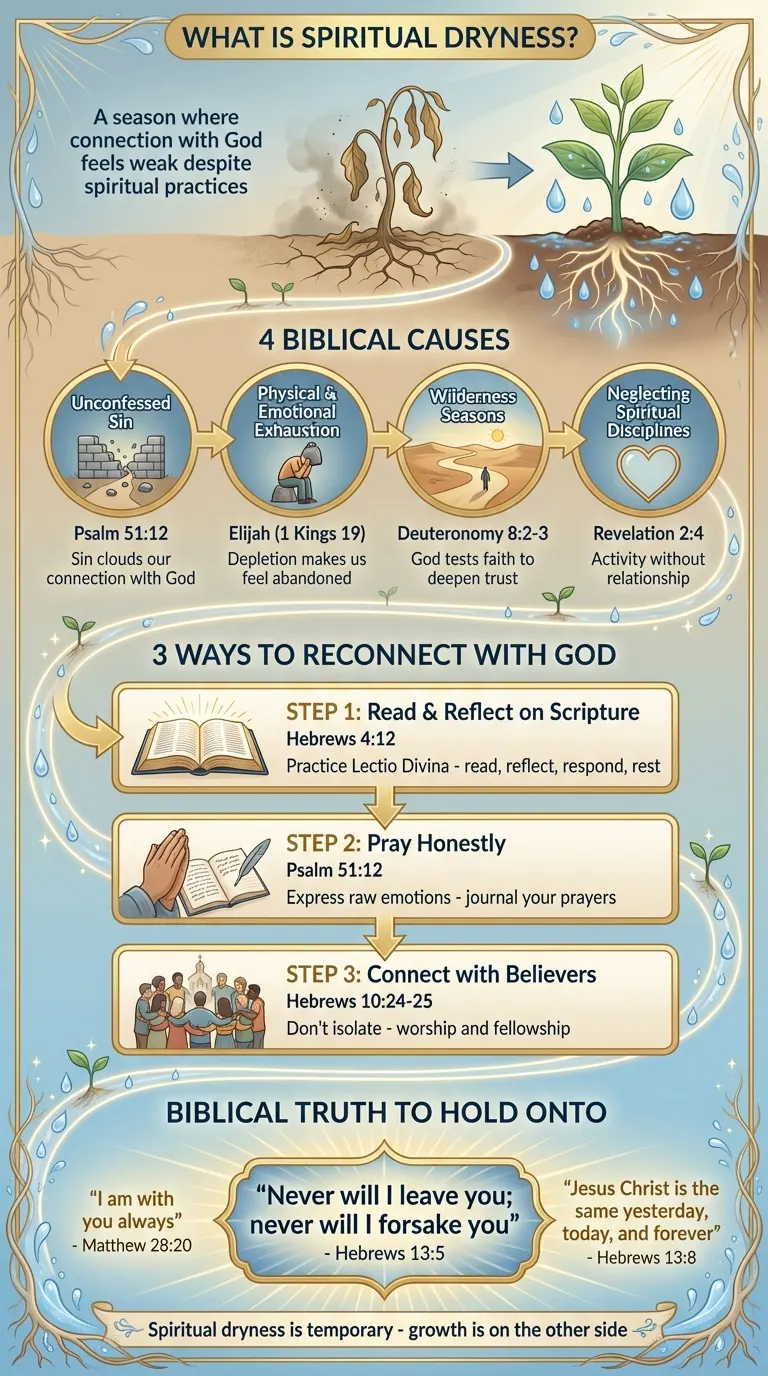
4 Biblical Causes of Spiritual Dryness and How to Reconnect with God
What the Bible Says About Spiritual Dryness
Why Spiritual Dryness Happens
Spiritual dryness can stem from a variety of reasons, and the Bible provides insight to help us understand these moments in our lives.
Unconfessed sin is one of the key barriers to a vibrant relationship with God. In Psalm 51:12, David’s heartfelt prayer shows how sin – whether rooted in lust, pride, or greed – clouds our connection with God and diminishes spiritual vitality.
Physical and emotional exhaustion can also leave us feeling spiritually drained. Elijah’s story after his dramatic victory over the prophets of Baal is a powerful example. Even after such a triumph, he found himself overwhelmed and despondent, showing how depletion of energy can make believers feel abandoned and empty.
Sometimes, God intentionally allows "wilderness seasons." These are periods where, much like the Israelites wandering in the desert (Deuteronomy 8:2–3), God tests our faith and teaches us to trust Him without relying on emotional highs. As Francis MacNutt, Founding Director of Christian Healing Ministries, explains:
"God has to wean us from using God in our search for spiritual pleasure. He wants us to seek Him and love Him for Himself alone and not just what He can give us."
Another contributing factor is neglecting spiritual disciplines or becoming overly consumed with church work. The church in Ephesus, described in Revelation 2:4, serves as a warning. Though they were doctrinally sound, they lost their "first love" by prioritizing activity over a genuine relationship with Christ.
God Remains Faithful During Dry Seasons
Even when God feels distant, His faithfulness never wavers. The Bible reassures us with promises like, "Never will I leave you; never will I forsake you" (Hebrews 13:5) and Jesus’ words, "I am with you always, to the very end of the age" (Matthew 28:20).
Throughout Scripture, God consistently provides for His people during their lowest moments. Consider Elijah, who, despite his exhaustion, was given food, rest, and heard God’s gentle whisper (1 Kings 19). Or the Israelites, who, when trapped at the Red Sea, witnessed God part the waters to deliver them (Exodus 14).
These dry seasons can deepen our dependence on God. Christina Patterson, Founder of Beloved Women, puts it beautifully:
"God is not leading you to a spiritual dry season to leave you empty but to show you to the only source that can truly satisfy your soul: Himself."
Like plants digging their roots deeper during a drought to find water, spiritual dryness pushes us to ground ourselves in God’s eternal truth instead of relying on fleeting emotions.
Moreover, these seasons teach us to worship God for who He is, not based on how we feel. Trusting Him in times of emptiness is a sign of mature faith, one that glorifies Him. As missionary Pete Nelson wisely observes:
"People know you’re deep when you get tested, and you’re not yanked out. You’re still standing and staying put in your devotion to God."
These reflections pave the way for practical steps to reconnect with God and renew your spiritual life.
How to Reconnect with God
Read and Reflect on Scripture
Even when your emotions feel dull, Scripture remains a powerful tool for shaping your heart. Hebrews 4:12 describes God’s Word as "living and active, sharper than any two-edged sword", emphasizing that it works within us regardless of how we feel. Psalm 119 also illustrates how meditating on God’s Word revives and sustains us, even during spiritually dry times.
Keep reading Scripture, even if it feels like a routine. A helpful approach is Lectio Divina, a simple four-step method: read a short passage slowly, reflect on a word or phrase that resonates with you, respond to God in prayer based on what you’ve read, and rest quietly in His presence. This practice can deepen your engagement with Scripture, even when your heart feels distant.
As Scripture begins to touch your heart, pair it with honest prayer to invite God into your dry season.
Pray Honestly
God welcomes your raw, unfiltered prayers. The Psalms are filled with examples of people expressing frustration, feelings of abandonment, and spiritual thirst – yet these laments often lead back to trust in God. You don’t need polished words or perfect emotions to pray authentically.
If you’re struggling to pray, ask God for the desire to pray. Use Psalm 51:12 as a guide: "Restore to me the joy of your salvation, and uphold me with a willing spirit." Dr. Richard Caldwell offers this encouragement:
"We don’t fake it; we faith it. We are to get up every day and be determined to live according to what the Scripture teaches, believing no matter how we feel".
Consider journaling your prayers. Writing slows your thoughts and creates a record of God’s faithfulness that you can revisit during future dry seasons.
Connect with Other Believers
When Scripture and prayer feel insufficient, fellowship becomes crucial. Isolation often deepens spiritual dryness. Hebrews 10:24–25 reminds us not to neglect meeting with others, urging believers to "encourage one another – and all the more as you see the Day approaching." Worshiping and connecting with others can provide strength when your personal faith feels weak.
The "means of grace" – Scripture, prayer, and the Church – work together to sustain you. When personal devotions feel empty, being with other believers reminds you that faith isn’t anchored in fleeting emotions but in God’s steadfast character. Glenna Marshall explains:
"The Word, prayer, and the Church are the means of grace God has given us to hold fast to Him and to grow in maturity".
Don’t wait for the "right feelings" to attend church or reach out to fellow Christians. Love, as Kate Fowler points out, is an intentional choice:
"Love is a choice, not a feeling. Therefore, when feelings are absent, God is inviting us to choose him with a love that is selfless and trusting".
Showing up – even when you feel emotionally numb – demonstrates a mature faith. It opens the door for God to work through the community around you, strengthening your spirit through their encouragement and support.
How Psalmlog Supports Spiritual Growth During Dry Seasons

Why Voice Journaling Helps
Speaking your prayers aloud can deepen your connection with God in ways that silent meditation sometimes cannot. During seasons of spiritual dryness, when quiet prayer feels hollow, voicing your frustrations and questions mirrors the heartfelt laments found in the Psalms, where David and others openly poured out their struggles. Voice journaling can also help you stay focused during prayer, keeping your thoughts from wandering.
Todd Hukill explains, "Sometimes, just voicing your frustrations and desires can lead to breakthrough." Similarly, Madison Myers of ReThink Church notes, "The book of Psalms meets us where we are, in our sorrows, pain, and moments of joy… Psalms are biblical journal entries." By recording your honest prayers, you not only find emotional release but also create a space for genuine dialogue with God, even in challenging times. This foundation sets the stage for how Psalmlog’s features can further support you on your spiritual journey.
Psalmlog Features for Dry Seasons
Psalmlog builds on the benefits of voice journaling by offering tools specifically designed to nurture spiritual growth during difficult times. With the Faith Builder plan ($19.99/month), you get 300 minutes of recording time each month, giving you a dedicated space to voice your prayers and process your struggles. The app’s 6-point AI insights analyze your spiritual patterns, helping you identify whether your dryness stems from fatigue, sin, or other challenges.
The Scripture tagging feature connects your reflections to specific Bible passages, encouraging you to ground your beliefs in God’s Word rather than fleeting emotions. By revisiting past entries through the calendar view, you can reflect on answered prayers and moments of grace, reminding yourself of God’s faithfulness even when He feels distant. Additionally, the app’s sentiment analysis tracks your emotional journey, echoing the biblical call to remember God’s works. As Paul Chernoch from Christianity Stack Exchange points out, "The Bible is filled with calls for people to remember the works that God has performed in the past as a means to sustain faith during present times of trouble."
Fitting Psalmlog Into Your Daily Routine
Incorporating Psalmlog into your daily life is simple and doesn’t require a big time commitment. Just 15 minutes in the morning, during lunch, or in the evening can be enough to record your thoughts and prayers.
Try creating a personal Psalm after meditating on a Scripture passage that speaks to your current situation. As Marc Alan Schelske says, "Our relationship with God becomes more vibrant the moment we start telling the truth. God already knows our struggles. When we get real about them, then God gets to be in the game with us."
Psalmlog’s transcript feature allows you to review your prayers and track your spiritual growth over time, revealing recurring themes of God’s work in your life. Preston from the Psalmlog blog highlights the value of this practice: "Writing these reflections in a journal helps capture your thoughts and track your spiritual journey." Unlike traditional paper journals, digital journaling offers advantages like searchable entries, tagged Scripture references, and visual insights that document your progress in faith.
Conclusion: Trusting God Through Spiritual Dryness
Biblical Truths to Remember
When God feels distant, it’s important to remember that emotions don’t change His constant presence. Hebrews 13:8 reminds us that Jesus is the same yesterday, today, and forever. The Cross stands as the ultimate proof of God’s unwavering commitment, even in our darkest times. Malachi 3:6 reinforces this by declaring that God’s character never changes, no matter the season.
Periods of spiritual dryness are not permanent. These times refine our faith and help us grow deeper roots for the future. Rick Warren puts it this way:
"We rarely change when we see the light; we change when we feel the heat. One of the ways God brings on heat is through dry spells".
As mentioned earlier, leaning on Scripture, prayer, and community is essential during these challenging periods.
With these truths as your foundation, take purposeful steps to reconnect with God.
Your Next Steps
Take action today – spend time in Scripture, pray with honesty, and seek out fellowship with other believers. Even if spiritual practices feel routine or forced right now, know that perseverance is often shaped in the wilderness.
Consider using practical tools to help you stay on track. For example, Psalmlog can be a great way to document your prayers and reflect on your spiritual journey. This can help you clearly see God’s faithfulness over time. Remember, this season will pass, and the growth it brings – stronger faith, deeper trust, and a closer relationship with God – will last far beyond the temporary dryness.
Overcoming Spiritual Dryness | When You Don’t Feel God’s Presence.
FAQs
How can I recognize if I’m going through a season of spiritual dryness?
Spiritual dryness often feels like a disconnect from God, making it challenging to engage with Him. You might find joy missing from prayer or reading Scripture, experience discouragement or apathy, or notice a waning interest in spiritual practices. While these periods are common and usually temporary, they can also be moments to seek God with greater purpose and deepen your faith.
How can I stay connected to God during times when He feels distant?
Staying connected to God during times of spiritual dryness requires deliberate actions to keep your faith alive. Begin with persistent prayer, even when it feels challenging. Pour out your heart with honesty – those raw, sincere moments of prayer can draw you closer to Him. Dive into Scripture, focusing on passages that remind you of His promises and offer encouragement.
Another important step is to connect with fellow believers. Opening up about your struggles and leaning on the support of a faith community can provide comfort and fresh perspective. Lastly, invite the Holy Spirit to work within you, asking for renewal and guidance. Even when God feels distant, trust that He is always near.
Why does God sometimes feel distant during tough spiritual seasons?
Periods of spiritual dryness often play a meaningful role in our journey of faith. They teach us resilience, deepen our trust in God, and guide us to focus less on emotional highs and more on building a sincere, enduring relationship with Him. These moments challenge us to love God for who He is, not just for His blessings or the comfort He provides.
Though these seasons can feel difficult, they offer valuable opportunities for growth. Through prayer, meditating on Scripture, and approaching God with an open heart, we can rediscover strength and connection in Him. Even when He feels distant, God is always present, working in ways we may not yet understand.