
Why Your Daily Devotional Isn't Working (And What to Do About It)
Fix an ineffective devotional: personalize Scripture to your struggles, use voice journaling and tracking, and adopt realistic 10–15 minute routines.
Struggling with your daily devotional? You’re not alone. Many people feel their devotional time lacks impact, leaving them disconnected from Scripture and their life’s challenges. Here’s why it may not be working and how to fix it:
- Generic content: Most devotionals focus on broad themes like “hope” or “peace” but fail to address real-life issues like financial stress or workplace conflicts.
- Unrealistic routines: A rigid daily schedule can feel like a chore, especially when life gets hectic.
- Lack of practical guidance: Devotionals often provide inspiration but little actionable advice for personal struggles.
How to improve your devotional time:
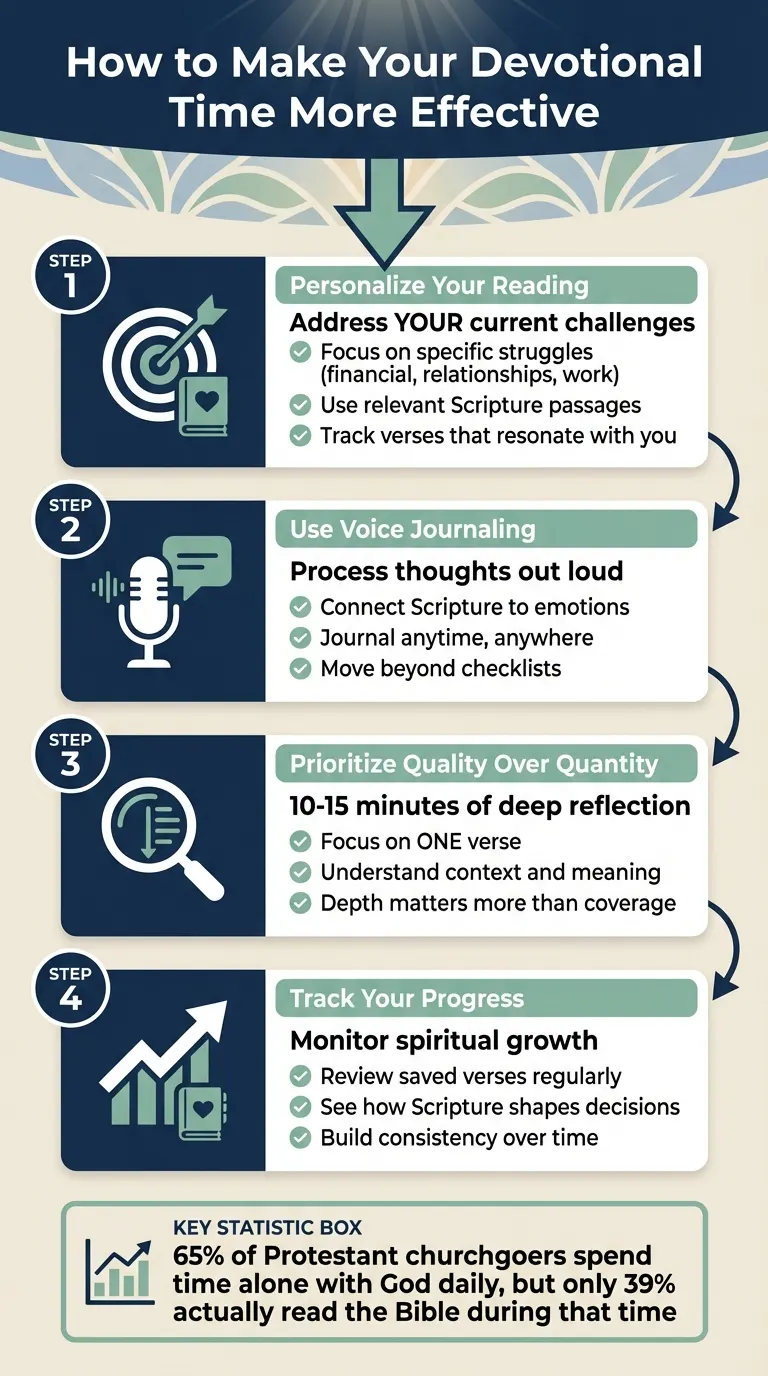
- Personalize your reading to address your current challenges – like financial worries or relationship struggles.
- Use tools like Psalmlog to find Scripture tailored to your needs and track your spiritual growth.
- Focus on quality over quantity – spend 10–15 minutes reflecting deeply on one verse rather than rushing through a chapter.
- Try voice journaling to process your thoughts and connect Scripture to your emotions and daily life.
4 Steps to Transform Your Daily Devotional Practice
Anxiety, Stress, & Worry Are Not Helping You | daily devotional
Why Daily Devotionals Often Fail
Daily devotionals can sometimes miss the mark when it comes to fostering meaningful spiritual growth. The reason? Many fail to address the real-life burdens and unique challenges of their readers. Here’s a closer look at some of the common pitfalls that make devotionals less effective.
Generic Content That Feels Distant
Devotionals often aim to reach a broad audience, but in doing so, they risk losing personal relevance. Themes like "trust God" or "find peace" are inspiring in theory, but they don’t always provide practical guidance for specific struggles – like navigating a toxic workplace or managing complex relationships. Instead of offering a cohesive framework for life, many devotionals rely on isolated verses that feel more like quick soundbites than tools for real transformation. As Bible teacher Jen Wilkin explains, popular devotionals often focus on "inspiration" and "comfort" rather than the deeper work of "teaching, rebuking, and training in righteousness".
Unrealistic Expectations for Daily Routines
Another stumbling block is the overly ambitious structure of many devotional routines. The idealized image of devotional time – a quiet hour in a tranquil setting – rarely matches the reality of busy schedules. For most, it’s a quick 10 minutes squeezed in between morning chaos or late-night exhaustion. When life gets hectic, guilt often creeps in, especially if a day or two is missed. Renee Zou, a corporate lawyer, captures this frustration:
What ought to be a daily, delightful privilege of communing with God devolves into a twenty‐minute checkbox that is more a burden than a joy, a requirement rather than a refreshment.
This pressure to stick to rigid plans can turn devotionals into a chore, causing many to give up altogether.
Lack of Practical Guidance and Emotional Connection
Traditional devotionals often emphasize passive reflection over actionable steps. While they may offer inspiration, they rarely equip readers with practical tools to handle challenges like financial stress or difficult conversations. This approach contributes to a decline in Bible literacy, leaving many unable to connect theological truths to their daily lives. Instead of providing a roadmap for real-world application, devotionals often leave readers with fragmented insights that feel disconnected from their struggles.
Understanding these challenges is the first step toward creating a devotional practice that truly enriches your spiritual journey and addresses the realities of everyday life.
How to Make Your Devotional Time More Effective
Small, intentional changes can turn your devotional time into a meaningful and personal conversation with God.
Tailor Your Devotional to Your Specific Needs
Your devotional time shouldn’t feel like a rigid, one-size-fits-all routine. Are you wrestling with a tough decision? Dive into passages like those in Proverbs, which provide practical wisdom and guidance for navigating life’s unique challenges.
Dru Johnson, a professor at The King’s College, offers this perspective:
Fluency is the ability to think alongside the repeated teaching of Scripture and extend its thinking and practices into modern situations – where all the variables may be different from those in the ancient context but the principles are the same.
Instead of randomly flipping through the Bible, focus on scriptures that speak directly to your current situation. Jot down the date and a brief note next to verses that resonate with you. This creates a personal record of God’s guidance and faithfulness over time. Once you’ve identified a verse that speaks to you, take it a step further by reflecting out loud.
Use Voice Journaling for Deeper Reflection
Speaking your thoughts aloud can open up a different kind of connection to what you’re reading. When you voice your reflections after reading Scripture, it helps you process how God’s word relates to your emotions and life circumstances.
Katie McCoy, Director of Women’s Ministry at Texas Baptists, highlights this idea:
Bible journaling can help us process our emotions and direct them to the Lord.
Voice journaling is perfect for capturing your thoughts anytime – whether you’re walking through your neighborhood or sitting quietly in your car. Instead of just listing out prayer requests, talk about how a passage addresses what you’re feeling – whether it’s stress about finances or frustrations at work. This practice shifts the focus from completing a checklist to genuinely engaging with God’s word.
Prioritize Quality Over Quantity
When it comes to devotional time, depth matters more than how much you cover. If one verse speaks to you, let it sink in. Reflect on it, meditate on its meaning, and connect it to your life. As Micah Maddox puts it:
The heart’s devotion is not toward an exercise, but toward the Savior. Give time and attention to God and His Word because you love Him.
Start with a manageable 10-15 minute session to make your devotional time consistent and sustainable. Avoid rushing through large sections of text; instead, focus on understanding the context and significance of what you’re reading. For instance, while 65% of Protestant churchgoers spend time alone with God daily, only 39% actually read the Bible during that time.
The goal isn’t to read more – it’s to connect deeply. Write down a verse that moves you, pair it with a prayer, and carry that thought with you throughout the day. By personalizing, vocalizing, and diving deeper into Scripture, you can create a devotional practice that feels both meaningful and practical.
Tools to Improve Your Devotional Routine
Turn your devotional time into a meaningful, personal connection with God by using tools designed to meet you where you are. Whether you’re navigating a tough career decision, financial stress, or relationship struggles, having the right resources can make all the difference.
Get Personalized Guidance with Psalmlog
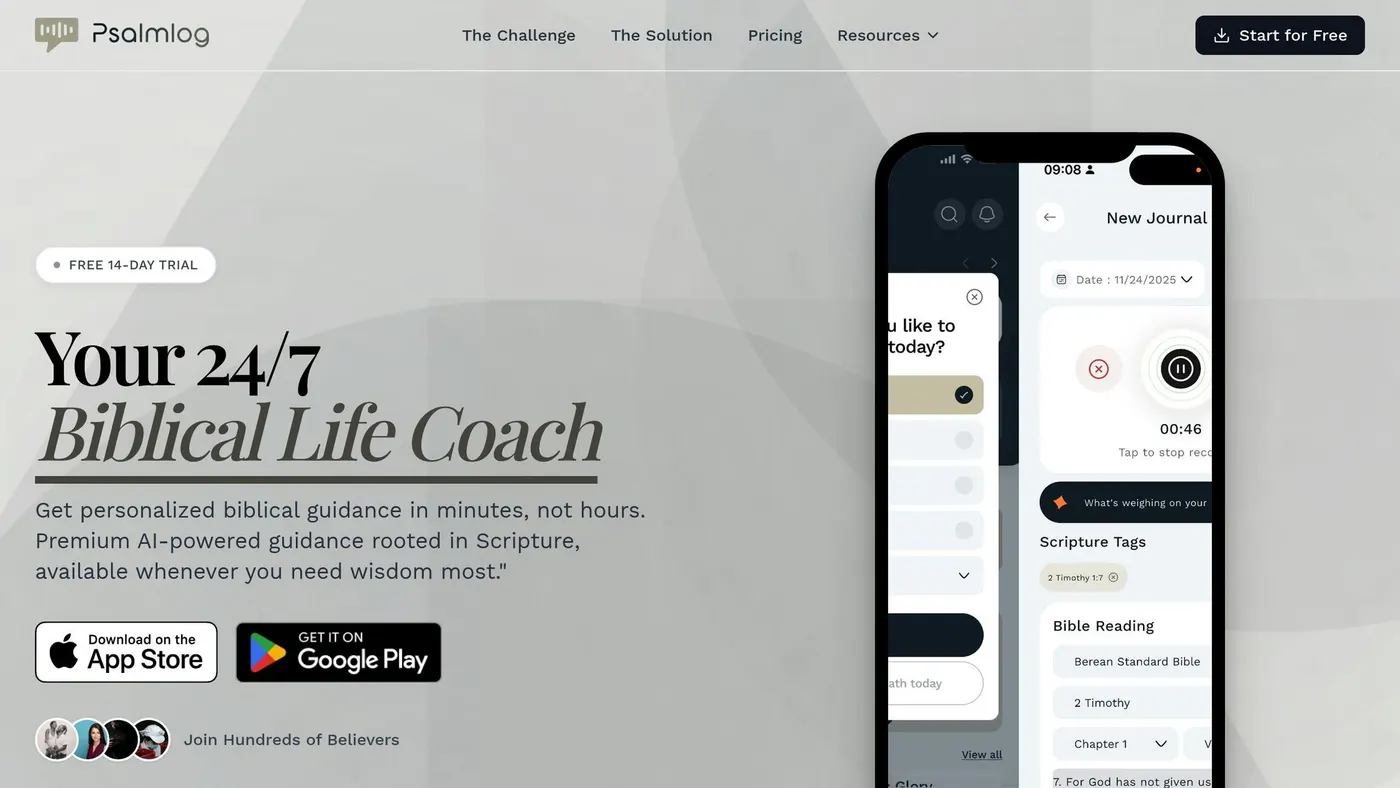
Psalmlog is a tool that tailors biblical guidance to your specific challenges. Feeling anxious about a job interview? Wrestling with family issues? Simply describe your situation in the app, and within 60 seconds, you’ll receive Scripture passages that speak directly to your need.
The app eliminates the hassle of manual searches by delivering instant, relevant verses. It offers specialized categories like Biblical Healing, Family Relationships, Anxiety & Stress, Major Decisions, Financial Struggles, and Career/Work. Even if you’re offline, Psalmlog allows you to record up to three journal entries, so you can stay consistent in your devotional practice no matter where you are.
Psalmlog also includes features like the Scripture Journal and Biblical Wisdom Archive, which save the verses and insights you receive. This creates a personal record of how God has guided you through different seasons, helping you maintain a steady and meaningful devotional habit.
Set Realistic Devotional Goals
To build a sustainable devotional routine, start with goals that fit your actual schedule. Instead of aiming for an hour-long session, begin with just 10–15 minutes. Choose a consistent time and place – whether it’s during your morning coffee, lunch break, or before bed – to make the practice feel automatic and less like a daily decision [6,14].
Ken Anema, an instructor at Divine Hope Reformed Bible Seminary, emphasizes the importance of small, consistent habits:
Do not underestimate the powerful impact of small consistent routines.
A simple four-step routine can work wonders: open with a 30-second prayer, spend 5–10 minutes reading or listening to Scripture, take 2–3 minutes to reflect on its application, and close with a 3–5 minute prayer. If your routine starts to feel monotonous, mix it up. Try reading a different book of the Bible, switching locations, or using voice journaling instead of writing [6,7].
Once your routine feels natural, the next step is keeping track of your progress.
Track Your Spiritual Progress
Tracking your spiritual growth adds another layer of depth to your devotional practice. By regularly reviewing your saved verses and journal entries, you’ll start to see how Scripture is shaping your decisions and addressing your challenges [23,24]. Psalmlog’s insights dashboard makes this easy by providing a visual record of your consistency and the Scriptural themes you’ve explored.
The focus here isn’t on how many chapters you’ve read but on how Scripture is influencing your real-life choices. When you can look back and see how a verse from months ago helped you navigate a current issue, it reinforces the transformative power of God’s Word. Tracking your progress turns your spiritual intentions into visible growth.
Conclusion: Create a Devotional Practice That Works for You
There’s no need to follow a rigid formula. Build a devotional practice that fits into your life – one that helps you navigate challenges like career changes, financial pressures, or relationship struggles. It’s not about the amount of time you spend but the quality of that time. Start small, with just 10–15 minutes at a time that works for your schedule. As Mary Lou Redding wisely says, "The point is to spend time with God, not to do this in a particular way".
What makes a devotional practice truly impactful is personalization. Tailor it to your needs by using tools that connect Scripture to what you’re facing right now. For example, Psalmlog allows you to record and reflect on how Scripture speaks to your life, offering features like voice journaling and tracking to help you see how God’s Word influences your decisions over time.
And don’t stress about finding the “perfect” tool. As David Phelan puts it, "Your choice of a tool is far less important than your faithfulness in using it". If your routine starts feeling repetitive, shake things up – explore a new book of the Bible, try a different setting, or experiment with new reflection methods. The goal isn’t to simply check off a daily task but to nurture a heart that remains connected to God throughout your day.
Start today by setting realistic goals, creating a steady routine, and staying open to adjustments. With a personalized approach and tools like Psalmlog, your devotional time can become more than just a habit – it can be a transformative encounter with God.
FAQs
How can I make my devotional time more meaningful and relevant to my life?
To make your devotional time more impactful, try connecting it to the challenges you’re currently facing. Whether you’re dealing with career transitions, relationship hurdles, or financial stress, focus on Scripture that directly relates to your situation. Reflect on how its wisdom can guide your decisions and help you navigate your circumstances.
Using tools like voice journaling or writing down your prayers can also be incredibly helpful. These practices allow you to process your thoughts and see how Scripture ties into your daily life. By personalizing your devotional time, you can deepen your connection with God and find meaningful guidance for your spiritual journey.
How can I make my daily devotional routine more consistent and meaningful?
To build a devotional routine that lasts, start by picking a specific time and place that fits seamlessly into your day. Maybe it’s early in the morning before the world wakes up, or perhaps it’s during a calm evening moment. The key is consistency. Choose a quiet spot where you can focus without interruptions.
You can also experiment with different tools and methods to make your devotional time meaningful. For example, try voice journaling to reflect on scripture, or think about how biblical principles apply to your everyday choices. Joining a small group for devotional reading or adding prayer walks to your routine can also bring variety and keep things engaging.
Most importantly, stay purposeful. A lasting devotional practice isn’t about doing it perfectly – it’s about creating a steady rhythm that fits your spiritual goals and daily life.
How can voice journaling make my devotional time more meaningful?
Voice journaling can add depth to your devotional time by encouraging you to actively engage with Scripture. When you speak your thoughts, emotions, and prayers aloud, it becomes easier to reflect on how God’s Word relates to your personal experiences – whether you’re dealing with career transitions, relationship struggles, or financial pressures. This practice turns devotionals into more than just reading; it becomes a heartfelt and interactive dialogue with God.
It also serves as a way to document your spiritual journey. By recording your immediate reflections and insights, you create a personal archive of how Scripture has spoken to you during different seasons of life. Listening back to these recordings can inspire growth and remind you of the ways God’s Word has supported you through challenges. Voice journaling makes devotional time more meaningful and intentional, helping you connect biblical wisdom to your everyday life in a way that feels deeply personal.