
How to Rebuild Trust After Betrayal: A Biblical Roadmap
A Bible-based five-step plan—confession, forgiveness, transparency, honest communication, and trusting God's timing—to restore relationships after betrayal.
Betrayal is painful, but healing and rebuilding trust is possible with biblical guidance. The process involves:
- Admitting the betrayal: Acknowledge the harm caused and confess fully without excuses.
- Choosing forgiveness: Release the desire for revenge, following Christ’s example.
- Rebuilding trust: Demonstrate consistent, transparent actions over time.
- Communicating openly: Share feelings honestly and pray together for strength.
- Trusting God’s timing: Healing takes time, but faith and steady effort lead to restoration.
This journey requires humility, accountability, and faith in God’s promises to bring renewal, even in broken relationships.
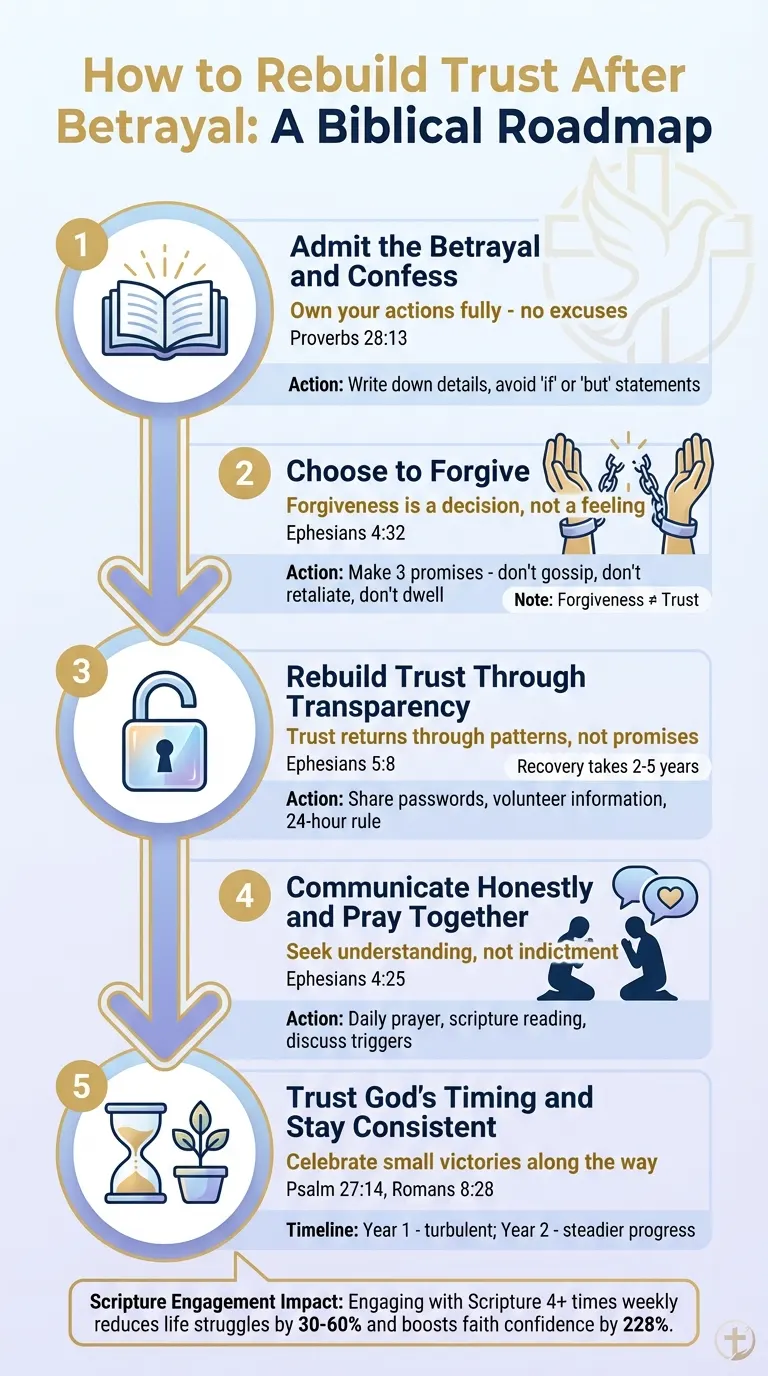
5 Biblical Steps to Rebuild Trust After Betrayal
425: Rebuilding Trust After Betrayal – What It Really Takes with Geoff Steurer
Step 1: Admit the Betrayal and Confess
Healing starts with honesty. This doesn’t mean offering a half-hearted apology like, "I’m sorry if I hurt you." True confession means fully owning up to your actions. As J.D. Greear explains, real repentance sounds like, "I have sinned, and I accept responsibility".
The Bible distinguishes between two types of remorse. Godly sorrow leads to genuine transformation and healing, while worldly sorrow is simply regret over getting caught or facing consequences. Proverbs 28:13 warns, "Whoever conceals his transgressions will not prosper, but he who confesses and forsakes them will obtain mercy". Trying to hide the truth or offering partial confessions only restarts the pain and delays trust from being rebuilt.
What the Bible Teaches About Confession
James 5:16 encourages, "Therefore, confess your sins to one another and pray for one another, that you may be healed". This act of confession creates a pathway for healing – for both the one who confesses and the one who was hurt. The Bible also reminds us that while betrayal deeply affects others, all sin ultimately offends God. David expressed this in Psalm 51:4, recognizing that his wrongdoing was first and foremost against the Creator.
Matthew 5:23–24 emphasizes the importance of reconciliation before religious rituals. If you know someone holds something against you, leave your offering and first seek to make amends. God values sincere repentance – a "broken and contrite heart" (Psalm 51:17) – over empty promises to simply "do better".
Steps to Confess the Betrayal
Confession must be thorough and transparent. Writing down the details beforehand can help ensure nothing is overlooked or minimized. When confessing, avoid words like "if", "but", or "maybe", as they can sound like excuses. Instead, take full responsibility for your actions and acknowledge the pain caused.
For example, being gradually transparent – openly sharing details and answering questions over time – can help rebuild trust step by step.
After confessing, ask, "What else do you need to heal?" and listen carefully to their response. They might request access to your phone, email, or schedule to regain a sense of security. Follow through on these requests. Remember, an apology without meaningful action to back it up is empty.
Confession lays the groundwork. From here, the journey continues with forgiveness and the ongoing work of restoration.
Step 2: Choose to Forgive
Forgiveness isn’t something you wait to feel – it’s a deliberate choice. You decide to forgive because Christ forgave you, even when the pain lingers. A counselor from the Biblical Counseling Center explains, "Forgiveness is granted before it is felt. You don’t wait until you feel like forgiving. You decide to forgive because Christ forgave you".
"Biblical forgiveness is deciding to release your right to revenge and placing the person who wronged you into God’s hands for Him to deal with. It’s a legal decision in your heart." – John Davison, author of Christian Wake-Up Call
This decision means letting go of the desire for revenge or the habit of revisiting the offense in your mind. Forgiveness doesn’t equal trust. Forgiveness is a gift you give freely to release yourself from bitterness, but trust takes time and is earned through consistent, trustworthy behavior. You can fully forgive someone while still maintaining boundaries to protect yourself from further harm. This choice lays the groundwork for releasing bitterness and moving toward healing.
What the Bible Says About Forgiveness
Scripture calls believers to forgive others because God has already forgiven them through Christ. Ephesians 4:32 reminds us, "Be kind to one another, tenderhearted, forgiving one another, as God in Christ forgave you". Similarly, Colossians 3:13 ties our forgiveness of others to Christ’s example. In Matthew 6:14-15, Jesus warns that refusing to forgive others creates a spiritual barrier to experiencing God’s forgiveness.
Forgiveness involves making three intentional promises: not bringing up the offense to others (avoiding gossip), not using it against the offender (no retaliation), and not dwelling on the pain internally (no rehearsing). This doesn’t mean you condone the wrong, forget what happened, or rush to reconcile. It means you stop holding onto bitterness, which only harms you. As Pastor Matt Sturdevant of Hope Church puts it, "Holding onto an offense is like drinking poison and expecting the other person to die".
Once you’ve made the decision to forgive, the next step is to put it into action.
How to Practice Forgiveness
- Pray for the offender. Praying for the one who hurt you helps break bitterness and opens the door to healing. Ask God for their genuine repentance and ultimate good, even when your emotions resist.
- Journal your wounds and your forgiven sins. Write down the full impact of the offense – whether emotional, financial, or spiritual – and pour out your raw emotions before God, much like the Psalms do. Then, create a "Gospel Perspective" list, reflecting on the sins God has forgiven you for. This shift in perspective helps forgiveness feel less about the other person’s worthiness and more about obeying God.
- Meditate on Scripture that encourages forgiveness. Focus on passages like Matthew 18:21-22, where Jesus says forgiveness has no limits. Reflect on Philippians 4:8, which encourages redirecting your thoughts toward what is true, honorable, and pure.
- Give your hurts to God. Picture yourself handing each wound over to God, trusting that His hands are big enough to carry the pain you’ve been holding onto. This practice reinforces that forgiveness doesn’t excuse the offense – it entrusts justice to God, who alone is qualified to handle it (Romans 12:19).
Step 3: Rebuild Trust Through Transparency and Accountability
After forgiveness is extended, rebuilding trust becomes the next critical step. This process requires consistent actions that demonstrate transparency and accountability. While forgiveness helps release bitterness, trust must be rebuilt over time through reliable behavior. As John Gottman, Professor Emeritus at the University of Washington, explains: "Trust is the result of trustworthy actions". In other words, apologies and promises alone won’t cut it. As The Pursuit Counseling aptly puts it, "Trust doesn’t return through promises. Trust returns through patterns".
When betrayal occurs, trust is essentially depleted, and restoring it takes sustained effort and genuine change. Research shows that recovery from betrayal often spans two to five years, with the first year being particularly challenging. During this time, the offending partner must take responsibility for being transparent. As highlighted in Ephesians 5:8, the offender should "walk in the light", meaning they should voluntarily provide information rather than leaving the betrayed partner to constantly ask for it. Caitlin McCaffrey, Director of Women’s Ministry at Harvest USA, underscores this point:
"If you are the one who has brought sexual sin into your marriage, you are responsible for setting the tone of walking in the light. This is your role; engage it, take responsibility for it, plan it".
Transparency must be backed by verifiable actions, and the betrayed partner should clearly communicate their needs for safety. Without this mutual effort, mistrust and resentment can linger, making healing far more difficult.
Ways to Create Accountability
To rebuild trust, the offender must take proactive steps to create a sense of safety and reliability. Here are some practical ways to establish accountability:
- Volunteer information before being asked: Instead of waiting for your partner to question you, share updates like, "I’m running late because of X." This small act can shift the dynamic from suspicion to reassurance.
- Provide full digital access: Share passwords, browser histories, social media accounts, calendars, and financial records openly. Consider using smartphone location tracking for real-time verification.
- Follow the "24-Hour Rule": Disclose any slips, breaches, or even tempting thoughts within 24 hours.
- Schedule regular check-ins: Have daily or weekly conversations to discuss triggers, emotional states, and progress in the healing process.
- Document accountability steps: Write down restitution plans, deadlines, and specific actions to make them concrete and measurable. For example, follow the example of Zacchaeus (Luke 19:8), who made tangible amends for his wrongs, such as financial repayment or public acknowledgment when necessary.
These steps, while challenging, help create a foundation for trust to grow again.
Getting Help from Mentors and Counselors
Rebuilding trust can feel overwhelming, but outside guidance can make a big difference. Proverbs 11:14 reminds us, "Where there is no guidance, a people falls, but in an abundance of counselors there is safety". Mature mentors, elders, or professional counselors can provide unbiased support, ensuring both parties stay accountable and avoid relying solely on self-assessment.
A counselor, for example, can assist the offending spouse with complete disclosure, guiding them to provide a thorough, written account of the betrayal. This helps eliminate hidden details that might otherwise surface later and further damage trust. It also prevents the "trickle-truth" effect, where new revelations emerge over time, deepening the wounds.
The betrayed spouse may also write an "impact letter" outlining the emotional, physical, and spiritual toll of the betrayal. The offender’s role is to receive this letter with empathy and without defensiveness, fostering a deeper understanding of the harm caused. This collaborative process, rooted in accountability, allows both partners to experience "godly sorrow" (2 Corinthians 7:10) and move closer to genuine healing.
Step 4: Communicate Honestly and Pray Together
Rebuilding trust after betrayal is an emotional and spiritual journey. It requires partners to openly share their feelings, fears, and hopes while keeping God at the center of the healing process. As Jill Savage, author and speaker, says, "The purpose of asking questions should be to seek understanding, not indictment."
What the Bible Says About Honest Communication
The Bible emphasizes the importance of truth in relationships. Ephesians 4:25 urges believers to "put away falsehood and speak truth" because we are "members one of another." When emotions and thoughts are buried instead of shared, it can lead to spiritual and emotional harm. Honest communication brings those hidden wounds into the light, allowing healing to begin.
David’s example in Psalm 55:17 is a powerful reminder of raw honesty. He cried out to God "evening, morning, and noon", openly expressing his emotions. In the aftermath of betrayal, the hurt partner often needs the space to revisit and express their pain repeatedly, as trauma tends to resurface in cycles rather than follow a linear path.
Open and regular communication helps shift a relationship from suspicion to understanding. As one counseling resource explains, "Proactive communication rebuilds trust. Reactive communication maintains suspicion." Jill Savage also points out, "Questions aren’t an invasion of privacy. You gave up privacy when you said ‘I do’ and began a lifelong journey toward oneness." Asking thoughtful questions like "How did that make you feel?" or "What’s on your heart right now?" can deepen understanding. Discussing specific triggers – like a song or event that stirs up old wounds – can also help both partners navigate the recovery process more effectively.
Once honest communication is established, couples can further strengthen their bond through shared prayer.
Daily Prayer Practices for Healing
Prayer acts as a steady anchor during times of uncertainty. While human trust may falter, God remains steadfast. Psalm 118:8 reminds us, "It is better to take refuge in the Lord than to trust in man."
In the first 90 days of rebuilding trust, couples can create a routine that includes shared prayer, scripture reading, and brief check-ins. Morning prayers can set a hopeful tone for the day, while evening reflections provide an opportunity to acknowledge acts of kindness or support. This practice mirrors the "three-fold cord" mentioned in Ecclesiastes 4:12, which symbolizes a strengthened bond when God is part of the relationship.
Praying scripture offers a structured way to express emotions. The Psalms of lament, for instance, provide language to bring anger and grief to God, preventing these feelings from turning into long-term resentment. Before tackling difficult conversations, couples might pray Psalm 139:23: "Search me, O God, and know my heart", seeking clarity and truth. James 1:5 also encourages asking God for wisdom and discernment when navigating trust and new commitments.
For the betrayed partner, prayer becomes a way to surrender the healing process to God. Following Jesus’ example in 1 Peter 2:23, they can entrust their pain to "Him who judges justly", releasing the burden of trying to control the outcome. While this doesn’t erase the hurt, it serves as a reminder that God is capable of transforming hearts in ways humans cannot. By combining honest communication with consistent prayer, couples create an environment where trust can gradually be rebuilt.
Step 5: Trust God’s Timing and Stay Consistent
Rebuilding trust is a gradual process – it doesn’t happen in a day. While forgiveness can be an immediate choice, trust is something that must be earned over time through consistent actions and faithfulness. Studies highlight that recovery from betrayal often requires long-term dedication. The first year can feel turbulent, filled with emotional highs and lows, while the second year typically shifts into a slower, steadier phase as the initial crisis energy fades.
What the Bible Says About God’s Timing
Trusting in God’s timing is an active decision to lean on His faithfulness, not a passive waiting game. Psalm 27:14 offers encouragement: "Wait for the Lord; be strong and take heart and wait for the Lord." These seasons of waiting are opportunities for God to shape character, deepen faith, and prepare a marriage for a deeper restoration – far richer than anything achieved through rushed fixes.
Romans 8:28 reminds us that "God works all things together for the good of those who love Him, who are called according to His purpose".
This verse serves as a reminder that God is in control, even in the healing process. He has the power to bring redemption, even from situations meant to harm. Trusting His timing requires surrendering your own expectations and believing that He is working in unseen ways to heal both hearts.
How to Build Trust Over Time
Rebuilding trust is about consistency. Each small, faithful action helps refill what was lost. Start by focusing on achievable, everyday commitments – like honest communication and following through on promises.
Instead of looking for dramatic changes, celebrate "small victories." These might include softer conversations, praying together, or checking in proactively about schedules. For the unfaithful spouse, radical transparency is key. This means offering information about schedules, devices, or personal struggles without waiting to be asked. It’s this proactive honesty that begins to rebuild the foundation of trust.
True reliability is shown when actions consistently align with words – not just for a few days, but over months and years. Mistakes will happen, but owning them and maintaining accountability are critical. Progress may feel slow, but steady, intentional steps will lead to lasting trust.
Using Psalmlog for Scripture Reflection and Emotional Processing

When navigating the aftermath of betrayal, finding ways to process emotions and rebuild can feel overwhelming. Psalmlog offers a Scripture-based voice journaling tool that helps you reflect and heal, even if you’re unsure of where to begin or which Bible verses to turn to in the moment.
How Psalmlog Supports Spiritual Growth
Psalmlog’s voice journaling feature allows you to speak freely about your thoughts and emotions, particularly during moments of high anxiety. Once recorded, the app’s AI connects your reflections to relevant Scripture in just about 60 seconds.
The app also uses sentiment analysis to track your emotional patterns over time. This can reveal a gradual shift from feelings of anger or despair toward stability and even compassion, aligning with the principles of reconciliation found in 2 Corinthians 5:18. According to research from the Center for Bible Engagement, engaging with Scripture at least four times a week can reduce life struggles by 30–60% and boost faith confidence by 228%. Setting a goal to journal regularly – ideally four times weekly – can amplify these benefits as you work through the process of rebuilding trust.
Psalmlog Features for Processing Betrayal
Psalmlog allows you to tag specific Scriptures that resonate with your personal experiences of betrayal. For example, you might save verses like Psalm 41:9 ("Even my close friend, someone I trusted, one who shared my bread, has turned against me") or Psalm 55:12–14, which capture the pain of being hurt by someone close. These tagged Scriptures are stored in your Biblical Wisdom Archive, creating a personalized resource you can revisit throughout your healing journey.
The app doesn’t just stop at Scripture suggestions – it offers personalized insights and actionable steps based on the emotions you’ve recorded. For instance, if your journal entries reflect heartbreak, Psalmlog might recommend verses like Psalm 147:3 ("He heals the brokenhearted and binds up their wounds") or Isaiah 61:3, which speaks of finding beauty in the ashes.
"The biblical guidance and insights shared are based on what you’re actually going through from your journal entries, not just generic guidance or lessons. I think it makes it easier to understand and absorb when it’s personally relevant".
These tailored insights guide you beyond surface-level solutions, helping you work toward deeper emotional and spiritual restoration through faith-based practices.
Additionally, Psalmlog encourages verbal release as a spiritual discipline. Recording affirmations like "I forgive them" can help reshape your heart and bring a sense of peace. The app’s Psalmcast feature allows you to replay your reflections and the biblical guidance you’ve received, further supporting your healing process.
This tool serves as a meaningful companion in your journey to rebuild trust and deepen your spiritual connection. It pairs practical steps with faith-driven insights to help you move forward.
Conclusion: Following the Biblical Path to Restoration
Restoring trust after betrayal is a deliberate process, built on the foundations of confession, forgiveness, transparency, and prayer. Each step – acknowledging the truth, choosing forgiveness, committing to transparency, and practicing honest communication – guides you from the pain of betrayal toward the hope of renewal. Trust, like a fragile thread, is mended slowly and intentionally, with God’s timing leading the way.
Forgiveness and trust, though connected, are distinct. Forgiveness cancels a debt, while trust measures consistent actions. Forgiveness is an act of obedience to God and can be given immediately, but trust must be rebuilt over time through reliable and changed behavior. This shift from assumed trust to verified trust requires accountability and the transparency discussed earlier.
Throughout this journey, God remains the constant anchor. While human trust is being rebuilt, you can rest in the security of God’s unchanging promises, as highlighted in Isaiah 25:1 and Joshua 21:45. This spiritual foundation empowers you to embrace vulnerability, even when the process is challenging or doesn’t unfold as expected.
Scripture provides both comfort and direction. The Psalms give voice to your pain, while passages like Colossians 3:13 and Ephesians 5:8 encourage you to walk in the light. These biblical principles validate your emotions and offer a clear path forward. Tools like Psalmlog can help you incorporate these teachings into daily life, fostering reflection and accountability as you navigate this process.
Healing doesn’t happen overnight, but with faith and consistency, progress builds over time. Trust God’s timing, lean on the principles outlined here, and take each step forward with courage and faith.
FAQs
Do I have to forgive right away?
Forgiveness doesn’t need to happen right away. It’s a journey that takes time and progresses at its own pace, often tied to your personal healing process. Give yourself the room to heal, and lean on prayer or moments of reflection to guide you as you move toward forgiving.
Can I forgive but keep boundaries?
Forgiveness is indeed a directive from God, but it doesn’t imply that trust should be instantly restored. Trust requires time and is rebuilt through steady and reliable actions. Setting healthy boundaries while moving toward restoration is not only sensible but also aligns with biblical principles. This approach creates room for healing and ensures accountability.
When is it wise to involve a pastor or counselor?
When betrayal leads to intense emotional pain, trauma, or spiritual instability, it can be helpful to involve a pastor or counselor. Turning to someone who offers biblically grounded support can make a big difference, especially when feelings of shock, grief, or confusion feel overpowering. Christian counseling or pastoral guidance often provides practical tools for healing, working through forgiveness, and rebuilding trust. This kind of support is particularly important in severe situations or when reconciliation feels challenging and requires extra help.