
Bible Friendship: Love, Truth & Boundaries
Practical biblical guidance on steady love, honest speech, wise boundaries, and repairing friendships with Scripture.
The Bible calls me to be a friend who loves steadily, speaks honestly, and helps when life gets hard. I can start today with one check-in, one offer of help, or one apology.
Proverbs 17:17 points to faithful love; John 15:13 points to sacrifice. Here’s how I put that into practice:
- Show up: Make time, pray, and keep my promises.
- Build trust: Listen, speak privately, and avoid gossip.
- Choose close friends wisely: Look at repeated behavior, not one bad day.
- Repair conflict: Own my part and forgive, while remembering that trust takes time.
- Set limits: <u>Love does not require accepting abuse.</u> Seek support when safety is at risk.
- Reflect before acting: Use Scripture and tools like Psalmlog to examine my choices - not judge my friend.
My next step: choose one friendship and one action for this week.
What Makes a Faithful Friend
Show Loyalty, Offer Help, and Encourage
Proverbs 17:17 and Hebrews 10:24–25 describe faithful friendship as being there and offering practical encouragement. Biblical friendship takes shape through everyday acts of care.
That may mean checking in, bringing a meal, giving a ride, helping with an urgent task, or praying together.
Speak Honestly and Protect Trust
Proverbs 27:5–6, 27:9, and 27:17 show that loving friends speak honestly, correct privately, and help each other grow. When something needs addressing, talk in private. Name the specific concern, admit what you may not understand, and listen. Correction should help a friend - not control or shame them.
Trust also means knowing what not to share. Proverbs 16:28 warns that gossip separates friends, while Proverbs 17:9 cautions against bringing up an offense repeatedly. Don’t share a friend’s private struggles or pull others into taking sides. Keeping a confidence never means hiding abuse, crime, or immediate danger.
David and Jonathan: Loyalty at a Cost
In 1 Samuel 18–20, Jonathan, Saul’s son and next in line to the throne, protects David at real personal cost. In the wilderness of Horesh, Jonathan strengthens David in God (1 Samuel 23:16–18); after Jonathan’s death, David honors him in a lament (2 Samuel 1:17–27).
Jonathan protected an innocent man. His loyalty served truth, not harm - a picture of biblical loyalty that protects rather than follows blindly.
Proverbs: How to Foster Godly Friendships
Choose Close Friends Wisely
Loyalty matters, but so does choosing who has the most influence on your life.
Proverbs 27:17 shows how close companions shape wisdom and faith. 1 Corinthians 15:33 warns that their influence can also lead someone off course. Paul is correcting false teaching about the resurrection - not banning friendships with people who believe differently.[5][6]
Treat everyone with respect, but give deep trust to people whose advice proves wise.
Signs of Helpful and Harmful Friendships
Judge a close friendship by repeated behavior, not a single moment or passing mood.
| Friendships that strengthen character | Friendships that undermine character |
|---|---|
| Encouragement: Support truth and constructive conversation | Normalize gossip, lies, ridicule, or humiliation |
| Honest correction: Welcome accountability and allow disagreement | Punish honesty or use correction to control |
| Loyalty in hardship: Offer practical, dependable help | Use help as leverage or make support conditional |
| Boundaries: Respect privacy, time, consent, and a clear no | Demand constant access or retaliate against limits |
| Faith direction: Encourage wisdom, self-control, and faithful living | Pressure someone toward destructive habits or false teaching |
When a Friendship Needs Boundaries
Use these questions to review your close relationships:
- Does this friendship encourage wisdom and integrity?
- Can both of us give and receive respectful correction?
- Are trust, privacy, and personal boundaries respected?
One uncomfortable conversation doesn't make a friendship harmful. Look at the pattern and whether behavior changes after you voice concerns. If that pattern becomes harmful, set limits through actions you control:
Decline certain activities, reduce sensitive disclosures, stop lending money, or reduce contact.[7]
Christian love doesn't require unrestricted access. Repeated manipulation, threats, or abuse calls for stronger boundaries and outside support. Turn to trusted people, a qualified counselor, or church leaders who understand abuse. If you're in immediate danger, contact emergency services first.[7]
Put Biblical Friendship Into Practice
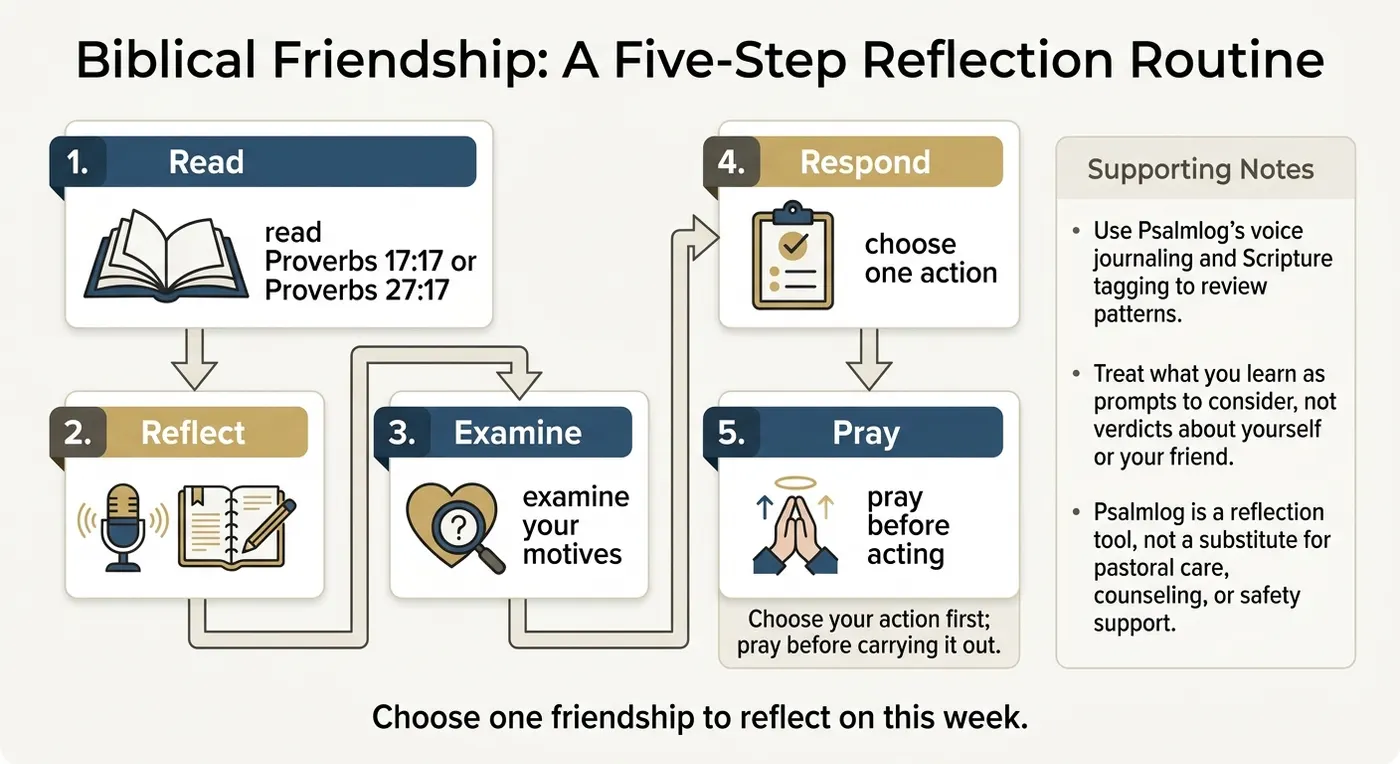
Turn friendship principles into daily habits. Start with a steady rhythm you can keep.
Make Time to Connect and Pray
Aim to be present consistently, not available constantly. Choose a realistic way to stay connected:
A 15-minute weekly check-in, a monthly meal, or another dependable pattern.
Offer specific help, and do what you promise.
Bring dinner, watch children, or review a résumé.
Check your follow-through, too. Ask whether your friend needs listening, practical help, prayer, or advice. Get permission before offering advice, and speak privately. Pray, then check back to ask what helped. Use Scripture to comfort, not to rush grief.
Resolve Conflict and Forgive Without Ignoring Harm
Even strong friendships need repair when conflict damages trust. Colossians 3:12–13 and Ephesians 4:31–32 call for compassion, patience, kindness, and forgiveness.[8][9]
For ordinary conflict, meet privately and calmly. Explain what happened, listen to your friend’s perspective, and own your part. A real apology names the harm without excuses. Agree on how to repair it, then follow through.
For example, commit to confirming plans earlier.
Forgiveness does not instantly restore trust. Reconciliation may take repentance, changed behavior, restitution, and time.[12][13] Serious harm may also call for pastoral care, a licensed counselor, or safety support. Do not pursue joint counseling when coercion or fear prevents honest speech. Protect children and vulnerable people first.[10][13]
Reflect on Your Friendships With Psalmlog
After the conversation, review what you said and learned. Follow a read–reflect–examine–respond–pray routine: read Proverbs 17:17 or Proverbs 27:17, record a concern aloud, examine your motives, choose one action, and pray before acting.[4][11]
Use Psalmlog’s voice journaling and Scripture tagging to review patterns. Treat what you learn as prompts to consider, not verdicts about yourself or your friend. Psalmlog is a reflection tool, not a substitute for pastoral care, counseling, or safety support.
Choose one friendship to reflect on this week.
Conclusion: Take One Step Toward Faithful Friendship
As you reflect on your friendships, choose one concrete step to take this week. Faithful friendship means steady love expressed through truth, loyalty, and wise boundaries.[5][14][15]
Read Proverbs 27:6 or Proverbs 17:17, and put its message into practice. Let one verse guide one decision today.[14]
Pick one action and decide when you’ll do it.
Contact a struggling friend by Friday, thank a friend for one specific quality, or start the conversation you have delayed. This may require exploring biblical forgiveness to move forward.
Ask God for wisdom as you make your plan, then follow through.
FAQs
How can I handle a one-sided friendship?
Approach the friendship with wisdom, prayer, and clear boundaries. Start with an honest conversation. Galatians 6:2 encourages us to carry each other’s burdens.
But if the friendship keeps draining you or consistently dishonors your faith, stepping back is biblical. You don’t have to stay close to someone who won’t return your care or respect your well-being. You can forgive them and pray for their growth while limiting contact to protect your peace.
Can I forgive a friend who never apologizes?
Yes. According to the Bible, forgiveness is a personal choice to let go of bitterness and the emotional debt someone owes you. It doesn’t depend on what they do or whether they show remorse [1].
Scripture encourages us to forgive as the Lord forgave us. But forgiving someone doesn’t mean you have to stay close to them or accept harmful behavior [1][2]. You can forgive your friend, pray for them, and still set healthy boundaries [1][2][3].
How do I distinguish loving correction from judgment?
Loving correction and judgment differ in motive and delivery. Loving correction aims to build someone up and restore them. Judgment often comes from pride, a desire to win, or a need for control.
Start by examining your own heart. Speak truth with gentleness and humility. Address specific behaviors rather than attacking the person’s character, and use “I” statements to explain how those behaviors affect you. Aim for reconciliation and the other person’s long-term good - not punishment.