
Bible Topics / Forgiveness
What Does the Bible Say About Forgiveness?
“Be kind to one another, tenderhearted, forgiving one another, as God in Christ forgave you.”
Ephesians 4:32
14 min read · 20 key verses
Peter thought seven was generous. The rabbis of his day taught that forgiving someone three times was plenty, so when he asked Jesus, "Up to seven times?" he expected credit. Jesus said seventy-seven (Matthew 18:22). Then He told a story about a servant forgiven a debt he could never repay, who walked out and choked a man over pocket change.
Forgiveness is not optional for believers. In the Lord's Prayer, Jesus links our forgiveness of others directly to God's forgiveness of us: "Forgive us our debts, as we also have forgiven our debtors" (Matthew 6:12). He then adds the sobering clarification: "For if you forgive others their trespasses, your heavenly Father will also forgive you, but if you do not forgive others their trespasses, neither will your Father forgive your trespasses" (Matthew 6:14-15).
Jesus didn't only teach it. He did it from the cross: "Father, forgive them, for they know not what they do" (Luke 23:34). Undeserved, costly, given freely. That's the definition.
Yet Scripture also acknowledges how deeply difficult forgiveness can be, especially when the wound is severe. Joseph wept when he forgave the brothers who sold him into slavery (Genesis 45:1-15). The process took years. Biblical forgiveness is rarely instant. Most of the time it's a slow letting go of bitterness, one day at a time, with God's help.
Ephesians 4:31-32 spells out the practice: "Let all bitterness and wrath and anger and clamor and slander be put away from you, along with all malice. Be kind to one another, tenderhearted, forgiving one another, as God in Christ forgave you." The measure is the cross. We forgive because we have been forgiven.
It's important to clarify what biblical forgiveness is not. Forgiveness is not excusing the offense, pretending it didn't happen, removing consequences, or necessarily restoring the relationship to what it was. Forgiveness is a decision to release the debt of bitterness and entrust justice to God (Romans 12:19). Reconciliation is a separate process that requires repentance from the offender.
Colossians 3:13 makes forgiveness a community practice: "Bear with each other and forgive one another if any of you has a grievance against someone. Forgive as the Lord forgave you." The church is meant to be a place where forgiveness is practiced regularly; offenses matter, and grace matters more.
If you're stuck on one specific person or one specific wound, start there. Write down what happened below and see what Scripture says about it.
God's Forgiveness: The Foundation
Before the Bible asks us to forgive others, it establishes a staggering truth: we have already been forgiven an unpayable debt. Jesus made this point unforgettably in the parable of the unforgiving servant (Matthew 18:21-35). A servant owed the king ten thousand talents, a number so large it was essentially infinite. The king forgave the entire debt. Then that same servant found a fellow servant who owed him a hundred denarii (a trivial amount) and had him thrown in prison.
The parable's logic is hard to escape: how can someone who has been forgiven everything refuse to forgive anything? This is the foundation of all biblical teaching on forgiveness. We forgive not because the offense against us was small, but because the offense God has forgiven in us was infinitely larger.
Psalm 103:10-12 describes the scope of God's forgiveness: "He does not treat us as our sins deserve or repay us according to our iniquities. For as high as the heavens are above the earth, so great is his love for those who fear him; as far as the east is from the west, so far has he removed our transgressions from us." East and west never meet: God's forgiveness creates permanent, irreversible distance between you and your sins.
Isaiah 43:25 reveals God's heart: "I, even I, am he who blots out your transgressions, for my own sake, and remembers your sins no more." Look at the motive: "for my own sake." God forgives because it's His nature to forgive. He delights in mercy (Micah 7:18). If you're carrying guilt that God has already dealt with through Christ, you're carrying a burden He has already taken.
Psalm 103:12“As far as the east is from the west, so far has he removed our transgressions from us.”
Jesus' Radical Teaching on Forgiving Others
Jesus' teaching on forgiveness was revolutionary in His context, and it remains revolutionary in ours. When Peter asked "Lord, how many times shall I forgive my brother or sister who sins against me? Up to seven times?" he was being generous by rabbinic standards. Jesus' answer: "seventy-seven times" (Matthew 18:22), was not a literal number. It meant no limit. There is no point at which a Christian is permitted to stop forgiving.
In the Lord's Prayer, Jesus made forgiveness a daily practice linked directly to our relationship with God: "Forgive us our debts, as we also have forgiven our debtors" (Matthew 6:12). He then added the most sobering clarification in all of Scripture: "For if you forgive others their trespasses, your heavenly Father will also forgive you, but if you do not forgive others their trespasses, neither will your Father forgive your trespasses" (vv. 14-15).
This doesn't mean we earn God's forgiveness by forgiving others. It means that a heart that has truly received God's grace will naturally extend it. An unforgiving heart reveals that we haven't grasped the magnitude of what we've been forgiven. The two go together, receiving and extending are part of the same flow of grace.
From the cross, Jesus modeled the ultimate act of forgiveness: "Father, forgive them, for they know not what they do" (Luke 23:34). He forgave while the nails were still being driven in. He forgave people who weren't sorry. He forgave the very act of being murdered. This is the standard, impossibly high, and only possible through the Spirit that now lives in believers.
What Forgiveness Is, and What It Isn't
One of the biggest barriers to forgiveness is misunderstanding what it requires. Biblical forgiveness is specific and bounded. It doesn't demand what many people fear it demands.
Forgiveness is a decision to release the debt of bitterness. When you forgive, you're saying "I will no longer hold this against you in my heart." You're transferring the case from your court to God's. Romans 12:19 says "Beloved, never avenge yourselves, but leave it to the wrath of God, for it is written, 'Vengeance is mine, I will repay, says the Lord.'" Forgiveness trusts that God is a better judge than you are.
It is a process more than an event. Joseph forgave his brothers, but it took over a decade. He wept through it (Genesis 45:1-15). David forgave Saul repeatedly, and it wasn't instant or easy. You may need to forgive the same offense many times before bitterness fully releases its grip. That's normal. Each time you choose forgiveness, the roots of bitterness weaken.
Forgiveness is not pretending the offense didn't happen. You can fully acknowledge what was done to you and still choose to forgive. Minimizing harm is denial, not forgiveness.
It does not remove consequences. David was forgiven by God for his sin with Bathsheba, but the consequences of his actions still unfolded (2 Samuel 12:13-14). A forgiven offense may still have relational, legal, or practical consequences.
It is not reconciliation. You can forgive someone and still maintain distance. Reconciliation requires the offender's repentance and demonstrated change. Forgiveness is one-sided; reconciliation is two-sided. Particularly in cases of abuse, forgiveness does not require putting yourself back in harm's way.
And it is not a feeling. Forgiveness is a decision; the feelings often follow later. Don't wait to "feel" forgiving. Choose it, and trust God to heal the emotions over time.
How Forgiveness Actually Happens
If you're struggling with forgiveness right now, whether of someone else, of yourself, or in receiving God's, here is how it tends to go in Scripture.
Name the wound honestly. Don't minimize what happened. Psalm 62:8 says "pour out your hearts before him." God can handle your anger, pain, and confusion. He doesn't need you to clean up your emotions before you bring them to Him. Write it all out; Psalmlog exists for this.
Grieve what was lost. Forgiveness doesn't bypass grief. Jesus wept at Lazarus' tomb even knowing the resurrection was minutes away (John 11:35). Something was taken from you, innocence, trust, time, relationship. Mourn it. Ecclesiastes 3:4 says there is "a time to weep." Grief is not the opposite of faith.
Remember your own forgiveness. Meditate on the parable of the unforgiving servant (Matthew 18:21-35). Let the magnitude of what God has forgiven in you reshape how you see the offense against you. That doesn't shrink your pain. It sets it inside a larger grace.
Make the decision. Say to God (out loud if possible), "I choose to forgive [name] for [specific offense]. I release the debt. I trust You with the justice." You may need to say this many times before bitterness fully releases. That's okay. Each declaration weakens the chains.
Pray for the offender. Jesus said "pray for those who persecute you" (Matthew 5:44). This is brutally hard, and it changes you. It is almost impossible to pray sincerely for someone and stay bitter toward them at the same time.
Set boundaries as needed. Forgiveness doesn't mean unrestricted access. You can forgive and also protect yourself from further harm. Proverbs 22:3 says "the prudent see danger and take refuge." Wisdom and forgiveness work together.
Colossians 3:13“Bear with each other and forgive one another if any of you has a grievance against someone. Forgive as the Lord forgave you.”
Want guidance that’s personal to you?
Try Psalmlog Free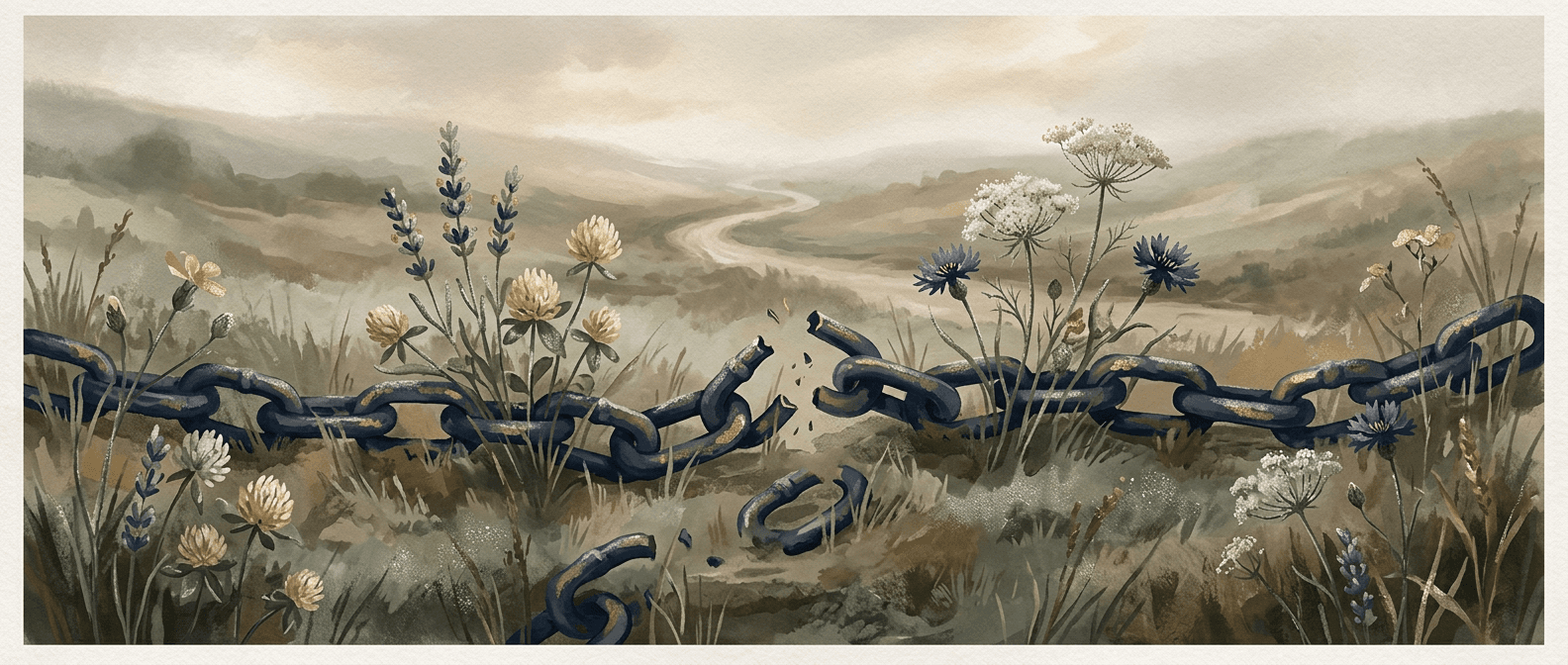
Get Scripture for Your Situation
Write what’s going on and get passages that fit it.
Frequently Asked Questions
Does the Bible say I have to forgive everyone?
What if I can't feel forgiveness?
Can God forgive any sin?
How do I forgive someone who isn't sorry?
What's the difference between forgiveness and reconciliation?
How do I forgive myself?
How can Psalmlog help me with forgiveness?
Explore Related Topics

What Does the Bible Say About Anger?
Learn what the Bible says about anger, managing it God's way, and finding peace when frustration overwhelms you.

What Does the Bible Say About Love?
Explore what the Bible says about love: God's love for us, loving others, and relationships through Scripture.

What Does the Bible Say About Healing?
Find what the Bible says about healing, physical, emotional, and spiritual. Scripture for those seeking God's restoration.
Psalmlog
Scripture That Speaks to Your Life
Write what’s on your heart (a worry, a decision, a moment of gratitude) and Psalmlog puts it next to what Scripture says about that.
No account needed. Voice or text.