
5 Biblical Principles for Managing Conflict in Your Marriage
Five Bible-based steps—pray first, examine yourself, speak truth in love, forgive quickly, and pursue peace—to resolve marital conflict and strengthen your union.
Conflict in marriage is inevitable, but how you handle it can strengthen your relationship and faith. The Bible provides clear guidance on navigating disagreements with love, humility, and forgiveness. This article outlines five key principles to help you approach conflict in a God-centered way:
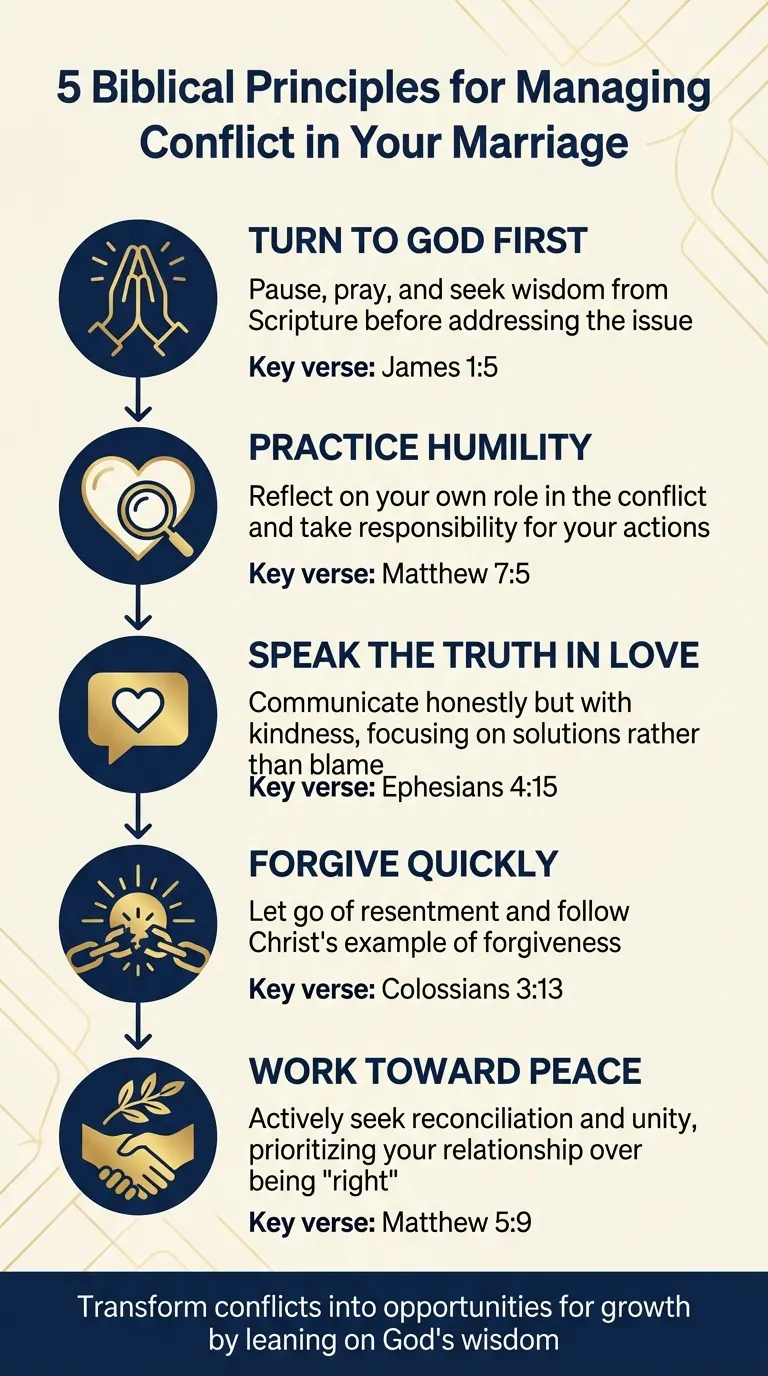
- Turn to God First: Pause, pray, and seek wisdom from Scripture before addressing the issue.
- Practice Humility: Reflect on your own role in the conflict and take responsibility for your actions.
- Speak the Truth in Love: Communicate honestly but with kindness, focusing on solutions rather than blame.
- Forgive Quickly: Let go of resentment and follow Christ’s example of forgiveness.
- Work Toward Peace: Actively seek reconciliation and unity, prioritizing your relationship over being “right.”
These principles, rooted in Scripture, can transform conflicts into opportunities for growth. By leaning on God’s wisdom and applying these steps, you can build a stronger, more peaceful marriage.
5 Biblical Principles for Managing Marriage Conflict
10 Biblical Ways to Resolve Conflict in Marriage
Principle 1: Turn to God Before Addressing the Issue
When tensions rise, it’s easy to react in the heat of the moment. But instead of jumping straight into confrontation, pause and seek God first. His wisdom far surpasses the limits of human emotion.
Our human nature, as fallen beings, often leads us toward blame and control when left unchecked. Matthew 26:41 reminds us of this: we need the Holy Spirit to overcome these selfish tendencies and gain a clearer perspective. By turning to God first, we allow space for self-reflection – acknowledging the "plank" in our own eye before pointing out the "speck" in someone else’s (Matthew 7:3-5).
Let’s look at how prayer and Scripture can prepare your heart to approach conflict with grace and understanding.
Pray for Wisdom Together
James 1:5 offers this comforting assurance: "If anyone lacks wisdom, let him ask God, who gives generously". When conflict arises, take a step back and spend a few moments in prayer. Whether you pray alone or together, this isn’t about avoiding the issue – it’s about shifting from emotional reactions to seeking God’s guidance.
In prayer, ask God for the wisdom to approach the disagreement with humility and understanding. Psalm 139:23-24 is a powerful prayer to guide you: "Search me, O God, and know my heart. Test me and know my anxious thoughts. See if there is any offensive way in me". This kind of prayer can help you identify your own role in the conflict. Acknowledging your part is a crucial step toward reconciliation.
Study Scripture for Direction
After praying, turn to Scripture to guide your next steps. In moments of heightened emotion, God’s Word provides clarity and steadiness. Psalm 119:105 describes it perfectly: "Your word is a lamp to my feet and a light to my path." When the way forward feels unclear, Scripture offers the direction you need.
Proverbs 3:5-6 encourages you to trust in the Lord wholeheartedly, rather than relying on your own understanding. This trust comes with the promise that He will make your path straight. Additionally, James 3:17-18 paints a picture of heavenly wisdom: peace-loving, considerate, submissive, and full of mercy. Use these qualities as a guide to ensure your actions and resolutions align with God’s truth, not just your emotions.
Principle 2: Practice Humility and Self-Examination
When conflicts arise, it’s easy to fall into the trap of blaming others – an instinct that can be traced all the way back to Eden. But instead of pointing fingers, a better approach is to turn inward and reflect. Genuine humility has the power to change how we handle disagreements.
Humility paves the way for resolution, while pride often leads to destruction (Proverbs 11:2, 16:18). Cultivating a humble heart means recognizing your own limitations and taking full responsibility for your part in the conflict, no matter how small it may seem. This doesn’t mean taking on all the blame – it’s about owning your contribution, even if it feels minor.
Even when you think you’re only 1% at fault, taking 100% responsibility for that 1% can make a significant difference in resolving the issue.
Take Responsibility for Your Own Faults
Jesus’ teaching in Matthew 7:5 makes this clear: focus on removing the plank from your own eye before addressing the speck in someone else’s. Before pointing out your spouse’s mistakes, take a moment to examine your own actions – whether it’s your tone, choice of words, or overall attitude.
This process isn’t about harsh self-criticism; it’s about gaining clarity. When you acknowledge your faults openly, it prevents your spouse from needing to point them out, which can reduce defensiveness and open the door to genuine dialogue. Ask yourself: Have I withheld affection? Spoken harshly? Ignored my spouse when they reached out?
Questions for Self-Reflection
Before approaching your spouse, take time to reflect honestly on your role in the conflict. These questions can guide your self-examination:
- How have I contributed to this conflict? Look beyond the surface issue and consider whether your actions, words, or attitudes have escalated the situation.
- Am I approaching this with love and grace? Are you seeking reconciliation, or are you more focused on “winning” the argument? (Ephesians 4:15, Philippians 2:3).
- Have I asked God to reveal my blind spots? Use Psalm 139:23 as a prayer: "Search me, O God, and know my heart".
- Am I assuming my spouse’s motives? Instead of jumping to conclusions, seek clarification.
- Is this expectation rooted in Scripture or just a personal preference? Sometimes we impose our own desires on our spouse without considering whether they align with biblical principles.
"Marriage is not about happiness; it is about holiness. And when we are holy, then we will truly be happy." – Bible Teacher’s Guide
Principle 3: Speak the Truth in Love
Being honest without compassion can hurt your spouse, while kindness without honesty leaves issues unresolved. The challenge lies in striking the right balance – speaking truthfully while showing love and respect. Ephesians 4:15 encourages believers to speak "the truth in love", and this principle can transform the way couples handle tough conversations.
Your spouse can’t address a problem they don’t know exists, which makes the how of communication just as important as the what. Approaching conflict with the intention of building your partner up, rather than tearing them down, creates room for understanding and connection. The goal isn’t about winning an argument – it’s about restoring unity and deepening your relationship. This mindset paves the way for expressing your feelings in a constructive way, which is crucial for healing and strengthening your bond.
Use "I Feel" Statements
Using "I feel" statements is a practical way to combine honesty with compassion, especially when resolving conflict through biblical wisdom. Statements that assign blame – like "you did this" or "you always…" – can make your spouse defensive. Instead, focus on expressing your emotions and experiences.
Try this format: "I feel [emotion] when [specific behavior or event]." For example, instead of saying, "You’re always late", you might say, "I feel hurt when you come home late without letting me know." This approach shifts the conversation from accusations to vulnerability, making it easier for your spouse to understand and empathize.
Avoid using absolutes like "you never" or "you always", as these phrases are usually inaccurate and can escalate tension. Stick to the current issue rather than revisiting past grievances that have already been forgiven.
Avoid Harsh Words and Tone
In addition to respectful words, your tone plays a critical role in effective communication. The Bible highlights the power of gentle words – Proverbs 15:1 says, "A gentle answer deflects anger, but harsh words make tempers flare." Even truthful statements can harm your marriage if delivered with harshness or contempt.
Before addressing your spouse’s actions, take a moment to reflect on your own role in the conflict. Focus on specific behaviors instead of attacking their character. For instance, rather than saying, "You’re so careless with money", try, "I feel anxious when we don’t stick to our budget." If emotions run too high for a calm discussion, consider taking a short break – 15 to 60 minutes – to cool down, pray, and regain perspective. James 1:19–20 reminds us to be "quick to hear, slow to speak, slow to anger; for the anger of man does not produce the righteousness of God."
Ephesians 4:29 offers a valuable guideline: "Let no corrupting talk come out of your mouths, but only such as is good for building up, as fits the occasion, that it may give grace to those who hear." Ask yourself: Are my words helping this relationship grow, or are they causing harm?
Principle 4: Forgive Quickly
Once you’ve spoken truth with love, the next step is forgiveness. This act clears the path for true reconciliation and healing in your relationship.
Mark 11:25-26 reminds us that forgiveness is not optional – it’s a direct command to forgive as Christ has forgiven us. While it might not come naturally, forgiveness is a conscious decision. As Covenant Keepers explain:
"Forgiveness is a choice, not a feeling; a choice to please and obey God. You will never feel like forgiving anyone. The feeling of forgiveness only comes after you choose to forgive." – Covenant Keepers
Holding on to unforgiveness can be dangerous. Ephesians 4:26-27 warns that unresolved anger gives the enemy a foothold, turning your marriage into a battlefield. Pastor Adrian Rogers puts it plainly:
"Unforgiveness is a cancer in a marriage." – Adrian Rogers, Pastor of Love Worth Finding Ministries
When left unchecked, bitterness can harden your heart, creating cycles of resentment and repeated arguments. The Parable of the Merciless Servant (Matthew 18:23-35) offers a powerful reminder: God has forgiven your "unpayable debt", so you, too, must forgive the "small debts" of your spouse. True forgiveness means letting go of resentment and refusing to keep a mental list of past wrongs. This aligns with 1 Corinthians 13:5, which teaches that love keeps no record of wrongs.
Daily Forgiveness Habits
One simple habit can make a big difference: resolve conflicts before the day ends. Known as the "Sunset Rule", this practice prevents anger from festering overnight. A heartfelt exchange like, "I’m sorry, will you forgive me?" followed by a clear statement of forgiveness can ensure both of you feel the issue is resolved.
Colossians 3:13 reinforces this approach:
"Make allowance for each other’s faults, and forgive anyone who offends you. Remember, the Lord forgave you, so you must forgive others."
If forgiveness feels like an uphill battle, take a moment to pray. A quick five-minute prayer, asking the Holy Spirit for strength, can help when your own willpower falls short.
Once daily forgiveness becomes a habit, the next step is to release past grievances.
Let Go of Past Grievances
Forgiveness is about more than just words – it’s about letting go of old wounds. Proverbs 17:9 cautions against revisiting past mistakes, as it can drive a wedge between even the closest of friends. Bringing up past wrongs only reignites old conflicts, so clear communication about forgiveness is key to moving forward.
Ephesians 4:32 offers this guidance: be kind, compassionate, and forgiving, just as God has forgiven you in Christ. When conflicts arise, ask yourself if they stem from a deeper, unresolved hurt or unmet need. Unforgiveness doesn’t just harm your relationship – it can also affect your spiritual life. 1 Peter 3:7 warns that unresolved bitterness can hinder your prayers, and Matthew 6:15 reminds us that failing to forgive others may result in God withholding His forgiveness.
Principle 5: Work Toward Peace and Reconciliation
After forgiveness, the next step in strengthening your marriage is actively working toward peace. This doesn’t mean ignoring conflicts or pretending everything is fine. Instead, it’s about taking intentional steps to restore harmony and rebuild unity. As Matthew 5:9 reminds us, peacemakers are blessed, and approaching conflict as an opportunity for growth can transform how you view challenges in your relationship.
It’s important to remember that the goal of any disagreement isn’t to "win." Ron Blue, a financial expert and author with Focus on the Family, puts it perfectly:
"Never forget that your relationship with your spouse is far more important than ‘winning’ an argument or ‘being right.’"
True peace comes from shifting the mindset from "my way" or "your way" to "our way." This mutual submission, rooted in biblical principles, helps couples prioritize unity over individual preferences.
Resolve Conflict Before It Escalates
Timing plays a crucial role in addressing disagreements. Ephesians 4:26-27 advises resolving anger before the day ends, warning that unresolved issues can create resentment and give the devil a foothold in your marriage. Making it a habit to settle conflicts daily can prevent small issues from growing into larger problems.
Take, for example, the story of Elicia and D.A. Horton. In their fifth year of marriage, they faced a serious financial dispute. Instead of letting emotions spiral, they paused to pray, acknowledged their fear-driven reactions, sought forgiveness from one another, and worked together to find solutions. Their collaboration ensured their insurance remained intact, leading to a healthy birth. They credit this outcome to prioritizing "oneness" over individual desires.
To keep conflicts from escalating, consider the "3 T’s of Conflict":
- Time: Avoid tackling problems when you’re hungry, tired, or stressed.
- Tone: Speak gently and with kindness.
- Turf: Keep private matters between the two of you, not in front of others.
Peacemaking Methods for Couples
Peacemaking involves practical skills that can strengthen your relationship. Start with active listening, as James 1:19 teaches: "Be swift to hear, slow to speak." Let your spouse finish their thoughts without interrupting, and then repeat back what you’ve heard to confirm you understand their perspective.
When emotions run high, consider taking a short timeout. This isn’t about avoiding the issue – it’s about giving yourselves a chance to calm down and pray. Studies show that heightened emotions, like anger, can make it physically difficult to have a rational, Christ-centered conversation. A 20-minute break can help reset the tone of the discussion.
If private efforts to resolve a conflict aren’t working, don’t hesitate to seek wise counsel. Proverbs 11:14 reminds us that "many advisers make victory sure". A trusted pastor or mentor couple can offer biblical guidance and help identify areas where you might be stuck.
Finally, practice the "3 A’s" to build a foundation for peace:
- Accommodation: Take the time to learn about each other’s interests.
- Acceptance: Love your spouse for who they are today, not for who they might become.
- Adjustment: Be willing to adapt your own behavior to strengthen your unity.
These habits, combined with a commitment to peacemaking, can bring lasting harmony to your marriage.
Using Psalmlog for Conflict Resolution Support

Psalmlog takes the biblical strategies we’ve discussed and brings them into the digital age, offering tools designed to help you apply these principles in real-life situations. When conflicts arise, Psalmlog uses biblical teachings to guide couples through processing disagreements, seeking divine wisdom, and working toward reconciliation – all through an AI-powered platform. These tools are a practical extension of the biblical principles aimed at fostering healthier, God-centered relationships.
Voice Journaling for Clarity
Voice journaling is an invaluable feature that allows you to process emotions aloud in real time. This practice also aids scripture memory by helping you internalize the Word as you speak it. It offers a much-needed pause during heated moments, giving you the chance to step back, open the app, and express what you’re feeling without interruption. This aligns beautifully with James 1:19, which reminds us to be "quick to hear, slow to speak, slow to anger."
By recording your thoughts privately, you create space for self-reflection, helping you identify your own contributions to the conflict. This practice moves beyond superficial arguments, encouraging you to uncover the deeper issues at play – a vital step toward lasting resolution.
Scripture Tagging and Insights
Once you’ve finished journaling, Psalmlog’s AI steps in. It tags Bible verses relevant to your situation and provides personalized six-point insights to help you frame your thoughts constructively. Whether you’re navigating financial stress, communication struggles, or unmet expectations, the platform connects your challenges to Scripture, encouraging you to lean on God’s wisdom rather than solely your own.
For example, you can use the insights to craft thoughtful "I feel" statements, such as "I feel hurt when…" instead of accusatory phrases like "You always…". This approach supports the biblical principle of speaking the truth in love, as taught in Proverbs 15:1: "A gentle answer turns away wrath." After journaling and gaining clarity, you can share these insights with your spouse to foster understanding and work together toward solutions.
Faith Builder Plan Benefits
For couples looking for deeper support, Psalmlog offers the Faith Builder Plan. This plan is tailored for those committed to resolving conflicts using biblical principles. At $19.99 per month, you’ll get 300 minutes of journaling time – enough to address conflicts as they arise. Each entry is paired with personalized insights that guide you in applying Scripture to your unique circumstances. You’ll also gain access to all Bible translations for comprehensive study.
This plan reinforces the biblical call to "not let the sun go down on your wrath" by equipping you with tools to record, reflect, and resolve conflicts promptly. By encouraging daily forgiveness and thoughtful reflection, it helps couples maintain the unity and harmony that God desires for marriage.
Conclusion
Disagreements in marriage are bound to happen – but they don’t have to escalate into battles. By following five biblical principles – putting God first, practicing humility, speaking truth with love, forgiving quickly, and pursuing peace – you can turn moments of conflict into opportunities for spiritual growth. Marriage isn’t just about happiness; it’s about holiness. And when holiness becomes the focus, true joy follows. Anchoring your efforts in God’s wisdom not only helps resolve conflicts but also shapes your character and draws you closer to Christ.
Psalmlog builds on these biblical principles by offering tools to help you pause, reflect, and turn to Scripture during conflicts. Voice journaling provides clarity in the heat of the moment, while Scripture tagging allows for focused reflection tailored to your specific challenges. The Faith Builder Plan delivers personalized insights, equipping you to approach reconciliation thoughtfully and without delay.
Applying these God-centered strategies takes effort and reliance on the Holy Spirit. Holding onto anger or unforgiveness can create space for the enemy to work in your relationship and may even hinder your prayers . It’s worth asking yourself: Are you ready to follow what the Bible teaches to restore the unity God intended for your marriage?
Resolving conflict ultimately comes down to obeying God’s commands and protecting the sacred bond of marriage. As Max Lucado put it:
"Conflict is inevitable, but combat is optional".
Make the choice to sow kindness, forgive daily, and lean on Scripture for guidance. When you do, conflict transforms from a threat into a tool that God uses to deepen your love, strengthen your faith, and bring lasting peace to your home.
FAQs
How can I use biblical principles to handle conflicts in my marriage?
Applying biblical principles to marital conflicts means prioritizing love, forgiveness, and humility in your interactions. Disagreements are a normal part of any marriage, but how you handle them can either build or strain your relationship. A good starting point is to truly listen to your spouse. As James 1:19-20 advises, "Be quick to listen, slow to speak, and slow to anger." Taking the time to hear their perspective not only shows respect but also helps you understand their emotions and concerns.
When conflicts arise, approach them with a forgiving spirit. Instead of assigning blame or using phrases like "You always" or "You never", focus on resolving the specific issue without escalating tensions. Prayer can be a powerful tool in these moments – praying together for wisdom and guidance invites God into the process, helping you both reflect on your own shortcomings and seek a loving resolution.
By actively listening, forgiving, and turning to God for direction, you can navigate conflicts in a way that strengthens your bond and honors the biblical foundation of your marriage.
Why is forgiveness essential for resolving conflicts in marriage?
Forgiveness plays a crucial role in marriage, serving as a bridge to restore peace and deepen the connection between spouses. When resentment lingers, it fuels conflicts and creates emotional barriers. On the other hand, forgiveness opens the door to moving forward with grace and mutual understanding. The Bible reminds us to forgive as God forgives us, encouraging a spirit of love and unity within the relationship.
Making forgiveness a priority helps couples foster an environment where open communication and healing can thrive. It allows them to approach disagreements with empathy, resolve challenges in a way that reflects their faith, and nurture a stronger, Christ-centered partnership. Forgiveness isn’t just a one-time action – it’s a conscious choice and a commitment to love and reconciliation, forming the foundation for lasting harmony in marriage.
How can I communicate effectively with my spouse during conflicts?
Effective communication during conflicts starts with a simple but powerful step: pause before you speak. This brief moment helps you collect your thoughts and respond thoughtfully, rather than reacting out of frustration or emotion. When it’s your turn to listen, be fully present – make eye contact, set distractions aside, and focus on understanding your spouse’s emotions and concerns.
Resist the urge to interrupt or mentally prepare your rebuttal while they’re talking. Instead, approach the conversation with a spirit of love, humility, and teamwork. Remember, disagreements are a normal part of any relationship and, when handled with care and respect, can lead to deeper understanding and growth.
Make it a priority to address conflicts sooner rather than later. Choose a calm, quiet space where you can talk without interruptions. Shift your focus from "winning" the argument to finding a resolution that strengthens your bond. Let biblical principles guide your words and actions, fostering a relationship built on respect, forgiveness, and mutual understanding.
Related Blog Posts
- What Does the Bible Say About Setting Healthy Boundaries (Even with Family)?
- Finding Your Purpose: What the Bible Says About Career and Calling
- What Does the Bible Say About Dealing with Toxic People and Difficult Relationships?
- Navigating Singleness: What the Bible Says About Finding Contentment and Purpose