
How to Love Your Spouse When You Don't Feel Like It
Biblical, practical steps—prayer, listening, small acts, forgiveness, and shared devotion—to choose love when feelings fade.
Struggling to love your spouse during tough times? Love isn’t just about feelings – it’s a choice, an action, and a commitment. Here’s a quick guide to rekindling connection when emotions falter:
- Shift Your Mindset: Love is a covenant, not a contract. It’s about faithfulness, not convenience.
- Pray Together: Prayer invites God into your struggles, softens hearts, and fosters humility.
- Communicate Better: Listen actively, avoid criticism, and speak with kindness to rebuild trust.
- Serve in Small Ways: Simple acts like helping with chores or leaving a thoughtful note show care.
- Forgive Quickly: Let go of resentment and focus on reconciliation through consistent actions.
- Build Spiritual Intimacy: Share devotional time, pray for each other, and grow together in faith.
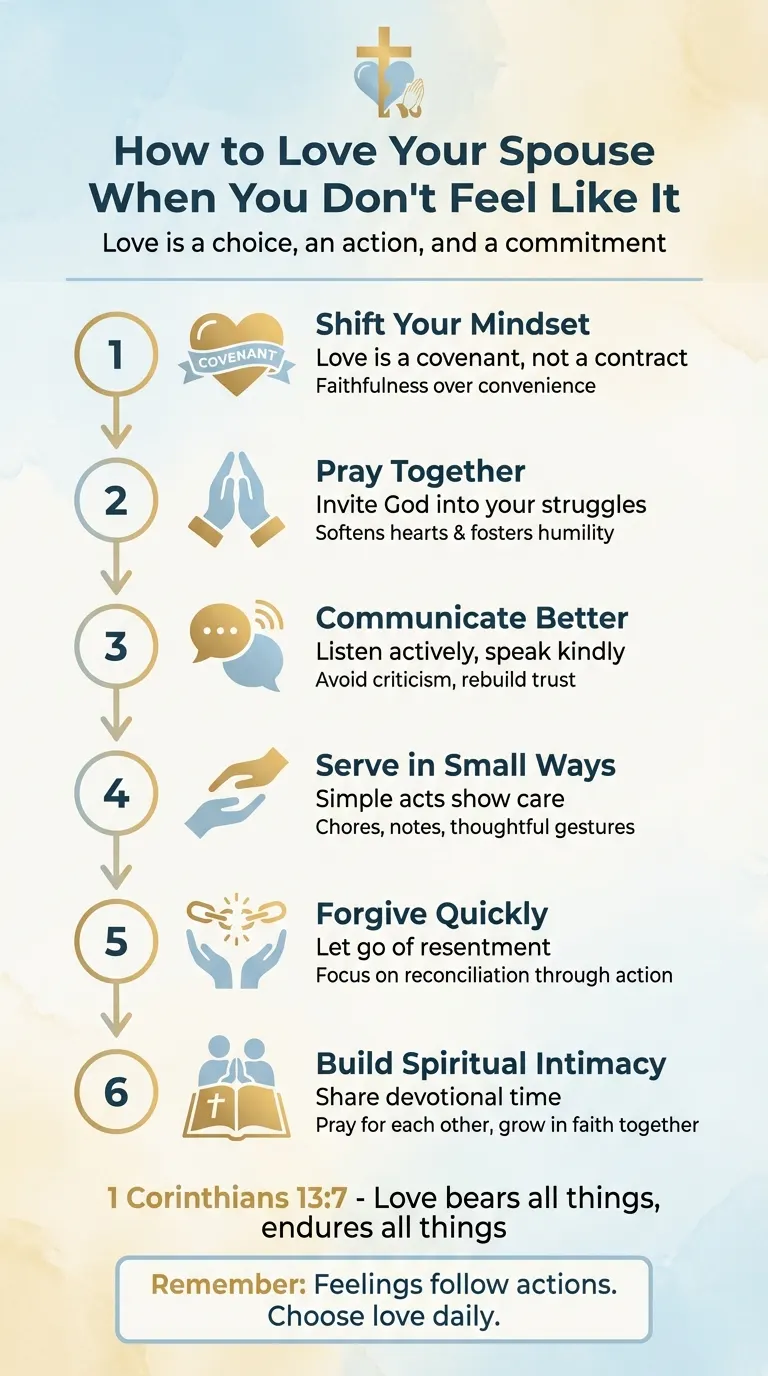
6 Biblical Steps to Love Your Spouse When Feelings Fade
Marriage Matters: How to Love Your Spouse Like Jesus | Pastor Andrew F Carter
What the Bible Says About Love
The Bible portrays love as more than just an emotion – it’s a deliberate and intentional act. It emphasizes love as a choice, a commitment rooted in obedience rather than fleeting feelings. This perspective becomes especially important when relationships, like marriage, face challenges. When emotions falter, this active decision to love lays the foundation for understanding marriage as a sacred bond.
Love as a Covenant
In Scripture, marriage is described as a covenant, not just a contract. This covenant reflects the Hebrew concept of hesed, a steadfast love that prioritizes the well-being of another, regardless of the circumstances. Unlike a contract, which depends on mutual benefits, a covenant is built on promises and unwavering faithfulness. Dave Jenkins, Executive Director of Servants of Grace Ministries, explains:
A covenant differs from a contract because it is not maintained only as long as benefits are exchanged. A covenant is grounded in promise and faithfulness.
When God unites two people in marriage, He seals their relationship with a sacred permanence. Genesis 2:24 describes this union as "holding fast" to one another, forming a binding and exclusive lifelong bond. Jesus reinforced this in Mark 10:9, saying, "What God has brought together, let not man put asunder".
The beauty of covenant love is its unwavering commitment – it removes the idea of a "plan B." When divorce is not considered an option, couples create a foundation of security that allows them to navigate difficult seasons. Ryan Frederick, co-founder of Fierce Marriage, highlights this truth:
Covenant is the arena within which the actions of love do the sanctifying work that they do.
A powerful example of this covenantal faithfulness comes from a woman in a church community who has remained married to her non-believing husband for over 50 years. Despite their spiritual differences and the challenges they’ve faced, she has remained committed to her vows, viewing her marriage as both an act of obedience and a reflection of Christ’s glory.
Bible Verses for Difficult Times
The Bible offers practical guidance for sustaining love during tough times. These verses provide a framework for choosing love, even when it feels difficult.
1 Corinthians 13:4-7 defines love through actions: patience, kindness, and endurance. It emphasizes that love "bears all things" and "endures all things", regardless of how one feels in the moment.
In Ephesians 5:25-33, husbands are called to love their wives as Christ loved the church – through self-sacrifice and by "nourishing and cherishing" their spouse as they would their own body. This is not a love of convenience but one of intentionality and effort.
Philippians 2:3 challenges believers to put their spouse’s needs above their own, breaking cycles of selfishness. Similarly, 1 John 3:18 reminds us to love "not in word or talk but in deed and in truth". Galatians 6:9 encourages perseverance: "Let us not grow weary in doing good, for in due season we shall reap". Finally, 1 Peter 3:7 instructs husbands to live with understanding and to honor their wives.
Whit George from Church on the Move sums up the essence of covenant love in marriage:
Love going forward in a covenant relationship is more about the resolve to come back to the promises we’ve made, to honor them, and to live up to them.
These verses remind us that love is not just an emotion but a command. When feelings waver, these truths guide us back to the foundation of love as an act of obedience – and often, the emotions will follow.
Pray Together for Your Marriage
When emotions waver, prayer brings God into the heart of your struggles. Instead of merely asking for change, prayer works within you, fostering humility and offering a fresh perspective on your relationship. It reinforces the sacred commitment of marriage, reminding you that love is a daily, faith-driven choice.
How Prayer Heals Relationships
Prayer has a way of humbling us, encouraging honest self-reflection, and softening how we view our spouse’s flaws. As Amanda Idleman explains:
Humility and grace must cover our interactions as we strive to walk alongside one another, even when we are not on the same page spiritually.
When you pray verses like Psalm 139:23-24 – "Search me, God, and know my heart; test me and know my anxious thoughts" – you invite God to uncover areas where pride or bitterness may have taken root. This self-awareness helps you avoid deepening existing wounds.
Even one person’s willingness to change can shift a relationship’s dynamic. Steve Kroening of the Dr. James Dobson Family Institute captures this beautifully:
When two hard hearts collide, they keep pounding until one shatters. But one soft heart can tone down the collisions and begin to heal the relationship.
There are countless examples of how personal growth through prayer can soften even the hardest hearts.
Prayer also helps maintain connection when one spouse feels spiritually adrift. Life’s trials – like exhaustion, burnout, or trauma – can create distance from God without diminishing love for each other. During these times, acting as a prayer warrior for your spouse is a powerful way to support both of you. As James 5:16 reminds us, "The prayer of a righteous person is powerful and effective."
How to Start Praying as a Couple
Starting to pray as a couple can feel awkward, especially if it’s new or if spiritual distance has grown over time. The key is to start small. Christin Slade offers wise advice:
Couples need to continue to seek the Lord separately and together because God is the Rock and Foundation for a marriage that is unified and delightful most of the time.
Begin by setting aside just one or two days a week for prayer or a short devotion together. This small step can build the foundation for deeper spiritual connection.
You might start with individual prayers, like Psalm 139:23-24, and then come together for brief prayers of gratitude. If praying together feels too difficult at first, don’t push – it’s important to invite your spouse into this practice gently, allowing them to engage at their own pace. Meanwhile, continue praying privately for your marriage.
Practical approaches can make this process easier. Pairing prayer with expressions of gratitude – acknowledging God’s goodness in your life – can shift the focus from struggles to blessings. Simple actions, like playing uplifting Christian music at home or in the car, can prepare your hearts for prayer. As Slade encourages:
The best way to get through these stormy waters is together. Seek the Lord together and lay those things you cannot control at His feet.
Even a few minutes of shared prayer can create a sense of emotional safety and help rebuild intimacy after times of distance. The goal is to make prayer a consistent, humble practice, trusting God to strengthen your marriage in ways you could never achieve alone.
Listen Well and Speak Kindly
After shared prayer, meaningful communication strengthens the connection by opening hearts and fostering understanding. How you listen and speak to your spouse can either nurture trust or erode it. Licensed Christian Counselor Justin Monuteaux puts it plainly:
The foundation of good communication is active listening. Too many times we respond to our partner without fully understanding what they are communicating, needing, or sharing.
Proverbs 18:13 offers a timeless reminder: "If one gives an answer before he hears, it is his folly and shame." When you respond without fully listening, you risk addressing what you think your spouse said, rather than what they actually need.
How to Listen Without Interrupting
Active listening goes beyond hearing words; it’s about understanding emotions and offering support. The Gottman Institute explains:
Active listening in relationships isn’t just hearing words; it’s understanding feelings and providing the emotional support your partner needs.
Encourage open dialogue by asking thoughtful, open-ended questions like, "What made you smile today?" or "How did that make you feel?" Pair these with positive body language – maintaining eye contact, nodding, or leaning in – to show genuine interest. To ensure clarity, summarize what your spouse has shared, confirming your understanding. At the same time, steer clear of negative gestures like eye-rolling or crossing your arms, which can unintentionally shut down communication.
When you combine these listening techniques with kind and thoughtful speech, you create a foundation for meaningful and uplifting conversations.
Use Words That Build Up
Words have immense power. Ephesians 4:29 advises: "Let no corrupting talk come out of your mouths, but only such as is good for building up, as fits the occasion, that it may give grace to those who hear."
Dr. John Gottman’s research highlights the harm caused by destructive communication patterns, often referred to as the "Four Horsemen": criticism, contempt, defensiveness, and stonewalling. Among these, contempt – expressed through actions like sarcasm or eye-rolling – can be especially damaging.
When emotions run high, resist the urge to react impulsively. Instead, take a moment to respond thoughtfully. Simple affirmations like "I’m with you" can validate your spouse’s feelings, while gentle repair attempts – like a kind touch or light humor – can help ease tension during disagreements.
To counteract negativity, focus on your spouse’s positive qualities. Philippians 4:8 encourages us to dwell on what is true, noble, and praiseworthy. Remember, the goal isn’t to "win" an argument but to seek mutual understanding, even when it feels challenging. By choosing words and actions that uplift, you create a space where love and respect can thrive.
Serve Your Spouse in Small Ways
Once you’ve laid the groundwork with spiritual connection and open communication, small acts of service can bring your commitment to life in meaningful ways.
When emotions wane, actions can step in to express love and dedication. Service becomes a tangible way to show care. Philippians 2:3 reminds us: "Do nothing from selfish ambition or conceit, but in humility count others more significant than yourselves." This isn’t about grand, sweeping gestures. It’s about the quiet, everyday actions that demonstrate faithfulness and meet your spouse’s needs.
Take Bill, for example. In February 2026, he sought help from writer Steve Kroening at the Dr. James Dobson Family Institute to mend his struggling marriage. Bill made a daily commitment to serve his wife in practical ways – like taking out the trash, washing dishes without being asked, and giving her breaks from childcare. These small but consistent actions became a tool for easing tension and rebuilding trust when words alone couldn’t bridge the gap. Over time, these simple gestures became a daily practice of love in action.
Simple Acts That Matter
Serving your spouse doesn’t require perfection – it just takes attentiveness. Notice what adds to their stress or brings them peace. Maybe it’s running an errand, brewing morning coffee, or tidying up a shared space. Take the initiative to complete chores without being asked. Offer them a break from the kids to recharge. Even a thoughtful note left where they’ll see it can brighten their day.
Steve Kroening explains:
Considering your mate more important than yourself becomes practical when you pay attention to his or her needs. It’s about daily thoughtfulness.
These small, often unnoticed acts build trust and connection over time. They create a foundation for healing and intimacy that arguments or discussions alone can’t always achieve.
Jesus’ Example of Service
Jesus sets the ultimate standard for selfless love. His acts of service weren’t based on how others treated Him – they were rooted in obedience and love. Kroening offers this encouragement:
Jesus loved you while you were still a sinner (Romans 5:8). That same kind of love is now at work in you. Loving your spouse does not require his or her approval or participation. It requires faithfulness.
Romans 5:8 reminds us that Christ’s love reached us in our brokenness, and First John 3:18 calls us to let our love show through action. By following His example, even small, faithful acts of service can begin to soften hearts and rebuild connection – especially in moments when love feels like a choice rather than a feeling.
Use Voice Journaling for Scripture Reflection
Individual reflection adds another layer of strength to your spiritual life, complementing prayer and acts of service. When love feels distant or strained, private moments of reflection can open your heart to God’s work. Voice journaling, in particular, helps you sort through complicated emotions while bringing Scripture into your most challenging moments. Instead of letting frustrations simmer, speaking your thoughts aloud can uncover what you’re truly feeling and where you need God’s guidance the most.
As you deepen your faith and grow in self-awareness, you naturally bring more clarity and resilience to your relationships. Reflecting on the foundation of your marriage – remembering the "why" behind your commitment – can renew your sense of purpose when emotions waver. Voice journaling offers a safe, private space to explore these questions honestly, inviting God into the conversation.
How Voice Journaling Supports Spiritual Growth
Speaking your thoughts out loud can help you better understand your inner struggles. When you name your emotions, vague frustrations often give way to specific concerns that you can address. This process encourages a more focused and intentional engagement with Scripture. Instead of quickly reading a verse, you can pause, reflect, and ask how it relates to your marriage in the present moment.
Biblical love, or agape love, is about choosing to act with sacrificial care, even when feelings aren’t aligned. Often, this choice comes before the emotional connection is restored. Voice journaling creates the space to process the gap between your current feelings and your spiritual calling, giving God room to work on your heart and actions.
Using Psalmlog for Tailored Guidance

Psalmlog’s voice journaling feature takes your spoken reflections and turns them into personalized biblical insights. By simply talking through your situation – whether it’s tension with your spouse, feelings of exhaustion, or lingering hurt – the app provides Scripture, advice, and actionable steps tailored to your needs.
For $19.99 per month, the Faith Builder plan includes 300 minutes of recording time, six personalized AI-generated journal insights, and access to all Bible translations. Psalmlog doesn’t just listen; it analyzes your words and emotions to deliver specific biblical truths and practical guidance for your challenges. Whether you’re working through forgiveness, feeling drained in your efforts to serve, or rebuilding trust, the app offers support rooted in Scripture to help you take your next steps with confidence.
Forgive Quickly and Make Peace
Forgiveness plays a critical role in nurturing marital closeness and maintaining a strong relationship with God. Holding onto grievances can create emotional distance and allow bitterness to take root. For Christians, forgiveness isn’t optional – it’s a command meant to protect both your spiritual life and your faith. Refusing to forgive can even create a barrier that impacts your prayers.
But forgiveness isn’t about waiting for the right feelings to show up. It’s a conscious choice to release the debt your spouse owes you. As Dr. Paul Chappell, Senior Pastor at Lancaster Baptist Church, puts it:
Forgiveness is not a feeling that comes naturally; it is a choice of obedience. Often, we must choose to forgive even when feelings lag.
Many couples delay forgiveness, hoping their emotions will align first. However, biblical love calls for action – even when our hearts are slow to catch up.
What the Bible Says About Forgiveness
The Bible emphasizes forgiveness as essential for both personal well-being and healthy relationships. Colossians 3:13 urges believers to bear with one another and forgive grievances, while Ephesians 4:32 reminds us to be tenderhearted and forgiving, just as Christ forgave us. Matthew 6:14-15 ties our willingness to forgive others to receiving God’s forgiveness, and Matthew 18:21-22 teaches us to forgive repeatedly, without limitation.
Unforgiveness can act as a spiritual roadblock. Refusing to forgive creates a "wall" between you and God, hindering your prayers. Guest writer Tiffany Montgomery sums it up perfectly:
When you or I refuse to forgive in marriage, we choose to disobey God… Refusing to forgive disobeys God’s command.
Marriage isn’t solely about happiness – it’s about holiness. God uses conflicts and the process of forgiveness to shape us into the image of Christ. Once forgiveness clears the way, the next step is rebuilding trust through consistent and meaningful actions.
How to Rebuild Trust After Conflict
Forgiveness is just the beginning; rebuilding trust is crucial for maintaining intimacy. While forgiveness can be granted immediately, reconciliation requires time and effort. Ryan and Callie Nixon explain:
Forgiveness can be granted immediately. Reconciliation requires trust to be rebuilt and this trust is rebuilt over time.
If you’re the one who broke trust, take full accountability. Ask your spouse how you can make things right and offer concrete steps to repair the damage. Regular check-ins and clear boundaries can help restore confidence. As The Pursuit Counseling wisely notes:
Trust doesn’t return through promises. Trust returns through patterns.
For those who were hurt, it’s important to set healthy boundaries while observing genuine change in your spouse’s actions. Forgiveness doesn’t mean instant trust – it means letting go of the desire for revenge. Once true healing begins, avoid bringing up past mistakes during future disagreements.
Small, thoughtful actions – like helping with chores unprompted or offering kind words during tense moments – can gradually rebuild trust. Steve Kroening, a staff writer at the Dr. James Dobson Family Institute, offers this reminder:
One soft heart can tone down the collisions and begin to heal the relationship.
Even one act of humility can shift the dynamic. Timely forgiveness, combined with small gestures, creates a pattern of healing. Aim to address conflicts within 24 hours to prevent bitterness from taking root. Before focusing on your spouse’s faults, ask God to reveal your own shortcomings using Psalm 139:23-24. When discussing conflicts, use "I" statements like "I felt hurt when…" rather than accusatory language.
Forgiveness appears over 100 times in the Bible, underscoring its importance as a spiritual practice. By choosing to forgive quickly and striving for peace, you safeguard your marriage and invite God’s healing into your relationship.
Build Spiritual Intimacy Every Day
After addressing forgiveness and acts of service, nurturing spiritual intimacy can transform your relationship into something far deeper and more fulfilling. If you’re feeling disconnected, it might be because you and your spouse are operating on different spiritual wavelengths. By embracing shared spiritual practices, you can create a shared sense of purpose that helps your relationship move from merely coexisting to truly thriving together.
Here’s a thought: most couples spend only about 35 minutes a week in intentional conversation – that’s less than five minutes a day. That’s barely enough time to scratch the surface, let alone dive into meaningful spiritual discussions. But the good news? Building spiritual intimacy doesn’t require massive time commitments or grand gestures. As Jessica DeYoung, Founder of Grace Unworthy Ministries, puts it:
Spiritual intimacy in marriage grows through small, faithful habits and honest conversations.
It’s all about consistency. Even if it starts with small, simple steps, those shared practices can deepen your connection over time, fostering a love that goes beyond surface-level affection.
Create a Routine of Shared Devotion
You don’t need to overhaul your entire schedule to build a devotional routine. Start small and weave new habits into what you already do. For example, if you always have coffee together in the morning, add a quick Scripture reading to that time. Or, if you eat dinner together, include a brief prayer of gratitude.
If one of you is less engaged, keep things simple. Try short prayers during meals or share just one Bible verse a day. You could also use a four-question approach when reading Scripture together:
- What does this teach me about God?
- What does it teach me about myself?
- What decisions does it ask of me?
- What actions should I take?
Sharing responsibilities can also make it easier. One of you can read Scripture while the other leads the prayer. If your schedules don’t match, consider using tools like Psalmlog for voice journaling with Scripture, so you can share reflections and respond when it’s convenient for each of you.
Another great idea? Dedicate 30 minutes of phone-free time each day to focus solely on each other. Play Christian music at home or in the car to create a worshipful atmosphere. And try conversation starters that go beyond the usual daily logistics. For instance, ask, “When did you feel closest to God this month?”. These small changes can open the door to deeper spiritual connection without feeling overwhelming. Over time, they’ll help strengthen a faith-based foundation for your relationship.
How Faith Strengthens Your Marriage
Shared spiritual activities do more than simply fill time – they reshape how you connect with each other. When both spouses seek God individually and together, it creates a unity that can endure even the most challenging seasons. Amanda Idleman, a writer and devotional author, explains it well:
Unity is hard to maintain when we are not both seeking God with all of our hearts, minds, souls, and strength.
Spiritual practices can soften pride and build humility. For example, committing to pray daily for your spouse’s specific needs can shift your mindset from criticism to compassion. Asking, “How can I lighten your load today?” and following through with a simple act of service – without being prompted – shows love in action.
Weekly check-ins can also help keep you aligned, especially during busy times. Set aside one evening a week for a 20–30-minute “walk and talk” to share spiritual insights and set goals together. Seeking guidance from mentor couples who’ve successfully navigated long-term Christian marriages can also provide valuable wisdom.
By focusing on daily spiritual habits, you reinforce the choice to love – even when emotions waver. Strengthening your personal relationship with God lays the groundwork for unity in your marriage. It helps you approach your spouse with humility rather than frustration or pride. When both individual and shared spiritual efforts come together, they create a renewed sense of connection and commitment.
Faith provides a solid foundation that sustains your relationship through the inevitable ups and downs. With consistent spiritual practices, even small ones, you’re building a bond that goes beyond fleeting emotions and anchors your marriage in something eternal.
Conclusion
Loving your spouse, even when it feels difficult, isn’t about waiting for emotions to magically reappear. It’s about making the intentional choice to act in love, trusting that God will work through your faithfulness to heal and restore. As Phil Hopper, Lead Pastor at Abundant Life Church, puts it:
"If you wait to feel the emotion, you may never put your love into action. By choosing agape love, eros love will eventually follow."
The steps we’ve discussed offer a practical and spiritual roadmap for rekindling love when feelings falter. Combining biblical principles with daily actions, you can nurture your marriage back to health. Prayer invites God into your struggles and softens hearts. Simple gestures like kind words, active listening, and small acts of service rebuild trust and connection. Tools like voice journaling help you process Scripture and track your spiritual growth, while practicing quick forgiveness keeps bitterness at bay. Sharing devotional time together grounds your relationship in something far deeper than fleeting emotions.
J.I. Packer’s insight offers a profound reminder: "Once you become aware that the main business that you are here for is to know God, most of life’s problems fall into place of their own accord." When your focus shifts to knowing God – both individually and as a couple – the strength to love sacrificially flows naturally from that relationship. Love isn’t something we create on our own; it’s sustained by God’s power, even during the toughest seasons.
Marriage is a covenant, built on an enduring commitment. Challenges don’t signify failure – they’re moments where God can deepen your reliance on Him and refine your relationship. By staying rooted in Christ, choosing humility over pride, and taking one step of faith at a time, these practices not only rebuild your bond but also reinforce the foundation of love and faithfulness.
Trust in God’s grace, lean into His strength, and continue to choose love – He will sustain and strengthen your marriage.
FAQs
What if my spouse won’t pray with me?
If your spouse isn’t ready to pray with you, it doesn’t mean your relationship is beyond hope. Patience and gentle honesty are key. Keep praying on your own and trust that your faith can inspire change over time. By staying consistent in your spiritual practices, you create a supportive and loving atmosphere that may encourage your spouse to join in prayer when the time feels right for them.
How do I love my spouse without faking feelings?
Loving your spouse genuinely means making deliberate choices to show care and commitment, even during times when emotions might feel distant. It’s about focusing on the little, everyday actions that build connection – like listening with intention, offering kind gestures, or even praying for their well-being. By reflecting on Scripture and understanding that love is an active choice rather than just a fleeting feeling, you can nurture a deeper, more authentic bond that grows stronger over time.
How can I forgive but still set boundaries?
Forgiving your spouse while setting boundaries is about releasing past pain from the heart while establishing clear limits to protect your emotional well-being. It requires open communication about your needs and consistently upholding those boundaries to avoid repeated harm. Forgiveness isn’t about accepting harmful behavior; it’s about finding a balance between compassion and self-respect, ensuring a safe and supportive space where both partners can thrive.