
Navigating Singleness: What the Bible Says About Finding Contentment and Purpose
A biblical guide to viewing singleness as a gift—finding contentment in Christ, serving with purpose, and practical habits like voice journaling for spiritual growth.
Singleness is often seen as a waiting period, but the Bible offers a different perspective: it’s a gift and a season with its own purpose. Scripture highlights that both singleness and marriage are valuable, with singleness providing unique opportunities for spiritual growth and service. Key takeaways include:
- Contentment in Christ: Philippians 4:11–13 teaches that joy comes from a relationship with God, not external circumstances.
- Biblical examples: Figures like Jesus, Paul, and Anna used their singleness to focus on God’s work.
- Purpose in singleness: 1 Corinthians 7 emphasizes the freedom to serve God wholeheartedly without divided attention.
This season isn’t about waiting for marriage but living fully now by growing spiritually, serving others, and trusting God’s plan. Tools like voice journaling can help process emotions and deepen your connection with God. Instead of seeing singleness as incomplete, view it as a meaningful chapter filled with opportunities to glorify Him.
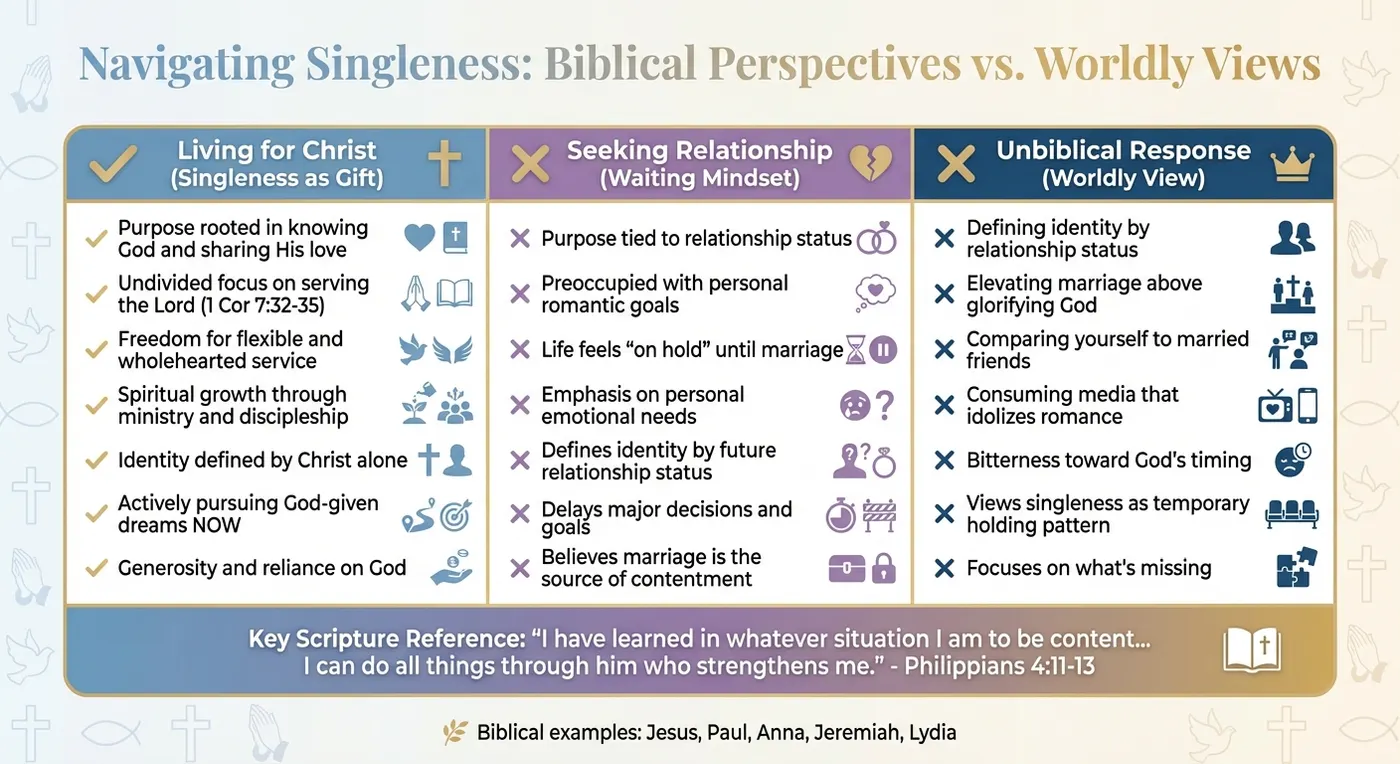
Biblical vs Worldly Perspectives on Singleness: A Comparison Guide
What the Bible Teaches About Contentment in Singleness
Bible Verses on Contentment
The Bible emphasizes that contentment doesn’t depend on circumstances. In Philippians 4:11–13, Paul writes:
"I have learned in whatever situation I am to be content. For I know how to be brought low, and I know how to abound. In any and every circumstance, I have learned the secret of facing plenty and hunger, abundance and need. I can do all things through him who strengthens me."
Paul’s words point to a profound truth: contentment stems from a close relationship with Christ, not from external conditions.
Similarly, 1 Thessalonians 5:16–18 encourages believers to:
"rejoice always, pray without ceasing, give thanks in all circumstances; for this is the will of God in Christ Jesus for you."
This passage doesn’t ignore life’s difficulties but instead invites us to recognize God’s presence and goodness even in hard times. When your contentment is rooted in Christ, it brings a peace that transcends your situation. These verses lay the foundation for understanding how biblical figures embraced singleness as an opportunity for focused devotion and purpose.
Biblical Examples of Purposeful Singleness
Throughout the Bible, we see individuals who used their singleness to serve God with undivided attention. Jesus Christ, for example, remained single during His earthly ministry, dedicating Himself entirely to God’s work without the responsibilities of marriage. His life shows that singleness can be a vital part of fulfilling God’s purpose.
The Apostle Paul is another example. He planted churches, mentored believers, and wrote much of the New Testament – all while remaining unmarried. In 1 Corinthians 7, Paul highlights how singleness allowed him to focus on ministry without distraction.
Jeremiah, the prophet, was instructed by God not to marry (Jeremiah 16:1–2), which freed him to fully commit to prayer and his prophetic mission. Anna, a widow mentioned in Luke 2:36–38, devoted her life to worship, fasting, and prayer in the temple:
"never left the temple, serving night and day with fastings and prayers".
Lydia, a successful businesswoman dealing in purple cloth, used her resources and home to support the early church in Philippi, hosting Paul and his companions. These examples reveal how singleness can create unique opportunities for service and devotion. Like these figures, anchoring your identity in Christ allows you to find purpose and fulfillment beyond relationship status.
Finding Your Identity in Christ
The Bible portrays singleness as a gift, reminding us that our identity is defined by God, not by whether we are married or single. Isaiah 43:1 offers this reassurance:
"Fear not, for I have redeemed you; I have called you by name, you are mine."
This verse underscores that your worth and purpose come from belonging to God.
Jesus also taught the importance of staying connected to Him in John 15:5:
"I am the vine; you are the branches. Whoever abides in me and I in him, he it is that bears much fruit, for apart from me you can do nothing."
When your identity is rooted in Christ, He becomes the ultimate source of your joy, peace, and fulfillment. Trusting in God’s plan can transform singleness into a season of growth and deeper connection with Him.
Finding Purpose and Calling While Single
How Singleness Creates Opportunities for Service
Singleness, when viewed through a biblical lens, can be a time of unique opportunity to discover and serve your God-given purpose. The Bible emphasizes that both singleness and marriage are gifts from God, each providing distinct ways to glorify Him and contribute to His Kingdom. Singleness, in particular, allows for undivided focus and devotion. Paul writes in 1 Corinthians 7:32–35:
"I want you to be free from anxieties. The unmarried man is anxious about the things of the Lord, how to please the Lord. But the married man is anxious about worldly things, how to please his wife, and his interests are divided. And the unmarried or betrothed woman is anxious about the things of the Lord, how to be holy in body and spirit. But the married woman is anxious about worldly things, how to please her husband. I say this for your own benefit, not to lay any restraint upon you, but to promote good order and to secure your undivided devotion to the Lord".
Paul highlights the freedom singleness provides to focus entirely on serving God. Every individual is created with a purpose: to know God and make Him known. Singleness can be a powerful season to pursue this calling, sharing the Gospel and making an eternal impact. Through service, you can begin to uncover your unique role in God’s plan.
Practical Ways to Identify Your Purpose
Finding your purpose often starts with recognizing your spiritual gifts – God-given abilities meant to serve others and strengthen the body of Christ. The best way to discover these gifts is by actively participating in ministry. Consider stepping back from the pursuit of romantic relationships for a time and channeling that energy into serving your church and community. Pay attention to where you feel most fulfilled and energized in ministry, as this often reveals your spiritual gifts.
Tools like Psalmlog’s voice journaling can help you reflect on your service experiences. Ask yourself questions like, "Where do I see God working through me? What ministry activities bring me the most joy?" Over time, these reflections can reveal patterns and provide clarity on how God has uniquely equipped you. Pair these insights with Psalmlog’s scripture tools to deepen your understanding of biblical teachings on service and calling. Cultivate self-discipline through regular prayer, Bible study, and memorizing Scripture.
The table below contrasts a life centered on Christ with one focused solely on seeking a relationship, offering a clear perspective on how singleness can be a season of purpose and fulfillment.
| Living for Christ | Seeking a Relationship |
|---|---|
| Purpose rooted in knowing God and sharing His love | Purpose tied to relationship status |
| Undivided focus on serving the Lord | Preoccupied with personal romantic goals |
| Freedom for flexible and wholehearted service | Life feels "on hold" until marriage |
| Spiritual growth through ministry and discipleship | Emphasis on personal emotional needs |
| Generosity and reliance on God | Prioritizing material comfort and security |
Pastor David Platt beautifully explains:
"Marriage is a display of the gospel. Singleness is also a unique portrayal of the gospel. Both are good gifts. Christian singleness, unlike the world, says, ‘You don’t need someone else to complete you.’ Jesus fully completes you. You don’t need sexual expression through marriage to be a full person. [Singleness] is a picture of full identity in Jesus, which points forward to heaven".
Your calling is not something to wait for – it’s active right now. Embrace this season by serving wholeheartedly, building personal discipline, and engaging with families and communities in your church. Be generous when God leads you and step into leadership roles. Churches need dedicated, unmarried adults who are fully committed to the Lord’s work. Instead of seeing singleness as a limitation, recognize it as a gift – a time to rely deeply on God and find comfort in Him and the fellowship of believers.
How to Practice Biblical Contentment Daily
Common Struggles and What Scripture Says
For single Christians, challenges like loneliness, envy, and anxiety about the future can feel overwhelming. These emotions often arise from misplaced priorities and unhealthy comparisons. But here’s the truth: biblical contentment doesn’t mean you stop desiring marriage. Instead, it means finding joy in Christ, even when your current circumstances aren’t what you hoped for.
Sometimes, God allows the desire for marriage to remain unmet for a time. This "holy discontentment" can serve as a reminder of your ultimate longing: the return of Christ. Scripture reassures us that God provides everything we need to glorify Him, no matter our marital status. When envy sneaks in, Proverbs 14:30 warns us that comparison only leads to discontent and discouragement. And when loneliness feels unbearable, Psalm 16:11 reminds us that true joy is found in Christ, not in marriage. These biblical truths lay the foundation for practicing daily habits that nurture contentment.
Daily Habits for Building Contentment
Contentment is something we learn over time. The apostle Paul wrote that he learned to be content "in any and every situation", whether he had much or little. You can develop this same mindset by incorporating Scripture-based practices into your daily life.
Begin each morning with prayer, laying your desires before God. Share your fears and longings with Him, trusting His perfect timing. Cultivate gratitude by regularly thanking God for His blessings – 1 Thessalonians 5:18 reminds us that giving thanks in all circumstances aligns with His will. Be mindful of what you consume, steering clear of media that glorifies worldly views of romance (Colossians 3:1-3).
Deepen your relationship with God through daily Bible study and prayer. Consider using tools like Psalmlog’s voice journaling to record your reflections and track your spiritual growth. Speak your thoughts aloud, explore relevant Scriptures, and observe how God is shaping your life over time.
Combat comparison by celebrating the blessings in others’ lives. Strengthen bonds with family and friends. Embrace the opportunities singleness provides by pursuing your God-given dreams now, rather than waiting for a future spouse.
Comparison Table: Biblical vs. Unbiblical Responses to Singleness
The table below highlights the differences between biblical and unbiblical approaches to singleness:
| Unbiblical Response | Biblical Response |
|---|---|
| Defining identity by relationship status | Finding identity in Christ alone |
| Elevating marriage above glorifying God | Seeking God’s Kingdom first (Matthew 6:33) |
| Comparing yourself to married friends | Rejoicing with others and practicing gratitude |
| Consuming media that idolizes romance | Guarding your heart and mind (Colossians 3:1-3) |
| Bitterness and resentment toward God’s timing | Trusting God through prayer and surrender |
| Postponing dreams until marriage | Actively serving God and pursuing goals now |
Focus on building a closer relationship with God by spending time in prayer, studying His Word, and surrendering your plans to Him. Confess your sins, grow in faith, prioritize God above all else, and forgive freely. Remember, life’s ultimate purpose is serving God – not just finding a spouse. By committing to these daily habits, you can experience a life grounded in genuine, Christ-centered contentment.
Using Voice Journaling and Scripture Reflection
How Psalmlog Supports Spiritual Growth

Voice journaling offers a powerful way to bring feelings of loneliness, comparison, and unmet desires before God. With Psalmlog, this practice becomes even more impactful. The app provides personalized biblical guidance, relevant Scripture, and practical insights, helping you deepen your spiritual discipline. By combining this journaling method with prayer and Scripture study, Psalmlog helps you uncover emotional patterns and connect them to God’s Word. Its sentiment analysis and Scripture assistant transform your journaling into a purposeful habit, strengthening your relationship with Christ.
Voice Journaling Topics to Explore
- Identity in Christ: Dive into verses like 1 Corinthians 7:7 and Colossians 1:16 to embrace the truth that singleness is a gift from God. Reflect on how being loved, valued, forgiven, and empowered by Him shapes your identity in Christ. Use your journaling time to affirm these truths and deepen your understanding of them.
- Contentment and Desire: Spend time meditating on Philippians 4:11-13, sharing your longings with God, and seeking satisfaction in Him alone. Consider how you might be tempted to find fulfillment in relationships, and instead, bring those desires to Christ through your journaling.
- Service and Mission: Reflect on passages like 1 Corinthians 7:32-35 and ask yourself, "How can I use the freedom of singleness to serve God without distraction?" Identify opportunities for ministry available in this season and commit to integrating service into your daily life.
These topics not only encourage self-reflection but also help align your heart with God’s plan, fostering consistent growth in your faith.
Tracking Your Growth Over Time
Instead of focusing solely on long-term goals, ask yourself questions like, "Am I content today?" Psalmlog’s calendar view and personal insights dashboard make it easy to track your voice entries over time. This feature allows you to identify emotional patterns, see answered prayers, and recognize your progress in surrendering to God. Over time, these records become a powerful testimony to God’s faithfulness, showing how He guides you step by step.
Trusting God with the Future While Living Fully Now
What the Bible Says About Marriage and Singleness
Building on the earlier discussion of finding contentment and identity in Christ, this section focuses on trusting God’s timing while embracing the opportunities of today. The Bible presents both marriage and singleness as God-given callings, each with its own purpose to glorify Him. Marriage is a wonderful gift, but it’s not the ultimate goal of a Christian’s life. Treating marriage as the finish line can obscure God’s purpose for the present. Scripture highlights that singleness offers unique opportunities for "undivided devotion" to the Lord, allowing for a focused life of service. This perspective doesn’t diminish marriage; instead, it reminds us that our worth comes from Christ, not our relationship status.
The key is to honor marriage without placing it on a pedestal. It’s possible to desire marriage while remaining content in Christ. These two positions can coexist. True joy is found in being secure in Jesus, not in external circumstances like marriage. Singleness isn’t a waiting room – it’s a season ordained by God for meaningful service and purpose today. With this understanding, let’s look at practical ways to live faithfully in the present.
Practical Steps for Living Faithfully Today
Living fully means embracing the opportunities of today. Invest in your relationships and approach your work with excellence, treating these as acts of worship. Engage with your church community – volunteer in children’s ministry, join a small group, or serve in areas where your talents can shine.
God’s love and mercy are renewed every morning, giving you exactly what you need for each day. Trusting God with your future is a spiritual discipline that involves daily surrender – letting go of control and committing your plans to Him. This doesn’t mean ignoring the future; it means refusing to let uncertainty overshadow God’s purpose for today. These practical steps stand in stark contrast to a mindset of simply waiting for life to change.
Comparison Table: Waiting for Marriage vs. Living Fully Now
| Waiting for Marriage | Living Fully Now |
|---|---|
| Views singleness as a temporary holding pattern | Sees singleness as a gift with unique opportunities |
| Delays major decisions and goals | Pursues God-given dreams and calling today |
| Defines identity by future relationship status | Defines identity in Christ |
| Focuses on what’s missing | Focuses on present opportunities for service |
| Believes marriage is the source of contentment | Understands contentment comes from Christ |
| Lives with a sense of restlessness | Lives peacefully by trusting God |
Navigating Singleness as a Christian: Biblical Principles for Purpose & Contentment- Jonny Ardavanis
Conclusion: Finding Contentment and Purpose in Your Season of Singleness
Singleness isn’t a problem to be fixed – it’s a calling that allows for undivided devotion to God. When your hope is rooted in Christ rather than life circumstances like marriage, you’ll find a deep sense of contentment that can’t be shaken by external pursuits.
Scripture reminds us that it’s possible to hold both contentment and longing at the same time. You can desire marriage while still finding joy and fulfillment in Christ today. As Sam Allberry beautifully states:
"If marriage shows us the shape of the gospel, singleness shows us its sufficiency".
This season brings its own set of blessings – time, flexibility, and freedom to focus on kingdom work in ways that married life may not always allow. Instead of seeing singleness as a waiting room for the next chapter, embrace it as a unique opportunity to serve God with your whole heart.
With this perspective, live fully by dedicating yourself to Christ and actively engaging in your church community. Be mindful of distractions that could pull you away from spiritual growth. God’s grace is new every morning, giving you exactly what you need to navigate each day.
To help process your thoughts and emotions during this time, consider using Psalmlog’s voice journaling. By speaking your struggles and reflections aloud, you can receive personalized biblical insights while tracking your spiritual growth. Features like scripture tagging and sentiment analysis provide a meaningful way to see how God is shaping your journey in this season.
Trust in the truth that God has ordained this time to draw you closer to Him. In Christ, you’ll find a satisfaction that surpasses anything the world can offer. Rest in His perfect timing, knowing your future is secure in His hands – live faithfully and purposefully today.
FAQs
What does the Bible say about finding purpose and contentment in singleness?
The Bible highlights singleness as a special opportunity (1 Corinthians 7:7) to grow closer to God. It reminds us that true contentment comes from trusting His plan and timing (Psalm 37:4) and finding joy in Christ rather than relying on life’s circumstances (Philippians 4:11).
This season provides a chance to serve God wholeheartedly, without the distractions that often come with other responsibilities (1 Corinthians 7:32-35). By prioritizing His kingdom (Matthew 6:33), you can uncover a deeper sense of purpose. Practices like cultivating gratitude, spending time in prayer, and immersing yourself in Scripture can bring fulfillment and clarity. Singleness isn’t a limitation – it’s a period rich with opportunities for growth and spiritual renewal.
What does the Bible teach about finding purpose and contentment in singleness?
The Bible offers inspiring examples of individuals who embraced singleness with purpose and deep trust in God. Paul, for instance, saw his singleness as a unique opportunity to focus entirely on serving God and spreading the Gospel (1 Corinthians 7:7). Ruth displayed remarkable faith and patience, trusting God’s timing while selflessly caring for others (Book of Ruth). Jeremiah, though he faced the challenges of loneliness, relied on God’s strength to faithfully carry out his prophetic mission (Jeremiah 1:1-9). And most profoundly, Jesus chose to remain unmarried, dedicating His life fully to His mission of redemption and teaching about the Kingdom of God (Matthew 19:10-11).
These stories remind us that singleness isn’t just a waiting period – it can be a deeply meaningful time to grow spiritually, serve others, and trust in God’s perfect plan.
How can I honor God and find purpose during my season of singleness?
Singleness is a season that offers a special chance to focus entirely on your relationship with God. As highlighted in 1 Corinthians 7:32-34, this time allows for a deeper, undivided devotion to the Lord. It’s an opportunity to grow closer to Him through prayer, reflecting on Scripture, and serving others in meaningful ways.
This season also gives you the freedom to discover and embrace the unique gifts God has given you. Whether it’s participating in ministry work, volunteering, or pursuing activities that align with your passions, you can use this time to glorify Him. By leaning into His plan and seeking His guidance, you can find purpose and fulfillment in this chapter of your life.