
How to Deal with a Difficult Mother-in-Law (the Christian Way)
Biblical steps—prayer, Christ-like love, daily forgiveness, and respectful boundaries—to heal relationships and protect your marriage from in-law conflict.
Navigating a tough relationship with your mother-in-law can be challenging, but the Bible provides guidance to handle it with grace. Here’s the core advice:
- Pray for wisdom and change: Prayer can shift your perspective, helping you approach the relationship with compassion and love.
- Show Christ-like love: Speak kindly, assume good intentions, and respond to negativity with acts of service.
- Forgive daily: Let go of grudges and bitterness, focusing on healing rather than holding onto past hurts.
- Set respectful boundaries: Protect your marriage by clearly and lovingly communicating limits on interference.
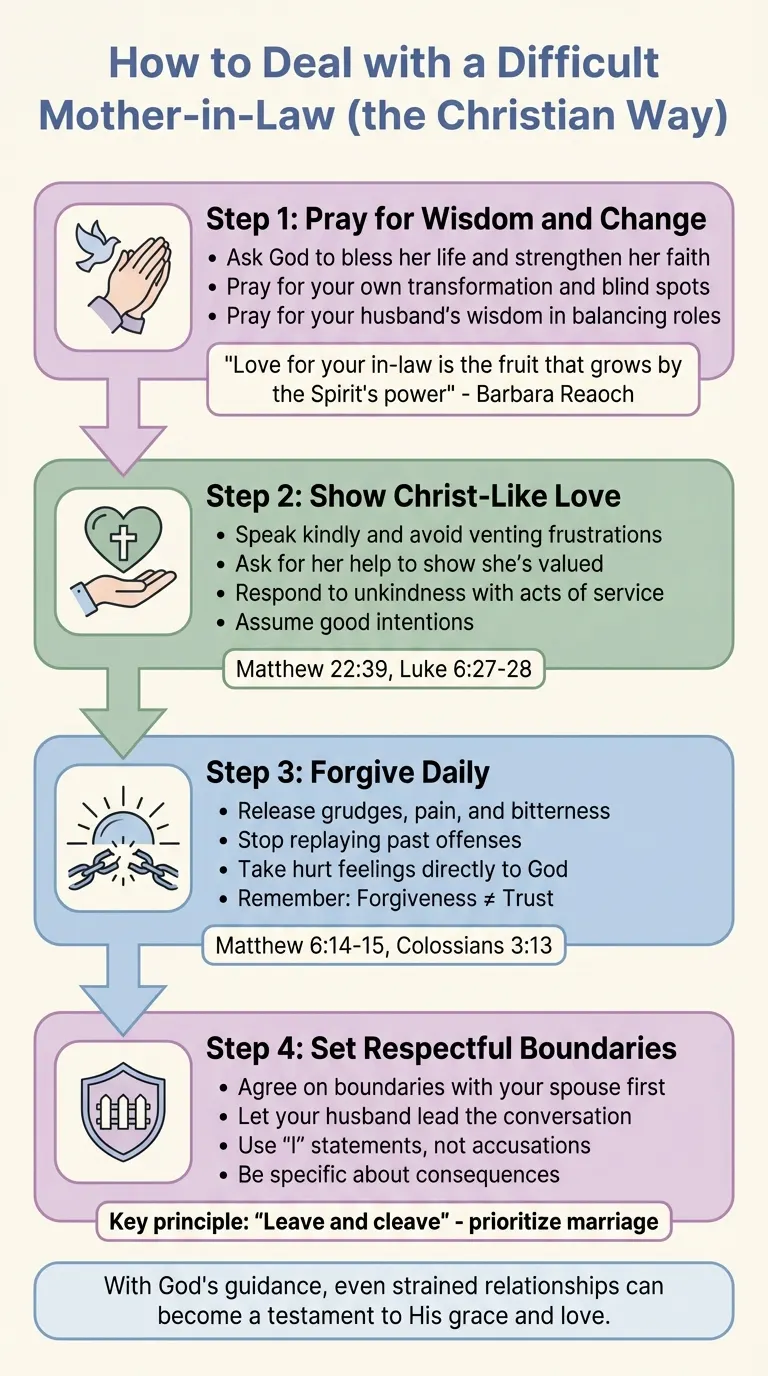
4 Biblical Steps to Handle a Difficult Mother-in-Law
Pray for Wisdom and a Changed Heart
Why Prayer Matters in Conflict Resolution
Prayer opens the door for the Holy Spirit to provide wisdom and guidance that go beyond fleeting emotions. When tensions run high, it’s easy to fall into defensiveness or vent frustrations. But prayer has the power to shift your perspective, helping you approach challenges with a heart that reflects Christ’s love.
Barbara Reaoch, co-author of Making Room for Her, puts it this way:
"Love for your in-law is the fruit that grows in your life by the Spirit’s power working in you. You cannot produce this love yourself."
This divine strength enables you to see your mother-in-law through what some call "Jesus’ glasses." Instead of focusing on her difficult behavior, you begin to notice her struggles and insecurities, fostering compassion rather than frustration.
Prayer also acts as a release valve for bitterness and resentment. By bringing your hurt feelings to God right away, you prevent them from hardening into grudges. This practice helps you let go of the need to control every detail and trust God’s plan for your family relationships.
With this foundation, let’s explore how to turn these principles into daily prayers for change and growth.
How to Pray for Your Mother-in-Law
Once you understand prayer’s role in changing your perspective, you can focus on intentional prayers for your mother-in-law.
Start by praying specifically for her. Ask God to bless her life, nurture her faith, protect her health, and strengthen her bond with your children. This may feel challenging, especially if you’re hurt, but Stacy Reaoch offers encouragement:
"You might be surprised by how your heart warms toward her as you earnestly lift her up in prayer."
Next, pray for your own transformation. Ask God to reveal any blind spots in your heart – whether it’s jealousy, a critical attitude, or something else. Lean on promises like James 1:5 to seek wisdom in responding to difficult situations. Invite the Holy Spirit to guide your words, helping you communicate with gentleness and clarity. If you feel offended, bring those feelings to God immediately instead of letting them linger.
Finally, don’t forget to pray for your husband. Ask God to give him wisdom as he balances his role of prioritizing your marriage while still honoring his mother. These prayers can spark transformation, not just in your relationship with your mother-in-law, but throughout your entire family dynamic.
Love Her as Christ Loves You
What the Bible Says About Love in Family Relationships
Scripture calls for love in every relationship. Jesus highlighted loving your neighbor as yourself as the second greatest commandment (Matthew 22:39). And your mother-in-law? She’s not just a neighbor – she’s family, firmly within your closest circle.
The Bible sets an even higher standard. Jesus instructed His followers to "love your enemies, do good to those who hate you, bless those who curse you, pray for those who mistreat you" (Luke 6:27-28). If Christ asks you to love actual enemies, how much more should that love extend to the woman who raised your spouse? This kind of love, known as agape love, is a deliberate decision to seek someone’s well-being, regardless of their actions.
Romans 5:8 provides a powerful example: "While we were still sinners, Christ died for us." Jesus didn’t wait for us to change or apologize before He showed us sacrificial love. He loved us first, even when we were against Him. That same principle applies to your relationship with your mother-in-law – you can choose to love her before she apologizes or changes.
So, how can this biblical call to love translate into everyday actions?
Ways to Show Christ-Like Love
Christ-like love isn’t just about feelings – it’s expressed through deliberate actions. Start by watching your words. Ephesians 4:29 reminds us to speak in ways that build others up, so avoid venting frustrations about her to your husband or friends. Instead, make it a habit to publicly praise something positive about her. Maybe it’s her dedication to her church, a kind gesture she made, or the strength she’s shown in tough times. Speaking well of her can shift the tone in your family.
Ask for her help in specific ways. Whether it’s her favorite recipe, advice on a household project, or tips from her parenting experience, seeking her input can be a game-changer. As Stacy Reaoch wisely points out, "Letting down your defenses and showing your need can be an open invitation for your mother-in-law to step in". This approach can make her feel appreciated and valued, rather than sidelined, while also reflecting the humility Christ displayed in Philippians 2.
Another way to love as Christ does is through what some call "surprise love" – responding to unkindness with unexpected acts of service. Send her a thoughtful card when she’s not expecting it. Deliver a meal if she’s unwell. Help with a task like gardening or cleaning. If she lives far away, use video calls to include her in your children’s milestones. These small but meaningful gestures echo Christ’s sacrificial service, putting others’ needs above your own.
Finally, assume the best intentions when her words or actions sting. Choose to believe she meant no harm or is speaking from a place of her own struggles. Missionary Amy Carmichael beautifully captured this mindset in her prayer: "Love through me, Love of God; Make me like Thy clear air / Through which, unhindered, colors pass / As though it were not there". This kind of love doesn’t hold grudges or keep a tally of offenses – it lets go of hurts as quickly as they come.
Forgive and Extend Grace Daily
What the Bible Teaches About Forgiveness
Forgiveness isn’t just a suggestion in the Bible – it’s a direct command. Jesus emphasized this in Matthew 6:14-15: "For if you forgive other people when they sin against you, your heavenly Father will also forgive you". In other words, your willingness to forgive others directly impacts your ability to receive God’s forgiveness – even when navigating challenging relationships, like with a difficult mother-in-law.
Forgiveness means releasing grudges, pain, and bitterness. Colossians 3:13 reminds believers to "bear with each other and forgive one another if any of you has a grievance against someone. Forgive as the Lord forgave you". Think about that: Christ forgave us without waiting for an apology or proof of worthiness; He forgave us while we were still sinners.
It’s crucial to remember that forgiveness and trust are not the same. Author and speaker April Cassidy explains:
"Forgiveness is NOT the same thing as trust. The only One we can trust unconditionally is the Lord. Trust of other people is conditional. We are not required to trust people who want to hurt us".
This means you can forgive someone – letting go of the offense – while still maintaining healthy boundaries with family. Trust is something that must be earned over time through consistent, reliable actions.
Ephesians 4:31-32 offers practical advice: "Get rid of all bitterness, rage and anger… forgiving each other, just as in Christ God forgave you". Holding onto resentment doesn’t just harm your relationships – it poisons your own heart. Choosing forgiveness lifts that burden and allows healing to begin.
So, how can you take these biblical principles and apply them to your daily life? Let’s look at some practical steps.
How to Develop a Forgiving Heart
Taking steps to develop a forgiving heart starts with self-reflection. Ask God to show you any hidden bitterness in your heart. Sometimes it’s easier to see someone else’s faults than to address the ones in your own life.
Break free from the habit of replaying past offenses in your mind. When old wounds resurface, make the choice to let them go and replace those thoughts with what’s true, noble, and pure, as Philippians 4:8 encourages. Dwelling on past hurts only deepens them, making healing harder.
Rather than venting your pain to others, take it directly to God. The Psalms, including raw ones like Psalm 109, show us how to lay our emotions before the Lord. He welcomes your honesty and offers clarity and healing in return.
Try to understand the root of her actions. Hurtful behavior often stems from deeper issues like insecurity, jealousy, past trauma, or even physical changes like menopause. Gaining insight into these struggles can help you extend grace. When you start seeing her through Jesus’ eyes, compassion often replaces offense.
Finally, make a habit of speaking life. For every complaint, challenge yourself to voice something you appreciate about her. Over time, this practice can transform your perspective. As April Cassidy wisely points out:
"We can’t forgive in our power, but He can give us His power to do this as we yield to Him and let Him have control".
Set Biblical Boundaries with Respect
Why Boundaries Matter in Healthy Relationships
Boundaries are essential for protecting your marriage and creating a healthy balance in relationships. Psalm 16:6 reminds us, "The Lord (the Father) has established his boundary lines, (space, territory) in pleasant or beautiful places." Even God sets boundaries, and when done thoughtfully, they bring harmony instead of conflict.
The "leave and cleave" principle is especially important here. It emphasizes prioritizing the marital bond over external influences. Marriage creates a new family unit that should be protected from unnecessary interference.
It’s worth noting that honoring your mother-in-law doesn’t equate to obeying her. Exodus 20:12 calls us to honor our parents, but as adults, we are no longer under their authority. You’re no longer a child but the leader of your household. Setting respectful yet firm limits helps prevent interference while maintaining a loving relationship.
As GotQuestions.org explains, "Boundaries need to be set and then held regardless of the resistance encountered. The reality is that people treat us the way we allow them to treat us." Without clear boundaries, unhealthy dynamics can persist. Boundaries aren’t about being unkind – they’re about creating the "pleasant places" God desires for your family.
Next, let’s explore how to communicate these boundaries with love and clarity.
How to Communicate Boundaries with Love
Good communication is key to ensuring boundaries work effectively. Start by agreeing with your spouse on specific boundaries before addressing them with your mother-in-law. Discuss topics like visit frequency, holiday plans, parenting decisions, and other sensitive areas. A unified approach strengthens your position and reinforces the boundaries you establish.
In most cases, it’s best for your husband to take the lead in discussing these boundaries with his mother. This approach minimizes misunderstandings and aligns with his biblical role as described in Ephesians 5:25-33. A husband who allows his mother to interfere with his marriage isn’t fully embracing his God-given responsibility to lead and protect his family.
When addressing boundaries, use "I" statements to express your feelings without sounding accusatory. For instance, say, "I feel overwhelmed when decisions are made without consulting us first", rather than, "You’re controlling." Start the conversation by acknowledging her good intentions. As April Cassidy suggests, you might say, "Thank you for caring about us and wanting to give us good advice. We will prayerfully consider what you suggested." This approach affirms her care while making it clear that you and your spouse make the final decisions.
Be specific about consequences to avoid confusion. For example, Kris Reece, Author and Minister, advises, "The next time you start yelling at me when we’re talking, I will hang up the phone or leave the house. I will come back when you’re ready to talk to me in a respectful manner without yelling." A clear statement like this leaves no room for misinterpretation and shows your commitment to maintaining healthy boundaries.
Use Psalmlog for Scripture Reflection and Emotional Support

How Psalmlog Supports Your Spiritual Growth
Dealing with a challenging relationship – like one with your mother-in-law – requires both spiritual reflection and emotional processing. Psalmlog provides a way to combine these efforts through its voice-first journaling techniques, helping you anchor your emotions in Scripture. This tool reinforces the healing power of prayer and forgiveness.
The voice journaling function creates a private space to express your pain and frustrations openly to God. By verbalizing these emotions, you can release bitterness and nurture a forgiving heart. As Jennifer Slattery, a writer and speaker, puts it:
"Truly understanding the emotional and spiritual dynamics of my most complicated relationships require significant prayer, Scripture reading, and ‘interactive journaling’ where I seek to hear from God as I write".
Psalmlog also offers personalized insights, helping you identify recurring patterns in your reactions and highlighting areas where God is calling you to grow. For example, you might uncover lingering resentment or recognize the need to reflect on your own actions, as Matthew 7:3-5 reminds us about examining the "plank" in our own eye before addressing others . This voice-first journaling bridges reflective prayer with actionable steps, making spiritual growth practical and accessible.
Ways to Use Psalmlog for Family Challenges
Psalmlog can be a valuable tool for navigating family dynamics, especially during difficult moments. Here’s how you can use it effectively:
- Record your raw emotions: When hurtful situations arise, like a sharp comment from your mother-in-law, use the voice feature to capture your feelings in the moment. This creates a healthy pause, allowing you to process emotions before reacting impulsively.
- Tag entries with Scripture: Attach key verses to your reflections, such as Genesis 2:24 (on leaving and cleaving), Romans 12:18 (living peaceably), Ephesians 4:25 (speaking truth in love), or Exodus 20:12 (honoring parents). Regularly reviewing these entries can help you spot patterns and focus on areas where growth is needed .
- Seek to understand root causes: Journaling can help you reflect on the deeper reasons behind your mother-in-law’s behavior. Ask God for insight into her insecurities or fears, which can make it easier to extend grace.
Over time, your entries can become a record of how God is transforming your heart and perspective. Regularly revisiting them can also help you identify and address any lingering bitterness or unforgiveness. As April, the founder of PeacefulWife.com, reminds us:
"We can’t forgive in our power, but He can give us His power to do this as we yield to Him and let Him have control".
How to Protect Your Marriage from In-Law Drama (Biblical Wisdom)
Conclusion
Dealing with a challenging mother-in-law requires patience, prayer, and a reliance on God’s wisdom. Through Christ-like love, forgiveness, and setting respectful boundaries, you can turn moments of conflict into opportunities for personal and spiritual growth. As Stacy Reaoch beautifully puts it, "The gospel will be put on display as you seek to love, serve, and honor the other mother in your life. And you just might gain a new friend too!"
By embracing these principles, you can shift your outlook from frustration to purpose, allowing grace to take center stage. Healthy boundaries also help safeguard your marriage, honoring the biblical "leave and cleave" teaching.
Take small, meaningful steps today. A simple text to let her know she’s on your mind or a prayer of gratitude for one of her good qualities can make a big difference. You might also ask your husband for his insights on how to better connect with his mother. These small, faith-filled actions can begin to transform your relationship.
Most importantly, remember that you’re not alone in this journey – God is your source of strength and guidance. Tools like Psalmlog can help you process your emotions, reflect on Scripture, and track your spiritual growth along the way.
As you walk this path, trust that God can work through you to bring healing and peace. With His guidance, even the most strained relationships can become a testament to His grace and love.
FAQs
What if my mother-in-law won’t change?
If your mother-in-law seems unwilling to change, focus on maintaining a respectful and loving attitude while establishing healthy boundaries grounded in biblical teachings. Take time to pray – not just for her, but also for yourself – asking God to provide you with patience and wisdom.
Your role is to respond with grace and humility, reflecting Christ-like love while trusting God to work in her heart. Protect your peace by nurturing family relationships through consistent prayer, patience, and boundaries that honor your faith.
How do I forgive without staying unprotected?
Forgiveness is about letting go of resentment and choosing kindness, but it doesn’t mean leaving yourself vulnerable. You can forgive while setting healthy boundaries to protect your well-being. This approach allows you to extend grace without tolerating harmful behavior.
The Bible offers guidance on this balance. Ephesians 4:32 encourages us to forgive with tenderness and compassion, while Romans 12:18 reminds us to live at peace with others – but not at the expense of our safety or emotional health. Boundaries are a way to honor both yourself and your relationships, enabling forgiveness that reflects love and respect while safeguarding your spiritual and emotional integrity.
How can we set boundaries without dishonoring her?
Setting boundaries in a respectful way requires open communication, kindness, and a humble approach. It’s important to express that your marriage represents a new family unit, one that thrives on mutual respect and well-defined limits. Take the time to gently explain why boundaries are necessary, while still acknowledging and valuing her role in your life. Including your spouse in these conversations fosters unity and reinforces the strength of your partnership. The Bible highlights the importance of honoring parents while also prioritizing your marriage, showing that it’s possible to establish boundaries without sacrificing respect or dignity.