
Names of God: Meanings & Prayer Uses
Explore eight biblical names of God, their meanings, and how to use them in prayer, worship, and journaling.
God’s names show what He is like, not just what He is called. In this article, I walk through 8 Bible names of God and show how each one connects to daily prayer, trust, and worship.
Here’s the short version:
- Elohim – God as Creator and the one with power over all things
- Yahweh – God’s personal covenant name, tied to His presence and faithfulness
- Adonai – God as Lord and Master, the one with authority over my life
- El Shaddai – God as Almighty, the one who is enough when I am weak
- Jehovah Jireh – The LORD will provide
- Jehovah Rapha – The LORD who heals
- Jehovah Nissi – The LORD is my banner in battle
- Jehovah Shalom – The LORD is peace
A few facts stand out right away:
- Yahweh appears 6,823 times in the Old Testament
- Adonai appears about 448 times
- El Shaddai appears 48 times, with 31 uses in Job
This matters because Most common Bible translations often flatten these names into “God” or “LORD.” When I slow down and notice the name behind the translation, I can pray with more focus. Need provision? I can pray Jehovah Jireh. Need peace? I can call on Jehovah Shalom. Need healing? I can turn to Jehovah Rapha.
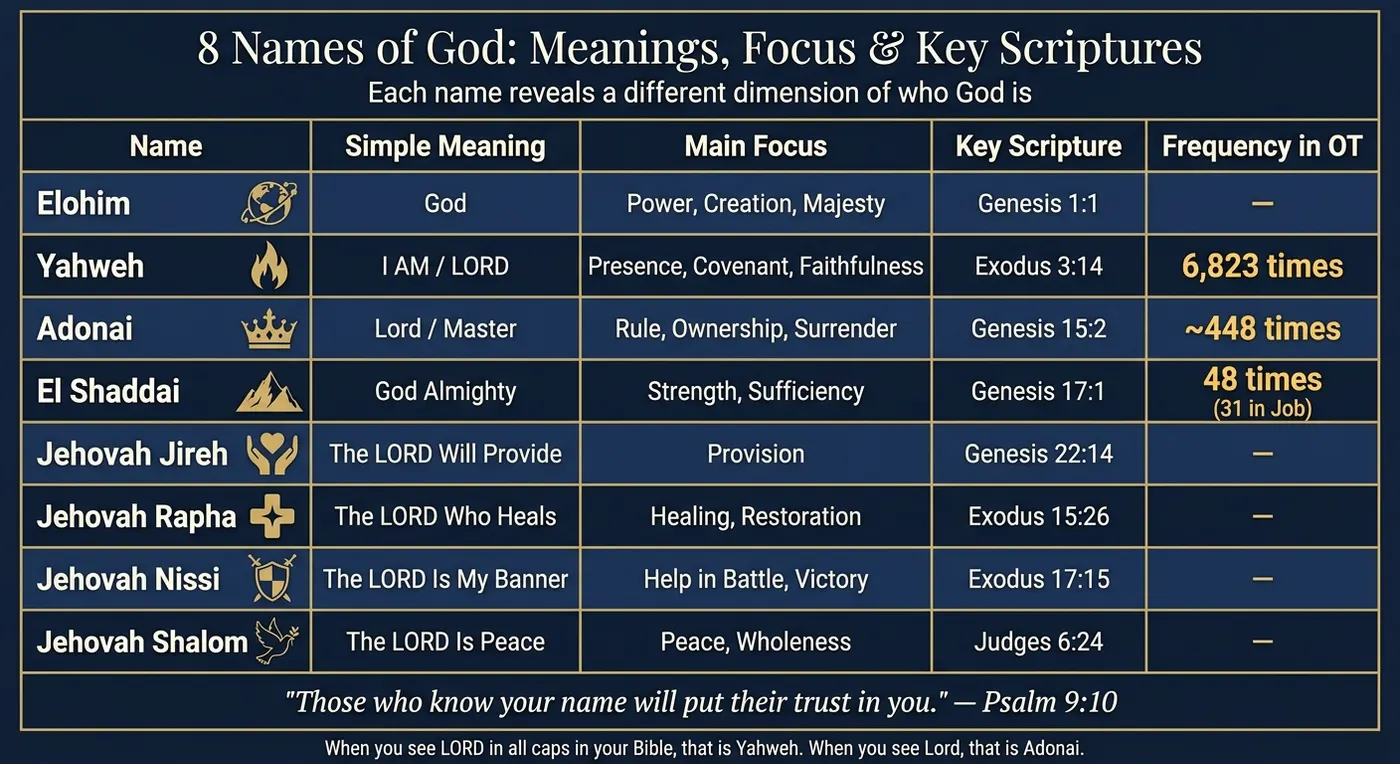
8 Names of God: Meanings, Focus & Key Scriptures
20 Powerful 🔥 Names of God and Their Meaning | With Bible References..
Quick Comparison
| Name | Simple Meaning | Main Focus | Key Scripture |
|---|---|---|---|
| Elohim | God | Power, creation, majesty | Genesis 1:1 |
| Yahweh | I AM / LORD | Presence, covenant, faithfulness | Exodus 3:14 |
| Adonai | Lord / Master | Rule, ownership, surrender | Genesis 15:2 |
| El Shaddai | God Almighty | Strength, sufficiency | Genesis 17:1 |
| Jehovah Jireh | The LORD Will Provide | Provision | Genesis 22:14 |
| Jehovah Rapha | The LORD Who Heals | Healing, restoration | Exodus 15:26 |
| Jehovah Nissi | The LORD Is My Banner | Help in battle, victory | Exodus 17:15 |
| Jehovah Shalom | The LORD Is Peace | Peace, wholeness | Judges 6:24 |
Bottom line: if I know what these names mean, I can read Scripture with more clarity and pray with more direct trust.
Why God’s Names Matter in Daily Life
English Bibles often translate different Hebrew names as "God" or "LORD." That can blur meanings that are worth noticing. Yahweh and Elohim are not the same name, and they do not point to the same thing. Each shows a different side of who God is. That shapes more than Bible study. It also shapes how believers pray, read, and respond to Scripture.
Knowing God’s names can move prayer from vague words to specific trust.
Yahweh points to God’s eternal covenant name. Elohim points to His power as Creator.
This gets even more helpful when life gets hard in plain, everyday ways. God’s names give you words for those moments. In sickness, Jehovah Rapha. In financial need, Jehovah Jireh. Proverbs 18:10 says it plainly:
"Yahweh’s name is a strong tower: the righteous run to him, and are safe."
That is practical truth, not just a nice image. Knowing which name to run to – and why – can make that tower feel near instead of distant.
When you read "LORD" in all caps, stop for a moment and see Yahweh. When you read "Lord," notice Adonai – God as Master and the one with rightful authority over your life. That small difference adds more depth to daily Bible reading. It also brings more clarity when you start with Elohim.
1. Elohim
Elohim is the first name used for God in the Bible. You see it in Genesis 1:1: "In the beginning God [Elohim] created the heavens and the earth." That matters for a simple reason: the God who made all things also rules over the parts of life that feel out of control.
The name Elohim comes from El/Eloah and points to power and strength. It appears in a plural form, but the point is not many gods. It highlights God’s majesty and fullness.
As a name, Elohim shows God as the transcendent Creator who brings order from chaos. And that same Creator gives people worth, because human beings are made in His image.
"Elohim, Mighty One, you made everything out of nothing, imposed order on chaos, gave birth to beauty, and called it all good."
Elohim also grounds human dignity. Genesis 1:27 says humankind was created in the image of Elohim. So every person has real worth and purpose.
This is the name to hold onto when you need God’s power and a bigger view of what you’re facing.
2. Yahweh
If Elohim presents God as Creator, Yahweh shows Him as covenant Lord.
This is God’s personal name, first made known to Moses at the burning bush in Exodus 3:14, when He said, "I AM WHO I AM". Yahweh appears 6,823 times in the Old Testament, which makes it the name used most often for God in Scripture.
The name Yahweh comes from hayah, “to be,” and points to God as self-existent and eternal.
More than that, Yahweh highlights God’s covenant presence with His people. That’s why this name hits home when life feels shaky. He is not distant. He is there.
Because Yahweh does not change, His character stays the same in every season. Exodus 34:6–7 describes Him as merciful, gracious, patient, full of steadfast love, and faithful. That was true in Moses’ day, and it is still true today.
On a day-to-day level, this name gives believers somewhere to run when life feels unstable. Proverbs 18:10 says it with striking plainness:
"The name of Yahweh is a strong tower; the righteous runs into it and is set securely on high."
In prayer, it helps to begin with who He is before moving to what you need. Use this name when you need confidence that God is present, faithful, and near.
3. Adonai
If Yahweh is God’s personal covenant name, Adonai points to His authority over our lives. It is a title of authority. Adonai comes from adon, which means "master" or "owner", and it is used for God as a title of supreme authority. It appears about 448 times in the Old Testament.
Abraham first uses Adonai in Genesis 15:2 as he wrestles with the promise of an heir. That scene helps explain why this name matters in prayer. It brings honesty and surrender together. Abraham speaks openly, but he also speaks to the One who has the right to rule.
Adonai means God is the Owner who provides, protects, guides, and sustains what belongs to Him. So when you call God Adonai, you’re not just using another name for Him. You’re yielding to His authority and trusting His care.
On a practical level, this changes how you handle decisions. Praying to God as Adonai is a confession that your time, plans, and choices belong to Him. Ann Spangler says it this way:
"Adonay is a Hebrew word meaning ‘Lord,’ a name that implies relationship: God is Lord, and we are his servants."
In prayer, Adonai shifts the focus back where it belongs: on God’s authority, not our control.
4. El Shaddai
If Adonai shows God as Master, El Shaddai shows that the Master is also enough.
El Shaddai is often translated as "God Almighty," but the name also carries the idea that God is enough. Scholars link Shaddai with power, strength, nurture, and sufficiency. Put together, the picture is clear: God is strong, and God supplies what His people lack.
This name first appears in Genesis 17:1, when God speaks to 99-year-old Abraham and renews His covenant. El Shaddai appears 48 times in the Old Testament, and 31 of those uses are in Job.
Psalm 91:1 shows what this looks like in daily life: dwelling in the shelter of the Most High and abiding in the shadow of the Almighty. That’s not just a nice image. It speaks to provision, protection, and strength when life feels thin. Pray this name when your strength, your resources, or your answers run out.
That same sufficiency also points to God’s care in provision.
5. Jehovah Jireh
That sense of sufficiency turns personal in Jehovah Jireh, the name that points to God meeting a specific need. Jehovah Jireh means "The LORD will provide." The word comes from raah, "to see", carrying the idea that God sees a need and sees to it.
The name first appears in Genesis 22:14. Abraham gives this name to the place where God stopped him from sacrificing his son Isaac and provided a ram caught in a thicket as a substitute. This happened on Mount Moriah.
This name puts God’s character in plain view: He sees the need before it shows up and acts with perfect foresight.
When you’re in a season of waiting and worry starts to build, Jehovah Jireh reminds you that His timing is not neglect. It is wise care. His provision often arrives right on time. Pray this name when you’re facing biblical financial principles, uncertainty, or an unmet need you can’t solve on your own. It gives believers words for moments when the need is real and the answer hasn’t come yet.
6. Jehovah Rapha
God’s care doesn’t stop at material needs. He also mends what has been hurt. Jehovah Rapha means "The LORD who heals." The Hebrew verb rapha means heal, restore, cure, or make whole.
Jehovah Rapha first appears in Exodus 15:26, when God made the bitter water at Marah fit to drink after Israel left Egypt. That moment showed that God can make bitter places sweet.
In Scripture, this kind of healing is not limited to the body. It is tied to shalom – peace, wholeness, and flourishing. God’s healing reaches into broken hearts, emotional pain, and spiritual weariness. Psalm 147:3 says God heals the brokenhearted and binds up their wounds. Isaiah 53:5 points to the deeper healing Christ gives through His suffering.
Ask God to show you the bitter places in your life – resentment, grief, anxiety, emotional pain, or spiritual fatigue. Then bring those places to Him and trust Him for deep restoration, not just short-term relief. Pray this name when you need healing in body, mind, or soul.
7. Jehovah Nissi
God doesn’t only heal. He also gives His people strength when they’re in a fight. Jehovah Nissi means "The LORD Is My Banner." The name comes from nes, the Hebrew word for a banner or rallying point.
This name appears one time in Exodus 17:15, after Israel defeated the Amalekites at Rephidim. Moses named the altar after God gave them victory, while Aaron and Hur stood beside him and held him up.
The picture here is simple but powerful. God is Israel’s rallying point and the source of its victory. In ancient warfare, a banner showed identity, authority, and hope. By naming the altar this way, Moses made it clear that the win came from God, not from human strength. Isaiah 11:10 and John 12:32 carry this banner image forward in Christ.
There’s also a very human lesson in this scene. Moses didn’t stand alone. Aaron and Hur supported him when he grew weak. That matters. When you face opposition, fear, or spiritual fatigue, pray this name and let other people stand with you in prayer. It’s a reminder that the battle belongs to God.
This same sense of peace leads into the next name, Jehovah Shalom.
8. Jehovah Shalom
Jehovah Shalom means "The LORD Is Peace." The name first shows up in Judges 6:24. Gideon built an altar in Ophrah after the Angel of the LORD appeared to him. At that time, Midian had crushed Israel. The people were poor, shaken, and living under constant fear. In that setting, God spoke straight to Gideon: "Peace be with you; do not be afraid" (Judges 6:23).
That detail matters. God didn’t speak peace after the crisis was over. He spoke peace in the middle of it.
Shalom carries a rich meaning. It points to wholeness, peace, and well-being. So Jehovah Shalom shows God as the source of true peace and the one who gives it. This kind of peace isn’t tied to easy days or quiet surroundings. It rests on who God is, and He does not change.
The New Testament carries this forward by showing Jesus as the Prince of Peace and our peace. So when anxiety spikes, conflict drags on, or life feels unsure, praying this name can turn your attention back to God instead of the pressure in front of you. Isaiah 26:3 says, "Thou wilt keep him in perfect peace, whose mind is stayed on thee: because he trusteth in thee."
Pray this name when fear starts to crowd out trust. Put your mind back on Him, not on the problem. That peace can take shape in simple, daily ways, especially through prayer, worship, and voice journaling with scripture.
How to Use God’s Names in Prayer, Worship, and Voice Journaling
These names matter most when they shape the way you pray, worship, and write down what God is showing you. A simple four-step pattern can help.
- Identify the life need. Are you under financial pressure, dealing with a health crisis, fighting fear, or stuck in a decision you can’t sort out?
- Pray the matching name. Facing lack? Pray Jehovah Jireh. Dealing with sickness? Call on Jehovah Rapha. Feeling buried by anxiety or conflict? Speak Jehovah Shalom.
- Pray the matching Scripture. Root your prayer in the verse where that name first appears. That keeps your prayer tied to Scripture.
- Reflect on what it shows about His character. Write one sentence about what this name shows you about God’s care, power, or presence.
Prayer gets stronger when it gets specific. Scripture links trust directly to God’s name:
"Those who know your name will put their trust in you, for you, Yahweh, have not forsaken those who seek you." – Psalm 9:10
Voice journaling works well with this approach. You might record a prayer to Jehovah Jireh during a season of financial pressure, tag it as provision, and come back to it later as a reminder of God’s faithfulness. Over time, those entries can give you a clear record of how He has been present across different parts of your life.
| Life Need | Name of God | Key Scripture |
|---|---|---|
| Provision | Jehovah Jireh | Genesis 22:14 |
| Healing | Jehovah Rapha | Exodus 15:26 |
| Peace | Jehovah Shalom | Judges 6:24 |
| Protection | Jehovah Nissi | Exodus 17:15 |
| Power in impossible situations | El Shaddai | Genesis 17:1 |
Conclusion
God’s names show who He is and how He cares for His people. That matters most when life feels shaky.
In Scripture, God’s name is more than a label. It gives you a glimpse of His character. So when pressure closes in, pray these names back to Him. When you’re dealing with money stress, illness, or plain uncertainty, God’s names can steady your faith.
As Psalm 9:10 says, those who know His name will trust Him, because He has not forsaken those who seek Him. That’s why it helps to record these names in voice journaling, so you can remember how God meets you in times of real need.
FAQs
Why does God have so many names?
In the Bible, names do more than identify a person. They point to character, nature, and identity.
That matters even more when we talk about God. He is infinite and holy, so no single name can fully describe who He is.
Instead, Scripture shows God through many names. Each one puts the focus on a different part of His nature – His power, His provision, His holiness, and His compassion. Taken together, these names give believers a better sense of who He is and why they can trust His promises in everyday life.
Are Yahweh and LORD the same in the Bible?
Yes. In English Bibles, LORD in all capital letters stands for the Hebrew name Yahweh (YHWH).
That choice comes from a Jewish practice of reverence. When people read the text aloud, they did not say YHWH directly. Instead, they said Adonai, which means Lord or master.
English Bible translations kept that difference on the page by using LORD for YHWH and Lord for Adonai.
How do I use God’s names in prayer?
Use God’s names in prayer to make your requests feel more personal and pointed. Call on the name that fits what you’re bringing before Him – Jehovah Jireh for provision, Jehovah Rapha for healing, or El Shaddai for strength.
This isn’t a formula. It’s an act of faith. Names like Adonai can also express surrender and trust in God’s rule over your life.