
How to Forgive Someone Who Isn't Sorry: A Step-by-Step Guide
Christian step-by-step guide to forgive someone who won't apologize: choose forgiveness, release the need for justice, pray, set boundaries, and use voice journaling.
Forgiveness is tough, especially when the other person doesn’t apologize. But forgiving isn’t about their actions – it’s about your healing and obedience to God. Here’s the core idea: forgiveness is a choice, not a feeling, and it’s something you do for your freedom, not theirs.
- Forgiveness vs. Reconciliation: Forgiveness is personal and between you and God. Reconciliation, however, requires both parties and trust rebuilding.
- Why Forgive Without an Apology: Holding on to resentment only hurts you. Letting go frees your heart and mind while trusting God to handle justice.
- Steps to Forgive:
- Decide to forgive as an act of obedience to God.
- Release the need for an apology or justice – God is the ultimate judge.
- Forgive out of love for Christ, reflecting His grace in your actions.
- Pray for healing and strength to overcome lingering emotions.
- Use tools like journaling or prayer to process your feelings and stay committed.
Forgiveness is a process, not a one-time event. By choosing to forgive, you align with Christ’s example and find emotional and spiritual freedom.
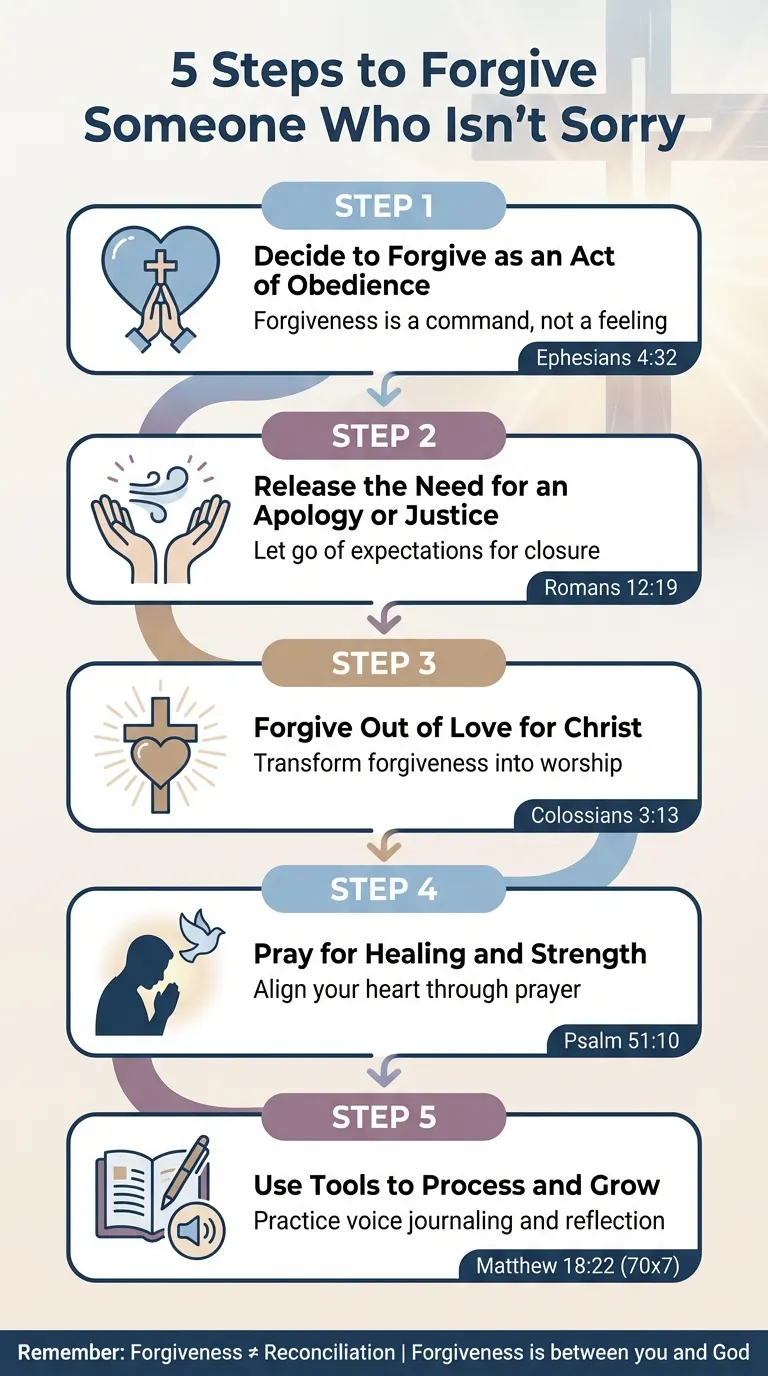
5 Steps to Forgive Someone Who Isn’t Sorry
A Prayer to Forgive When the Other Person Is Not Sorry | Your Daily Prayer
Step 1: Decide to Forgive as an Act of Obedience
Forgiveness starts with a deliberate choice to release someone from their debt. It’s an intentional act, not something driven by feelings.
Ephesians 4:32 provides clear guidance: "Be kind and compassionate to one another, forgiving each other, just as in Christ God forgave you." God’s forgiveness toward us is unconditional – it doesn’t wait for us to earn it. Pastor Ernie Baker explains this beautifully:
"We make a decision to grant undeserved favor to another based upon the lavish forgiveness we have been given in Christ."
The Bible doesn’t treat forgiveness as optional; it’s a command. Waiting until you "feel ready" or until the other person apologizes puts you in a position of disobedience. The Biblical Counseling Center emphasizes this point:
"Forgiveness is granted before it is felt. You don’t wait until you feel like forgiving. You decide to forgive because Christ forgave you."
This decision is primarily between you and God. It’s something you can commit to in prayer, even if the person who hurt you never acknowledges their actions. Once you make this choice, lean on your faith to carry it out.
How Faith Makes Forgiveness Possible
Faith bridges the gap between your decision to forgive and the emotional release that follows. Let’s be honest – some wounds feel impossible to forgive on our own. That’s where faith steps in. Forgiveness isn’t about sheer willpower; it’s about relying on the Holy Spirit. Jesus reminds us in Luke 18:27, "What is impossible with man is possible with God." When you reflect on the immense debt God forgave through Christ’s sacrifice, it becomes easier to let go of the smaller debts others owe you.
One way to activate your faith is by creating a "Forgiven List." Write down examples of times God has forgiven you. This simple exercise shifts your perspective from focusing on what you’re owed to recognizing the grace you’ve received.
Overcoming Emotional Resistance
Even after deciding to forgive, emotional resistance is normal. Feelings of anger, resentment, and a desire for justice often linger. The key is to face these emotions honestly without letting them control your actions. Acknowledge the pain fully, but present it to God and choose to release it.
A helpful practice is to confess your decision aloud. For example, you might say, "Lord, I choose to forgive [Name] for [specific offense]. I release them from the debt they owe me." Speaking these words reinforces your decision, even if your emotions haven’t caught up yet.
Praying for the person who hurt you is another powerful step. While it may feel impossible at first, it’s an effective way to soften bitterness. Amy Carmichael once said:
"Art thou stung? Thou wilt find as thou pray that the sting will lose its power. Thy thinking will be kindly."
Praying for the offender aligns your heart with Christ’s example and helps you stop replaying the offense in your mind. This practice breaks the cycle of resentment and keeps you grounded in obedience.
Lastly, commit to three boundaries: don’t rehash the offense, don’t use it as a weapon against the offender, and don’t let it consume your thoughts. These boundaries help protect your decision to forgive and prevent you from slipping back into unforgiveness.
Step 2: Release the Need for an Apology or Justice
Once you’ve made the choice to forgive, the next step is about letting go of the need for personal closure. This means releasing the expectation of an apology or any form of vindication. It’s natural to want acknowledgment of the wrong and for the other person to make things right. But holding out for an apology keeps you tethered to the pain. It gives the offender power over your healing process, which isn’t how forgiveness is meant to work.
Letting go of this need doesn’t mean you’re excusing the offense. Romans 12:19 reminds us: "Do not take revenge, my dear friends, but leave room for God’s wrath, for it is written: ‘It is mine to avenge; I will repay,’ says the Lord." God is the ultimate Judge, and His justice operates in His own way and timing. Your role is to let go of the debt and trust Him to handle the outcome. This act of release is what allows you to embrace the depth of forgiveness.
What Unconditional Forgiveness Means
Unconditional forgiveness is modeled after Christ’s example. In the book of Philemon, Paul writes about Onesimus, saying: "If he has done you any wrong or owes you anything, charge it to me. I, Paul, am writing this with my own hand. I will pay it back" (Philemon 18-19). Paul’s willingness to take on Onesimus’ debt reflects the essence of forgiveness – absorbing the cost on behalf of another. This mirrors what Jesus accomplished on the cross. He took on the debt of humanity’s sins so we could be forgiven without conditions.
When you forgive unconditionally, you’re declaring that the debt is no longer owed. Tim Sledge puts it this way:
"Forgiveness means that you no longer regard the offending person as indebted to you."
This doesn’t erase the memory of what happened, but it cancels the expectation of repayment. Instead of demanding restitution, you absorb the cost of the offense. Refusing to forgive implies that Christ’s sacrifice wasn’t sufficient to cover that particular sin. But Jesus has already paid the price. By forgiving, you’re acknowledging this truth and releasing the offender from any obligation.
Letting God Handle Justice
Understanding unconditional forgiveness helps you trust God to handle justice. This can feel like you’re letting the offender off the hook, but in reality, you’re entrusting the situation to the only one capable of true justice. Matthew 5:39-44 challenges the natural instinct for revenge: "But I tell you, do not resist an evil person… Love your enemies and pray for those who persecute you." This isn’t about being passive; it’s about recognizing God’s authority over the matter.
Joseph’s story in Genesis 50:19-21 is a powerful example. After being sold into slavery by his brothers, Joseph rose to power in Egypt. When he had the chance to retaliate, he chose forgiveness instead. He told his brothers, "Don’t be afraid. Am I in the place of God? You intended to harm me, but God intended it for good." Joseph understood that vengeance wasn’t his to take – he trusted God’s sovereignty and chose to forgive.
To fully release the need for justice, commit to three promises: don’t gossip about the offense, don’t use it against the person in the future, and don’t dwell on it internally. These boundaries help safeguard your decision to forgive and shift the burden to God. As you pray for the offender, visualize handing over the hurt to God, trusting that He can handle the justice you cannot. This act of surrender brings the spiritual and emotional freedom that forgiveness promises.
Step 3: Forgive Out of Love for Christ
When the need for an apology is set aside, forgiveness takes on a deeper purpose. Forgiving out of love for Christ transforms the act into an expression of worship. This shift moves the focus from the offender’s actions to Christ’s worthiness. By forgiving in response to Jesus’ sacrifice and His command, you honor Him – regardless of how you feel or whether the offender shows remorse. In Philemon 20, Paul appeals to Philemon, saying, "Yes, brother, let me benefit from you in the Lord; refresh my heart in Christ". Forgiveness, then, becomes an act of obedience that glorifies Christ.
The reasoning is clear: Jesus forgave a debt far greater than any wrong you could face. Refusing to forgive diminishes the weight of His sacrifice. As Kevin Hay explains, "Forgiveness isn’t just some therapeutic concept – it’s a theological one". It stems from a heart transformed by God’s mercy and becomes a form of worship.
Why Love for Christ Drives Forgiveness
Instead of dwelling on the offense, focus on Christ’s sacrifice. His suffering and grace far outweigh any personal grievance, making obedience to Him the priority. Colossians 3:13 and Ephesians 4:32 encourage believers to forgive as the Lord forgave them – completely and without conditions.
When forgiveness feels impossible, shift your focus from the pain to Christ’s example. Reflect on His suffering and His response to injustice. Chris Brauns emphasizes this approach: "The key to Christlike responses, the key to getting mental victory over bitterness and hurt, is to fix our eyes on Jesus Christ himself, day in and day out". This intentional mindset helps you take on the cost of forgiveness, mirroring how Jesus bore the cost of your sin through His sacrifice.
How Biblical Forgiveness Differs from Secular Forgiveness
Secular forgiveness often revolves around personal well-being – letting go to reduce stress, avoid bitterness, or find inner peace. In contrast, biblical forgiveness is rooted in obedience to God and centered on His glory. It’s not about achieving emotional relief; it’s about reflecting forgiveness in the Bible and honoring the mercy you’ve received. This Christ-focused perspective sets biblical forgiveness apart from secular approaches.
| Feature | Secular Forgiveness | Biblical Forgiveness |
|---|---|---|
| Primary Focus | Personal benefit | Love for Christ and obedience |
| Goal | Emotional healing | Reflecting the Gospel |
| Motivation | Therapeutic: self-improvement | Theological: Christ’s sacrifice |
| Basis | Pride or self-focus | Humility and Christ’s mercy |
This distinction highlights how forgiveness, when rooted in love for Christ, becomes more than a personal act – it’s a declaration of faith. Choosing to forgive out of devotion to Jesus reflects His worthiness, even when it’s challenging. Mark Dever sums it up perfectly: "Nothing is nearer the heart of Christian faith than the recognition of our own need to forgive because of our own need for forgiveness in Christ". By keeping forgiveness grounded in the gospel, you move beyond fleeting emotions or the offender’s response, anchoring your actions in Christ’s unchanging grace.
Step 4: Pray for Healing and Strength
Prayer acts as the connection between your decision to forgive and the emotional healing that follows. Forgiveness is more than just a choice – it’s an intentional act of obedience. Through prayer, your heart aligns with this decision, especially when old feelings of resentment creep back in. Prayer invites God’s strength to help you overcome bitterness and begin the healing process. Dr. Michael A. Milton describes it this way:
Forgiveness is an incomparably powerful solvent that cuts through even generations of hatred, years of guilt, and deep-rooted spirits of bitterness.
Healing, especially on a spiritual level, takes time and consistent prayer. This practice not only restores your heart but also deepens your spiritual journey.
Praying with Scripture
When emotions feel overwhelming, scripture can guide and ground your prayers. Start with Psalm 51:10: "Create in me a clean heart, O God; and renew a right spirit within me". This verse reflects the need for God’s cleansing work when bitterness tries to take hold. Matthew 6:12 reminds us of the connection between receiving forgiveness and extending it: "Forgive us our debts, as we also have forgiven our debtors". Similarly, Colossians 3:13 encourages us: "Forgive as the Lord forgave you". And when forgiveness feels like an impossible task, turn to Philippians 4:13 for strength: "I can do all things through Christ who strengthens me". These scriptures serve as anchors, helping you stay grounded as you work through forgiveness.
Daily Habits for Releasing Resentment
Incorporating daily practices alongside scriptural prayer can strengthen your commitment to forgiveness. Start each prayer session by taking a moment of stillness – breathe deeply and focus on God’s presence. Be honest about your emotions; instead of suppressing your pain, bring it to God, who understands the complexity of your feelings. As Pastor Matt Sturdevant insightfully puts it:
Holding onto an offense is like drinking poison and expecting the other person to die.
One practical tool is the "Two-Chair" method: sit in one chair, imagine the person who hurt you in the other, and say aloud, "You are free and forgiven. I release you from your debt". If resentment resurfaces, reaffirm your forgiveness by declaring, "I have forgiven [Name]. I refuse to walk in bitterness. Spirits of unforgiveness, leave me in Jesus’ name". Forgiveness is a continuous process – what some call a "70×7" habit – requiring you to choose forgiveness repeatedly. Each time the memory of the offense comes back, make the choice again, trusting that God is gradually healing your heart. These practices create a strong foundation for continuing the journey toward forgiveness.
Step 5: Use Voice Journaling to Process and Grow
Voice journaling offers a way to express raw emotions without the self-censorship that often comes with writing. Speaking your thoughts aloud taps into different neural pathways, allowing you to bypass internal filters and uncover hidden patterns of resistance. This simple yet powerful practice can deepen your path toward forgiveness.
How Voice Journaling Supports Forgiveness
When you speak freely for 3–7 minutes without overthinking, you may discover patterns of resistance that wouldn’t surface through writing alone. This helps cultivate "attitudinal forgiveness" – a shift in your heart that lets go of grudges, regardless of whether the offender seeks forgiveness. Adding physical movement, like walking while recording, can encourage a more natural flow of thoughts. After each session, record a short 30-second summary to track changes in your tone and notice how bitterness gradually fades [33, 34].
Using Scriptures as Anchors
Pairing your voice journaling with Scripture can provide emotional grounding and remind you of God’s truth. Just as you release your burdens through this practice, Scripture reinforces the idea of God’s complete forgiveness. For example, you can tag Psalm 103:12 – "As far as the east is from the west, so far has he removed our transgressions from us" – to reflect on God’s grace. When bitterness arises, Ephesians 4:31-32 can guide you toward a forgiving spirit, while Romans 12:19 can remind you to leave justice in God’s hands. These verses act as spiritual touchpoints you can revisit for reassurance and clarity.
Building on earlier steps, use your recordings to detail the offense and your emotions. Then, consciously place your pain before Jesus, asking Him to carry the weight and replace bitterness with a tender heart. Over time, revisiting these entries can help you reflect on your spiritual growth and recognize how you’re becoming more Christlike. Research even shows that forgiveness can improve mental health, reduce stress, and lower blood pressure. These benefits highlight how this spiritual practice can bring healing to both your mind and body.
Working Through Common Emotional Barriers
Recognizing What’s Blocking Your Forgiveness
The first step in overcoming emotional barriers is identifying what’s truly holding you back. Often, it’s not just about the offense itself but the fear that lingers beneath it. Ask yourself, "What am I afraid of?" Many people fear that forgiving someone might make them vulnerable to further harm or that the offender’s behavior will remain unchanged.
Pay attention to physical tension or recurring negative thoughts – they’re often signs of unresolved resentment. Do you find yourself replaying imaginary confrontations with the offender? This mental loop can deepen bitterness rather than pave the way for healing.
Another common hurdle is the belief that you need to feel forgiving before you can actually forgive. But forgiveness isn’t about waiting for perfect feelings. As Sarah Howley, a counselor and author, puts it:
Forgiveness is a decision before God to release the personal debt someone owes you. You’re saying, ‘I won’t carry the role of judge, jury, and collector. I’m handing the account to the Lord.’ You can make that decision before the feelings catch up.
Practical Ways to Overcome Barriers
Once you’ve identified what’s holding you back, take deliberate steps to address it. Be specific about the loss you’ve experienced – whether it’s trust, safety, or a future you once envisioned. Naming the loss allows you to process it in prayer and reflection.
Stick to three key boundaries of forgiveness: avoid gossiping about the offense, resist confronting the offender out of anger or shame, and stop dwelling on it internally. These boundaries reflect the biblical principle of God choosing not to remember our sins.
When bitterness creeps back in, reaffirm your choice to forgive. Pair this declaration with Scripture, such as Colossians 3:13: "Forgive as the Lord forgave you," to ground yourself in the spiritual foundation of forgiveness.
If you’re unsure about the difference between forgiveness and reconciliation, seek guidance from a trusted mentor or pastor. Releasing someone from a debt (forgiveness) doesn’t automatically mean restoring the relationship (reconciliation). Forgiveness can coexist with maintaining healthy boundaries for your well-being.
Keep in mind that forgiveness is often a journey rather than a single moment. Jesus’ instruction to forgive "seventy-seven times" reminds us that deep wounds may require repeated acts of forgiveness as memories resurface. Be patient with yourself, and focus on Christ rather than the offense. These steps tie into the larger process of forgiveness, helping you grow spiritually while moving toward healing.
Conclusion: Finding Freedom Through Forgiveness
Main Points to Remember
Forgiveness starts with a conscious decision – it’s not about waiting for your emotions to align. It’s choosing to let go of the debt and trusting God to handle justice.
While forgiveness is something personal between you and God, reconciliation requires both parties to come together in repentance. You can forgive someone while still maintaining boundaries to protect yourself.
When painful memories resurface, redirect your thoughts toward prayer and healing. Resist the urge to replay the offense in your mind. Instead, pray for the person’s well-being and affirm out loud that you’ve forgiven them. As Pastor Matt Sturdevant from Hope Church explains:
Forgiveness is ultimately a gift you give yourself. It’s how you get unstuck, break free, and move forward.
These principles lay the groundwork for a transformative journey toward spiritual freedom.
Forgiveness as a Lifelong Practice
Once you make the initial choice to forgive, remember that letting go of resentment is an ongoing commitment. Jesus’ teaching to forgive “seventy times seven” reminds us that forgiveness is limitless and continuous. As you deepen your faith, you might find yourself revisiting forgiveness – not because you failed, but because healing deep wounds often requires repeated effort.
This ongoing practice strengthens your connection with God. Each act of forgiveness brings you closer to His teachings and opens your heart to greater spiritual freedom. Forgiveness allows you to release others from their debts, ensuring that your own prayers remain unhindered. By embracing tools like prayer and voice journaling, you can let each step of forgiveness draw you nearer to Christ’s grace. Lean on God’s strength through prayer, Scripture, and daily surrender – He will guide you through every moment of this transformative process.
FAQs
What if forgiving them feels impossible?
Forgiveness can feel out of reach sometimes, but it’s important to understand that it’s a journey – one deeply connected to biblical teachings. It doesn’t depend on whether the other person feels sorry or not. Begin by recognizing the pain you’ve experienced. Then, turn to prayer for the strength to move forward. Make a deliberate choice to forgive, even if it’s difficult. Picture yourself letting go of the offense through prayer, trusting in God’s justice and timing to handle the rest. Remember, forgiveness is about finding peace and freedom for your own heart, not about waiting for an apology or restoring a relationship.
Can I forgive and still keep distance?
Forgiveness is a way to release resentment and emotional weight without needing to rebuild closeness or reconcile. Biblical teachings highlight the importance of forgiving sincerely, even when no apology has been offered. It’s about freeing yourself from the burden of bitterness, not about forcing a relationship to be restored. Sometimes, maintaining distance is the wisest path, particularly when reconciliation could be unsafe or unsuitable, while still staying true to God’s guidance on forgiveness.
How do I stop replaying what happened?
To break the cycle of replaying past hurts, make a conscious choice to let go of the pain and resist the urge to dwell on the offense. Start by acknowledging your emotions, asking for strength through prayer, and affirming your commitment to forgive. When memories resurface, deliberately shift your focus, pray for a sense of calm, and try journaling as a way to work through your feelings. These actions reflect biblical teachings, guiding you to release resentment and trust in God’s ability to heal your heart.
Related Blog Posts
- What Does the Bible Say About Setting Healthy Boundaries (Even with Family)?
- What Does the Bible Say About Dealing with Toxic People and Difficult Relationships?
- What Does the Bible Say About Social Justice and Our Responsibility to the Poor?
- 5 Biblical Principles for Managing Conflict in Your Marriage