
A Biblical Guide to Parenting Teenagers in a Secular World
Practical, faith-based strategies to raise Christ-centered teens: family devotions, open communication, handling peer pressure, social media, and service.
Parenting teens today is challenging. Social media, peer pressure, and conflicting worldviews constantly influence their values and beliefs. This guide offers practical, faith-based strategies to help you navigate these challenges and raise teens grounded in biblical principles. Key takeaways include:
- Your Influence Matters Most: Studies show parents shape teens’ beliefs more than peers, media, or schools.
- Create a Christ-Centered Home: Daily prayer, devotions, and open communication build spiritual resilience.
- Equip Teens for Secular Challenges: Teach them to handle peer pressure, manage social media, and share their faith confidently.
- Model Faith in Action: Live out biblical values through humility, repentance, and generosity.
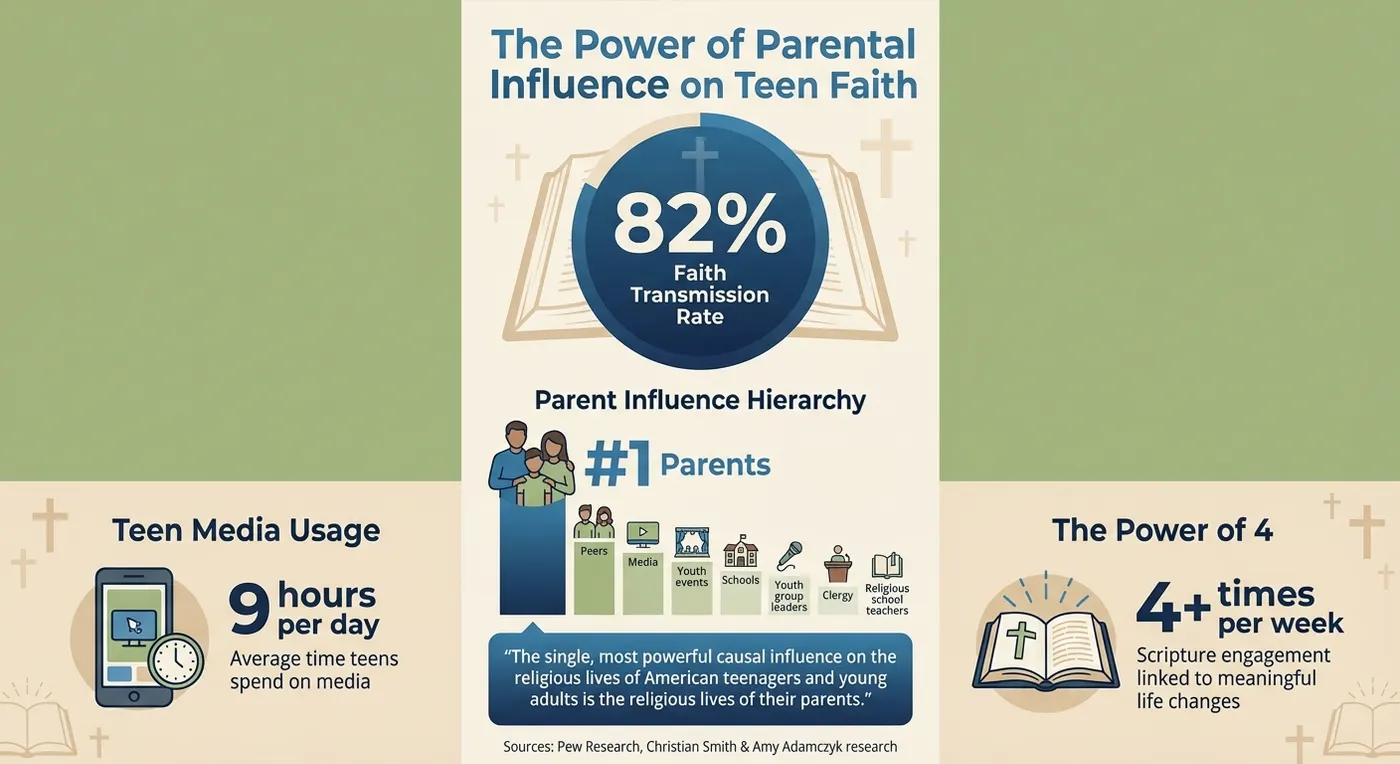
Biblical Parenting Statistics: Parent Influence vs Peers and Media
Top Tips for Raising a Christian Teen | Sean McDowell
Building a Christ-Centered Family Foundation
Your home plays a key role in shaping your teen’s faith. Studies reveal that parents have a greater influence on their teenager’s spiritual life than peers, media, or youth events. This means the environment you create at home holds more weight than any program or event they attend. A home centered on Christ becomes a stronghold against the challenges of the world, equipping your teen to navigate life with purpose and resilience.
Creating this foundation requires intentionality, consistency, and a genuine faith. When Christ is at the center of your family life, you’re not just teaching about Him – you’re living out what it means to follow Him in every season.
Setting Up Family Devotions and Prayer Time
Family devotions don’t need to be complicated. Pastor and author Costi Hinn puts it simply:
"Family devotions are not about producing spiritual moments on demand. They are about cultivating a home where God’s Word is normal, central, and honored".
Start with just 5 to 10 minutes each night. Choose a time that works for your family’s schedule – after dinner, before bed, or even at breakfast – and commit to protecting that time. Read directly from Scripture, such as a Psalm, Proverb, or a story from the Gospels, and ask a couple of straightforward questions like, "What does this teach us about God?" or "How can this guide the way we live?".
Hinn also emphasizes:
"Five minutes nightly will accomplish far more than thirty minutes sporadically. Clarity is better than creativity. Consistency is better than perfection".
When someone in your family shares a struggle, take a moment to pray for them right then and there. Use their own words in your prayer to show you’re truly listening.
For tech-savvy teens, tools like the ESV Student Study Bible or apps like YouVersion can make Scripture feel more accessible and relevant.
Modeling Christlike Behavior as Parents
Your actions speak louder than your words. Teens are quick to notice inconsistencies between what parents say and do, making authenticity crucial. A Pew Research survey found that 82% of Protestant Christian parents had teenagers who also identified as Protestant Christian, highlighting the deep impact of parental example.
Show humility and repentance – apologize when you make mistakes. Demonstrate biblical values by prioritizing church attendance, practicing generosity, and involving your teen in family prayers, especially during challenging times. This not only teaches them to rely on God but also shows them how to handle anxieties through faith.
Building Open Communication Rooted in Scripture
Open communication helps prevent the frustration mentioned in Ephesians 6:4 and Colossians 3:21. When teens feel safe to share their struggles without fear of judgment, they’re more likely to turn to you – and to God – when facing difficult choices.
Be willing to share your own struggles to foster trust and encourage your teen to do the same. Follow James 1:19 by being quick to listen and slow to speak. If you need to set boundaries around technology or media, explain the biblical principles and safety concerns behind the rules, rather than simply enforcing them.
Apply the "Shema" principle from Deuteronomy 6:7 by naturally weaving God’s Word into daily life – whether during meals, car rides, or bedtime routines. As InWord Resources explains:
"When communication lines are open, families can endure lots of turbulence and survive. Even thrive. When communication lines are closed, the slightest bump can knock a family way off course".
When your teen asks tough questions, explore the answers together rather than offering quick solutions. Use tools like concordances to study Scripture side by side. This process not only builds their confidence but also shows them that faith is strong enough to handle honest doubts and inquiries.
With a Christ-centered home, consistent communication, and practical spiritual habits, you’ll be well-equipped to nurture your teen’s faith and prepare them for the challenges ahead.
Navigating Secular Influences Through Biblical Principles
Teenagers today face challenges that may feel unfamiliar to parents who grew up in a different era. For instance, studies highlight increasing levels of loneliness among adolescents, emphasizing the importance of a solid home environment. While a strong foundation at home is crucial, teens also need practical ways to apply biblical principles when navigating life outside of that safe space. Let’s explore how these principles can help guide them through secular pressures.
Helping Teens Handle Peer Pressure with Biblical Encouragement
A Christ-centered home equips teens to stand strong against peer pressure. In the Bible, peer pressure is often linked to the "fear of man" – seeking approval from others instead of God. Proverbs 29:25 warns, "The fear of man brings a snare, but he who trusts in the Lord will be exalted". This verse can remind teens that staying true to their faith isn’t about being antisocial or critical of others; it’s about finding their identity in Christ.
Try introducing the "Decide in Advance" game at home. Role-play different scenarios – like being offered cigarettes, pressured to watch inappropriate content, or encouraged to lie – and celebrate when they choose the path of biblical truth. It’s also helpful to highlight biblical stories like Daniel in the lions’ den (Daniel 6) or Shadrach, Meshach, and Abednego in the fiery furnace (Daniel 3). These examples show that choosing God’s approval over human acceptance often leads to a stronger, more independent faith, even if it comes with moments of loneliness.
Guiding Teens in Responsible Social Media Use
Teens today spend an average of nine hours a day on media, and many struggle to manage their screen time. Instead of focusing solely on rules, address the heart behind their digital habits. Philippians 4:8 offers a great framework for this:
"Whatever is true, whatever is noble, whatever is right, whatever is pure, whatever is lovely, whatever is admirable – if anything is excellent or praiseworthy – think about such things."
Encourage your teen to reflect on whether their digital consumption aligns with these values. You can also set practical boundaries at home, like creating a central charging station for devices overnight, making bedrooms and meal times phone-free zones, or scheduling regular "digital sabbaths" for the family to unplug and reconnect with each other and with God.
Another helpful tool is the "10-minute think break." Teach your teen to pause before reacting to online drama or posting anything. This delay can help them ensure their words align with Ephesians 4:29, which calls for speech that builds others up. It’s also worth reminding them that online posts are permanent, so thoughtful engagement is essential for protecting both their reputation and character. These habits can even become opportunities for sharing their faith, which we’ll dive into next.
Teaching Teens to Share Their Faith with Confidence
Open communication at home lays the groundwork for teens to share their faith with others, which can strengthen their spiritual confidence. They don’t need to have all the answers or be Bible experts – what matters most is authenticity. As 1 Thessalonians 2:8 explains, sharing faith is about being transparent about personal experiences, not just quoting scripture. When teens talk about how their faith helped them through tough times, they’re engaging in meaningful evangelism.
Equip them with 1 Peter 3:15:
"Always be prepared to give an answer to everyone who asks you to give the reason for the hope that you have. But do this with gentleness and respect."
This verse reminds teens that their hope in Christ can be a powerful testimony. Encourage them to share their faith in small, everyday moments – like saying, "I’ll pray for you" or "God really helped me with that." Connecting them with mentors like youth pastors or coaches can also reinforce these values. Additionally, hands-on ministry experiences, such as visiting nursing homes or helping at food banks, allow teens to see God’s work in action and discover their own spiritual gifts.
If your teen faces criticism or rejection for their beliefs, remind them of 1 Peter 3:14:
"Even if you suffer for what is right, you are blessed. Do not fear their threats; do not be frightened."
While standing firm in their faith might not make them popular, it assures them of God’s presence and blessings in their lives.
Practical Parenting Tools for Spiritual Growth
Building a Christ-centered family means creating opportunities for spiritual habits to grow naturally in daily life. By introducing practical tools rooted in biblical principles, you can help your teen develop a deeper connection with their faith. Research highlights the transformative impact of engaging with Scripture at least four times a week – often referred to as the "Power of 4" – which is strongly linked to meaningful life changes. Here are three strategies to encourage spiritual growth in teenagers.
Using Voice Journaling for Spiritual Reflection
Voice journaling is a simple yet effective way for teens to reflect on their spiritual journey without the pressure of writing. Apps like Psalmlog make this process accessible, using AI to transcribe spoken prayers and thoughts while connecting them to relevant Bible verses. For instance, the app might suggest Philippians 4:6-7 when anxiety is expressed, offering a scriptural reminder of God’s peace. It can also analyze emotions, helping teens identify recurring feelings and link them to biblical truths about comfort and hope.
To ensure privacy and encourage honest reflection, choose apps with features like encryption and biometric locks. Specific journaling prompts such as "How did you see God at work today?" or "What verse has been meaningful to you this week?" can guide their reflection. Reviewing past entries periodically allows teens to see patterns of God’s faithfulness in their lives. This practice not only deepens their reflections but also helps them anchor their thoughts in Scripture.
Using Scripture Memorization as a Spiritual Anchor
Memorizing Scripture equips teens with a source of strength and guidance during challenging moments. Setting aside 30 minutes each morning for Bible study and memorization – before the distractions of social media – can help make this a consistent habit. Focus on understanding the context of the verses rather than rote memorization alone. Learning entire passages provides a richer, more cohesive understanding of Scripture.
For inspiration, author Kimberly Sorgius Jones shared how her teenage daughter memorized several books of the Bible, including Philippians and Colossians, within a year. She later set an ambitious goal to memorize the Gospel of John, using tools like audio recordings and daily writing exercises. Encourage teens to listen to Scripture on repeat, write verses from memory, or use visual aids like whiteboards to reinforce learning. Regular check-ins with a mentor or friend can offer accountability and encouragement. As their faith grows through these personal practices, they can extend it outward through acts of service.
Getting Teens Involved in Service and Community
Church involvement plays a crucial role in fostering both spiritual growth and a sense of belonging. In a world where many teens struggle with loneliness, the community found in church can provide meaningful, face-to-face connections that go beyond the shallow interactions of social media.
Parents play a vital role here, as Christian Smith and Amy Adamczyk emphasize in Handing Down the Faith:
"The single, most powerful causal influence on the religious lives of American teenagers and young adults is the religious lives of their parents. Not their peers, not the media, not their youth group leaders or clergy, not their religious school teachers."
Making church attendance a family priority strengthens these values. Discussing sermon takeaways during car rides or over Sunday meals can spark deeper conversations about faith. Encourage teens to find service opportunities that align with their passions – whether it’s helping with tech during services, contributing musically in worship, or volunteering in local outreach programs. Teach them that their time, skills, and resources are gifts to be used for God’s work. Youth groups can also connect them with mentors who provide additional guidance and fresh perspectives on living out their faith.
Conclusion: Trusting God in Your Parenting Journey
Key Takeaways for Biblically Grounded Parenting
Parenting teens in today’s world isn’t about getting everything right – it’s about pointing them toward Christ. As Rebecca Tucker, Chief Brand Officer at ActsSocial, puts it:
"Godly Parenting is not about perfection – it’s about direction".
The strongest influence on your teenager’s faith isn’t their friends, social media, or even youth leaders – it’s you. Studies show that consistent religious involvement has a lasting impact on happiness and well-being.
Instead of striving for control, focus on stewardship. While you can’t change your teen’s heart or guarantee their choices, you can provide a biblical foundation and live out an authentic faith. When you make mistakes, apologize and show them what it means to rely on God. This openness demonstrates that Christianity is about a relationship with God, not just following a set of rules. Lean into the wisdom of Scripture, which offers timeless guidance, and remember that God generously gives wisdom to those who ask (James 1:5).
These principles help you stay grounded in faith, even when the road feels uncertain.
Encouragement to Keep Going in Faith
Parenting is hard, but you’re not doing it alone. God’s guidance is constant, and He’s never surprised by the challenges you face. As you parent your teens, God is parenting you, shaping you through the process. Even in struggles, He’s working for good (Genesis 50:20; Romans 8:28). Melissa Kruger, Vice President of Discipleship Programming at The Gospel Coalition, offers this reassurance:
"God is parenting us as we parent our teens, and we can cry out to him as Father, knowing he hears and answers our prayers".
Don’t navigate this journey in isolation. Find a prayer partner or mentor, as modeled in Nehemiah 4. And remember, you’re not fighting against your teen – you’re fighting for them. Your example of Christ-centered living equips them to stand firm in a secular world. Lay your worries at God’s feet (1 Peter 5:7) and trust His perfect timing. Together, with God’s help, you can face the challenges ahead.
FAQs
How do I start family devotions with a busy schedule?
Starting family devotions, even with a packed schedule, can be done with a few practical steps. Choose a regular time that works for everyone, even if it’s just a few minutes – consistency is key to making it a habit. Begin with a prayer to center your family and invite God into the moment. Keep it simple by focusing on one Bible verse or story and ending with a short prayer together. Don’t aim for perfection; instead, focus on showing up regularly and adjusting the routine to match your family’s needs and daily flow.
What should I do if my teen doubts their faith?
When your teen starts questioning their faith, it’s important to create a space where they feel safe to share openly without fear of judgment. Listen carefully, showing that you value their thoughts and emotions. Acknowledge their feelings as valid and encourage them to ask questions, even the hard ones.
Resist the urge to respond defensively. Instead, gently guide them toward scripture and prayer, offering these as tools for finding clarity and strength. Biblical principles, such as “speaking the truth in love” (Ephesians 4:15), can serve as a foundation for building trust and supporting their spiritual journey during this challenging time.
How can I set social media rules without constant conflict?
Setting boundaries for social media use can be a meaningful way to guide your teen while staying grounded in biblical values. Start by discussing the purpose of social media and how it can be used to honor God, drawing inspiration from verses like Colossians 3:17: “And whatever you do, whether in word or deed, do it all in the name of the Lord Jesus, giving thanks to God the Father through Him.”
Involving your teen in creating rules can make them feel more invested in the process. For example, you might work together to set limits on screen time or agree to keep devices away during family meals. These shared decisions not only establish clear expectations but also encourage accountability.
Consistency is key. Enforce these boundaries fairly and model the behavior you want to see – if you ask your teen to limit their usage, be mindful of your own habits too. Keep the lines of communication open, grounding your conversations in faith and mutual respect. This approach can help reduce tension and create an environment where both guidance and understanding thrive.