
Bible Basics for New Believers — Beginner Guide
A clear, practical starter guide showing new believers where to begin with Scripture, simple daily habits, and tools to apply the Bible.
Starting with the Bible can feel overwhelming, but it doesn’t have to be. This guide simplifies the process and helps you dive into Scripture with confidence. Here’s a quick breakdown:
- The Bible’s Structure: It’s divided into the Old Testament (39 books) and the New Testament (27 books), each with unique themes and purposes.
- Where to Begin: Start with the Gospel of John for a clear view of Jesus’ life, then explore Psalms for heartfelt prayers and wisdom.
- Daily Reading Tips: Just 5–10 minutes a day is enough. Use scripture-based reflection methods like SOAP (Scripture, Observation, Application, Prayer) to grow.
- Helpful Tools: A study Bible provides context, while apps like Psalmlog offer personalized guidance, making Scripture more relatable to daily life.
The Bible isn’t just a book – it’s a guide to understanding God’s love, redemption, and wisdom for your life. Start small, stay consistent, and let Scripture transform your heart and mind.
The ULTIMATE beginners guide to the Bible (what you need to know, tips for reading, best resources)
How the Bible Is Organized
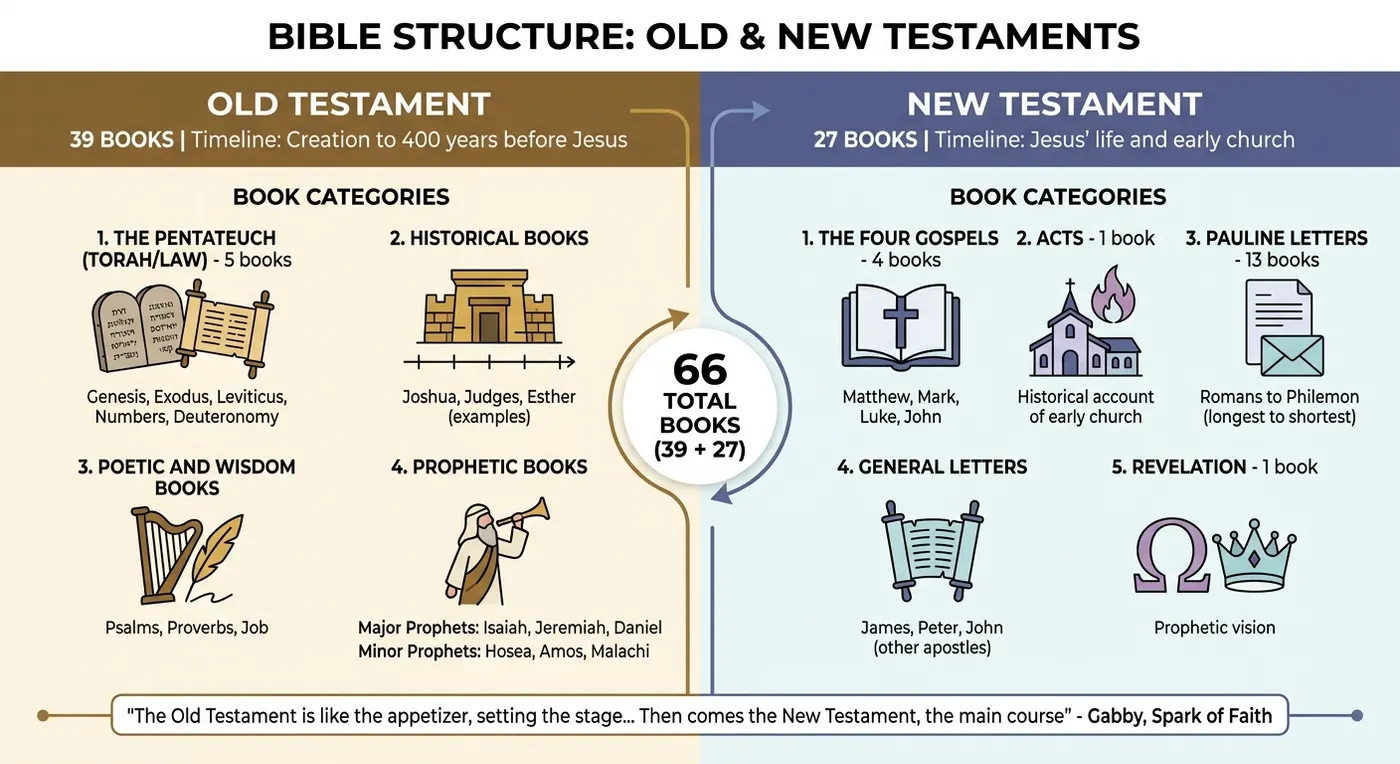
Bible Structure: Old Testament vs New Testament Overview
Think of the Bible as a library packed with a variety of writings. It’s a collection created over centuries, thoughtfully arranged by type and theme to make it easier to navigate.
The Bible is split into two main parts: the Old Testament, which contains 39 books, and the New Testament, which has 27 books. The Old Testament spans from creation to roughly 400 years before Jesus’ birth. Meanwhile, the New Testament centers on Jesus’ life and the beginnings of the Christian church. Gabby from Spark of Faith puts it this way:
"The Old Testament is like the appetizer, setting the stage with laws, history, poetry, and prophecies… Then comes the New Testament, the main course".
Let’s take a closer look at how these sections are structured, starting with the Old Testament, to see how each part contributes to the Bible’s overarching message.
The Old Testament: Where It All Begins
The Old Testament forms the groundwork for understanding God’s relationship with humanity. It’s divided into four main categories, each offering a different type of writing.
- The Pentateuch (also known as the Torah or Law): These first five books – Genesis, Exodus, Leviticus, Numbers, and Deuteronomy – introduce God’s laws and recount the early history of Israel.
- Historical Books: Books like Joshua, Judges, and Esther narrate the victories and challenges faced by God’s people.
- Poetic and Wisdom Books: Works such as Psalms, Proverbs, and Job delve into human emotions and provide practical advice through poetic language.
- Prophetic Books: These include both the Major Prophets (longer books like Isaiah, Jeremiah, and Daniel) and the Minor Prophets (shorter books such as Hosea, Amos, and Malachi). The terms "Major" and "Minor" refer only to the length of the books, not their importance.
The Old Testament sets the stage, while the New Testament reveals how God’s promises come to life.
The New Testament: Jesus and His Teachings
The New Testament shifts the focus to Jesus Christ and the fulfillment of God’s promises. It begins with the four Gospels – Matthew, Mark, Luke, and John – which recount Jesus’ life, teachings, death, and resurrection, each from a unique perspective.
The book of Acts, written by Luke, provides a historical account of the early church’s growth after Jesus’ resurrection. Then come the Pauline Letters, letters written by the apostle Paul to various churches, offering theological insights and practical advice. These are arranged from longest to shortest, starting with Romans and ending with Philemon.
Next are the General Letters, written by other apostles like James, Peter, and John, addressing broader Christian audiences. Finally, the book of Revelation offers a symbolic and prophetic vision of God’s ultimate victory.
This structure not only organizes the Bible but also highlights how each book fits into the larger story of redemption.
| Testament | Number of Books | Primary Focus | Key Examples |
|---|---|---|---|
| Old Testament | 39 | Creation, Law, and Israel’s history | Genesis, Psalms, Isaiah |
| New Testament | 27 | Jesus Christ and the Early Church | John, Acts, Romans, Revelation |
How to Start Reading the Bible
Understanding how the Bible is organized is one thing, but deciding where to begin is another. Many new readers dive into Genesis with plans to read straight through to Revelation, but this approach can feel daunting – especially when you hit more complex books like Leviticus or Numbers. A more thoughtful starting point can help you stay engaged, build momentum, and grow spiritually.
Begin with the Gospels and Psalms
For beginners, the Gospel of John is often the best place to start. It focuses on the life, miracles, and teachings of Jesus, offering a clear picture of salvation and His identity. As Bible Maximum notes:
"The Gospel of John is the single best place to start reading the Bible."
- Bible Maximum
Once you’ve read John, the Psalms are a natural next step. This collection of 150 poetic prayers and songs covers the full range of human emotions – joy, sorrow, gratitude, and more – while teaching you how to approach God with honesty. Pastor Paul David Tripp highlights their importance:
"The Psalms are also the Old Testament’s prayer manual – the Psalms teach you how to pray."
- Pastor Paul David Tripp
If you’re looking for practical advice for daily life, the Book of James is another excellent choice. It’s short, straightforward, and packed with wisdom for living out your faith.
Follow a Simple Reading Plan
A reading plan can take the guesswork out of where to start each day. For example, a 30-day Gospel plan that focuses on one chapter of John per day is a great way to stay on track and maintain steady progress.
Rather than aiming for long sessions, commit to reading 5–10 verses or spending just 5–10 minutes daily. Read each passage twice – once for a general understanding and again to notice specific details, such as commands, promises, or lessons.
To deepen your study, try a method like SOAP:
- Scripture: Write down a verse that stands out.
- Observation: Note what’s happening in the text.
- Application: Reflect on how it applies to your life.
- Prayer: Respond with a short, heartfelt prayer.
Another option is the 4 R’s: Read, Reflect, Respond, and Remember. Whichever method you choose, having a plan will make your reading more intentional and meaningful.
Set Achievable Goals and Build Consistency
Consistency is key when developing a Bible-reading habit. Start by setting small, realistic goals. For example, dedicate 5–10 minutes daily at the same time and place – whether it’s during breakfast, a lunch break, or before bed. A regular routine removes uncertainty and helps make Bible reading a natural part of your day.
If you miss a day, don’t stress. Just pick up where you left off without trying to catch up. Even a small daily commitment can lead to significant spiritual growth over time. Psalm 119:18 offers this encouragement:
"Open my eyes that I may see wonderful things in your law."
To stay motivated, track your progress with a checklist or calendar. Seeing your consistency build over time can be a powerful reminder of how far you’ve come.
Tools That Make Bible Study Easier
The right tools can transform Bible study into an enjoyable and enriching experience. Whether you’re a fan of traditional books or prefer the convenience of digital apps, selecting resources that align with your lifestyle and learning preferences can help you stay consistent and grow spiritually. Let’s dive into how to choose the best study Bible and explore the benefits of a digital tool like Psalmlog.
How to Choose a Study Bible
A study Bible does more than present Scripture – it offers context through features like explanations of ancient customs, maps, timelines, and footnotes. These tools help clarify challenging passages. For beginners, the translation style is key. Thought-for-thought translations, such as the NLT, emphasize readability, while word-for-word translations like the ESV focus on accuracy for deeper study. The NIV strikes a balance between the two, making it a popular choice for new believers.
When selecting a study Bible, look for one with clear cross-references, visual aids, and a font size that’s easy to read. To test different translations, try a Bible app to see which one feels most natural to you. As Bible Editions wisely puts it:
"A good-enough Bible you actually read beats a perfect Bible you never buy."
If you’re interested in digital tools, there’s also a voice-guided option worth considering.
Using Psalmlog for Personalized Biblical Guidance
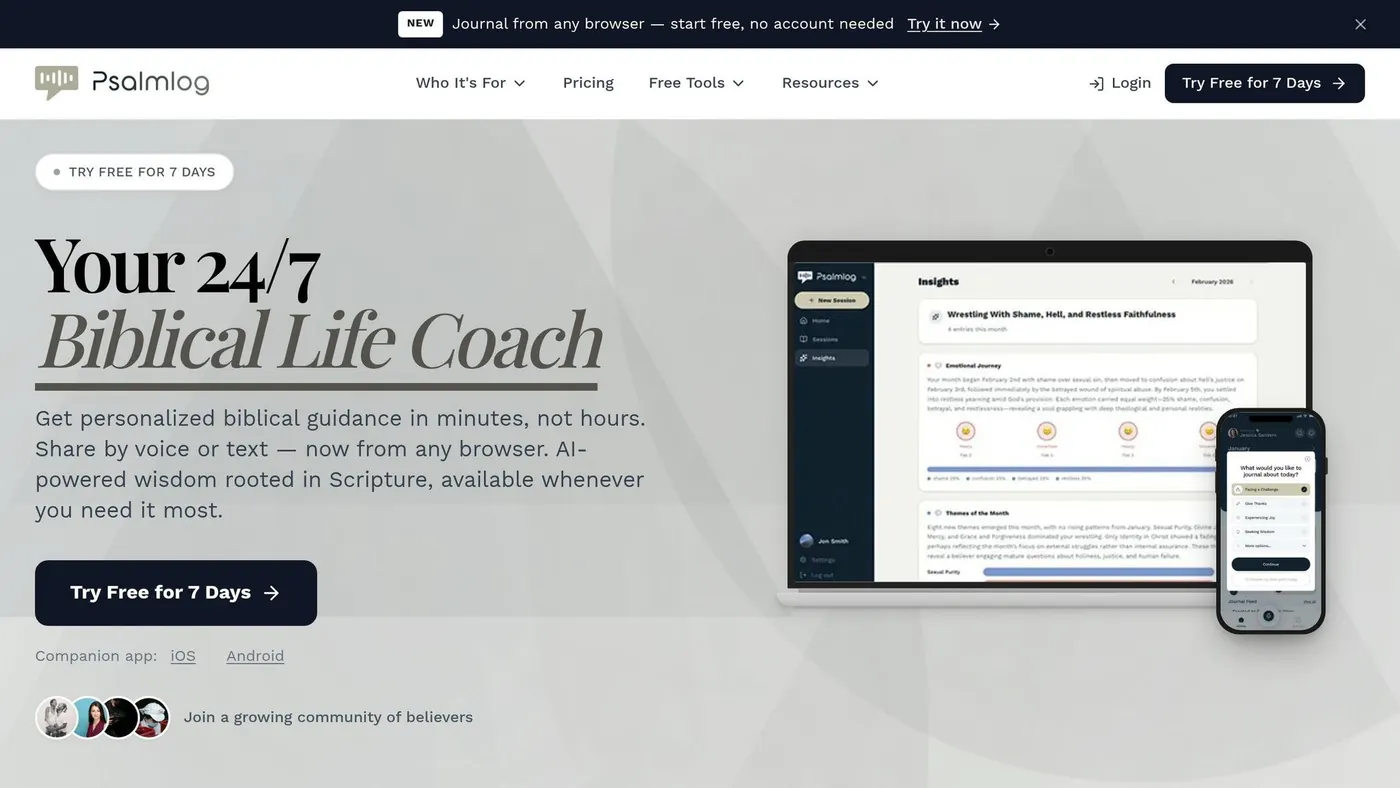
Psalmlog is an app designed for those with busy lives who want quick, personalized Scripture guidance. Using AI, the app identifies relevant Bible passages tailored to your situation – whether you’re feeling anxious, facing family challenges, or making a tough decision – within just 60 seconds. Simply speak naturally about what’s on your mind, and the app provides biblical insights along with actionable steps.
Its voice-first design makes reflection effortless. Your recordings are transcribed locally and then deleted to ensure privacy, while the app tracks your spiritual growth over time. According to research, engaging with Scripture at least four times a week can significantly boost confidence and reduce spiritual stagnation by 60%. Psalmlog’s Faith Builder plan costs $19.99/month, which includes a 7-day free trial, 300 minutes of recording time per month, and access to all Bible translations.
Study Bibles vs. Psalmlog: A Comparison
Both study Bibles and Psalmlog bring unique benefits to your spiritual journey. While study Bibles provide deep historical insights and scholarly perspectives, Psalmlog focuses on building daily habits and offering personalized applications of Scripture. Many people find that using both together creates a well-rounded approach – study Bibles lay the foundation for understanding, while Psalmlog helps you act on those insights in your daily life.
| Feature | Study Bible | Psalmlog |
|---|---|---|
| Primary Strength | Offers historical context, maps, and scholarly commentary | Delivers instant, personalized Scripture guidance |
| Ease of Use | Requires manual searching through concordances or indexes | AI-driven; finds relevant verses with voice or text input |
| Portability | Can be bulky (hardcover) or lightweight (paperback) | Easily accessible on iOS, Android, and web browsers |
| Interactivity | Static text that requires manual note-taking | Dynamic AI guidance tailored to specific prompts |
| Best For | Understanding historical and cultural context | Daily reflection and applying Scripture to life situations |
Incorporating these tools into your routine can deepen your understanding of Scripture while helping you maintain a consistent and meaningful study habit.
Key Biblical Themes and How to Apply Them
The Bible weaves a unified story of God’s creation, humanity’s fall, and redemption through Jesus Christ. Each passage contributes to this larger narrative, offering a glimpse into God’s overarching plan. As Mary Elizabeth Sperry, Associate Director for Utilization of the New American Bible, explains:
"The Bible is the story of God’s relationship with the people he has called to himself."
Rather than centering on human figures, Scripture consistently reveals who God is. His holiness, mercy, justice, and love are intricately displayed, shaping how we face life’s challenges. These aren’t just ancient stories – they invite you to know a God who is actively working in your life today.
God’s Love for People
At the heart of the Bible’s narrative is God’s love, vividly demonstrated through Jesus’ life and sacrifice. The Gospel of John captures this purpose in John 20:31:
"These are written, that ye might believe that Jesus is the Christ, the Son of God; and that believing ye might have life through his name."
When feelings of rejection or unworthiness creep in, remember how Jesus reached out to those on the margins of society. His invitation in Matthew 11:28-29 is a timeless reminder:
"Come to me, all you who are weary and burdened, and I will give you rest. Take my yoke upon you and learn from me, for I am gentle and humble in heart."
This love not only comforts but also leads us to reflect on the profound themes of redemption and grace.
Redemption and Grace
The theme of redemption addresses humanity’s brokenness and the longing for a restored relationship with God. The Bible introduces two key covenants: the Covenant of Works, which requires perfect obedience, and the Covenant of Grace, which offers salvation as a gift. Since no one can achieve perfection, grace becomes essential.
Throughout Scripture, this message is evident. In the Old Testament, God repeatedly forgave His people despite their shortcomings. In the New Testament, Jesus’ death and resurrection provide the ultimate act of redemption. Theologian Michael Horton highlights this connection:
"What unites [the themes of the Bible] is not itself a central dogma but an architectonic structure… That particular architectural structure . . . is the covenant."
Viewing Bible study as a relationship rather than an obligation helps you embrace grace. If you miss a day of reading, allow yourself the freedom to begin again without guilt. This perspective not only deepens your understanding of grace but also equips you to understand the Bible and live out its wisdom daily.
Using Biblical Wisdom in Daily Life
The Bible offers practical guidance for navigating life’s decisions, relationships, and emotions, turning challenges into opportunities for growth. A helpful approach is the SOAP method: Scripture, Observation, Application, and Prayer.
For instance, when anxiety strikes, Philippians 4:6-7 encourages you to bring your worries to God in prayer and thanksgiving, promising a peace that surpasses understanding. When faced with uncertainty, James 1:5 offers this reassurance:
"If any of you lacks wisdom, you should ask God, who gives generously to all without finding fault, and it will be given to you."
Even in small moments, Matthew 6:25-27 reminds us of God’s care for every detail of creation. The Psalms also serve as a model for honest prayer, inviting you to bring your raw emotions – whether anger, confusion, or joy – directly to God. This openness strengthens your relationship with Him and makes the wisdom of Scripture relevant in every aspect of life.
How to Reflect on Scripture and Grow Spiritually
Engaging with Scripture goes beyond simply reading it – it involves prayer, meditation, and tools like voice journaling to cultivate a deeper connection with God. This approach helps you move from Bible reading to application, transforming study from an intellectual exercise into a meaningful relationship. Mary Elizabeth Sperry, Associate Director at the USCCB, underscores this idea:
"If Scripture remains just words on a page, our work is not done. We need to meditate on the message and put it into action in our lives."
This shift from passive reading to active engagement opens the door to spiritual growth and a more profound connection with God.
Prayer and Meditation on Scripture
Start and end your Bible reading sessions with prayer. Before diving into Scripture, ask the Holy Spirit to guide your heart and mind, helping you understand what God wants to reveal. After reading, pray for the Word to take root in your life and influence your actions.
Meditation takes this process deeper. Ask yourself, "What is God saying to me through this passage?" Instead of skimming through verses, dedicate 15–30 minutes to reflect and let the message resonate. This practice makes Scripture memorable and impactful.
Repetition is another powerful tool. For instance, repeatedly reading the same book – such as going through Acts 8–10 times over a 10-week span – can take you from surface-level understanding to a richer comprehension.
This reflective approach naturally leads to using tools like voice journaling to document and deepen your insights.
Voice Journaling with Psalmlog
Voice journaling adds a personal and dynamic layer to Scripture reflection. With Psalmlog, you can speak openly about your thoughts, struggles, or emotions – whether it’s anxiety, family challenges, or work stress. In about 60 seconds, the app connects your reflections to relevant Bible verses and offers insights on how to apply biblical wisdom to your situation.
Psalmlog doesn’t stop at identifying verses; it also suggests actionable steps to help you live out God’s Word. Your entries are saved in an archive, allowing you to track your spiritual journey over time. The app even works offline, so you can record reflections anytime and sync them later.
Incorporating tools like Psalmlog into your daily routine can help you make consistent spiritual progress.
Building a Daily Reflection Habit
Consistency is key to deepening your spiritual life. Find a cozy spot and create a ritual that signals your time with God. Whether it’s lighting a candle, brewing a cup of tea, or simply sitting in a favorite chair, these small habits can make your reflection time something you look forward to.
Sharing your insights with others also keeps you engaged. Whether you’re discussing Scripture with friends, joining a small group, or connecting with online communities, communal reflection can strengthen your commitment.
Structured tools can provide additional support. Psalmlog’s Faith Builder plan ($19.99/month) offers 300 minutes of monthly recording time, personalized AI insights, and access to all Bible translations. The app’s calendar view helps you track your progress, encouraging you to stay consistent.
And if you miss a day, don’t be discouraged. Extend yourself the same grace God offers. Spiritual growth is about the relationship, not perfection – just pick up where you left off and continue your journey.
Conclusion
You don’t need a theology degree or the perfect setup to start studying the Bible. God’s Word is for everyone, offering guidance and life to all who seek it. The beauty of Scripture lies in its open invitation – welcoming not just scholars, but anyone longing for a deeper connection with their Creator.
Start small: dedicate just 5 to 10 minutes a day to reading the Gospel of John. This book provides a clear picture of Jesus’ life and mission. Opt for the best version of the Bible for your needs, like the NIV or NLT, and focus on consistency rather than the length of your study. If you miss a day, don’t stress – just pick up where you left off. Building a habit is about showing up regularly, not perfectly.
To make your study time even more impactful, consider using tools that help you connect what you read to your daily life. For example, Psalmlog offers features designed to turn your reflections into actionable steps. Their Faith Builder plan ($19.99/month) includes 300 minutes of recording time, personalized AI-generated insights, and access to all Bible translations – a great way to track and deepen your spiritual growth.
As Psalm 119:130 says, "The entrance of thy words giveth light; it giveth understanding unto the simple". Understanding God’s Word happens over time. Stay consistent, pray for wisdom as James 1:5 encourages, and trust that God will meet you where you are. Your journey starts now – one verse, one prayer, one step forward.
FAQs
Which Bible translation should I start with?
Choosing the right Bible translation can make a big difference when you’re starting out. The NIV (New International Version) and NLT (New Living Translation) are excellent choices for beginners, thanks to their clear and straightforward language. They use everyday terms that make Scripture easier to grasp. If you’re looking for something closer to the original text, the ESV (English Standard Version) offers a more word-for-word style, which is particularly helpful for deeper study. Starting with the NIV or NLT can help you feel more at ease as you dive into the Bible.
How do I read hard parts without quitting?
To tackle challenging Bible passages, it’s important to approach them with patience and a clear plan. Begin by selecting a translation that’s easier to understand, such as the New International Version (NIV) or the New Living Translation (NLT). These versions use straightforward language, making complex ideas easier to grasp.
Break the passage into smaller, manageable sections. Then, use a simple method to guide your study: observe, interpret, apply, and pray. Observation helps you notice key details, interpretation focuses on understanding the meaning, application connects the passage to your life, and prayer invites spiritual insight.
Consider using study tools like reading plans or reflection questions to stay engaged and focused. Over time, consistent reading and thoughtful reflection can make even the most difficult passages feel more approachable and meaningful.
How do I know what a passage means for me?
To understand how a Bible passage speaks to you personally, it’s important to consider its context and how it relates to your life. Start by familiarizing yourself with the Bible’s broader themes, as this helps you see how individual passages fit into God’s overarching story. A simple approach like the 4 R’s – Read, Reflect, Respond, and Remember – can guide you in this process. Combine this method with prayer and thoughtful reflection to connect Scripture to your own experiences in a meaningful way.