
Fruit of the Spirit: Meaning of Nine
A single Spirit-grown fruit shapes nine Christlike traits—growth is gradual, relational, and seen in everyday choices.
The short answer: Galatians 5:22–23 names one fruit with nine parts – love, joy, peace, patience, kindness, goodness, faithfulness, gentleness, and self-control. I see Paul’s main point this way: you do not build this character by rule-keeping alone; the Holy Spirit grows it in you over time.
Here’s the article in plain English:
- There are 9 traits, but 1 fruit. The list is a single picture of Christlike character, not 9 separate badges to earn.
- Paul contrasts “works” and “fruit.” Works come from self-effort. Fruit grows from life with the Spirit.
- The setting is Galatians 5. Paul was pushing back on the idea that people could be made right with God by keeping the Law.
- Growth is gradual. In most cases, change is easier to spot over weeks, months, and years than in one day.
- Daily life is the test. These traits show up in conflict, parenting, work, money, habits, speech, and stress.
- Self-check matters. I can use the 9 traits like a mirror and ask where I am growing and where I am still weak.
- The goal is direction, not perfection. Setbacks matter, but they are not the end.
At a glance, the nine traits mean:
- Love: seeking another person’s good
- Joy: gladness rooted in God
- Peace: calm and wholeness with God and others
- Patience: staying steady with people and delay
- Kindness: warmth in how I treat people
- Goodness: doing what is morally right
- Faithfulness: being reliable in small and large things
- Gentleness: strength under control
- Self-control: rule over desires and impulses
A quick fact from the passage itself: Paul lists 9 qualities in 2 verses – Galatians 5:22–23. That small list covers both the inner life and outward behavior, which is why it speaks so directly to everyday choices.
If I had to sum up the whole article in one line, it would be this: the fruit of the Spirit is the slow shaping of a new kind of life.
What Are The Fruit Of The Spirit In The Bible (each fruit explained)
Biblical Context: How the Holy Spirit Produces This Fruit
In Galatians, Paul makes a sharp point: the Spirit produces Christlike character, not rule-keeping. He was pushing back against legalism, the idea that people can earn salvation by following rules. Freedom in Christ does not mean a free pass to sin. It means the center of the Christian life shifts from outward performance to Spirit-led change.
Works are made by human effort. Fruit grows from life in the Spirit. That contrast is the heart of Paul’s message. The Spirit produces what human effort cannot create.
Walking by the Spirit Instead of the Flesh
Walking by the Spirit is a daily pattern, not a one-time choice. The Greek word peripateo points to a day-by-day way of living, not a single moment of decision. Believers still feel the pull of the flesh. The issue is not whether that pull exists. The issue is which voice they follow.
This shows up in ordinary moments, not just big spiritual ones. A tense conversation with a coworker. A parenting moment that pushes your patience to the edge. A clash in a close relationship. Those are the places where the Spirit grows patience and self-control. They also show what is guiding the heart.
How to Examine Your Spiritual Growth Honestly
Honest self-examination is not the same as self-condemnation. The point is not guilt. The point is to notice patterns. Your reactions often say more than your intentions do – how you speak when you’re worn out, how you respond when you’re misunderstood, and whether your peace holds when life feels out of control.
A simple place to start is to use the nine qualities like a mirror. Ask plain questions:
- Where did my patience break down this week?
- Is my joy tied to outcomes, or to my relationship with God?
That kind of reflection pulls you away from legalistic scorekeeping and toward honest awareness.
With that framework in place, the next section defines each of the nine fruit in turn.
The Meaning of All Nine Fruits of the Spirit
Paul names one fruit with nine parts, not nine separate fruits. And love comes first because it gives shape to everything that follows. The Spirit grows these qualities together as Christ is formed in a believer.
Here are the nine qualities Paul names, along with brief meanings and simple, everyday pictures of what they look like.
Love, Joy, and Peace
Love stands first because it sets the tone for the rest of the list.
Love (agape) is self-giving concern for another person’s good, even when it costs you. 1 Corinthians 13:4–7 makes it plain and concrete: patient, not self-seeking, not easily angered.
Joy (chara) is a settled gladness rooted in God, not in changing circumstances. Philippians 4:4 calls believers to rejoice in the Lord. That means joy can stay in place during a hard medical diagnosis or a season of money stress, because its base does not move.
Peace (eirene) is more than a calm feeling. It means wholeness with God and with other people. Romans 5:1 ties it straight to being reconciled to God through Christ. In daily life, it can look like walking into a tense family moment and helping bring calm instead of adding heat.
Patience, Kindness, and Goodness
Patience (makrothumia) means putting up with people, delay, or hardship without bitterness. An old Hebrew image for slow anger. Romans 12:12 links it with hope and prayer. A manager who keeps waiting for a team to grow, without turning sour, is showing this fruit.
Kindness (chrestotes) is the tone and warmth you bring to other people, even the hard ones. Ephesians 4:32 pairs it with forgiveness. You see it in the way someone gives correction to a coworker, or in the choice to stop and listen when another person is hurting.
Goodness (agathosune) goes one step further. If kindness is about how you act, goodness is about what kind of action it is. Galatians 6:10 calls believers to do good to all people. This shows up in moral choices, like telling the truth in a business deal when cutting corners would be easier.
Faithfulness, Gentleness, and Self-Control
Faithfulness (pistis) means being reliable. Luke 16:10 points to the weight of being trustworthy in small things. This fruit shows up in keeping small promises, showing up when you said you would, and following through even when you don’t feel like it.
Gentleness (prautes) is not weakness. It is strength under control. Matthew 11:29 points to Jesus as the model: strong enough to overturn tables in the temple, yet gentle enough to restore a broken disciple. In leadership and in speech, it looks like correcting someone without crushing them.
Self-control (egkrateia) is Spirit-enabled rule over desires and impulses. Titus 2:12 frames it as living self-controlled, upright, and godly lives. It touches ordinary parts of life: how you use your time, how you handle your money, and what you do with your anger.
These traits show up most clearly in relationships, choices, and daily habits.
How the Nine Fruit Show Up in Daily Life
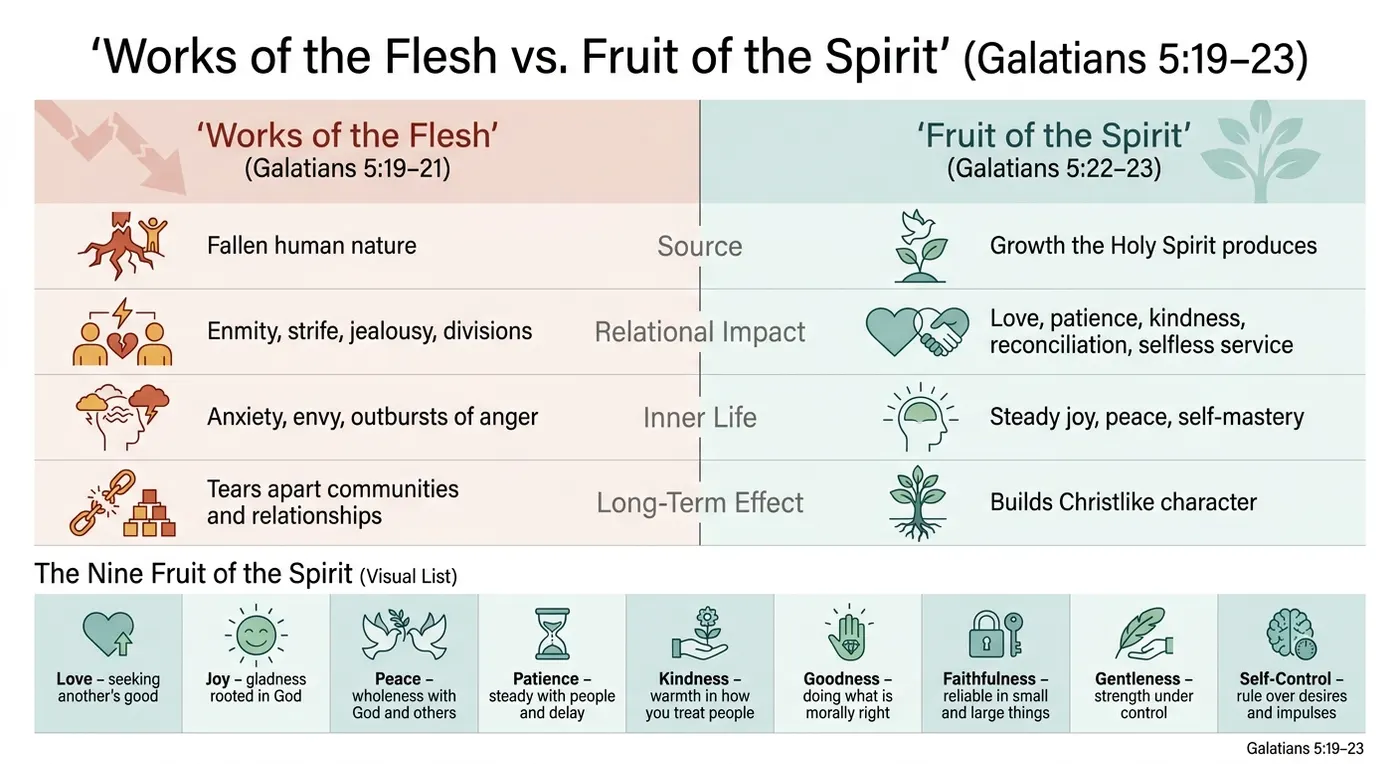
Works of the Flesh vs. Fruit of the Spirit: A Visual Guide
Those meanings start to feel real in daily life.
What the Fruit Looks Like in Relationships and Conflict
The fruit of the Spirit shows up most clearly when life gets tight and emotions run hot.
Love shows up when you serve someone even when you’re worn out and feel empty. Patience appears when a parent stays calm with a child for the tenth time in one day. Gentleness is strength under control: firm, but not harsh. Self-control is what stops a cutting word from coming out in the middle of an argument. Kindness is choosing to pause and listen when someone is hurting, even when your calendar is packed.
This is the point where character stops being theory and becomes visible. In tense moments, these traits often shape whether conflict brings healing or leaves a relationship more brittle.
What the Fruit Looks Like in Decisions, Habits, and Inner Life
Joy rooted in God can hold steady through hard seasons. Peace grows when you hand over worry instead of replaying it on a loop.
Faithfulness shows up in the small, unglamorous moments: keeping a commitment when you don’t feel like it, or doing what you said you’d do even when nobody sees it. Self-control reaches into ordinary choices too – how you use your phone at midnight or how you deal with an impulse purchase. Goodness appears as integrity at work: being honest in a business deal when cutting corners would be easier and no one would find out.
It’s worth noticing which kinds of pressure bring impatience, fear, or self-protection to the surface.
Works of the Flesh vs. Fruit of the Spirit
Paul’s point is simple: the flesh breaks things apart; the Spirit shapes a life.
The contrast gets even clearer when you put flesh and Spirit next to each other.
| Area | Works of the Flesh (Galatians 5:19–21) | Fruit of the Spirit (Galatians 5:22–23) |
|---|---|---|
| Source | Fallen human nature | Growth the Holy Spirit produces as you abide in him |
| Relational impact | Enmity, strife, jealousy, and divisions | Love, patience, kindness, reconciliation, and selfless service |
| Inner life | Anxiety, envy, and outbursts of anger | Steady joy, peace, and self-mastery |
| Long-term effect | Tears apart communities and relationships | Builds Christlike character |
The flesh is active, but what it produces is conflict and division. The Spirit doesn’t just name the standard. He produces the character.
That kind of growth is often easier to spot when you look back over time. The next step is learning how to notice it week by week.
Growing in the Fruit of the Spirit Over Time
This kind of growth is slow, so it helps to watch for patterns over weeks, not single moments.
Fruit doesn’t ripen all at once. Sanctification works like that too. It’s gradual, and it’s marked more by direction than perfection. When you hit a setback, that isn’t the end of the story. It’s a call to repent, return to Christ, and keep abiding in Him through Scripture and prayer.
Pastor Jonathan Landry Cruse puts it plainly:
"We should not expect immediate results in our sanctification, but rather steady growth over time. The idea of God’s graces as fruit in our lives should instill two things in the earnest believer: grace and hope."
The aim is Spirit-led growth, not instant perfection. Over months and years, you may start to see small but real changes. Maybe you recover from anger a little faster. Maybe gratitude comes back more naturally in hard seasons.
A Simple Weekly Practice for Noticing Growth
At the start of the week, choose one fruit to pay attention to, such as patience or kindness. Then, at the end of the week, look back on a few moments when it showed up and a few when it didn’t.
After that, pray through Galatians 5:22–23 slowly. Ask the Spirit to show you what is growing and where He is still shaping you. Then choose one small next step. That could mean pausing before you answer in a tense conversation or finally following through on a commitment you’ve been putting off.
A short weekly voice review can make these patterns easier to notice.
Using Psalmlog to Track Spiritual Patterns

A weekly voice reflection can help you spot growth that only becomes clear in hindsight. Record a short voice journal entry each week, then listen back for repeated themes in your reactions, prayers, and gratitude.
It can also help to talk through that growth with a trusted friend or mentor, especially when you need encouragement or gentle accountability.
Conclusion: How the Fruit of the Spirit Builds Christlike Character
Over time, the Spirit forms one Christlike character in you. As you walk by the Spirit each day, He shapes love, joy, peace, patience, kindness, goodness, faithfulness, gentleness, and self-control together as you keep in step with Him. Track what the Spirit is forming, and keep walking in that direction.
FAQs
Why does Paul call it one fruit instead of many?
Paul uses the singular fruit on purpose. He’s showing that these nine qualities belong together as one whole, not a menu where believers get to pick the ones they like best.
They aren’t separate gifts. They form one connected picture of Christlike character. As the Holy Spirit works in a believer’s life, these qualities grow together, showing an active connection to Christ.
How can I tell if the Spirit is really growing this in me?
Look for inner change, not just grit or self-help. This fruit grows as you stay close to Christ, like a branch abiding in the vine.
You may notice it in a deeper desire to walk with the Spirit through prayer, Scripture, and surrendering daily choices to God’s guidance. That shows up most clearly in tense moments, or when you’re dealing with hard people and need help choosing your response.
What should I do when I keep failing in one area?
When you keep struggling in one area, don’t assume the answer is more pressure, more effort, or tighter self-control. Spiritual fruit doesn’t grow because you perform well. It doesn’t come from perfection, and you can’t force it into being.
The better place to focus is your connection to Jesus. Stay close to Him. Abide in Him by walking in the Spirit – trusting God, looking for His direction, and going along with what He’s doing in your heart. And when you fail, don’t stay stuck staring at yourself. Turn your eyes back to Christ.