
Scripture Inspiration for Creative Artists
Use Scripture, voice journaling, and tools to turn biblical imagery and stories into art, deepen faith, and overcome creative blocks.
Ever feel stuck creatively? The Bible offers a rich source of ideas, emotions, and themes to inspire your work. From the poetic imagery of Psalms to the detailed craftsmanship in Exodus, Scripture provides endless opportunities to spark your imagination and connect your art to a higher purpose. Engaging in scripture-based reflection can help you uncover these hidden gems. Here’s how to use Scripture as a guide:
- Draw from vivid imagery: Psalms, Song of Solomon, and prophetic books provide striking visuals for any medium.
- Explore biblical stories: Themes like creation, redemption, and transformation offer timeless narratives for storytelling.
- Voice journaling: Reflect aloud on Scripture to process ideas and uncover new directions for your art.
- Use tools like Psalmlog: Record and organize your reflections for deeper insights and creative focus.
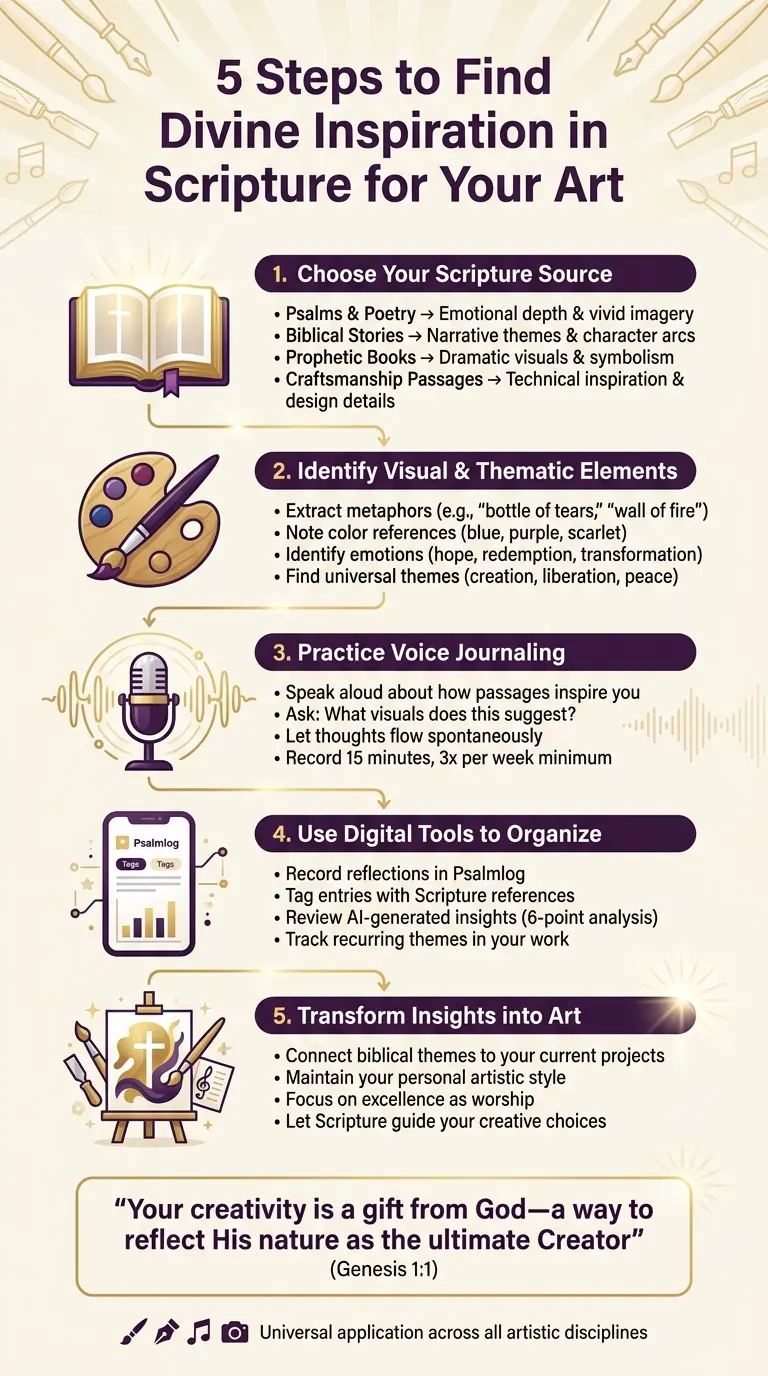
5-Step Process for Finding Divine Inspiration in Scripture for Creative Work
The Biblical Connection Between Faith and Creativity
God as the Original Creator
The Bible begins with a profound statement: "In the beginning, God created the heavens and the earth" (Genesis 1:1). Before we learn anything else about God, we see Him as the ultimate Creator. He didn’t work with preexisting materials but brought beauty and order out of chaos, transforming what was "formless and empty" (Genesis 1:2) into something extraordinary.
When you face a blank page, an empty canvas, or a silent room, you step into this divine act of creation. God’s first creative act – bringing light into darkness – set the stage for all forms of artistry. This interplay of light and shadow forms the basis of visual arts and beyond. As Mark Hillis, a pastor and artist, explains: "When you pick up a brush, a pen, an instrument, or any creative tool, you’re not indulging in vanity… You’re reflecting the image of the One who made you."
The Bible underscores a connection between artistic skill and spiritual calling. Interestingly, the first person described as being "filled with the Spirit of God" wasn’t a prophet or priest, but Bezalel, a craftsman tasked with designing the Tabernacle (Exodus 31:1–5). God gave him the wisdom, skill, and creativity to work with materials like gold, silver, and wood. This shows that divine inspiration isn’t limited to preaching or teaching – it can also reside in creative work, whether in a sanctuary or a workshop.
This divine model for creation reminds us that creativity isn’t just about technique. It’s also a spiritual practice that can bring you closer to God.
How Creativity Deepens Your Faith
Engaging in creative work doesn’t just fill an empty space; it connects you to God on a deeper level. The Bible teaches that humans are made in God’s image (imago Dei), and since His first act in Genesis was creation, your creativity reflects His nature. The Hebrew word for "image" (tselem) suggests that your creative efforts can reveal aspects of God’s character to the world.
Creativity also serves as a channel for honest spiritual expression. David’s Psalms are a perfect example – they capture raw human emotions, from joy to despair, and invite you to bring your own authentic worship into your art. By developing your craft and striving for excellence, you engage in an act of worship that honors God and reflects His creative spirit.
Does the Bible talk about Art? #artandculture #theology #christianartist
How to Choose Scripture Passages for Artistic Inspiration
Scripture is a treasure trove of genres and themes, each offering a unique doorway to artistic inspiration. Whether you’re drawn to heartfelt emotion, vivid imagery, or profound storytelling, there’s a passage to match your creative vision. For instance, the Psalms channel raw emotion, prophetic books brim with dramatic visuals, and resurrection narratives explore themes like sacrifice and redemption.
Take artist Mark Lawrence’s VerseVisions™ archive as an example. With over 600 abstract paintings inspired by Bible verses, he demonstrates how scripture can guide creativity. Lawrence selects verses that address universal struggles – like loneliness, fear, or a sense of aimlessness – and pairs them with biblical truths of hope and renewal. For example, Psalm 36:7 ("Shadow of Your Wings") inspires themes of refuge, while Proverbs 3:5-6 ("Trust In The Lord") sparks ideas around guidance and purpose. These intentional choices open the door to deeper artistic exploration.
Using Psalms and Poetry for Emotional and Visual Ideas
The Psalms are a goldmine for emotional depth and sensory imagery, making them perfect for creative inspiration. Take Psalm 56:8, which speaks of a "bottle of tears" – a striking image that could inspire sculpture, painting, or mixed-media work. Similarly, Psalm 50:2 describes God’s beauty shining forth from Zion, which could influence how you play with light in a composition. The Song of Solomon, with its lush metaphors about nature and relationships, offers endless ideas for exploring color, texture, and form.
Verses with vivid metaphors are especially powerful. Think of the "wall of fire" in Zechariah 2:5, the "streams of glory" in Isaiah 66:12, or the "hearts of refinement" in Zechariah 13:9. These phrases can shape how you use elements like light, shadow, and texture in your work.
Using Biblical Stories for Narrative and Themes
While poetic passages stir emotion and spark visuals, biblical stories provide a framework for storytelling in art. These narratives, complete with characters and arcs, inspire across mediums like painting, theater, film, music, and literature. For instance, Genesis’ creation story explores the theme of bringing order from chaos, while the Exodus narrative delves into liberation and the pursuit of freedom. These timeless themes resonate universally, making them a rich source for artistic interpretation.
Prophetic texts add another layer of inspiration. Jacob’s vision in Genesis 28:12, with its ladder reaching heaven, serves as a metaphor for transformation and enlightenment. Designers can also look to the detailed craftsmanship in passages like Exodus 25–27 and 1 Kings 7:13–14 for insights into artistic techniques, while Revelation’s symbolic visions encourage abstract and experimental approaches. By connecting voice journaling with Scripture and merging these elements with your personal creative voice, you can produce art that reflects a deeper, spiritual connection.
Using Voice Journaling to Reflect on Scripture
Once you’ve chosen Scripture passages that resonate with your creative vision, voice journaling can help you process these insights in a more personal and dynamic way. This method goes beyond simply reading the text – it bridges the gap between Scripture and your artistic expression. Unlike traditional journaling, where thoughts are confined to the page, speaking aloud allows for spontaneous reflection and emotional depth, which are often crucial for artists working at the crossroads of faith and creativity.
Why Voice Journaling Works for Creative Minds
Verbalizing your thoughts taps into the way many creatives naturally process ideas. For instance, reflecting aloud on the imagery of "honey" and "treasure" in Psalm 19 might inspire ideas for color schemes, textures, or themes in your work. This auditory process can help quiet mental clutter, allowing you to focus on creative exploration without getting bogged down by overthinking or self-doubt.
Bev Jessup, Founder of Christian Art Journaling, shares, "I love how creativity brings us together to hear God and share our stories".
For those dealing with burnout or creative blocks, voice journaling can be a game-changer. By speaking freely and letting emotions flow, you create space to release perfectionism and pain, opening yourself to the Holy Spirit’s guidance in your artistic journey.
As Christa Sterken notes, "This art form has really brought me back to focusing on God’s word. For the easily distracted, this is a tool. A process to train me to meditate on the message".
The emphasis here isn’t on perfection, but on being fully present. This practice transforms reflection into a meaningful ritual that nurtures both your spiritual life and your creative vision, laying the groundwork for practical application through tools like Psalmlog.
Using Psalmlog for Voice Journaling

To make the most of voice journaling, digital tools like Psalmlog can simplify and enhance the process. Start by selecting a Scripture passage that aligns with your current creative project or spiritual season. Then, set an intention or use voice journaling prompts before recording – this helps focus your reflections.
When you’re ready, open the app and speak naturally about how the passage inspires you. Let your thoughts flow freely. Consider questions like: What visual ideas does this verse suggest? How does its message align with your creative goals? What emotions does it evoke? Psalmlog’s Faith Builder plan ($19.99/month) records up to 300 minutes monthly, giving you ample time to explore without feeling rushed.
After recording, the app’s AI offers six-point insights tailored to your reflections. You can tag entries with Scripture references, making it easy to revisit your thoughts later. For example, while reviewing her transcripts, Shelley noticed recurring themes in her reflections:
"God’s give me things visually and we need to value ourselves and see ourselves in the way God sees us".
This review process helps turn scattered ideas into clear artistic direction, allowing you to stay true to your personal style while grounding your work in Scripture.
Turning Biblical Themes into Artistic Work
Connecting Biblical Themes to Your Creative Projects
Building on techniques like voice journaling and reflective passage selection, this section explores how to weave biblical themes into your art. The goal is to transform spiritual insights from Scripture into tangible visual and emotional elements. Start by choosing passages that resonate with your current creative focus and identifying the qualities they embody. For example, if your work revolves around hope and redemption, consider how Scripture uses the interplay of light and darkness as a powerful visual metaphor.
When God instructed the creation of the Tabernacle, He specified the use of blue, purple, and scarlet yarn – colors rich with sacred and royal meaning. Similarly, Proverbs 3:15 compares wisdom to precious jewels, evoking imagery of brilliance and rarity. The Song of Solomon’s nature-inspired metaphors, such as vineyards and flowers, can inspire color palettes and compositional flow.
"Every clasp, curtain, and board becomes liturgy in wood, metal, and textile" – Bible Hub.
A textile artist might draw from the embroidery techniques described in Exodus 35:35, while a digital artist could look to Revelation’s vivid depictions of the heavenly throne room for inspiration. The key is to focus on elements that resonate with your creative instincts rather than forcing a connection. For instance, Isaiah 11:6’s imagery of the wolf and lamb dwelling together offers a striking vision of peace and restoration that can shape your composition. These ideas help bridge the gap between spiritual reflection and practical artistic choices.
Maintaining Your Personal Style While Honoring Scripture
As you incorporate Scripture into your work, it’s important to stay true to your personal artistic style. Biblical creativity doesn’t require altering your style to fit a religious mold – it’s about working with integrity, care, and an understanding that your creativity is a gift. David’s Psalms, for instance, are raw and honest, capturing the full spectrum of human emotion while remaining deeply artistic.
"The biblical worldview presents artistic ability as a spiritual gift analogous to prophecy or leadership" – Bible Hub.
Your unique style and technique are not barriers to spiritual expression; they are the means through which divine inspiration flows. In Exodus 31:3, God filled Bezalel with His Spirit, enabling him to excel in engraving, design, and craftsmanship. Use your chosen medium to channel Spirit-led creativity. The focus isn’t on making your work appear traditionally religious but on whether it reflects truth and the character of the Creator who gifted you with your abilities. Strive for excellence – not to impress others, but because quality reflects the design of the One who inspires your creativity.
Building a Regular Scripture-Based Creative Routine
Carrying forward the benefits of voice journaling, establishing a consistent reflection routine can transform moments of inspiration into ongoing creative insights.
Setting Up a Daily or Weekly Reflection Schedule
Consistency is key to turning inspiration into a habit. Set aside 15 minutes each morning or plan a longer session on Sundays for Scripture-based reflection. Find a rhythm that complements your creative style. Some people prefer early mornings when their minds are clear and open, while others find evening sessions more rewarding after a day of creative activity.
If you’re just starting, keep it simple – try 10 minutes three times a week. Focus on a single passage or theme during each session, and let your thoughts naturally influence your creative work. This practice also aids scripture memory by engaging your senses. For example, you might spend Monday reflecting on a Psalm, Wednesday diving into a biblical story, and Friday reviewing how these reflections shaped your artistic decisions. Keep track of what resonates most – note which passages spark the most energy and which times of day feel most productive for connecting spiritually and creatively. This routine lays a solid foundation for incorporating digital tools to document and refine your insights.
Using Digital Tools to Support Your Practice
Once you’ve established a reflection routine, digital tools can help you stay organized and focused. These tools make it easier to capture your thoughts, track your spiritual growth, and connect it to your creative output. For instance, Psalmlog’s voice journaling feature allows you to record your reflections on Scripture without breaking your creative flow – perfect for those moments when inspiration strikes mid-project. The app’s Scripture tagging system lets you organize passages by artistic elements, such as tagging Psalms for visual inspiration or marking stories from Exodus for narrative ideas.
Use the app’s dashboard to spot recurring themes that energize your work. You might notice that certain biblical themes consistently align with your creative challenges or fuel your imagination. Since artistic skill is recognized as a spiritual gift in Exodus 31:1-11, these tools can help you honor that gift by keeping a structured record of your spiritual insights and creative progress.
Conclusion
This guide has explored how biblical wisdom and modern voice journaling can come together to inspire and deepen your creative journey.
Scripture serves as a profound wellspring of inspiration for creatives, connecting your artistic talents to their divine source. Rooting your work in biblical teachings transforms your art into more than just an act of creation – it becomes an act of worship, reflecting the nature of God as the ultimate Creator. As Colin Ma beautifully puts it:
"Creativity then is an act of worship. And this is so important – the process of creating is itself valuable, apart from that which we create".
The methods outlined – like choosing meaningful passages and incorporating voice journaling for scripture insights – offer practical ways to weave Scripture into your creative process. These tools help channel your creative energy while staying anchored in spiritual truths.
Why not start today? Use Psalmlog’s voice journaling feature to capture those moments when Scripture ignites your imagination. With its tagging system, you can easily organize your spiritual reflections alongside your creative projects, ensuring nothing gets lost in the process.
And keep the words of Isaiah 64:8 close to heart:
"Yet you, Lord, are our Father. We are the clay, you are the potter; we are all the work of your hand".
Your creativity is a gift from God, a way to draw closer to Him and reflect His beauty. Let Scripture guide every stroke of the brush, every word you write, and every choice you make in your craft. By doing so, your art becomes not just an expression of your talent, but a testament to divine artistry.
FAQs
How do I pick a Bible passage for my next project?
When selecting a Bible passage for your project, begin with a verse that connects with your current spiritual journey or creative vision. This approach can provide direction and infuse your work with greater significance. If you’re uncertain where to start, take some time to explore Scripture for verses that speak to you personally or align with the themes you want to convey through your creative efforts.
What should I say in a voice-journaling session?
In a voice-journaling session, take a moment to share your thoughts, prayers, and reflections inspired by Scripture. For instance, if you’re feeling overwhelmed, you might turn to Philippians 4:6 to express your worries and hopes: “Do not be anxious about anything, but in every situation, by prayer and petition, with thanksgiving, present your requests to God.” Use this as a guide to lay your concerns before Him while focusing on gratitude.
Or, if you’re reflecting on growth and blessings, consider celebrating God’s work in your life with passages like Galatians 5:22-23: “But the fruit of the Spirit is love, joy, peace, forbearance, kindness, goodness, faithfulness, gentleness and self-control.” Reflect on how these qualities show up in your daily life and relationships.
Another option could be meditating on Philippians 1:6: “…He who began a good work in you will carry it on to completion until the day of Christ Jesus.” This verse is a powerful reminder to trust in God’s ongoing work in your life, even when the journey feels uncertain.
These prompts not only inspire creativity but also deepen your faith by weaving biblical wisdom into your personal reflections. Let your voice journal become a space where Scripture shapes your prayers and thoughts.
How can Psalmlog help me turn Scripture into art ideas?
Psalmlog offers a unique way to turn Scripture into artistic inspiration by blending biblical teachings with your creative journey. With features like voice journaling, it promotes thoughtful reflection on specific Bible passages, helping you draw out ideas that can shape your artistic vision. By weaving Scripture into your creative process, Psalmlog helps you craft art that carries a deeper spiritual significance, rooted in faith and purpose.