
Checklist for AI-Powered Bible Study Tools
Explore how AI tools can enhance Bible study with personalized insights, emotional analysis, and features like voice journaling and multi-language support.
AI tools are transforming Bible study by making it faster, more personalized, and accessible. These tools can analyze your study patterns, highlight connections, and even suggest passages based on your reflections. Whether you’re exploring Scripture in multiple languages, tagging themes, or journaling hands-free, AI Bible study apps like Psalmlog simplify and enrich the experience. However, choosing the right tool requires evaluating features, privacy, and usability. Here’s what to look for:
- Multi-Language Support: Access translations and original texts (Hebrew/Greek) for deeper understanding.
- AI-Driven Features: Phrase matching, thematic tagging, and 6-point biblical guidance to uncover Scripture connections.
- Voice Input: Record reflections and connect them to Bible verses effortlessly.
- Privacy and Security: Ensure your notes and data are stored securely and AI providers can’t train on them.
- Growth Tracking: Visual dashboards to monitor study habits and spiritual progress.
- Usability: Simple interfaces and cross-device syncing for easy access.
For example, Psalmlog offers 6-point AI biblical guidance, voice journaling, and personalized insights, with plans starting at $0 (free, 3 entries) and scaling up to $34.99/month for advanced features. All paid plans include a 7-day free trial. Start free to explore what works best for your study routine.
7 Unknown Benefits of Using AI for Bible Study
Core Features to Look for in AI Bible Study Tools
When choosing an AI-powered Bible study platform, it’s important to focus on features that genuinely enrich your spiritual journey. The right tools should simplify your study and provide deeper insights, not overwhelm you with unnecessary distractions.
Multi-Language Support
Having access to multiple translations is a cornerstone of meaningful Bible study. The best AI tools allow seamless exploration across various Bible versions and contemporary translations, offering a richer understanding of Scripture.
This feature also enables original language exploration. When a passage feels unclear in English, AI tools with integrated Hebrew and Greek resources can shed light on the original text. This deeper dive reveals why certain English words were chosen and what nuances might be lost or altered in translation.
For believers from diverse backgrounds, multi-language support ensures that context is preserved. AI can highlight when cultural or historical details are significant, providing notes that connect ancient Middle Eastern customs to modern interpretations.
AI-Driven Phrase Matching and 6-Point Guidance
AI phrase matching uncovers thematic connections within Scripture, making it easier to see how different passages relate. Instead of manually cross-referencing, these tools quickly identify parallels, such as similar events described across the Gospels, even when details or emphases differ.
Beyond exact word matches, conceptual matching broadens your understanding. For example, when studying forgiveness, AI might surface passages about mercy, grace, and redemption, offering a more comprehensive view of the theme.
The most useful tools go further, structuring each insight into a multi-point framework. Psalmlog’s 6-point AI biblical guidance is a good example: every entry receives Scripture-anchored interpretation, prayer prompts, and a practical “Walking it out” application step – turning study into action.
Scripture Tagging and Annotation
AI-powered tagging transforms your Bible reading into an organized, searchable resource. Tools can automatically suggest tags based on content, while also allowing you to create custom categories that align with your personal study focus.
This feature is especially helpful during seasonal studies or when preparing for specific life events. Tags like "guidance", "comfort", or "hope" let you quickly revisit verses that resonated with you in the past, creating a personalized library of meaningful passages.
Annotations enhance this experience by letting you jot down thoughts, questions, or insights as they arise. Combined with tagging, these tools make it easy to revisit and reflect on your spiritual growth over time.
Voice Input and Journaling
Voice input allows for hands-free reflection, capturing your thoughts during moments when writing isn’t practical – like during a walk or commute. This feature helps preserve spontaneous insights that might otherwise be forgotten.
For instance, Psalmlog offers voice journaling tailored for Christians on its Faith Builder plan ($19.99/month or $14.99/month billed annually), with 300 minutes of voice recording per month and a 7-day free trial. Shepherd users get unlimited voice. See full pricing.
Data Privacy and Security
Your Bible study notes and prayer reflections are deeply personal, so strong security measures are non-negotiable. Look for platforms that store data securely on managed infrastructure and contractually prohibit any third-party AI providers from training on your content.
Additionally, check for clear data ownership policies that guarantee your spiritual content belongs to you, not the platform. Psalmlog, for example, prioritizes privacy by storing entries securely while still delivering AI-driven insights, and the AI services it uses are prohibited from training on your data.
Advanced AI Features for Better Bible Study
Once you’ve got the basic tools in place, advanced features can elevate your Bible study experience by offering deeper analysis and personalized insights. These tools go beyond the essentials, helping you uncover richer meanings and track your spiritual growth in a more meaningful way. Let’s explore how these advanced AI capabilities can transform your study sessions.
Contextual and Theological Accuracy
Advanced AI tools take Bible study to the next level by ensuring you grasp not just the words, but the deeper theological context behind them. Unlike basic keyword searches, these systems analyze the meaning within Scripture. For instance, when studying the word love, AI can differentiate between divine love, such as agape, and human affection, providing a more nuanced understanding.
These tools also connect passages in a way that reflects theological and historical depth. If you’re exploring Jesus’s parables about seeds, the AI might guide you to Old Testament passages on sowing and reaping, while providing insights into ancient agricultural practices that deepen your understanding.
Another key feature to look for is source transparency. High-quality platforms should clearly indicate whether their interpretations come from trusted commentaries, lexicons, or theological traditions. This ensures your study is grounded in reliable scholarship rather than algorithmic assumptions.
Contextual Memory and Reflection Analysis
The most advanced AI tools don’t just analyze a single entry – they remember the arc of your spiritual journey. Psalmlog’s contextual AI ties this together: Faith Builder gives 30-day memory across your reflections, and Shepherd extends that to 3-6 months of context. The AI surfaces patterns – recurring themes in your prayers, gratitude, or struggles – and connects them back to Scripture, so guidance gets more personal the longer you use it.
Over time, these tools can reveal trends in your reflections. You might notice increased peace during certain periods or recurring struggles that need more focused prayer and study. When paired with Scripture tagging, these insights create a fuller picture of how biblical themes resonate with your spiritual state. Visual tools then map these patterns, offering a clear view of your growth.
Visual Growth Tracking
Advanced platforms also use visual tools to make your spiritual progress more tangible. Dashboards can track metrics like how consistently you study, which books of the Bible you’ve explored, and the depth of your reflections. These visualizations can be tailored to your spiritual goals, giving you a clear picture of your journey.
Take Psalmlog’s insights dashboard as an example. Faith Builder includes a basic insights dashboard, while the Shepherd plan unlocks the full AI-powered insights dashboard plus a weekly spiritual pulse summary – organizing your data into charts and patterns that show how your reflections and study habits evolve over time. This structured feedback helps you see your growth at a glance.
Some tools even integrate with calendars, mapping your study activity across weeks or months. Faith Builder includes calendar sync, revealing patterns like times of the year when you’re more reflective or how life events influence your spiritual practices. These visual cues can inspire more intentional and consistent Bible study habits.
Practical Considerations for Usability and Access
While advanced AI features can enhance Bible study, practical usability is what ensures these tools are genuinely helpful. To make the most of AI-driven insights, think about how design, device compatibility, and support for different learning styles can improve your overall experience. A great Bible study tool should be simple to use and accessible on any device.
User Interface Simplicity
The best tools prioritize easy navigation, offering intuitive designs with minimal instructions. Features like tooltips and quick explanations guide you without overwhelming you. By focusing only on what’s relevant to your current task, these tools create a distraction-free environment, helping you concentrate on Scripture rather than figuring out how to use the software.
If you prefer using voice input, pay attention to how the platform handles it. For instance, Psalmlog integrates voice journaling into its core design (Faith Builder and higher), allowing users to record spoken reflections with a single button. These recordings are then linked to related Scripture passages, making the experience seamless and personal.
Cross-Device Compatibility
Bible study often takes place across multiple devices – smartphones, tablets, desktops, or web browsers. A reliable AI-powered tool should sync effortlessly across all of them. This ensures your progress and insights are always up to date, no matter where or how you access the tool. For example, if you jot down a reflection on your phone during a break, it should sync instantly so you can pick up where you left off on your tablet later. Tools with strong syncing capabilities ensure your annotations and insights are always accessible across your preferred devices. Psalmlog runs on web and a native mobile app (iOS + Android), with all plans except Free including mobile access.
Support for Different Learning Styles
Since everyone processes information differently, the most effective Bible study tools cater to a variety of learning styles, offering multiple ways to interact with Scripture and record insights.
- Voice-based learners benefit from tools that allow spoken reflections and audio playback. Speaking out loud can help clarify thoughts. Psalmlog’s voice journaling feature, for example, lets users record reflections naturally and then provides AI-driven 6-point biblical guidance based on their spoken words.
- Visual learners appreciate tools that include charts, graphs, and dashboards, which make it easier to see patterns and track spiritual growth at a glance.
- Text-based learners prefer features like detailed writing and annotation options, along with powerful search tools. These make it easy to organize notes and build an extensive study resource over time.
The most versatile tools adapt to your needs, letting you switch between modes depending on your setting or mood. You might use voice input during a morning walk and switch to text annotations in a quiet study session.
Psalmlog: An AI-Powered Bible Study Tool
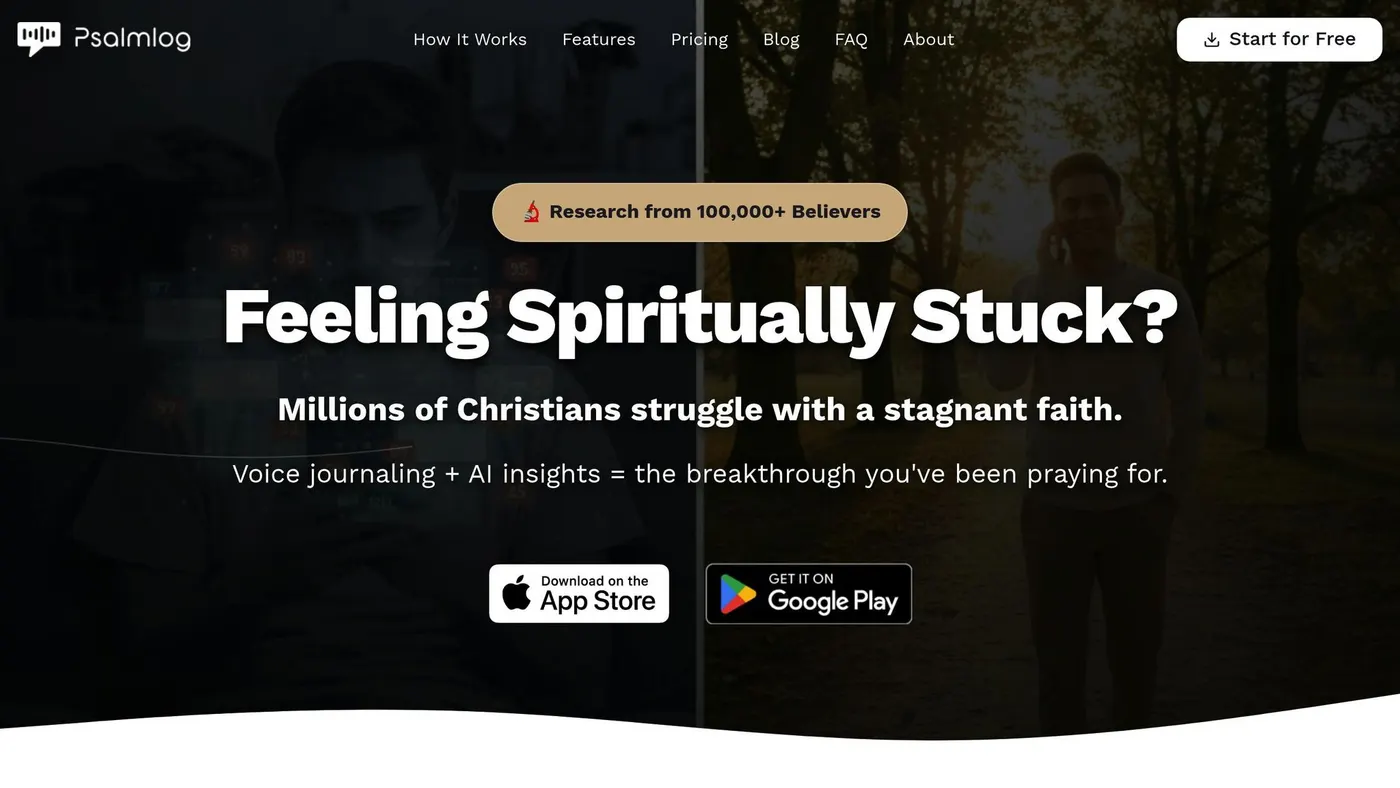
Psalmlog is an AI Bible study and journaling platform that blends written and spoken reflections with Scripture-anchored AI guidance. Built for Christians looking to connect their personal thoughts with Scripture, it turns every entry into a 6-point biblical reflection – making it easier to integrate meaningful spiritual reflection into busy routines, whether during a commute, a walk, or a quiet moment. It’s a modern tool that brings faith and technology together in a seamless way.
Key Features and Benefits
6-Point AI Biblical Guidance
Every entry – written or spoken – receives Scripture-anchored interpretation, prayer prompts, and a “Walking it out” practical application step. This is the core of Psalmlog and what sets it apart from generic journaling apps.
Voice Journaling Made Simple
With just a tap, Faith Builder users (and higher) can record their reflections, prayers, or thoughts. These recordings are automatically transcribed, making them both searchable and linkable to relevant Bible passages. This feature is perfect for those who find it easier to express themselves verbally rather than through writing.
Scripture Integration
Psalmlog automatically connects reflections to related Scripture verses across multi-lingual Bible translations. This eliminates the need for manual searches, encouraging a more natural and spontaneous reflection process.
Contextual AI Memory
Faith Builder gives the AI 30 days of context across your entries; Shepherd extends that to 3-6 months. The longer you journal, the more personal and pattern-aware the guidance becomes.
Insights Dashboard and Weekly Spiritual Pulse
Faith Builder includes a basic insights dashboard; Shepherd adds the full dashboard and a weekly spiritual pulse summary to help you spot trends and recurring themes.
Psalmcast (AI Audio Devotionals)
Generate audio devotionals based on your guidance content – 5 credits/month on Faith Builder, 50 on Shepherd. Great for listening on commutes.
Privacy and Security
Journal entries are stored securely on managed infrastructure, and the AI services Psalmlog uses are contractually prohibited from training on your data. Users maintain full control over their content.
Psalmstory Sharing
Create shareable summaries of spiritual insights to share with others. Importantly, these summaries maintain privacy by excluding sensitive details, bridging the gap between personal reflection and community sharing.
Pricing and Plans
Psalmlog offers four pricing tiers. See the full pricing page for the complete feature breakdown.
| Plan | Monthly | Annual (effective/mo) | Voice Minutes | Key Features |
|---|---|---|---|---|
| Free | $0 | – | None | 3 lifetime journal entries, basic AI biblical guidance, web only, text input |
| Seeker | $9.99 | $99.99 ($8.33/mo, save 17%) | None (text only) | 30 sessions/month, full 6-point AI biblical guidance, mobile app, basic templates, Psalmstory sharing, CSV backup. 7-day free trial |
| Faith Builder | $19.99 | $179.99 ($14.99/mo, save 25%) | 300 min/mo | Unlimited sessions, 30-day contextual AI memory, voice journaling, Psalmcast 5 credits/mo, basic insights dashboard, 20+ premium templates, calendar sync, single-entry PDF. 7-day free trial |
| Shepherd | $34.99 | $299.99 ($24.99/mo, save 29%) | Unlimited | 3-6 month AI context, unlimited voice, full Psalmcast (50 credits/mo), full insights dashboard, weekly spiritual pulse, premium + custom templates, devotional book PDF. 7-day free trial |
All paid plans include a 7-day free trial, the mobile app (iOS + Android), multi-lingual Bible translations, and export. Subscribers can switch plans or cancel anytime, with changes taking effect in the next billing cycle.
The Free plan is a no-risk way to try the format with 3 lifetime entries. At $9.99/month, the Seeker plan unlocks the full 6-point AI biblical guidance and mobile app – ideal if you mainly journal in text. Faith Builder ($19.99/month) is where voice journaling, contextual AI memory, and Psalmcast unlock, making it the most popular tier for active users. Shepherd ($34.99/month) is the deepest tier with extended AI context, the full insights dashboard, and devotional book PDF export.
Conclusion: Checklist for Selecting the Right Tool
Selecting the right tool for your Bible study means focusing on features that align with your spiritual needs. Look for multi-language support, precise phrase matching, structured AI guidance (like Psalmlog’s 6-point framework), and efficient scripture tagging – these essentials lay the groundwork for a meaningful and personalized study experience.
Security is just as important. Make sure the platform stores your data securely and prohibits AI providers from training on it. If you’re often on the go, robust voice input can make engaging with Scripture more convenient and natural, even on busy days.
Advanced AI features can take your study to the next level, offering tools like contextual memory across entries and visual growth tracking. These features can help you uncover patterns and measure your spiritual progress. Just ensure the AI-generated insights are contextually accurate to support thoughtful theological reflection.
Ease of use is another factor you shouldn’t overlook. A tool with an intuitive interface and cross-device compatibility can make your study routine smoother and more enjoyable.
Budget is also a key consideration. Start small – try Psalmlog’s free plan (3 entries, no credit card) to explore the basics. If you’re ready for more, the Seeker plan unlocks the full 6-point AI biblical guidance at $9.99/month with a 7-day free trial, and Faith Builder adds voice journaling at $19.99/month.
The right AI-powered Bible study tool should seamlessly integrate into your spiritual routine, helping you deepen your connection with Scripture without unnecessary complexity. Take advantage of free trials or basic plans to explore and find the platform that best supports your unique faith journey.
FAQs
How can AI-powered phrase matching help me uncover deeper connections in the Bible?
AI-powered phrase matching opens up new ways to explore the Bible by identifying and linking related words, phrases, and concepts across various passages. This approach helps reveal patterns and themes that might not stand out at first glance, offering new perspectives on biblical stories and theological ideas.
These tools simplify the process of finding connections, making it easier to engage with scripture on a deeper level. By doing so, they support a richer understanding and encourage personal spiritual growth.
How do AI-powered Bible study tools protect my personal reflections and data?
AI-driven Bible study tools place a strong emphasis on privacy and security, ensuring that your personal reflections and data remain safe. Look for platforms that store data on secure managed infrastructure and that contractually prohibit any AI providers from training on your content – Psalmlog, for example, takes both steps.
Many platforms also let you decide what, if anything, you want to share, offering a private and secure space for journaling and spiritual exploration. These features aim to create a dependable and safe environment for your faith journey.
How does visual growth tracking in AI Bible study tools support my spiritual development?
Visual growth tracking in AI-powered Bible study tools offers a practical way to see and measure your spiritual progress. By examining how you engage with scripture, reflect on it, and develop patterns over time, these tools highlight areas where you can grow and celebrate important milestones along the way.
This feature helps keep you inspired and on track by providing a clear, visual snapshot of your journey. It encourages regular interaction with scripture and fosters a deeper, more meaningful connection to your faith. It’s a helpful companion for anyone looking to stay mindful and intentional about their spiritual growth.