
Historical Context in Bible Study with AI
Explore how AI is transforming Bible study by providing instant access to historical insights, linguistic analysis, and personalized tools for deeper understanding.
AI is transforming Bible study by providing instant access to historical and cultural insights that were once time-intensive to gather. These tools analyze vast datasets, link scripture to historical records, and help uncover linguistic patterns, offering a deeper understanding of biblical texts. For example, platforms like FaithGPT and Psalmlog’s AI Bible study app simplify complex research, making it easier for anyone to explore scripture’s original context.
Key Takeaways:
- AI speeds up research: Tasks that took weeks now take seconds.
- Historical insights: AI connects biblical events to archaeological and historical data.
- Linguistic analysis: Tools identify authorship and textual evolution.
- Accessible tools: Apps like Psalmlog personalize study through 6-point AI biblical guidance, voice journaling, and scripture tagging.
- Challenges: Ethical concerns, data accuracy, and over-reliance on AI.
AI complements traditional study methods, but human wisdom and community remain essential for meaningful interpretation.
4 AMAZING AI Tools for Greek and Hebrew Bible Word Studies
How AI Delivers Historical and Cultural Insights
AI has revolutionized the way we explore historical and cultural contexts within biblical texts – work that once took months of painstaking manual research. By analyzing ancient writings, cross-referencing historical records, and spotting patterns, AI tools reveal how biblical passages were understood in their original settings. Let’s dive into the specific techniques that make this possible.
Natural Language Processing (NLP) and Biblical Texts
Natural Language Processing (NLP) is at the heart of AI’s ability to analyze biblical texts in detail. These algorithms examine word frequency, syntax, and semantic relationships, uncovering unique linguistic patterns and even authorship clues. For instance, a study in PLOS ONE used word frequency analysis to differentiate between various scribal traditions within the Hebrew Bible. In a separate project in March 2022, researchers from the University of Copenhagen applied machine learning to trace the linguistic and textual history of the Hebrew Bible, incorporating data from the Dead Sea Scrolls to map out language development and textual evolution.
NLP also sheds light on how translation choices shape interpretation. By highlighting subtle differences in phrasing, these tools help readers grasp nuances that might be lost in modern English translations.
Cross-Referencing Biblical Events with Historical Data
AI doesn’t stop at textual analysis – it also bridges the gap between scripture and external historical records. By integrating data from archaeology, ancient manuscripts, and contemporaneous writings, AI tools can link biblical events to real-world historical contexts. Take FaithGPT, launched in 2024, as an example. This platform offers a feature that cross-references scriptural narratives with external historical data, providing insights into the political, social, and economic landscapes of biblical times.
Imagine reading about a trade route in scripture and discovering connections to archaeological evidence of ancient marketplaces, trade agreements, or economic conditions. These tools reveal how original audiences might have understood specific passages, offering a richer perspective on the text.
Machine Learning for Cultural and Linguistic Analysis
Machine learning takes cultural and linguistic analysis to another level. By training algorithms on vast datasets of biblical and historical texts, researchers can uncover recurring themes, cultural references, and shifts in language. In 2023, a team at Duke University used AI to pinpoint three distinct scribal traditions within the Hebrew Bible, confirming correlations between texts. This approach allowed scholars to trace the development of language and ideas with remarkable accuracy, showing how cultural attitudes evolved over time.
Machine learning also identifies subtle cultural details – like references to social customs or religious ceremonies – clarifying their significance in their original context. Perhaps most excitingly, these tools make advanced biblical scholarship accessible to everyone, not just academics. As new archaeological discoveries and historical research emerge, the algorithms update their analyses, ensuring that the insights remain aligned with the latest findings. This means everyday readers can explore the Bible with a depth of understanding that was once out of reach.
AI Tools for Historical Context in Bible Study
AI tools are opening new doors for Bible study, helping Christians connect their personal reflections with the deeper historical and scriptural context of the Bible. These tools bring together technology and faith in ways that make scripture more accessible and meaningful.
Psalmlog: 6-Point AI Biblical Guidance, Voice Journaling, and Scripture Tagging
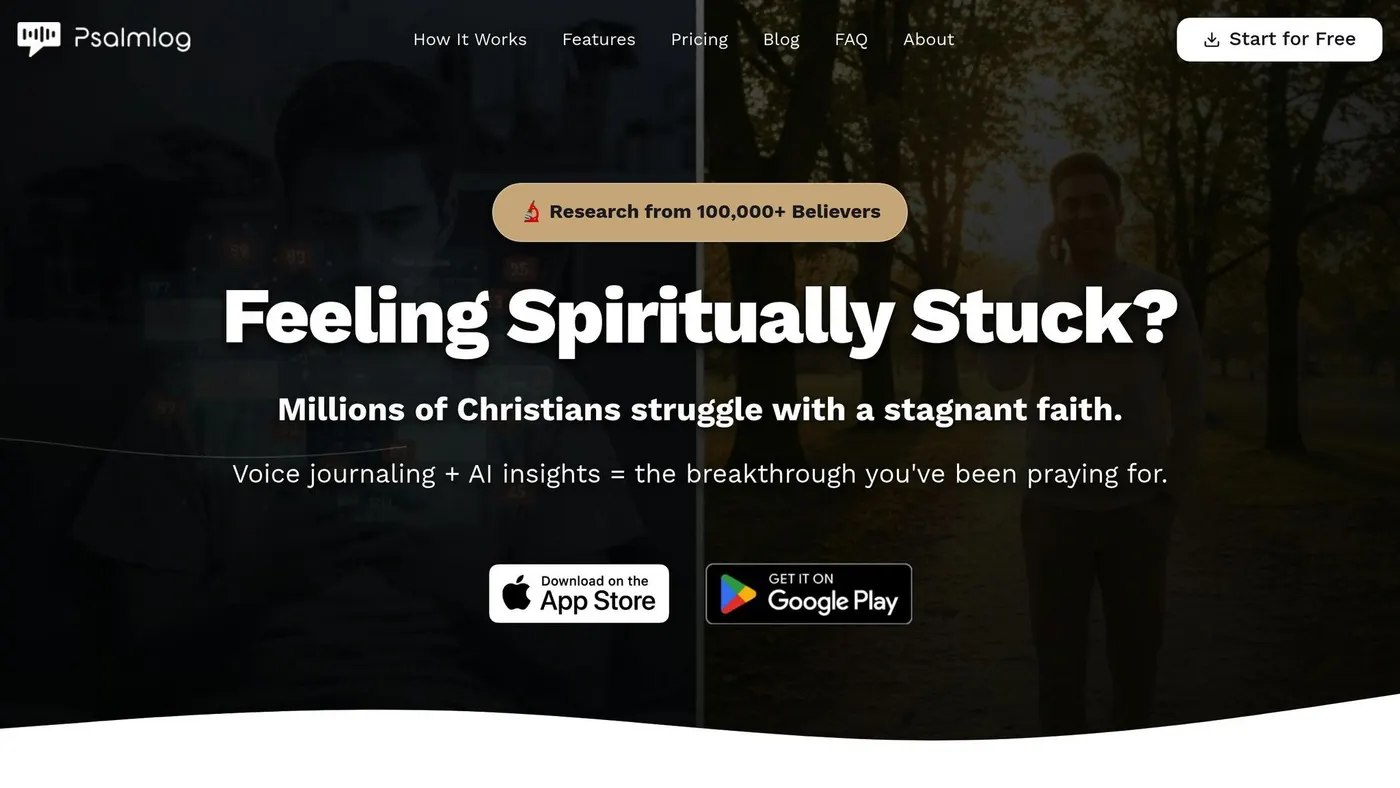
Psalmlog is an AI Bible study and journaling platform that turns each entry – written or spoken – into a Scripture-anchored reflection. The core feature is 6-point AI biblical guidance: every entry receives an interpretation grounded in Scripture, prayer prompts, and a practical “Walking it out” application step. Voice journaling (on Faith Builder and higher) lets you speak your reflections naturally, while scripture tagging connects each entry to relevant passages across multi-lingual Bible translations.
Jennifer K., a busy mom, shared how Psalmlog helped her discover scripture passages she "never would have found on [her] own", inspiring her to study the Bible multiple times a week. Likewise, Marcus T., a business executive, praised the platform for its "deep biblical connections", which have enriched his regular engagement with scripture.
Psalmlog also offers an insights dashboard, weekly spiritual pulse, and Psalmcast (AI-generated audio devotionals from your entries). Plans:
- Free ($0): 3 lifetime journal entries, basic AI biblical guidance, web only.
- Seeker ($9.99/month or $99.99/year – save 17%): 30 sessions/month with full 6-point AI biblical guidance, mobile app, basic templates, Psalmstory sharing, CSV backup. 7-day free trial.
- Faith Builder ($19.99/month or $179.99/year – save 25%): Unlimited sessions, contextual AI with 30-day memory, 300 minutes of voice journaling per month, Psalmcast 5 credits/mo, basic insights dashboard, premium templates, calendar sync.
- Shepherd ($34.99/month or $299.99/year – save 29%): Extended AI context (3-6 months), unlimited voice, full Psalmcast, full insights dashboard, weekly spiritual pulse, devotional book PDF.
See full pricing for details.
While Psalmlog focuses on personal and reflective Bible study rather than deep historical or cultural analysis, its AI-powered insights enhance scripture engagement and can serve as a complement to more traditional historical studies.
For those seeking tools that delve further into the historical context of scripture, other platforms provide complementary features.
Other Tools for Contextual Analysis
Beyond Psalmlog, there are several AI tools that specialize in exploring the historical and cultural dimensions of scripture. For example:
- FaithGPT offers guided Bible studies with tools that provide detailed historical analysis.
- BibleGPT takes an interactive approach, generating insights that reveal the historical background of individual verses.
- ScriptureArk integrates scholarly resources, archaeological findings, and ancient manuscripts to deliver comprehensive textual analysis.
According to research from Pew, 61% of Americans see potential in AI for academic research, including Bible study applications. These platforms often include features like parsing scripture in its original languages, cross-referencing texts, and identifying key themes. By breaking down complex biblical scholarship, they make it accessible to anyone interested in understanding the historical foundations of scripture – no seminary degree required.
Benefits and Drawbacks of AI in Bible Study
AI tools bring both opportunities and challenges to the practice of Bible study. By understanding these, Christians can make thoughtful decisions about integrating technology into their spiritual lives.
Benefits of AI for Historical Insights
AI has revolutionized how we explore biblical history by processing vast amounts of data at incredible speed. This capability allows everyday Christians to dive into complex questions about authorship, historical context, and cultural background – areas that once required years of specialized training. For example, AI can connect biblical events to archaeological discoveries, political records, and ancient social customs, making scripture more accessible to a wider audience .
Through language analysis, AI can uncover subtle textual patterns, identifying unique authorial voices based on word choice and usage. This helps both scholars and lay readers understand how different parts of the Bible were composed and compiled over time.
Perhaps the most transformative aspect of AI is how it democratizes deep biblical study. Tools like Psalmlog allow users to connect personal reflections with scripture through intelligent tagging, helping them discover passages they might not have otherwise encountered. These innovations empower believers to explore biblical context more deeply, enriching their spiritual journey.
However, these advancements are not without challenges.
Drawbacks and Ethical Considerations
AI tools face several limitations, starting with the quality of their data. AI systems rely heavily on the information they are trained on, and gaps or biases in historical records can lead to incomplete or misleading conclusions. When historical evidence is sparse or disputed, AI may fill in the blanks with assumptions rather than verified facts.
Another concern is over-reliance on technology. There’s a real risk that Christians might prioritize automated insights over the interpretive wisdom of pastors, scholars, and faith communities. As Pastor Jane Davis points out:
"The role of pastors and church leaders in interpreting historical evidence remains paramount, even in an age of technological advancements."
Ethical issues also arise, particularly around data privacy. Platforms that collect personal reflections or spiritual journals must handle this information responsibly. Additionally, if AI systems are not carefully monitored, they could perpetuate historical or theological biases.
A more subtle issue is the potential for decontextualization. AI might present historical facts without the wisdom needed to apply them meaningfully to modern faith challenges. This could lead to misunderstandings rather than fostering deeper spiritual insight.
Pros and Cons Comparison Table
Here’s a comparison of AI’s benefits and challenges in Bible study:
| Benefits | Drawbacks |
|---|---|
| Provides rapid access to historical and cultural insights | Risk of bias in AI models and training data |
| Identifies hidden language patterns and authorship clues | Incomplete or disputed historical records can mislead |
| Makes deep Bible study accessible to non-scholars | Over-reliance on AI might weaken traditional study methods |
| Cross-references multiple sources and translations | Raises ethical concerns about data privacy and theological accuracy |
| Offers personalized insights through tools like Psalmlog | Requires human oversight to ensure theological soundness |
| Tracks spiritual growth visually | May lack the nuanced understanding of faith and community wisdom |
Using AI responsibly in Bible study means balancing its capabilities with traditional interpretive methods. These tools work best as supplements to – not replacements for – pastoral guidance, manual study, and discussions within faith communities. Churches can play a key role by teaching congregations how to use AI ethically, ensuring that human wisdom and spiritual discernment remain central .
Best Practices for Using AI in Spiritual Reflection
Successfully integrating AI into Bible study requires a thoughtful and balanced approach. When used correctly, AI can complement traditional study methods without compromising theological principles.
Combining AI with Manual Study Methods
AI works best as a research assistant, not a spiritual authority. Begin with the Scripture itself, then use AI to deepen your understanding by exploring historical context, cross-references, and linguistic nuances. This way, technology becomes a tool to support your study, not dictate it.
While AI has made advanced biblical research more accessible, it’s essential to verify its insights. Cross-check AI-generated information with trusted commentaries, consult with pastors or study groups, and ensure alignment with core Christian beliefs.
A practical approach could look like this: start your study with prayer and an initial reading of the Scripture, use AI tools to uncover historical or linguistic insights, and then deepen your understanding through personal research and discussions with your faith community. This method combines AI’s efficiency with the spiritual depth that comes from manual study.
Churches across the U.S. are increasingly offering programs to teach responsible AI use in Bible study. These initiatives emphasize that while AI can uncover literary and linguistic patterns in Scripture, human wisdom is crucial for proper interpretation. Tools like Psalmlog build on this foundation, offering new ways to enrich personal reflection.
Using Psalmlog for Reflective Study
Psalmlog reimagines the "3 Rs" of spiritual growth – Reflect, Receive, and Respond – through a voice-powered platform designed for busy lifestyles. It helps users engage with Scripture during moments that might otherwise go unused, such as commutes or quiet breaks.
Voice journaling, one of Psalmlog’s standout features (available on Faith Builder and higher), is particularly helpful for those seeking consistent Bible engagement. Research involving over 100,000 believers over eight years highlights the transformative power of engaging with Scripture four or more days per week. This "Power of 4" approach has been shown to reduce spiritual stagnation by 60%, ease difficulty with forgiveness by 31%, and lower feelings of loneliness by 30%.
Psalmlog also offers tools to track spiritual growth. Features like scripture tagging, an insights dashboard, and AI-driven pattern recognition allow users to identify themes in their journey, making it easier to stay on track and gain deeper insights.
Ethical Use of AI in Faith Practices
While AI can enrich Bible study, it’s essential to approach it ethically and thoughtfully. Over-reliance on technology for spiritual guidance should be avoided. Church leaders emphasize the importance of human discernment and community engagement when interpreting Scripture and historical evidence.
Data privacy is another critical concern, especially for platforms handling personal reflections. Psalmlog addresses this by storing entries securely on managed infrastructure and contractually prohibiting the AI providers it uses from training on user data. When selecting any AI-powered tool, it’s vital to review its data handling policies to ensure your information is safeguarded.
AI systems can also mirror biases within their training data. To counter this, approach AI-generated insights critically. Validate findings through multiple sources, engage in discussions with your faith community, and seek pastoral guidance when navigating complex theological topics.
The aim is to use AI to make deep biblical research accessible without compromising doctrinal integrity. Treat AI insights as starting points for exploration, not definitive answers. Combine the benefits of technology with prayer, reflection, and communal wisdom to ensure that AI enhances your spiritual journey without overshadowing the transformative power of Scripture.
Set clear boundaries for AI-assisted study. Dedicate time to manual study and prayer, connect regularly with your faith community, and remember that the most profound insights often come through quiet moments of reflection and divine guidance – not algorithms.
Conclusion: AI as a Tool for Deeper Bible Study
AI is reshaping Bible study by offering instant access to historical and cultural insights. Through advanced analytics, it connects scripture with historical contexts, deciphers ancient languages, and identifies linguistic patterns that shed light on authorship and textual development.
One of the most transformative aspects of AI in this realm is how it makes in-depth biblical study more accessible. This shift allows laypeople – who once depended solely on commentaries or pastoral guidance – to engage with Scripture in ways previously reserved for scholars. The growing use of AI in academic and biblical research highlights its potential to democratize scriptural analysis.
AI also brings a personal dimension to Bible study. Tools like Psalmlog combine 6-point AI biblical guidance with voice journaling and scripture tagging, enabling believers to track their spiritual growth and relate personal experiences to biblical teachings. This tailored approach introduces a new layer of reflection and connection, enhancing the way individuals engage with Scripture.
Additionally, AI facilitates exploration of archaeological discoveries, cultural contexts, and historical details. For example, projects that analyze writing styles in early biblical texts have not only confirmed existing theories but also opened new paths for understanding.
However, as exciting as these advancements are, they serve as a reminder that technology should complement – not replace – traditional spiritual practices. Community engagement, pastoral guidance, and personal reflection remain irreplaceable. While AI provides detailed insights and data, it is human wisdom that interprets this information within the framework of faith.
The future of AI-enhanced Bible study lies in harmonizing quick access to historical insights with the spiritual depth found in prayer, community, and tradition. When used responsibly, AI becomes a valuable tool that deepens our understanding of Scripture and supports spiritual growth, blending innovation with the enduring wisdom of faith. Start free with Psalmlog to see how AI biblical guidance can complement your study practice.
FAQs
How can AI enhance our understanding of the historical and cultural context of the Bible?
AI tools are reshaping the way people approach Bible study by shedding light on the historical and cultural settings behind biblical texts. By processing extensive historical data, ancient languages, and cultural details, these tools help bring clarity to the meaning and importance of scripture.
For instance, AI can detect patterns, link scripture to historical events, and interpret subtle linguistic details that might go unnoticed with traditional study methods. This added layer of context allows readers to engage more deeply with the text, enhancing their understanding of scripture in its original setting.
What ethical concerns and challenges should we consider when using AI for Bible study?
Integrating AI into Bible study brings up some important ethical questions. One major concern is the risk of AI tools misinterpreting or oversimplifying scripture. These tools operate based on algorithms, which often lack the depth needed to fully grasp the theological and cultural nuances of biblical texts. That’s why it’s essential to treat AI-generated insights as supplementary resources rather than absolute truths. They should complement, not replace, sound doctrine and personal study.
Another issue to keep in mind is data privacy. If you’re using platforms that analyze personal reflections or spiritual habits, make sure they prioritize secure and private data handling. Take the time to review a platform’s privacy policies to ensure your sensitive information is well-protected.
Finally, think about how relying on AI might shape your spiritual journey. While these tools can be helpful, they should never replace a personal, prayerful connection to scripture. Use AI as a support, but keep your focus on deepening your own relationship with the Word.
How does AI, like Psalmlog, support deeper Bible study and spiritual growth?
AI tools such as Psalmlog bring a fresh dimension to Bible study by blending 6-point AI biblical guidance with voice journaling and scripture tagging. As you record or write your reflections, the tool identifies personalized connections to Scripture, highlights themes across multi-lingual Bible translations, and monitors your spiritual growth over time – including a practical “Walking it out” step that turns insight into action. This method not only promotes regular engagement but also deepens your understanding of your faith journey. The free plan gives you 3 entries to try it, and every paid plan includes a 7-day free trial.