
How AI Links Old and New Testament Texts
AI is revolutionizing Bible study by uncovering connections between the Old and New Testaments, enriching personal and scholarly understanding.
AI is changing how we study the Bible, connecting the Old and New Testaments in ways that were difficult to analyze before. By using natural language processing (NLP) and machine learning, AI identifies patterns, themes, and links between scripture – like prophecies in Isaiah and their fulfillment in the Gospels. These tools help believers and scholars alike understand the Bible as a unified narrative.
Key insights from the article:
- AI connects prophecies to fulfillments: For example, Isaiah 7:14 ("The virgin will conceive…") is linked to Matthew 1:23.
- Language analysis: AI reveals shared themes, like covenant language in Jeremiah and Hebrews.
- Manuscript studies: Tools like OCR digitize ancient texts for deeper analysis.
- Practical tools for personal growth: Platforms like Psalmlog match personal reflections with relevant scriptures, helping users engage with the Bible regularly.
While AI offers incredible speed and accuracy, its findings need human interpretation to ensure theological depth and context. These tools are transforming Bible study but work best as companions to traditional methods like prayer and community discussions.
How AI ChatGPT is used to Understand Bible? (BibleGPT)
How AI Analyzes Biblical Texts
AI has opened up fascinating ways to study scripture, offering tools that uncover connections across biblical texts in mere seconds – connections that might take scholars years to identify. By processing thousands of verses at lightning speed, these systems reveal patterns and relationships that deepen our understanding of the Bible’s unified narrative. Here’s how AI achieves this through three key methods:
Machine Learning and Natural Language Processing
Machine learning dives into massive biblical datasets, identifying linguistic patterns unique to different authors and time periods. These systems can even parse out distinct scribal traditions by analyzing the text in incredible detail.
Take the groundbreaking 2024 study from Duke University and Reichman University, for example. Researchers Shira Faigenbaum-Golovin and Axel Bühler used AI to analyze word frequency in the Hebrew Bible. Their findings, published in PLOS One, confirmed that Deuteronomy and the Deuteronomistic History share more linguistic ties with each other than with Priestly texts. This kind of analysis provides statistical clarity that strengthens textual studies.
Natural language processing (NLP) pushes this even further by comparing vast amounts of text, identifying recurring themes, shared vocabulary, and subtle references. For instance, NLP can pinpoint when New Testament authors allude to Old Testament passages – even when the connection isn’t immediately clear. By breaking down verses into words, phrases, and grammatical structures, NLP creates a web of relationships that reveals how biblical writers interwove earlier scriptures into their works.
Optical Character Recognition and Manuscript Studies
OCR (Optical Character Recognition) technology plays a crucial role in making ancient manuscripts accessible for AI analysis. By converting scanned images of fragile, handwritten texts into machine-readable formats, OCR allows computers to rapidly process and cross-reference these ancient writings.
The process starts with high-resolution scans of delicate manuscripts, many of which are too fragile for frequent handling. OCR systems then identify individual characters, words, and passages, transforming these images into searchable digital text. This digitized data enters massive databases, where AI can analyze variations in spelling, word choice, and phrasing across different manuscript traditions.
This capability is especially helpful when comparing Old Testament passages with their appearances in the New Testament. AI can examine the original Hebrew or Aramaic texts alongside their Greek translations, revealing subtle changes that shed light on early Christian interpretations. By tracking these variations, scholars gain insights into how biblical texts evolved and how scribes understood earlier scriptures.
Pattern Recognition and Theme Mapping
AI’s ability to recognize patterns is a game-changer for mapping recurring themes and covenant language across the Bible. These systems can track related terms and narrative structures, showing how ideas like redemption, covenant, and salvation develop and connect across scripture.
For example, AI can trace the "suffering servant" motif from Isaiah 53 to its New Testament applications in 1 Peter 2:24 and Acts 8:32–35. By doing so, it highlights how the prophecy in Isaiah finds fulfillment in descriptions of Jesus’ mission. AI also detects linguistic parallels spanning centuries, identifying when New Testament authors use Greek words that echo Hebrew concepts from the Old Testament.
Modern platforms like Psalmlog take this technology a step further. By using emotional pattern recognition, Psalmlog helps users connect their personal reflections with scripture’s deeper themes. It reveals spiritual insights tailored to each individual, offering theological guidance without requiring years of formal study.
The results of this mapping process are often visualized as networks, illustrating how themes flow from the Old Testament into the New Testament. These visual tools help believers see the Bible’s interconnected narrative, making it easier to appreciate how the scriptures work together as a cohesive whole. With AI, personal spiritual reflection becomes richer and more accessible, unlocking layers of wisdom that might otherwise remain hidden.
AI-Found Connections Between Old and New Testaments
AI has uncovered intriguing links between the Old and New Testaments, shedding light on a cohesive biblical story. From fulfilled prophecies to shared themes and nuanced translation choices, advanced algorithms are uncovering patterns that have remained unnoticed for centuries. Let’s explore how AI reveals these connections through prophecy fulfillment, thematic parallels, and translation analysis.
Prophecies and Their Fulfillments
AI technology has been instrumental in mapping Old Testament prophecies to their New Testament fulfillments. By analyzing semantic and syntactic structures, these systems identify typological references and subtle allusions that might otherwise go unnoticed. For instance, in 2022, developers used AI to link Isaiah 53’s "suffering servant" prophecy to multiple New Testament passages, such as 1 Peter 2:24 and Acts 8:32–35. This demonstrates how a single prophecy can resonate across texts, enriching our understanding of scriptural connections.
Language and Theme Parallels
AI doesn’t stop at explicit prophecies – it also uncovers subtler linguistic and thematic links that deepen the study of scripture. By clustering passages with similar word patterns and themes, AI has highlighted recurring motifs like messianic expectations, covenant language, and theological continuity. For example, it has drawn connections between the "new covenant" passages in Jeremiah and corresponding discussions in Hebrews, showing how these texts echo shared theological concepts.
Modern tools like Psalmlog make these insights accessible to everyday readers. In 2025, Jennifer K., a working mom, shared how Psalmlog’s AI insights helped her discover connections she "never would have found on [her] own", leading her to engage with the Bible more frequently – jumping from once a week to nearly daily. Similarly, Marcus T., a business executive, praised the platform for its "surprisingly deep" connections, which encouraged him to maintain consistent Bible study for the first time in years.
"The AI insights help me understand passages I never would have found on my own. I’m finally experiencing the spiritual growth I’d been missing."
– Jennifer K., Working Mom
Translation Choices and Doctrinal Insights
AI’s analysis of translation variations and manuscript traditions provides fresh perspectives on how interpretive choices influence the connections between the testaments. For example, AI has traced how the Hebrew word "almah" (young woman) in Isaiah 7:14 was translated as "virgin" in Greek, a shift with profound Christological implications for New Testament readings. By comparing translations and manuscript variants, AI reveals how subtle word choices shape theological interpretations.
In 2023, a Duke University research team used AI-driven statistical models to analyze language patterns in the Bible. Their project distinguished between Deuteronomistic and priestly texts and attributed disputed chapters to their likely authors. These findings were published in academic journals and even featured in The New York Times. Beyond individual words, this type of analysis uncovers broader interpretive frameworks, helping readers understand not only the connections between texts but also the reasoning behind early Christian writers’ doctrinal decisions. These advancements highlight AI’s growing role in uncovering the unified narrative of scripture across both testaments.
Benefits and Challenges of AI in Scripture Analysis
AI offers impressive capabilities for biblical study but also comes with limitations that users need to consider. Like any advanced tool, it works best when paired with human understanding. While AI shines in processing and uncovering patterns, its findings often require thoughtful contextual interpretation.
Strengths of AI in Scripture Analysis
AI can process vast amounts of biblical text in a fraction of the time it would take a human, uncovering connections that might otherwise take scholars weeks to identify.
It’s especially skilled at spotting subtle patterns in language and data. For instance, AI can differentiate writing styles and bring to light underlying structures within the text .
Additionally, AI generates thematic groupings and metadata that help clarify textual similarities. This supports deeper linguistic and thematic analysis. Tools powered by AI can dive into the original Hebrew, Aramaic, and Greek texts, offering insights into word usage and translation nuances that might take years of traditional study to uncover .
On a more personal level, AI provides tailored biblical insights that resonate with individual circumstances. By leveraging emotional pattern recognition, it uncovers deeper spiritual themes that might otherwise go unnoticed. This ties back to AI’s ability to highlight scriptural interconnections, making it a valuable resource for spiritual growth. In fact, research shows that engaging with Scripture four or more days per week can significantly impact spiritual well-being – reducing feelings of stagnation by 60%, struggles with forgiveness by 31%, and loneliness by 30%. At the same time, it boosts positive behaviors like sharing faith (up by 228%), financial giving (up by 218%), and Scripture memorization (up by 407%).
Limitations and Need for Context Understanding
Despite its strengths, AI has clear limitations when it comes to interpreting scripture. It often falls short in providing the theological and cultural context necessary for a full understanding of biblical texts. This can lead to an overemphasis on statistical patterns while overlooking deeper spiritual or doctrinal meanings .
Standard AI models also face challenges with shorter or heavily edited passages, and the complex editorial history of the Bible – shaped by numerous authors and editors over centuries – further complicates its analysis.
Human judgment remains crucial in evaluating AI-generated insights. Theological, historical, and spiritual contexts are essential for interpreting patterns and connections surfaced by AI. Only knowledgeable readers can assess the doctrinal significance of these findings, resolve ambiguities, and apply them meaningfully in both personal and communal faith practices .
Overreliance on AI carries risks. Without critical evaluation, users might end up with misinterpretations or shallow connections. AI is best viewed as a supplement, not a substitute, for human theological insight.
The most effective approach is to treat AI-generated insights as starting points for deeper exploration. When paired with careful discernment and context, AI becomes a powerful tool that enhances traditional scripture study, prayer, and community engagement, rather than replacing them.
Practical Uses: AI-Powered Tools for Spiritual Growth
AI’s ability to draw connections between scriptural texts has opened the door to tools that support daily spiritual practices. While research into the links between the Old and New Testaments is fascinating, the real impact comes when these insights are applied to personal spiritual growth.
The increasing demand for accessible ways to study the Bible has led to the creation of platforms that merge ancient scripture with modern technology, making spiritual practices more engaging and relevant.
How Psalmlog Connects Reflections to Scripture
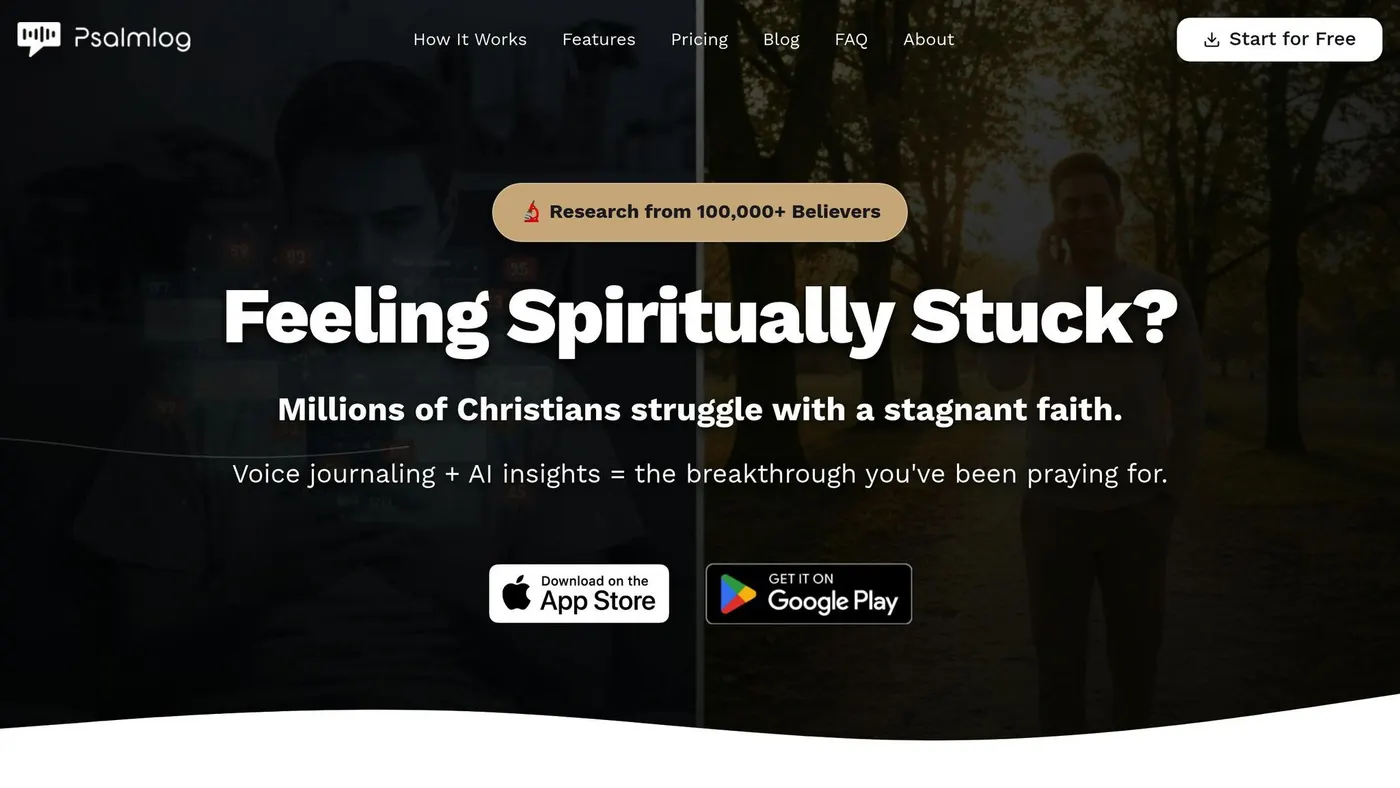
Psalmlog is an AI-powered journaling tool designed to help Christians connect their personal reflections with relevant scripture. By transcribing spoken thoughts and tagging key themes, the platform matches these reflections with Bible verses from both the Old and New Testaments.
At the heart of Psalmlog is its scripture tagging system. Using natural language processing, the AI identifies themes in a user’s journal entry and links them to related Bible passages. For instance, if someone records a reflection about anxiety, the tool might suggest Philippians 4:6-7 ("Do not be anxious about anything…"), offering a scriptural perspective on their feelings. This feature bridges the gap between personal experiences and biblical wisdom, making scripture feel more accessible and relevant.
But Psalmlog goes beyond simple verse matching. Its AI analyzes emotional patterns within reflections, uncovering spiritual themes that might otherwise go unnoticed. By doing so, it not only highlights connections across the Testaments but also provides deeper, personalized insights into how scripture can guide everyday life. Privacy is a key focus as well – users can rest assured that their data is encrypted and securely protected.
Enhancing Journaling Through AI
Psalmlog’s capabilities extend further, offering tools to track and measure spiritual growth over time. Through sentiment analysis, the platform evaluates the emotional tone of journal entries, helping users identify recurring themes and changes in their spiritual and emotional states. Visual dashboards present this data in a clear and engaging way, showing trends in sentiment, scripture engagement, and journaling habits. These insights empower users to set and achieve meaningful spiritual goals.
The benefits of this approach are backed by research. Studies indicate that engaging with scripture at least four times a week can lead to significant improvements: spiritual stagnation decreases by 60%, struggles with forgiveness drop by 31%, and feelings of loneliness are reduced by 30%. Meanwhile, positive behaviors like sharing faith increase by 228%, financial giving rises by 218%, and scripture memorization grows by an impressive 407%.
Psalmlog also encourages community engagement. Users can share AI-generated insights with friends, family, or small groups, making it a valuable tool for Bible studies or church discussions. These shared insights spark deeper conversations and strengthen communal bonds while maintaining a focus on traditional study practices.
Rather than replacing personal discernment, Psalmlog serves as a supportive tool, encouraging reflection, prayer, and guidance alongside its AI-driven insights. By integrating these insights into daily journaling, users can deepen their understanding of scripture and nurture their spiritual growth. The platform highlights the unified narrative that connects the Old and New Testaments, enriching both personal and communal faith journeys.
Conclusion: AI as a Bridge Between Testaments
AI is reshaping how believers delve into Christian scripture, opening doors to uncover connections between the Old and New Testaments that might otherwise remain unnoticed. From identifying fulfilled prophecies to drawing thematic parallels, the impact is both fascinating and practical.
A standout example of AI’s potential lies in its ability to link prophecies like Isaiah 7:14 ("The virgin will conceive and give birth to a son…") with their fulfillment in Matthew 1:23. Such connections highlight how technology can illuminate intricate biblical relationships.
Beyond scholarly insights, AI is also making scripture more accessible for everyday believers. Platforms like Psalmlog illustrate this by combining tools like voice journaling with sentiment analysis to connect users to relevant biblical passages. These innovations are helping individuals engage with scripture in deeply personal ways, fostering spiritual growth while complementing traditional interpretive methods.
Studies underline the transformative power of regular Bible engagement. Research involving over 100,000 believers over eight years found that engaging with scripture at least four times a week leads to profound spiritual changes. AI tools are helping make this level of engagement more achievable, simplifying interaction with scripture and encouraging consistent study.
However, it’s important to recognize AI’s limitations. While it can analyze text and provide insights, it lacks the spiritual discernment and contextual understanding that are essential for interpreting deeper meanings in scripture. This underscores the need for traditional wisdom – community discussions, pastoral guidance, and personal prayer remain irreplaceable. AI is at its best when it acts as a companion to these practices, not a substitute.
Looking forward, the role of AI in scripture study is set to grow. Experts predict advancements in real-time translation, original language analysis, and personalized spiritual insights. These tools will continue to bridge the gap between ancient texts and modern faith, enriching both academic research and personal devotion. Yet, even as technology evolves, the timeless value of human wisdom and divine guidance will remain central to understanding God’s word.
FAQs
How does AI identify accurate connections between the Old and New Testament?
AI delves into the relationship between the Old and New Testament by processing extensive biblical texts and scholarly works. Through advanced language models, it identifies themes, patterns, and contexts, uncovering connections between passages that might otherwise go unnoticed.
Although AI is highly effective at spotting linguistic and thematic links, it does not serve as a theological authority. Instead, its insights act as a resource for deeper study, inviting individuals to explore these connections within the framework of their own faith and understanding.
What challenges does AI face in biblical studies, and how can they be resolved?
AI’s role in biblical studies comes with its own set of hurdles. It can sometimes misinterpret scripture, struggle with understanding the deeper context, or overlook spiritual subtleties – challenges that stem from its algorithm-driven design. However, these gaps can be bridged by pairing AI-generated insights with human theological knowledge. This collaboration ensures interpretations stay both accurate and meaningful.
Platforms like Psalmlog exemplify this approach. They integrate AI tools with features designed to promote personal reflection and thoughtful engagement with scripture. This allows users to delve into spiritual connections in a way that feels both enriching and secure.
How does Psalmlog use AI to support personal spiritual growth?
Psalmlog uses AI-powered tools to enrich your spiritual experience. By linking your spoken reflections with Scripture, it highlights meaningful biblical themes, provides personalized spiritual guidance, and even tracks your progress over time.
With features like sentiment analysis and Scripture tagging, Psalmlog offers a practical and transformative way to interact with the Bible. This personalized approach helps today’s believers stay rooted in their faith while encouraging regular engagement with Scripture.