
How to Protect Privacy in Digital Faith Communities
Learn how to protect your privacy in digital faith communities with essential tips and strategies for safe online sharing and engagement.
Privacy in digital faith communities is crucial to maintaining trust and safeguarding personal information shared in spiritual spaces. These platforms often involve sharing sensitive details, such as prayer requests or personal testimonies, which can expose users to risks like data misuse, identity theft, and cyberattacks. Here’s how to protect yourself and your community:
- Be cautious with personal information: Avoid oversharing details like health issues, financial struggles, or contact information in group settings.
- Use strong passwords and enable two-factor authentication (2FA): This adds an extra layer of security to your accounts.
- Watch for scams: Be alert to phishing emails or messages that exploit trust within the community.
- Review privacy policies: Understand how platforms handle your data and ensure they align with your expectations.
- Promote digital safety education: Encourage workshops and resources to help members recognize and avoid online threats.
Platforms like Psalmlog demonstrate how technology can support faith journeys while prioritizing privacy through secure features and user control over data sharing. By taking these steps, digital faith communities can remain safe spaces for connection and spiritual growth.
Archdiocese of Bombay – Navigating the Digital Space | Digital Privacy | Fr Nigel Barrett

Common Privacy Risks in Digital Faith Communities
Digital faith communities encounter distinct privacy challenges. The personal nature of spiritual sharing, combined with the atmosphere of trust in these spaces, can leave members vulnerable to specific risks that demand careful consideration.
Personal Information Shared in Faith Communities
Faith-based platforms often encourage members to share deeply personal details that go well beyond what’s typically seen on social media. Prayer requests, for instance, may reveal sensitive information like medical conditions, financial hardships, relationship struggles, or family issues – details that could be exploited if they fall into the wrong hands.
Voice recordings introduce another layer of risk. Many platforms now feature audio-based sharing, such as prayer recordings, personal testimonies, or scripture reflections. These recordings can capture unique audio patterns that make individuals identifiable. Unlike text, which can be edited or anonymized, voice recordings create lasting digital fingerprints that are much harder to erase or obscure.
In addition, members frequently share contact details like phone numbers, home addresses, or email addresses in group chats or directories. While this openness fosters genuine connections, it also creates multiple avenues for personal data to be exposed or misused.
The sharing of children’s photos and information – whether in prayer requests or event-related groups – further amplifies privacy concerns. Without clear deletion policies, this information could remain accessible for years, raising long-term risks.
Digital Privacy Threats to Watch For
Data harvesting is a major concern in digital faith communities. Some platforms collect far more information than users might expect, including message content, voice recordings, location data, and behavioral patterns. This data could be sold to third parties, used for targeted ads, or stored indefinitely without clear guidelines on deletion.
Unauthorized sharing and identity theft are additional risks. Personal information shared in prayer requests or group discussions could be exploited for scams, predatory lending schemes, or even insurance fraud.
For members in regions where religious practice is restricted, surveillance risks are a serious threat. Governments may monitor digital faith platforms, putting users at risk of discrimination, harassment, or legal repercussions. Even in the United States, some employers or institutions might view public expressions of faith unfavorably, leading to potential bias or consequences.
Doxxing attacks pose another danger. By piecing together personal information shared online – such as religious beliefs, church affiliations, or moral viewpoints – malicious actors can target individuals for harassment, both online and in real life.
Finally, platform vulnerabilities can leave entire communities exposed. Weak encryption, inadequate password requirements, or poorly protected servers can make faith-based apps and websites easy targets for hackers or other malicious actors.
Christian Values and Digital Ethics
Christian teachings offer valuable guidance for addressing these privacy risks. Principles like stewardship, the Golden Rule, and confidentiality emphasize the importance of treating personal information with care and respect. Members of digital faith communities should handle both their own and others’ data with the same level of caution they’d expect for themselves. Platforms should strive to uphold confidentiality standards similar to those found in pastoral counseling or prayer partnerships.
Trust and integrity are foundational to any faith community, whether online or offline. Transparency about data collection, storage, and sharing practices is essential. When platforms obscure their privacy policies or use confusing language, they undermine the honest communication that should define Christian interactions.
The concept of sanctuary – a safe space for worship and spiritual growth – has long been central to faith communities. Digital spaces should aim to replicate this sense of sanctuary, ensuring members can share openly without fear of judgment, exploitation, or breaches of privacy. Achieving this requires not only strong technical protections but also community standards that prioritize safety and respect over convenience.
These ethical principles lay the groundwork for the practical steps needed to safeguard privacy in digital faith communities.
How to Protect Your Privacy Online
Maintaining your privacy in digital faith communities is essential for secure and meaningful participation. This is especially true when you’re sharing sensitive prayer requests or personal reflections. Here’s how anonymous sharing can help keep your interactions private.
Use Anonymous Sharing Thoughtfully
Anonymous sharing allows you to contribute to discussions and express your thoughts without disclosing your identity. By using a pseudonym or alias, or even opting for anonymous voice recording features, you can share personal insights securely. This ensures your privacy while still enabling you to engage in community conversations and submit sensitive prayer requests with peace of mind.
Cybersecurity Steps for Faith Communities
Good cybersecurity habits are essential for protecting both individual members and the broader faith community from digital threats.
Secure Your Accounts Properly
The first line of defense against cyber attacks is a strong, unique password. Create passwords that are complex and include a mix of letters, numbers, and symbols. Avoid using personal details like birthdays, family names, or anything tied to your church, as these are easy for attackers to guess.
Consider using a trusted password manager to create and securely store your passwords. These tools help you avoid the risky habit of reusing passwords across multiple accounts. A single compromised password could give attackers access to your email, banking, or community platforms.
Another critical step is enabling two-factor authentication (2FA). This adds an additional layer of protection by requiring a second form of verification, like a code sent to your phone or an authentication app. Even if someone manages to steal your password, they would still need this second factor to log in. Make sure to activate 2FA on all accounts that support it, including email, social media, and any platforms used by your faith community.
If you ever receive a breach notification from a service you use, act immediately. Change your password for that account and any others where you might have reused it. Quick action can limit the damage and stop further unauthorized access.
Spot and Avoid Cyber Attacks
Faith communities are often targeted by phishing scams that exploit trust. These scams may involve emails that seem to come from a pastor, church administrator, or fellow member, often requesting urgent help or donations.
To spot phishing attempts, look for warning signs like urgent language pushing you to act immediately, requests for personal information or money, generic greetings like "Dear Member", and suspicious links. Before clicking any link, hover over it to check if the destination matches the sender’s organization.
Social engineering is another tactic scammers use to manipulate people. For example, someone might call pretending to be from your church’s IT team, asking for login credentials to "resolve a technical issue." Remember, no legitimate organization will ask for your password over the phone or via email.
When in doubt, verify unexpected requests using a trusted contact method. If you receive an email asking for sensitive information, reach out to the sender directly using a phone number or email address you know is legitimate – not the one included in the suspicious message.
By staying vigilant, you can protect yourself and help maintain the safety of your entire community.
Teach Digital Safety to Your Community
Once you’ve strengthened your personal cybersecurity, sharing that knowledge with your community can make a big difference. Faith leaders, in particular, play a vital role in promoting digital safety. Regular education can help members recognize and avoid threats before they escalate.
Host monthly workshops to cover topics like creating strong passwords, identifying phishing attempts, and staying safe on social media. These sessions can be especially helpful for older adults or others who may be less familiar with digital risks.
Another way to support your community is by adding a digital safety resource page to your church’s website. Include links to reliable cybersecurity guides, recommendations for trusted password managers, and clear instructions for reporting suspicious activity. Make sure this page is easy to navigate and regularly updated.
Establish clear reporting procedures for cyber incidents so members know exactly who to contact if they encounter suspicious emails or accidentally click on a harmful link. Quick reporting can help prevent these issues from spreading to others in the community.
Finally, consider appointing tech-savvy volunteers as digital safety ambassadors. These volunteers can assist less experienced members with setting up security tools and answer basic questions about online safety. By making cybersecurity education accessible and approachable, you can help your community stay protected while fostering trust and confidentiality in your digital spaces.
How to Review Privacy Policies
Privacy policies are like the fine print of trust between you and a platform – they explain how your data is handled and whether their practices align with your values. Just as trust is crucial in personal relationships, it’s equally important in the digital world. A clear, well-structured privacy policy helps you make informed decisions about your online privacy.
What to Look for in a Privacy Policy
A strong privacy policy lays everything out plainly: what data is collected, why it’s collected, and how it’s stored. Look for simple, direct explanations. Does the platform gather only basic information, or does it go further into sensitive details, like your spiritual or personal preferences?
Pay close attention to how the policy explains data usage. It should clearly state whether your information is used for improving services, sending updates, or shared with third parties. Be cautious of vague phrases like "enhance user experience" that don’t explain what that actually means.
Storage practices are another key area. A good policy will describe how your data is protected – mentioning encryption in transit, secure managed infrastructure, and whether AI providers are contractually restricted from training on your data. It should also outline your rights, such as downloading your data or permanently deleting your account.
Consider how the platform’s approach to data aligns with your values. Does it treat your personal information with respect and care? A thoughtful policy will reflect the idea that your data isn’t just numbers – it’s a part of who you are.
Consent is another critical aspect. The policy should require your clear and informed agreement before collecting or sharing your data, especially if sensitive information is involved. Avoid platforms that assume your consent just because you continue using their services or bury key permissions in lengthy, hard-to-read terms.
Building Trust Through Transparency and Accountability
After reviewing the policy itself, check for signs of transparency in the platform’s actions. Does the company publish regular transparency reports? These reports show how they handle user data, respond to government requests, and manage security incidents. Platforms that openly share this information demonstrate accountability and a commitment to user trust.
Third-party security audits are another strong indicator of reliability. Companies that willingly undergo these audits and share the results show they take privacy seriously. This kind of openness reflects the principle of being accountable to the broader community.
How the platform responds to data breaches also says a lot. A trustworthy service will notify users quickly and honestly if their data has been compromised. They should explain what happened, what was affected, and what steps are being taken to prevent future issues.
The policy should also address data sharing with third parties. Some platforms sell data to advertisers or share it with partners. A privacy-focused company will clearly state if and when this happens and give you the option to opt out. This transparency helps ensure your data won’t be used in ways that could harm or discriminate against you.
Finally, look for platforms that treat privacy as a dynamic, ongoing responsibility. This might include regular updates to their policies, adopting new security technologies, or participating in broader privacy initiatives. Services that take privacy seriously will also allow you to delete your account and permanently erase your data, rather than just hiding it away.
How Psalmlog Protects Your Privacy
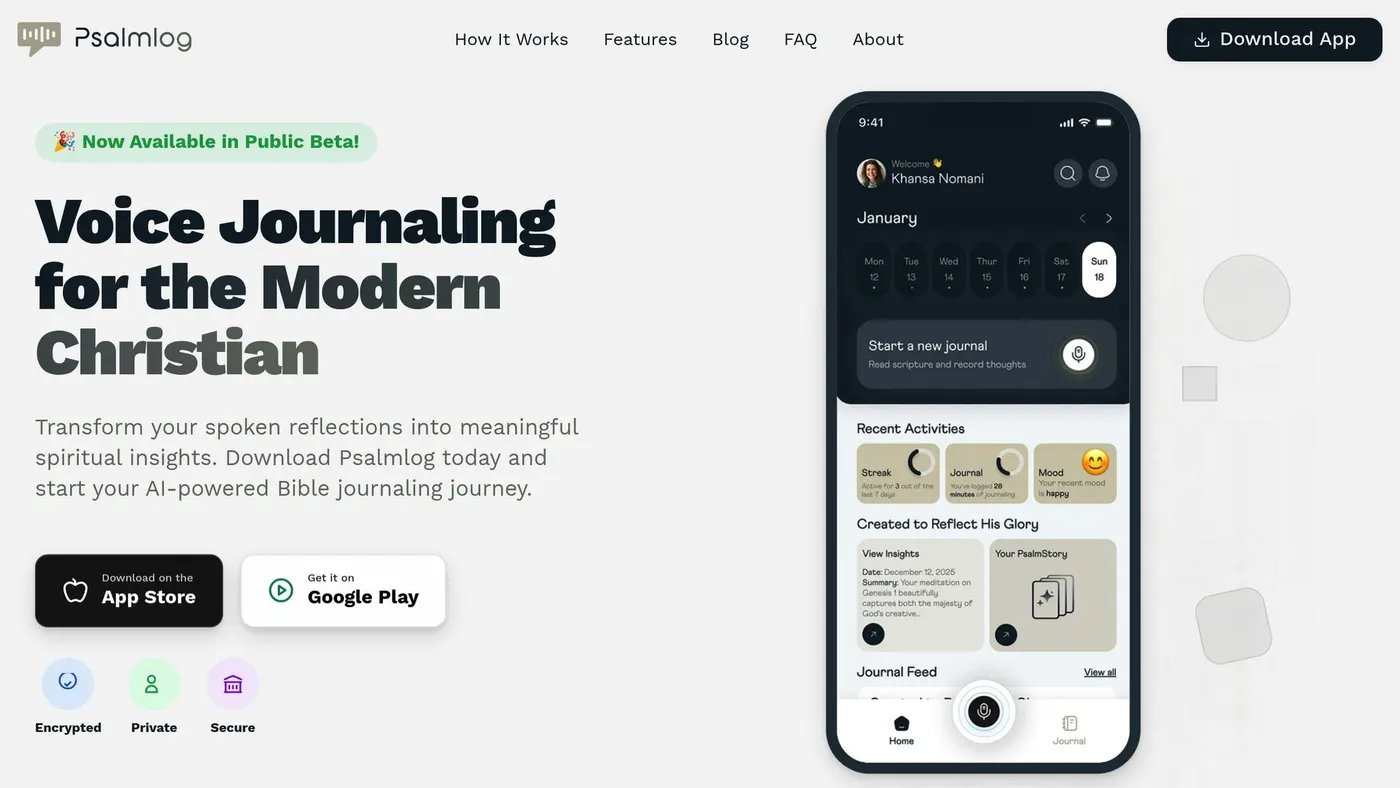
Psalmlog takes privacy seriously, especially when it comes to safeguarding your spiritual reflections and personal faith journey. By implementing strong security measures, the platform ensures that your sensitive information remains confidential and secure.
Secure Voice Journaling Features
Psalmlog provides multiple layers of protection for your entries (text or voice), keeping your prayers, reflections, and thoughts private. According to Psalmlog:
"We have implemented appropriate technical and organizational security measures designed to protect the security of any personal information we process."
Entries are stored securely on managed infrastructure designed to handle sensitive data, and AI providers are contractually prohibited from training on user data. By default, your entries and their transcripts are private, accessible only to you unless you actively decide to share specific insights via Psalmstory or Psalmcast. The platform processes your entries to generate transcripts and personalized 6-point AI biblical guidance, all within a secure environment. At the same time, Psalmlog acknowledges the inherent limitations of any security system:
"However, despite our safeguards, no security system is impenetrable. We cannot guarantee the security of our databases, nor can we guarantee that information you supply will not be intercepted while being transmitted to us over the Internet."
This transparency highlights Psalmlog’s commitment to maintaining a balance between robust security and realistic expectations.
Scripture Tagging and Analysis Tools
Psalmlog also ensures the privacy of your scripture tagging and analysis activities. When you tag entries with scripture, your insights remain entirely confidential. The sentiment analysis feature examines your emotional and spiritual patterns over time, generating personalized insights that only you can access. These insights are created within a secure environment, where AI tools map your spiritual themes and emotional trends through scripture connections – including multi-lingual Bible translations. The result is a dynamic dashboard that helps you track and reflect on your faith journey over time.
Control What You Share
Psalmlog gives you complete control over what you choose to share. Whether it’s reflections, scripture connections, or AI-generated insights, everything remains private unless you explicitly decide to share it using the platform’s tools. This ensures that your most personal moments stay just that – personal.
Every Psalmlog plan is designed to prioritize your privacy. The Free plan ($0, 3 lifetime entries) lets you try the format with full privacy protection. Seeker ($9.99/month) opens the full 6-point AI biblical guidance and the mobile app. Faith Builder ($19.99/month) adds voice journaling (300 min/mo), 30-day contextual AI memory, and Psalmcast. Shepherd ($34.99/month) adds unlimited voice, 3-6 month AI context, and the full insights dashboard – all under the same privacy standards. See full pricing; all paid plans include a 7-day free trial.
Conclusion: Privacy Builds Trust in Faith Communities
Protecting privacy is at the heart of fostering genuine connections in digital faith communities. When people feel assured that their prayers, reflections, and personal struggles are kept secure, they’re more likely to open up, share their journeys, and engage deeply with their faith and community.
The steps outlined earlier – choosing secure platforms and thoroughly reviewing privacy policies – create a protective environment where digital faith communities can thrive. When members know their personal information is safe, they can focus on what truly matters: strengthening their relationship with God and supporting one another.
Platforms like Psalmlog, highlighted earlier for its secure journaling and controlled sharing options, show how technology can support spiritual growth without compromising privacy. By giving users control over how their data is shared and maintaining transparency about security practices, such platforms empower believers to explore their faith with confidence and peace of mind.
Trust is fragile – built over time but easily broken by a single privacy breach or lapse in security. Faith communities that take privacy seriously – through secure platforms, clear data policies, and proper cybersecurity measures – create spaces where both personal reflection and collective worship can flourish. These efforts not only protect individual members but also strengthen the bonds of the community as a whole.
As digital faith communities grow and evolve, those that prioritize privacy will stand out as safe havens. These platforms and organizations will become places where believers feel secure enough to be vulnerable, seek guidance, and share their spiritual insights. By protecting both personal data and the sanctity of shared faith, they ensure that trust remains the foundation of their mission.
FAQs
What are the risks of sharing personal information in online faith communities?
Engaging in online faith communities can sometimes come with risks, particularly when sharing personal information. Details like your address, phone number, or birthday – if made public – could leave you vulnerable to identity theft, harassment, or privacy breaches. These dangers are even greater in spaces without proper oversight, where bad actors might exploit such information.
To protect yourself, be mindful of what you share and choose platforms that emphasize privacy and security. For instance, tools like Psalmlog provide a private journaling experience – entries stored securely on managed infrastructure with AI providers contractually prohibited from training on your data – so you can share reflections safely while building meaningful spiritual connections.
How can members of online faith communities recognize and protect themselves from phishing scams?
To protect yourself from phishing scams, it’s important for members of online faith communities to be cautious about emails or messages that seem suspicious. Look out for anything that pressures you to act quickly, requests personal information, or contains links that seem unfamiliar. Before clicking on a link or sharing sensitive details, take a moment to confirm the sender’s identity.
Simple steps like using security software, enabling multi-factor authentication, and staying aware of common scam tactics go a long way in keeping you safe. Sharing this knowledge with your community can help everyone remain alert and protected.
What should I check in a platform’s privacy policy to ensure my personal data is secure?
When going through a platform’s privacy policy, pay close attention to how your data is collected, used, and shared. Make sure the policy explains security measures like encryption in transit and multi-factor authentication, which are designed to safeguard your information. It should also spell out your rights, such as the ability to access, update, or delete your personal data, and clarify whether AI providers are restricted from training on your data.
It’s also a good idea to see if the platform includes clear contact details for handling privacy-related questions or concerns. A detailed, straightforward policy reflects the platform’s dedication to treating your data with care and keeping it secure. By reviewing these elements, you can feel more confident about protecting your personal information while engaging online.