
How AI Cross-References Multi-Language Scriptures
AI uses NLP, semantic networks, and pattern recognition to cross-reference scripture across languages and offer voice-first, personalized biblical guidance.
AI is transforming how people study scripture by simplifying the process of comparing texts across 3,300+ languages. It uses tools like natural language processing (NLP), semantic networks, and pattern recognition to identify connections between verses, even when translations or wording differ. This technology helps link prophecies, themes, and theological concepts across the Bible, making scripture study faster and more accessible for everyone, regardless of language or training in ancient texts.
Key features include:
- Instant cross-referencing: AI finds links between passages, such as Isaiah 7:14 and Matthew 1:23, in seconds.
- Multi-language insights: AI compares translations to maintain meaning and accuracy.
- Personalized guidance: Tools like Psalmlog connect scripture to real-life challenges, offering tailored advice.
- Voice-first interaction: Users can speak naturally about concerns, and AI recommends relevant scripture.
AI tools like Psalmlog don’t replace traditional study but enhance it by saving time and providing deeper insights. On the $19.99/month Faith Builder plan, Psalmlog includes 300 minutes of voice input a month, making scripture study easier for busy schedules. Whether you’re a scholar or a casual reader, this approach bridges gaps in understanding and connects scripture to daily life.
4 AMAZING AI Tools for Greek and Hebrew Bible Word Studies
How AI Analyzes Scripture Across Multiple Languages
AI doesn’t just stop at translating scripture; it dives deeper, uncovering profound theological connections and patterns that would typically require years of manual study. By leveraging advanced technologies, it reveals insights that bridge linguistic and cultural divides, making scripture more accessible and meaningful.
This advanced process relies on three key technologies working together: natural language processing (NLP), semantic networks, and pattern recognition. Together, these tools allow AI to interpret scripture with depth and precision. Let’s take a closer look at how each of these technologies contributes to this groundbreaking approach.
Natural Language Processing in Scripture Analysis
Natural language processing (NLP) allows AI to analyze scripture in a way that feels almost human. Rather than merely matching keywords, NLP considers context, grammar, and subtle meanings. This means AI can interpret scripture with a nuanced understanding of its original intent. For instance, when examining the Greek term "agape" (a form of love emphasized in the New Testament), NLP ensures the theological essence of the word remains intact across multiple translations.
This capability also makes ancient texts more approachable for modern readers. Translation tools powered by AI now include localized lexicons and cross-references, breaking down barriers to understanding classical languages like Hebrew and Greek.
Psalmlog takes this a step further by engaging with users in a conversational manner. You can describe a personal challenge, and the AI will connect your situation to relevant scripture, often uncovering verses that traditional search methods might miss. For example, if you’re struggling with forgiveness, the AI might guide you to passages that provide comfort and wisdom tailored to your experience.
Once NLP identifies the linguistic elements, AI moves on to map theological relationships through semantic networks.
Semantic Networks for Theological Meaning
Semantic networks act as a web of connections, linking theological concepts across scripture, even when translations or wording differ. This ensures that the meaning of a passage is preserved and accurately cross-referenced across various languages and denominations.
Think of semantic networks as invisible threads weaving together every mention of an idea like "mercy" or "forgiveness" throughout the Bible. For example, when AI studies Jesus’ parables, it can trace complementary themes in the Old Testament, enriching our understanding by revealing connections that traditional methods might overlook.
Here’s how AI-powered tools stand out compared to traditional methods:
| Feature | Traditional Methods | AI-Powered Tools |
|---|---|---|
| Connection Explanation | Provides verse numbers | Explains why verses connect |
| Original Language Analysis | Rarely included | Examines Hebrew/Greek relationships |
| Thematic Connections | Limited to obvious links | Discovers deep, cross-translation patterns |
| Speed | Time-intensive | Instant cross-referencing across languages |
Semantic networks also offer practical insights. For instance, when Sarah M., a Marketing Executive, faced a tough career decision, Psalmlog’s AI provided scripture about trusting God’s plans and seeking wise counsel. This personalized guidance helped her navigate her situation with clarity and faith.
Once the semantic networks establish these connections, AI uses pattern recognition to uncover even broader themes across scripture.
Pattern Recognition Across Languages
Pattern recognition is where AI truly shines, uncovering thematic links that span books, languages, and centuries. Unlike simple word searches, this technology detects how biblical concepts evolve and interconnect over time, offering a richer understanding of scripture.
For example, AI can instantly connect Old Testament prophecies, such as Isaiah 7:14, with their New Testament fulfillment in Matthew 1:23. By analyzing linguistic and theological patterns, AI reveals these links with remarkable accuracy. It doesn’t stop there – AI identifies parallel passages, thematic links, direct quotations, and shared Hebrew or Greek terms, creating a comprehensive map of biblical ideas.
AI also uses statistical models to examine language patterns across major sections of the Bible. This analysis uncovers hidden connections that might be missed through traditional study methods. For instance, David R., a father of three, turned to Psalmlog for help with parenting challenges. The AI highlighted verses about patience and godly parenting, drawing on themes of family relationships from across scripture. This guidance helped David adopt a more thoughtful approach with his teenage son.
Additionally, AI assists in aligning translations by comparing target languages with closely related ones that already have Bible translations. By analyzing phonetic similarities, it identifies missing words or potential errors, ensuring accuracy in new translations.
Through these advanced technologies, AI is transforming how scripture is studied and understood, opening up new ways to explore timeless truths.
How to Use AI for Multi-Language Scripture Comparison
AI tools make comparing scripture across multiple languages simpler and faster. Instead of spending hours combing through translations manually, you can start with a single verse and let AI handle the heavy lifting. This approach connects verses across languages with ease, giving you a clear picture of their relationships.
By entering a verse, AI can uncover thematic connections and provide contextual insights. It highlights the core messages, helping you understand how different translations align without overwhelming you with technicalities.
Taking this a step further, Psalmlog uses advanced AI analysis to offer personalized biblical guidance tailored to your life’s challenges. Whether you’re studying scripture in English or exploring translations in other languages, Psalmlog provides practical insights that make your study experience more meaningful and approachable. It’s a tool designed to deepen your engagement with scripture while keeping it relevant to your journey.
Using Psalmlog for Personalized Scripture Cross-Referencing
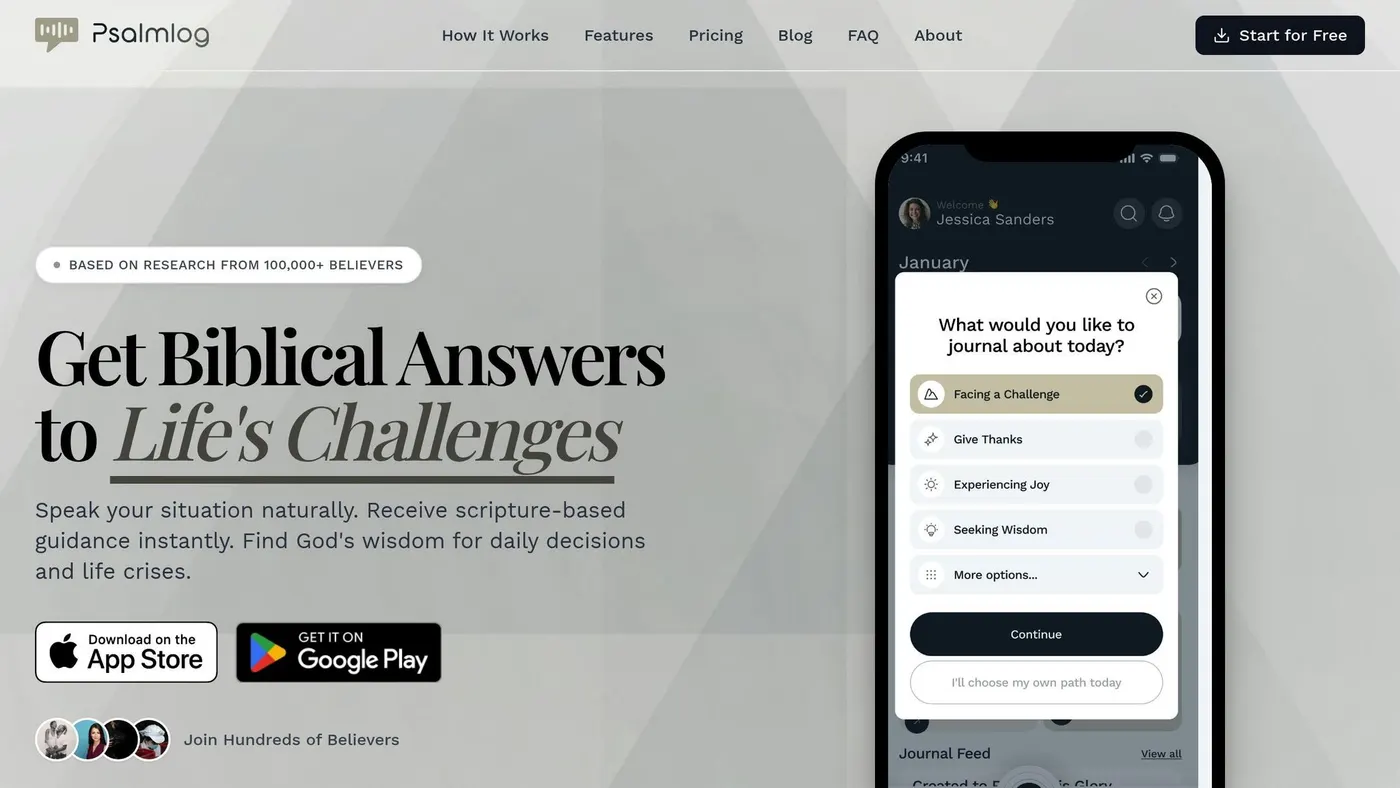
Psalmlog takes scripture study to a new level by connecting real-life situations with Biblical wisdom, offering personalized cross-referencing in multiple languages.
Multi-Language Scripture Study with Psalmlog
Psalmlog’s AI doesn’t just skim the surface – it dives deep into the semantic meaning of scripture and uncovers thematic patterns across various languages. You share your concern, and the AI deciphers the theological intent behind your words, revealing connections that would typically take hours of manual study to uncover.
What makes this tool stand out is its ability to link passages with shared theological concepts, even when they use different vocabulary or are scattered across different books of the Bible. For example, if you’re studying the theme of faith, Psalmlog can show how it weaves through Hebrews 11 and connect it to related passages in other translations or languages.
With access to multiple Bible translations, you can explore how different versions interpret specific verses, offering a richer perspective on their original meaning. The AI can also trace Old Testament prophecies to their New Testament fulfillment – like linking Isaiah 7:14 to Matthew 1:23.
But Psalmlog isn’t just about text; it’s designed to make scripture feel approachable and relevant.
Voice-First Scripture Guidance
Sometimes, the hardest part of Bible study is knowing where to start. With Psalmlog, you don’t need to memorize book names or theological terms – just talk naturally about what’s on your mind, like you would with a close friend.
This voice-first approach is perfect for moments when typing isn’t convenient. Whether you’re commuting, walking, or winding down before bed, you can engage with scripture effortlessly. The AI listens to your words, understands your situation, and finds scripture that speaks directly to your needs.
Research involving over 100,000 believers highlights the importance of regular scripture engagement. Those who interact with scripture most days experience a 60% drop in spiritual stagnation, a 31% drop in unforgiveness, and a 30% drop in feelings of loneliness. By making Bible study as simple as speaking, Psalmlog helps you build a consistent habit, even in the busiest of schedules.
This conversational method doesn’t just make study easier – it transforms it into a source of practical, life-focused guidance.
Getting Practical Guidance for Life Challenges
Psalmlog goes beyond connecting scripture; it helps you apply it. After identifying relevant passages, the app provides context and actionable steps rooted in biblical principles.
Sarah M., a marketing executive, turned to Psalmlog when she was uncertain about a new job offer. The app guided her to scripture on trusting God’s plans and seeking wise counsel, giving her peace and clarity in her decision.
David R., a father of three, used Psalmlog during a period of constant family conflict. The guidance he received helped him address specific parenting challenges with a renewed sense of purpose.
The platform supports a wide range of life situations – family dynamics, work decisions, financial stress, health concerns, and more. By connecting your unique moments with timeless Biblical truths, Psalmlog makes scripture feel personal and practical, not just academic.
The AI doesn’t stop at surface-level connections. It identifies quotations, allusions, and parallel passages across the entire Bible – insights that could take hours to find manually. For instance, if you’re anxious about finances, Psalmlog links themes like provision, trust, and stewardship across multiple books and translations, offering a well-rounded scriptural perspective.
Regular users of Psalmlog report remarkable growth in their spiritual lives: a 228% boost in confidence, a 218% increase in generosity, and a 300% rise in sharing their faith. These results come from making scripture instantly relevant to real-life challenges, turning Biblical wisdom into actionable steps for everyday living.
Best Practices for Using AI in Scripture Study
AI tools have brought new possibilities to scripture study, but getting the most out of them requires careful planning. If you’re using Psalmlog, following these tips can help you create a study routine that is both effective and accurate.
Setting Up AI Tools for Multiple Languages
The first step is configuring your AI tool to match your language and Bible translation needs. Choose the translations and languages you’ll use most often. Many AI tools let you set primary and secondary language preferences, which influence how connections between scriptures are analyzed and displayed.
Think about your study goals when setting up these preferences. For example, if you’re comparing denominational interpretations, including widely respected translations like the King James Version, New International Version, and English Standard Version is a smart choice. If you’re diving into deeper theological study, consider adding original Greek and Hebrew texts. AI tools can break down definitions, root words, and grammar, even if you don’t have formal training in these ancient languages.
Start small by working with two or three translations initially. This approach keeps things manageable while still offering valuable comparisons.
AI-powered cross-referencing also simplifies identifying related verses across different languages. Unlike traditional methods that require complex searches, AI can do this automatically. For less common languages, alignment tools can even compare target scripts with similar languages to highlight missing words or potential errors.
Once your setup is complete, always verify the AI’s findings against trusted original texts to ensure accuracy.
Verifying AI Results Against Original Texts
While AI tools are incredibly helpful, they’re not perfect. It’s crucial to double-check their results using reliable manuscripts and commentaries.
Traditional cross-referencing tools often limit you to verse numbers, but AI tools go further by explaining why certain verses connect. For instance, when studying a verse, you can review the AI’s suggested connections and their explanations, then dig deeper into the referenced passages. Compare these insights with established biblical commentaries to confirm their reliability.
For passages where translation nuances matter, examining the original Greek or Hebrew is key. AI can quickly map out every instance of a concept like "mercy" or "forgiveness" across the Bible – a task that would take hours manually. However, the quality of these connections depends on accurate identification of the original terms. Features like built-in lexicons and multilingual support are especially useful for translators and students of biblical languages.
By verifying AI-generated insights, you can confidently incorporate them into your study routine, even when time is tight.
Maximizing Efficiency for Busy Schedules
Time constraints shouldn’t hold you back from engaging with scripture. Studies involving over 100,000 believers show that reading scripture at least four times per week can significantly impact your life – reducing spiritual stagnation by 60%, unforgiveness by 31%, and loneliness by 30%.
For those with packed schedules, voice-first features are a game-changer. Instead of typing or searching for specific verses, you can simply describe your current challenge to the AI. Whether you’re commuting, working out, or taking a quick break, you can interact with scripture effortlessly.
Psalmlog’s Faith Builder plan, priced at $19.99 per month, offers 300 minutes of recording time. That’s about ten minutes a day, an achievable commitment for most people. This setup encourages consistency.
AI tools can also streamline your study by quickly identifying thematic links, saving you the time you’d spend flipping through concordances. The AI handles the heavy lifting, allowing you to focus on reflecting and applying the insights. Plus, its personalization features tailor the experience to your needs, unlike traditional one-size-fits-all cross-references. Over time, as Psalmlog learns your preferences, its suggestions become even more precise.
Make AI a part of your daily routine. Use small pockets of time – like waiting for your coffee or winding down at night – to uncover meaningful connections in scripture. AI can reveal quotations, parallels, and patterns across the Bible that might otherwise take hours to uncover manually. It can even detect subtle language patterns in major sections of the text, providing insights you might not notice on your own.
For a balanced approach, combine AI tools with traditional methods. Let AI guide your initial exploration, then spend time meditating on the passages it highlights for a deeper understanding. This blend of technology and reflection can enrich your scripture study experience.
Conclusion
AI and Psalmlog are transforming how believers engage with scripture, making it simpler to study across languages and denominations. Tasks that once required hours of flipping through concordances or commentaries can now be done in seconds. With the help of AI, you can uncover deep, interconnected themes and understand why certain passages are linked, thanks to its ability to analyze relationships between Hebrew and Greek words – all while tailoring the experience to your unique study needs.
The evolution from static, one-size-fits-all cross-reference systems to dynamic, AI-powered tools has made biblical scholarship more accessible than ever. For example, AI can trace Old Testament prophecies to their fulfillment in the New Testament, offering richer theological insights along the way. It can also map mentions of concepts like "mercy" or "forgiveness" throughout the Bible, comparing how different translations handle specific verses. These features open the door for anyone, regardless of formal theological training, to dive deeply into scripture in a way that’s both efficient and spiritually meaningful.
Psalmlog takes this a step further with its personalized, voice-first, multi-language cross-referencing capabilities. Instead of typing out queries or navigating complicated systems, you can simply speak about a life challenge and receive relevant scripture along with practical insights. At $19.99 per month, the Faith Builder plan includes 300 minutes of recording time a month, making consistent scripture engagement possible even with a packed schedule.
AI doesn’t replace traditional scripture study – it enhances it. By handling the time-consuming work of identifying patterns and connections, AI allows you to focus on deeper reflection and personal growth. The key is finding a balance: using AI for efficient exploration while dedicating time to prayerfully consider the passages it highlights. This approach blends modern technology with the timeless practice of engaging deeply with God’s Word.
FAQs
How does AI maintain accuracy and theological consistency when translating scriptures across different languages?
AI plays a key role in maintaining precision and theological soundness in scripture translations by using advanced natural language processing (NLP) and machine learning models. These tools dive deep into linguistic subtleties, contextual nuances, and theological meanings, ensuring translations stay true to the original text.
To further enhance accuracy, AI systems cross-check various translations and align their work with established theological principles. This approach helps prevent misinterpretations, preserving the spiritual and doctrinal heart of the scriptures. The result? Translations that make sacred texts accessible to a wide audience while staying faithful to their original message.
How can AI tools like Psalmlog make studying scripture more meaningful and personalized?
AI tools such as Psalmlog are transforming how people engage with scripture by delivering customized support based on individual life situations. Rather than spending hours flipping through pages or searching online, you can describe your circumstances, and the app will present Bible verses, practical advice, and actionable steps tailored to your needs.
This method not only streamlines the process but also brings scripture study closer to your everyday life, making it more relevant and approachable, especially for those looking for quick, meaningful ways to apply biblical wisdom.
What challenges might arise when using AI to analyze scriptures in multiple languages?
Analyzing scriptures across multiple languages using AI is no small feat. One of the biggest challenges lies in language nuances – things like idioms, theological terms, and cultural contexts that often don’t have straightforward translations. These subtleties can complicate how accurately AI cross-references and interprets sacred texts.
Another obstacle is the diversity of scripture versions and denominations. Different translations, structures, and interpretations across traditions make it tough for AI to deliver results that are universally applicable. On top of that, balancing respect for the sacred nature of these texts while ensuring the analysis remains contextually relevant adds a layer of sensitivity to the process.
Still, platforms like Psalmlog are finding ways to navigate these complexities. By using advanced algorithms and a deeper understanding of context, they’re pushing the boundaries of what AI can achieve in this intricate field.